


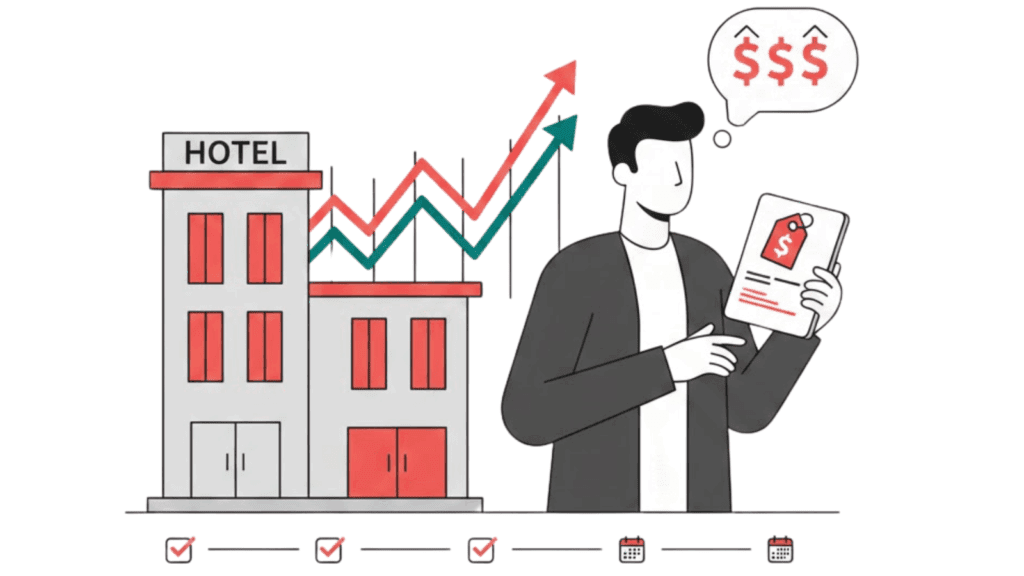
Dynamic pricing is no longer a luxury reserved for large chains. It is the critical equalizer that allows your smaller property to compete effectively in today’s demanding hospitality market. This data-driven approach moves beyond static rate sheets. It allows you to automatically adjust room rates based on real-time market conditions, demand patterns, and competitor activity. By combining AI-powered tools with a smart strategy, you can optimize both occupancy and average daily rate (ADR), achieving measurable improvements in RevPAR and operational efficiency.
The Power of AI-Powered Dynamic Pricing

The biggest challenge for independent hoteliers is the lack of dedicated revenue management staff. This is where artificial intelligence steps in, transforming complex, manual pricing into an automated system that analyzes multiple data points simultaneously.
AI-powered pricing systems evaluate multiple factors simultaneously to recommend optimal rate adjustments in real time. These factors include:
- Occupancy rates and booking pace
- Competitor pricing and seasonal trends
- Local events and market data
Key Advantages for Independent Hotels
- Accessible Automation: You get customizable controls that let you set pricing boundaries and override AI recommendations when needed.
- Seamless PMS Integration: Centralizes your workflow and eliminates manual data entry across popular property management systems.
- Reduced Manual Workload: Significantly improves pricing accuracy and response time to sudden market changes.
- Scalable Solution: Grows with your property’s needs and booking volume.
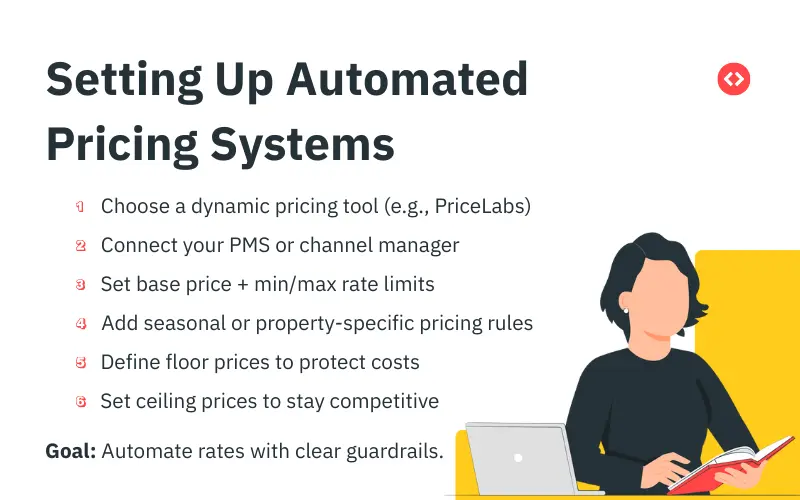
Getting started with PriceLabs is simple: Connect your existing PMS, define your revenue goals, set pricing parameters, and gradually activate full automation as your confidence builds.
Transform your hospitality approach today
Discover actionable strategies tailored for small hotel owners and managers creating unforgettable stays for your guests & expanding revenues for your hotel!
Start your 30-day FREE trial now!Real-Time Market Intelligence Tools
Success in dynamic rate optimization requires continuous access to market demand and competitive intelligence. Without it, you’re pricing blind.
Real-time market intelligence provides you with:
- Live competitor rates
- Demand trend analysis and local event calendars.
- Agile, data-backed pricing decisions that respond immediately to market fluctuations.
These platforms monitor not just your direct competitors but also alternative accommodations and OTA pricing across multiple channels. This tool is crucial for hotel comp set analysis and making real-time hotel pricing decisions that would be impossible to execute manually.
Essential Market Intelligence Features
| Feature | Benefit for Independent Hotels |
| Real-time competitor monitoring | Stay competitive without manual rate shopping. |
| Local events integration | Anticipate demand spikes and adjust rates proactively. |
| Automated alerts and triggers | Receive notifications for significant market changes. |
| Historical trend analysis | Identify seasonal patterns and optimize future pricing. |
| Mobile accessibility | Make pricing decisions remotely and respond quickly. |
Personalized Pricing Strategies for Guest Value
The shift in hospitality is toward guest-centricity. Personalized pricing adjusts rates based on individual guest data, offering tailored value propositions.
This dynamic adjustment considers factors like:
- Search timing, booking history, and stay frequency
- Historical spend and likelihood to cancel or modify reservations
- Booking source, geographic origin, and travel purpose (business, leisure, family)
Major OTAs and hotel chains already use this strategy to increase conversions. PriceLabs enables guest-centric pricing through sophisticated integrations and customizable rule sets, helping you implement personalized hotel pricing without complex technical infrastructure.
By recognizing a guest’s preferences and willingness to pay, personalized pricing transforms your model from one-size-fits-all to a dynamic system that improves both revenue performance and guest satisfaction.
Flexible and Segment-Based Pricing Models
To achieve optimal hotel revenue optimization, you must combine dynamic pricing with strategic segmentation. Different guest types have varying price sensitivity and value expectations.
Independent hotels can implement dynamic pricing alongside multiple models:
- Corporate and group segments with negotiated rates and volume discounts.
- Leisure travelers with flexible pricing based on advance booking and seasonality.
- Event-driven bookings with premium pricing during high-demand periods.
- Last-minute bookings with strategic discounting to optimize occupancy.
Research confirms that combining dynamic pricing with segment-based and forecast-based pricing enhances revenue by allowing you to optimize rates for each guest type while maintaining overall pricing coherence.
| Guest Segment | Pricing Variables | Dynamic Adjustments |
| Business travelers | Corporate rates, booking policies | Demand-based premiums during peak periods |
| Leisure guests | Advance purchase discounts | Seasonal and event-driven pricing |
| Groups and events | Volume discounts, package rates | Market demand and availability-based |
| Last-minute bookers | Occupancy optimization rates | Real-time inventory and demand balancing |
Collaborative Revenue Management Approaches
Successful dynamic pricing implementation requires coordination across your hotel’s departments. Your pricing strategy must align with your operational capabilities, marketing initiatives, and guest service standards.
Collaborative revenue management integrates expertise from:
- Revenue Management: Pricing, forecasting, and inventory.
- Marketing: Promotions, campaigns, value communication.
- Operations: Staffing, service capacity, guest experience.
Effective collaboration includes:
- Regular cross-functional revenue meetings to align pricing strategies with marketing campaigns.
- Shared real-time dashboards providing all teams access to market data and booking pace.
- Guest feedback integration to incorporate service quality metrics into pricing and value proposition decisions.
PriceLabs’ portfolio analytics and integrated workflow tools enhance this collaboration by providing transparent, accessible data that enables all team members to understand the pricing rationale.
Transparent Pricing Practices for Guest Trust
While dynamic pricing optimizes revenues, its long-term success depends on guest trust. Transparency involves clear, honest communication about why rates change, helping guests understand the value proposition and timing considerations.
Research shows that avoiding customer alienation depends on providing fair justification for price changes and maintaining consistent value delivery.
Recommended transparency practices:
- Clear Website Communication: Explain how dynamic pricing provides better deals during off-peak periods.
- Value Justification: Detail inclusions and amenities, especially during high-demand periods.
- Booking Timing Guidance: Help guests understand optimal booking windows (e.g., “Book early for the lowest rates…”).
This approach builds guest trust in hotel pricing while maintaining the revenue benefits of dynamic rate optimization.
Continuous Monitoring and Adjustment Techniques
Dynamic pricing relies on continuous data—occupancy, booking pace, and market events—to set optimal rates that respond to changing conditions in real time.
A typical monitoring and adjustment workflow includes:
- Daily competitive rate analysis to identify positioning opportunities and threats.
- Reviewing internal booking pace against historical patterns and forecasts.
- AI-generated alerts for anomalies or significant market changes.
- Rapid rate and package adjustments to optimize RevPAR based on real-time data.
The value of automation is clear: it prevents revenue leakage from outdated pricing, capitalizes on unexpected demand surges, and frees your team to focus on strategy rather than tactical rate adjustments.
Wrapping Up
Dynamic pricing is the essential, accessible technology that empowers your independent hotel to achieve enterprise-level revenue optimization. By adopting AI-powered platforms, leveraging real-time market intelligence, and committing to transparent, segmented pricing, you can optimize your revenue, improve efficiency, and compete successfully against any large chain.
Frequently Asked Questions ( FAQ
How can I ensure my hotel’s dynamic pricing is competitive against local short-term rentals (STRs)?
To compete with STRs, you need to use a hybrid strategy that includes STR data in your competitive set (comp set). PriceLabs helps you monitor both hotel and short-term rental data to ensure precise benchmarking. Additionally, use flexible Length of Stay (LOS) strategies; while STRs often have stricter minimums, you can adjust your LOS rules dynamically (e.g., shorter minimum stays in peak season, longer stays with discounts in low season) to gain an edge and optimize occupancy.
What is the most significant risk of switching from static to dynamic pricing, and how do I mitigate it?
The primary risk is damaging your brand’s perceived value or alienating guests by inconsistent or unfair pricing if the strategy isn’t transparent. To mitigate this, avoid aggressively undercutting rates, which can hurt your brand. Instead, ensure your communication is transparent, justifying price variations by emphasizing the unique value, quality, and amenities your property offers. Bundling services and experiences is a great way to enhance perceived value without compromising on price.