


Dynamic pricing has transformed how independent hotels operate in today’s market, enabling them to adjust rates in real time based on demand, competition, and market conditions. Unlike static pricing models that rely on fixed rates, dynamic pricing uses data-driven algorithms to optimize revenue by responding to market fluctuations in real time. For independent hotels competing with major chains that use sophisticated revenue management systems, implementing dynamic pricing isn’t just an advantage—it’s essential for survival.
What is Dynamic Pricing for Hotels?
Dynamic pricing is a revenue management strategy that automatically adjusts room rates based on real-time market data, demand patterns, and competitive intelligence. Rather than setting fixed prices for extended periods, hotels use dynamic pricing, continuously adjusting their rates to capture maximum revenue from each booking opportunity.
Supply – Demand Economics
The core principle of dynamic pricing lies in supply-and-demand economics. When demand is high and inventory is limited, rates increase to optimize revenue per available room. Conversely, during low-demand periods, rates decrease to stimulate bookings and maintain occupancy levels.
Analysis of Multiple Data Points
Modern dynamic pricing systems analyze multiple data points simultaneously, including historical booking patterns, competitor rates, local events, weather forecasts, and booking pace. This comprehensive analysis enables hotels to make pricing decisions that would be difficult through manual processes alone.
Transform your hospitality approach today
Discover actionable strategies tailored for small hotel owners and managers creating unforgettable stays for your guests & expanding revenues for your hotel!
Start your 30-day FREE trial now!How Dynamic Pricing Works
Dynamic pricing operates through sophisticated algorithms that process vast amounts of data to determine optimal room rates. The system begins by collecting data from multiple sources: property management systems, channel managers, competitor rate shopping tools, and market intelligence platforms.
Sophisticated Algorithms
The algorithm analyzes this data against predetermined business rules and objectives. For instance, if a hotel prioritizes revenue over occupancy, the system will maintain higher rates even if it means lower booking volumes. Conversely, properties focusing on occupancy will see more aggressive rate reductions during low-demand periods.
Machine Learning
Machine learning capabilities enable these systems to improve over time, learning from past pricing decisions and their outcomes. The algorithm identifies patterns in booking behavior, seasonal trends, and market responses to price changes, becoming more accurate with each iteration.
Rate updates typically occur multiple times daily, with some systems adjusting prices hourly or even more frequently during high-demand periods. These updates are automatically distributed across all booking channels, ensuring rate parity and maximizing exposure to potential guests.
Benefits of Dynamic Pricing for Independent Hotels

Revenue Optimization
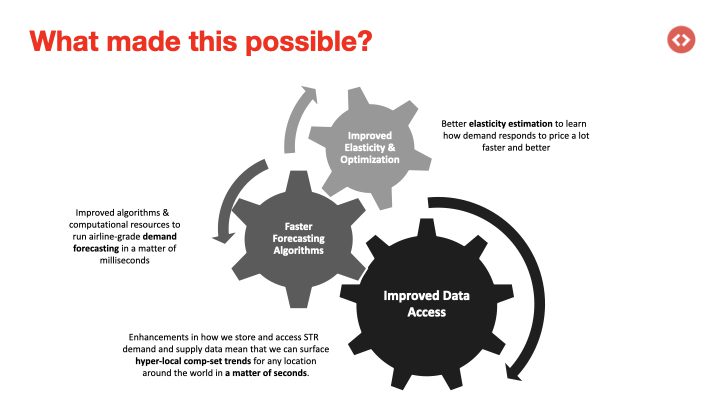
Dynamic pricing delivers measurable revenue improvements by capturing demand at optimal price points. Independent hotels using dynamic pricing systems typically see revenue increases of 10-25% compared to static pricing models, according to hospitality technology research.
The system identifies revenue opportunities that manual pricing often misses, such as last-minute demand spikes or competitor pricing gaps. By responding promptly to these opportunities, hotels capture revenue that would otherwise be lost to competitors or left on the table through underpricing.
Competitive Positioning
Independent hotels gain access to real-time competitive intelligence, enabling them to strategically position their rates in the market. The system monitors competitor pricing across all major booking channels, identifying opportunities to undercut competitors during price-sensitive periods or maintain premium positioning when demand supports higher rates.
This competitive awareness is particularly valuable for independent properties that lack dedicated revenue management staff to manually monitor competitor rates throughout the day.
Operational Efficiency
Dynamic pricing eliminates the time-consuming manual rate management process, freeing hotel staff to focus on guest experience and other revenue-generating activities. Property managers no longer need to spend hours each day adjusting rates across multiple channels or analyzing competitor pricing.
The automation also reduces human error in pricing decisions and ensures consistent rate distribution across all booking platforms, minimizing rate parity issues that can damage relationships with online travel agencies.
Market Responsiveness
Independent hotels can respond instantly to market changes, from unexpected local events that drive demand spikes to economic conditions that affect travel patterns. This agility is crucial in today’s volatile travel market, where demand can shift rapidly based on external factors.
The ability to process multiple data sources simultaneously enables more informed pricing decisions than manual methods, which typically rely on limited information and historical patterns.
Dynamic Pricing Strategies for Independent Hotels


Demand-Based Pricing
This fundamental strategy adjusts rates based on forecasted demand levels for specific dates. The system analyzes booking pace, historical demand patterns, and forward-looking indicators to predict demand intensity and set rates accordingly.
During high-demand periods such as local festivals or conferences, rates increase progressively as inventory decreases. The system may implement multiple rate tiers, starting with moderate increases for early bookings and escalating to premium pricing as availability becomes scarce.
For low-demand periods, the strategy focuses on stimulating bookings through competitive pricing while maintaining minimum rate thresholds to protect profit margins.
Competition-Based Pricing
This approach positions rates relative to competitor pricing, ensuring the hotel remains competitively positioned within its market segment. The system continuously monitors competitor rates and adjusts pricing to maintain desired positioning, whether that’s matching competitor rates, maintaining a discount, or commanding a premium.
Independent hotels often use this strategy to compete directly with similar properties in their immediate vicinity, ensuring they don’t lose bookings due to pricing disadvantages while capitalizing on opportunities when competitors overprice.
Length-of-Stay Optimization
This advanced strategy encourages longer stays through strategic pricing incentives. The system identifies patterns in guest booking behavior and adjusts rates to promote stays that optimize total revenue and operational efficiency.
For example, the system might offer attractive rates for three-night stays during typically low-demand periods, increasing overall revenue per guest while reducing turnover costs associated with daily housekeeping and check-in processes.
Seasonal and Event-Based Pricing
The system automatically adjusts pricing strategies based on seasonal patterns and local events. It maintains different pricing models for peak seasons, shoulder periods, and off-peak times while also incorporating special event premiums when local attractions or business activities drive increased demand.
This strategy is particularly effective for independent hotels in tourist destinations or business districts where demand patterns follow predictable seasonal or event-driven cycles.
Implementing Dynamic Pricing: A Step-by-Step Guide
Step 1: Assess Your Current Pricing Strategy
Begin by analyzing your existing pricing performance to identify revenue gaps and missed opportunities. Review historical occupancy and average daily rate data to understand your property’s demand patterns and pricing sensitivity.
Document your current pricing processes, including how rates are set, how frequently they’re adjusted, and which staff members are involved in pricing decisions. This baseline assessment will help measure the impact of dynamic pricing implementation.
Step 2: Define Your Pricing Objectives
Establish clear goals for your dynamic pricing strategy, whether prioritizing revenue optimization, occupancy optimization, or market share growth. These objectives will guide system configuration and help measure success.
Consider your property’s unique characteristics, such as location, target market, and competitive positioning, when defining objectives. A boutique hotel in a tourist destination may prioritize revenue per available room, while a business hotel might focus on maintaining consistent occupancy levels.
Step 3: Choose the Right Dynamic Pricing Platform
Evaluate dynamic pricing solutions based on your property’s specific needs, technical capabilities, and budget constraints. Key considerations include integration with your existing property management system, ease of use, reporting features, and the quality of customer support.
Look for platforms that offer transparent pricing models and don’t require long-term contracts, allowing you to test the system’s effectiveness before making long-term commitments. PriceLabs stands out with its seamless integration and robust support.
PriceLabs, as a dynamic pricing platform, supports you to –
- See what competitors are charging so you can price smarter.
- Automate rate updates based on demand, seasonality, and occupancy.
- Easily adjust prices in bulk across all units in seconds.
Step 4: Configure Business Rules and Parameters
Set up the system’s business rules to align with your pricing objectives and operational constraints. This includes establishing minimum and maximum rate thresholds, defining competitor sets for benchmarking, and configuring demand sensitivity settings.
Work with the platform’s implementation team to ensure proper configuration, as incorrect settings can lead to suboptimal pricing decisions or operational challenges.
Step 5: Train Your Team
Provide comprehensive training for staff members who will interact with the dynamic pricing system. This includes understanding how the system makes pricing decisions, how to override automatic rates when necessary, and how to interpret performance reports.
Ensure your team understands the strategic rationale behind dynamic pricing to gain buy-in and support for the new approach.
Step 6: Monitor and Optimize
Continuously monitor system performance against your defined objectives, making adjustments as needed. Regular review of pricing decisions and their outcomes helps optimize the system’s configuration and improve results over time.
Establish regular reporting schedules to track key performance indicators and identify trends or issues that require attention.
Common Challenges and Solutions
Rate Parity Issues
Dynamic pricing can complicate rate parity management across multiple booking channels. The solution involves ensuring your dynamic pricing system integrates properly with your channel manager and updates rates simultaneously across all platforms.
Implement monitoring tools to detect rate discrepancies quickly and establish protocols for resolving parity issues when they occur.
Guest Perception and Fairness
Guests may perceive frequent rate changes as unfair, particularly if they see lower rates after booking. Address this challenge by communicating your pricing policies transparently and by offering rate protection or best-rate guarantees when appropriate.
Consider implementing minimum rate hold periods for specific booking channels to reduce the frequency of visible rate changes while maintaining pricing flexibility.
Staff Resistance to Change
Team members accustomed to manual pricing processes may resist adopting dynamic pricing systems. Overcome this resistance through comprehensive training, clear communication about the benefits, and involving staff in the implementation process.
Demonstrate how dynamic pricing frees up time for other valuable activities and can improve overall property performance.
Over-Reliance on Automation
While dynamic pricing systems are sophisticated, they shouldn’t replace human judgment entirely. Maintain oversight of pricing decisions and be prepared to intervene when unique circumstances require manual adjustments.
Establish clear protocols for when and how to override automatic pricing, ensuring staff members understand their authority and responsibility in pricing decisions.
Measuring Success: Key Performance Indicators
Revenue Per Available Room (RevPAR)
This fundamental metric combines occupancy and average daily rate to measure overall revenue performance. Dynamic pricing should drive consistent RevPAR improvements over time.
Track RevPAR daily, weekly, and monthly to identify trends and assess the system’s effectiveness across different demand periods.
Average Daily Rate (ADR) Growth
Monitor ADR improvements to ensure the system is successfully capturing demand at optimal price points. Effective dynamic pricing should increase ADR during high-demand periods while maintaining competitive positioning during slower times.
Compare ADR performance against competitor benchmarks to ensure your pricing strategy remains competitive.
Occupancy Optimization
While revenue growth is the primary objective, monitor occupancy levels to ensure pricing strategies don’t negatively impact booking volumes beyond acceptable thresholds.
Analyze occupancy patterns by day of week and season to identify opportunities for further optimization.
Booking Pace and Lead Time Analysis
Track how dynamic pricing affects booking patterns, including advance booking behavior and last-minute reservation trends. This analysis helps optimize pricing strategies for different booking windows.
Competitive Market Share
Monitor your property’s market share within your competitive set to ensure dynamic pricing strategies maintain or improve your position relative to competitors.
Future Trends in Hotel Dynamic Pricing


Artificial Intelligence & Machine Learning
The evolution of artificial intelligence and machine learning continues to enhance dynamic pricing capabilities, with systems becoming more sophisticated in predicting demand and optimizing pricing decisions. Predictive analytics will increasingly incorporate external data sources such as weather patterns, economic indicators, and social media sentiment to improve forecasting accuracy.
Customization
Personalization represents another frontier, with systems now offering customized rates based on individual guest preferences, booking history, and willingness to pay. This approach optimizes revenue while improving guest satisfaction through tailored pricing.
Integration with other hotel technologies will deepen, creating more comprehensive revenue optimization ecosystems that consider factors beyond room pricing, including ancillary revenue opportunities and guest lifetime value.
Real-time market intelligence will become more granular, with systems analyzing micro-market conditions and competitor responses at unprecedented levels of detail, enabling even more precise pricing decisions.
Wrapping Up
Dynamic pricing has evolved from a luxury reserved for major hotel chains to an essential tool for independent properties seeking to compete effectively in today’s market. By implementing the right system and strategies, independent hotels can achieve significant revenue improvements while maintaining operational efficiency and competitive positioning. Success requires careful planning, proper implementation, and ongoing optimization, but the potential returns make dynamic pricing an invaluable investment for forward-thinking independent hoteliers.
Frequently Asked Questions ( FAQs)
How can dynamic pricing benefit my independent hotel compared to fixed pricing strategies?
Dynamic pricing enables your hotel to adjust room rates in real time based on factors such as demand, seasonality, local events, and competitor rates. Unlike fixed pricing, which may leave money on the table during high demand or result in unsold rooms during low periods, dynamic pricing helps maximize your revenue by ensuring rates reflect current market conditions. This approach gives you a competitive edge and can significantly improve occupancy and profitability.
Is implementing dynamic pricing complicated for a small hotel without a large revenue management team?
While dynamic pricing may seem complex at first, there are now user-friendly tools and software designed specifically for independent hotels. These solutions often automate much of the process, analyzing market trends and suggesting optimal rates. Even with a small team, you can take advantage of dynamic pricing by starting with simple strategies—like adjusting rates for weekends or special events—and gradually adopting more advanced methods as you become comfortable.