


Choosing standard lodging over an alternative hotel is like buying a mass-produced, off-the-rack suit instead of visiting a master tailor. Sure, the factory suit covers the basics and gets the job done, but the bespoke suit is crafted to fit your exact contours, making you feel entirely unique and confident. Today’s modern travelers are tired of the “off-the-rack” hospitality experience. They no longer want identical lobbies, predictable room layouts, and sterile hallways. They want the bespoke suit. They want a story. This shift in consumer behavior marks the meteoric rise of the alternative hotel, giving independent owners an unprecedented opportunity to outshine the big corporate chains and dominate the “Experience Economy.”
What Exactly is an Alternative Hotel?
An alternative hotel breaks the mold of traditional hospitality. It’s not just a place to sleep; it’s a destination in itself. An alternative hotel can be a collection of luxury yurts in a forest, a converted 19th-century warehouse featuring local art, a hyper-themed boutique hotel, or a high-tech eco-lodge.
If we look closely at Alternative accommodation trends, the data reveals a massive shift: travelers are actively searching for properties that offer character, authenticity, and a deep connection to the local culture. They are willing to pay a premium for a memory, rather than just a mattress.
However, running an alternative hotel comes with a unique set of challenges. Independent hotel owners and general managers often find themselves wearing too many hats—juggling operations, marketing, and revenue management with limited staff. Setting the right base price for a property that defies standard categorization can feel like throwing darts in the dark.
How PriceLabs Helps You Set the Foundation
When your alternative hotel doesn’t look like the Marriott down the street, how do you know what your baseline should be?
- Base Price Guidance: PriceLabs removes the guesswork. It provides data-informed recommendations for setting your annual average rate, grounded in your historical performance and current market conditions.
- The Benefit: Instead of relying on gut feeling and risking underpricing your unique asset, you start with a mathematically sound foundation, freeing you up to focus on the guest experience.
Crafting Unique Hotel Stay Experiences

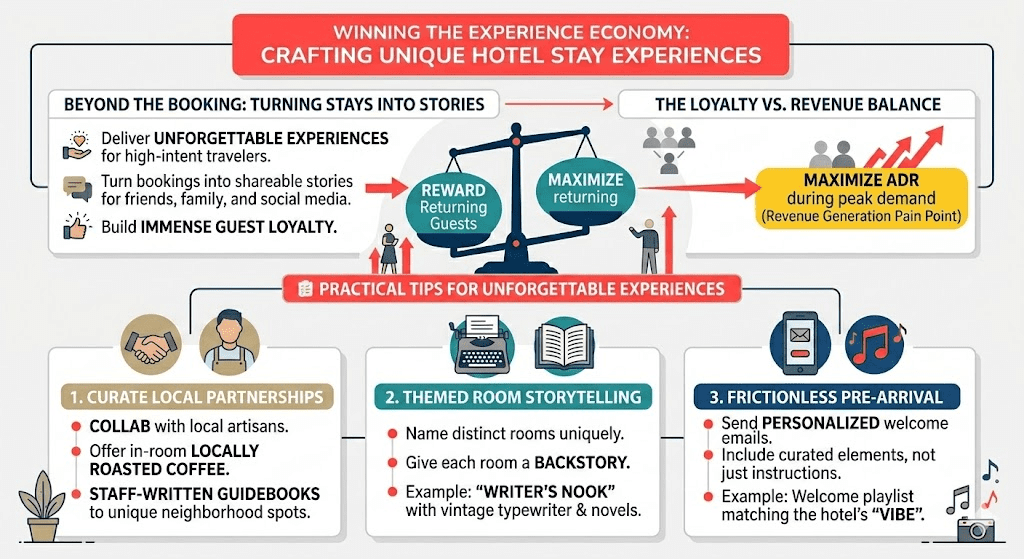
To truly win in the experience economy, an alternative hotel must deliver Unique hotel stay experiences that high-intent travelers cannot find anywhere else. The goal is to turn a simple booking into a story the guest will share with their friends, family, and social media followers.
When you offer a unique hotel stay experience, you build immense guest loyalty. However, balancing that loyalty with revenue generation is a common pain point. You want to reward returning guests, but you also need to maximize your Average Daily Rate (ADR) during peak demand.
Practical Tips for Creating Unforgettable Experiences
- Curate Local Partnerships: Partner with local artisans. Offer a locally roasted coffee in the room, or provide a guidebook written by your staff featuring off-the-beaten-path neighborhood spots.
- Themed Room Storytelling: If your alternative hotel has distinct rooms, name them and give them a backstory. A “Writer’s Nook” room could feature a vintage typewriter and classic novels.
- Frictionless Pre-Arrival: Send a personalized welcome email not just with check-in instructions, but with a curated playlist that matches the “vibe” of your alternative hotel.
How PriceLabs Helps Protect Your Time
Delivering these unique experiences requires your full attention. If you are spending hours manually adjusting prices across different Online Travel Agencies (OTAs), your guest experience will suffer.
- Automated Rate Syncing: PriceLabs ensures your rates are updated automatically across all booking channels.
- The Benefit: You step away from the spreadsheet and get back to the lobby. You no longer have to manually apply discounts or hike prices; the system does it for you while you focus on enchanting your guests.
The Revenue Dilemma: Dynamic Pricing for Niche Lodging
Revenue managers at standard hotels have it relatively easy. They have 100 identical “King Rooms” to sell. But what if your alternative hotel consists of three treehouses, two luxury glamping tents, and one historic master suite?
Managing complex pricing strategies for non-standard inventory is a massive headache. You need Dynamic pricing for niche lodging because traditional revenue rules simply don’t apply to you. You have to balance occupancy versus ADR meticulously because every single room represents a significant percentage of your total inventory.
How to Implement a Niche Pricing Strategy
- Analyze Demand by Room Category: Don’t treat your entire alternative hotel as one unit. Your luxury suite might book out months in advance, while your standard boutique rooms book last-minute.
- Adjust for Length of Stay: Use minimum stay requirements strategically to prevent unbookable “gap nights” between weekend reservations.
- React to Market Shifts: If a local festival is announced, your prices should react instantly, not three days later when you finally check the news.
How PriceLabs Handles Complex Inventory

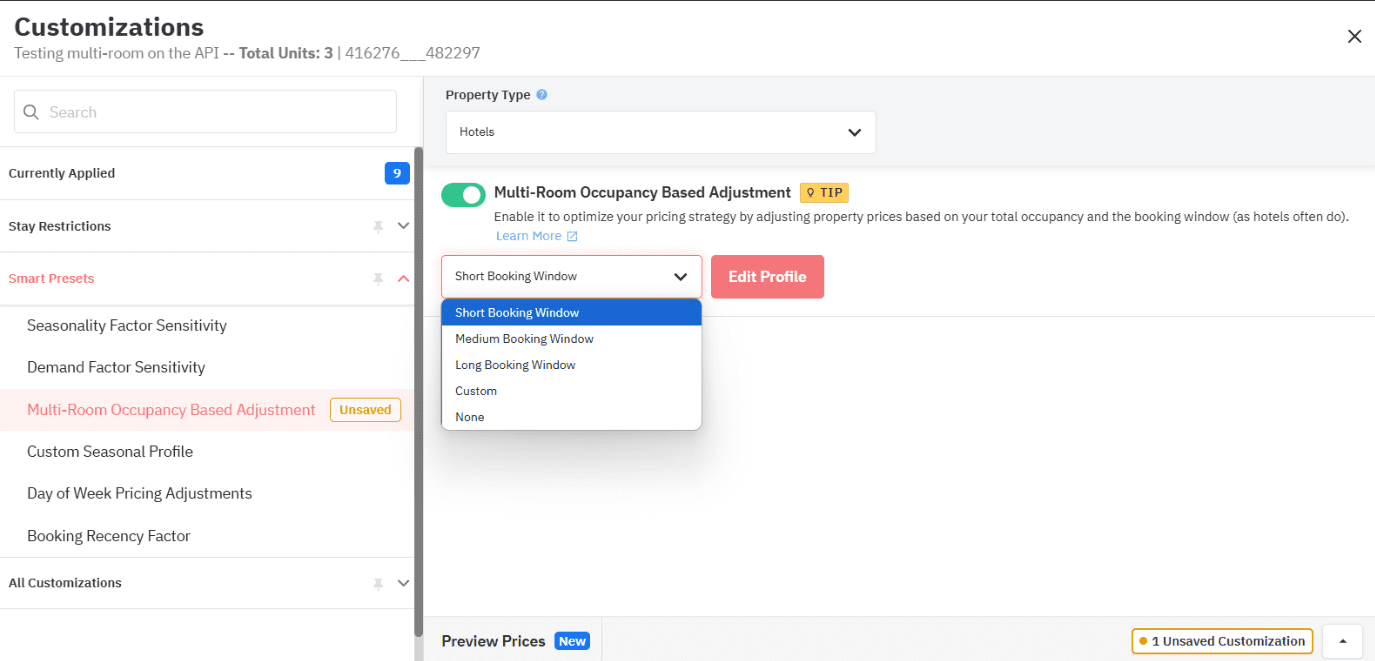
PriceLabs is built to handle the quirks of an alternative hotel.
- Room-Type Specific Pricing: Customize pricing strategies based on specific room categories, demand patterns, and booking windows. Apply custom rules to your “Treehouse” without affecting your “Garden Suite.”
- Multi-Room Occupancy-Based Adjustments (MROBA): Adjust pricing recommendations based on occupancy trends within specific room types. This supports a balanced sell-through across your entire quirky inventory.
- Minimum Stay Rules: Adapt length-of-stay suggestions automatically based on seasonality and booking patterns, ensuring you never miss out on peak revenue.
Outsmarting the Chains: Competitive Intelligence for the Alternative Hotel
A major pain point for independent alternative hotel owners is the feeling of David fighting Goliath. You are competing with larger chains that have massive budgets, sophisticated visibility, and entire floors of revenue analysts. How can you compete when you don’t have clear competitive benchmarking?
You might assume your competition is the chain hotel by the highway, but for an alternative hotel, your real competition might be the high-end boutique inn two towns over, or luxury short-term rentals in your immediate neighborhood.
How PriceLabs Levels the Playing Field
You don’t need an enterprise budget to get enterprise-level insights. PriceLabs gives you a clear window into the market.
- Custom Comp Sets: This is a game-changer for the alternative hotel. Manually select specific, unique rivals to benchmark against. Ensure your rates are influenced only by the properties guests actually consider alongside yours, not the irrelevant budget motel next door.
- Neighborhood Data Tab: Analyze short-term rental pricing trends and competitive positioning within your local market. If families are looking at large Airbnb rentals instead of your alternative hotel suites, you need to know what they are paying.
- Hotel Weights: Control the influence of traditional hotel data versus short-term rental data on your pricing recommendations. This is ideal for niche properties sitting in markets dominated by vacation rentals.
Mastering Seasonality and Lead Times
An alternative hotel is often heavily impacted by seasonality. A coastal boutique property might see 95% occupancy in July and 15% in November. Forecasting uncertainty and missing peak demand opportunities can devastate your annual revenue.
Furthermore, you need to capture both the meticulous planner who books a unique anniversary stay six months out, and the spontaneous traveler looking for a weekend escape on a Thursday afternoon.
Practical Tips for Seasonal Management
- Identify Shoulder Seasons: Don’t just think in terms of “Summer” and “Winter.” The weeks right before and after your busy season are where smart pricing can capture massive extra revenue.
- Incentivize Early Booking for Niche Rooms: Since your inventory is limited, encourage guests to lock in their specific desired room early.
How PriceLabs Automates the Calendar

Don’t rely on sticky notes to remind you to change your winter rates.
- Seasonal Profiles: Define distinct pricing and stay-rule strategies for peak, shoulder, and off-peak seasons. Set it once, and let the algorithm do the heavy lifting.
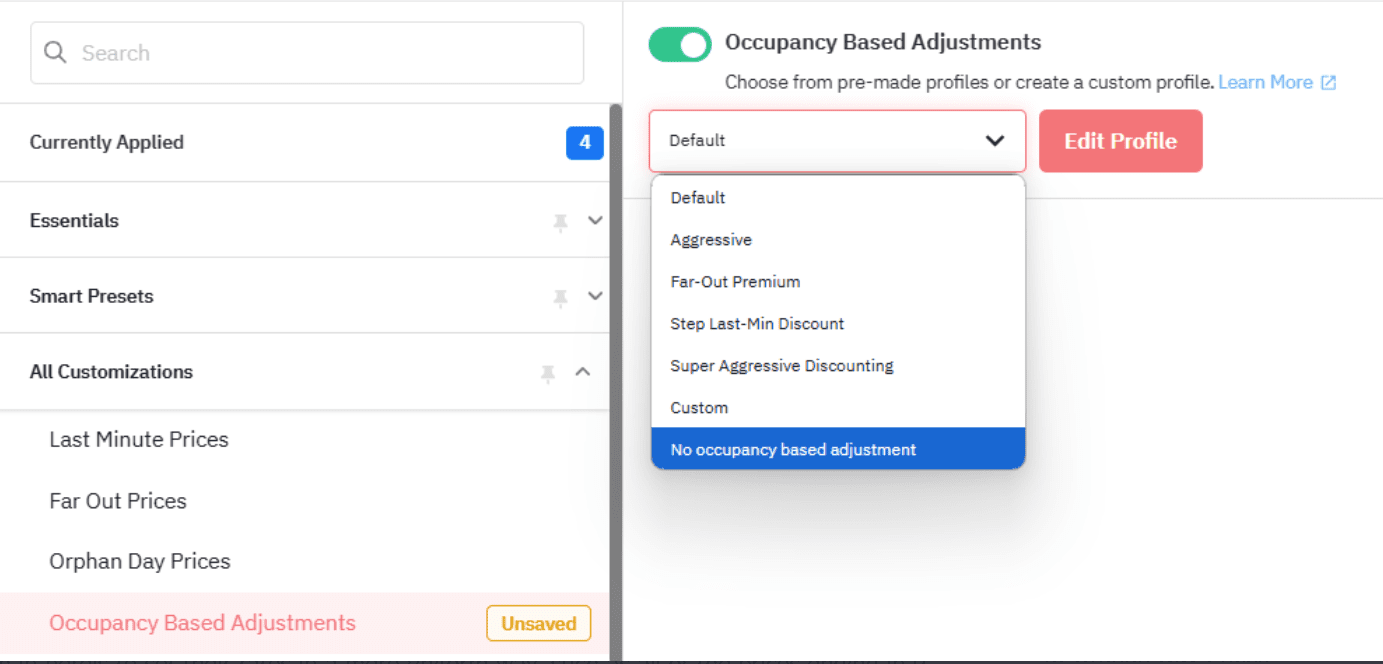
- Far-Out Pricing Adjustments: Shape recommendations for dates far in advance to reflect long lead times and early demand signals, protecting the value of your alternative hotel.
- Last-Minute Pricing Adjustments: Automatically adjust pricing for close-in dates based on occupancy and market demand to support optimal occupancy without you having to lift a finger.
Overcoming the Tech Disconnect: Seamless Integration
Many independent owners hesitate to adopt new tech because of PMS integration concerns, data overload, or the fear of losing control over their pricing. You want automation to save time, but you still want the steering wheel in your hands. Furthermore, you need simple, clear reports to justify pricing changes to owners, stakeholders, or staff who don’t fully understand dynamic revenue management.
How PriceLabs Simplifies Your Workflow
PriceLabs is designed to cure the “disconnected systems” headache.
- 160+ PMS & OTA Integrations: Seamlessly connect to your Property Management System, OTAs, and direct booking platforms without discrepancies.
- Real-Time Sync: For select PMSs, this high-frequency add-on uses webhooks to trigger up to 24 price updates per day instantly following new reservations or cancellations.
- Report Builder & Portfolio Analytics: Create custom reports using key hotel KPIs (ADR, Occupancy, RevPAR). Ditch the data overload and get clear, high-level insights that you can easily present to stakeholders.
- Date-Specific Overrides: Fear of losing control? Don’t worry. You have full user control. You can manually adjust pricing, stay restrictions, and availability for specific high-demand dates whenever you want.
Way Forward
The era of the cookie-cutter vacation is fading, making room for the golden age of the alternative hotel. Independent owners hold the ultimate trump card in the Experience Economy: authenticity. By blending the charm of a one-of-a-kind property with the sharp, data-driven precision of dynamic pricing, independent hoteliers can not only compete with corporate giants but consistently outperform them.
Your next step is to stop treating your alternative hotel like a standard commodity. Embrace your unique inventory, lean into local experiences, and upgrade your tech stack. Start by auditing your current pricing strategy—are you adjusting rates daily based on market data, or are you losing money to static, seasonal pricing? Adopt a smart revenue optimization tool to handle the math, so you can return to doing what you do best: creating unforgettable magic for your guests.
Frequently Asked Questions (FAQs)
Q: Can dynamic pricing work for a very small alternative hotel with under 10 rooms?
A: Absolutely. In fact, dynamic pricing is even more critical for small alternative hotels. When you only have a few rooms, every single vacant night represents a massive percentage of lost revenue. Tools like PriceLabs use Hyper Local Pulse to ensure even small properties maximize their ADR and occupancy.
Q: Won’t constantly changing prices upset my regular, returning guests?
A: Travelers today are accustomed to dynamic pricing in flights, ride-sharing, and standard hotels; they understand the market fluctuates. However, to balance guest loyalty, you can use PriceLabs’ Date-Specific Overrides, or simply offer your loyal guests a dedicated promo code to book directly on your site, bypassing OTA commissions entirely.
Q: How do I know who my actual competitors are if my alternative hotel is entirely unique?
A: You don’t have to rely on traditional geographic competitors. Using PriceLabs’ Custom Comp Sets, you can hand-pick the specific properties—whether they are boutique inns, luxury hotels, or specific niche lodgings in the broader region—that your target demographic is likely looking at.
Q: I’m not a “numbers person.” Is revenue management software too complex for a general manager wearing multiple hats?
A: Not if you choose the right tool! PriceLabs is built to overcome the “learning curve” pain point. It offers a simple, easy-to-understand interface. You can set your base rules and let the automation run, while the Report Builder gives you visually clear, high-level insights without data overload.