



For years, the hospitality industry has been locked in a click-through cycle. To get a booking, you had to ensure a traveler clicked your ad, clicked your social media link, or—most commonly—clicked your listing on a massive Online Travel Agency (OTA) like Airbnb or Booking.com.
But as we move through 2026, the internet is shifting from a place where we search and click to a place where we ask and receive. This transition is powered by the Universal Commerce Protocol (UCP). It is an open-source standard that enables AI agents such as Google’s Gemini or OpenAI’s ChatGPT to communicate directly with your property’s backend.
For the independent operator, this isn’t just another tech update; it is a total strategy shift. It effectively ends the twenty-year reign of the OTA middleman by allowing you to offer a seamless, instant booking experience directly within a guest’s conversation with their AI.
Bonus: The Ultimate Guide to Vacation Rental Automation
Establishing the New Language of Digital Trade
Think back to how the internet began. We can visit any website because every browser and every server speaks a language called HTTP. Before UCP, commerce didn’t have this. If ChatGPT wanted to book a room for you, it would need a custom, expensive integration with every property management system on the planet.
UCP solves this NxN problem. It creates a standardized commerce language. Now, an AI agent can query your system, negotiate the price, verify amenities, and process the payment without the guest ever leaving the chat interface.
For the first time, a single property can have the same instant book visibility as a global hotel chain.
Prioritizing Machine-Readable Trust Over Search Rankings
Traditionally, success meant ranking on the first page of a search engine results page. In the age of agentic commerce, success is about Machine-Readable Trust. When a guest asks their AI for a quiet villa with a workspace and high-speed Wi-Fi, the AI isn’t browsing photos; it is scanning data.
If your property data is dirty, meaning your Wi-Fi speeds aren’t documented, your quiet hours aren’t specified in a structured way, or your pricing is cached and out of date, the AI will simply skip you. It won’t risk its reputation on an uncertain booking.
The goal now is to turn your property into a Live Pipe of information that AI agents can rely on.
Aligning Your Current Management Tools with Future Standards
Depending on how you currently manage your properties, your path to UCP-readiness looks different.
1. Optimizing External Platforms for Autonomous Discovery
If you currently rely entirely on platforms like Airbnb or Vrbo, you are already participating in a version of this, but you are paying a high price for it. To prepare for the direct-booking shift:
- Audit your Amenities: Don’t just list Workplace in your description. Check the specific amenity boxes in your backend. AI agents pull from structured fields, not just prose.
- Enable Instant Book: UCP is designed for autonomous discovery. If your property requires a 24-hour manual approval, an AI agent will likely deprioritize you in favor of a property it can confirm instantly.
2. Enhancing Direct Websites for Semantic Clarity
If you have your own site via Lodgify, Wix, or WordPress, your website is about to become much more than a digital brochure.


- Adopt Semantic HTML: Ensure your site uses schema.org markup for lodging. This tells the AI exactly what the Price, Availability, and Review Score are, so it doesn’t have to guess.
- Check for Protocol Compliance: Reach out to your website provider. Ask them what their roadmap is for Google’s Universal Commerce Protocol. If they don’t have one, it might be time to migrate to a provider that does.
3. Leveraging Professional Systems for Real-Time Reliability
If you use a Property Management System (PMS) to sync multiple calendars, you are in the best position to capitalize on UCP.
- The Live Negotiation Requirement: UCP allows for Live Negotiation. When an AI asks for a price, it expects the actual price for that specific guest on those specific dates.
- The Role of Dynamic Pricing: Using a tool like PriceLabs becomes essential here. It ensures that the Live Pipe of data the AI sees is always optimized. If a local festival is suddenly announced, your UCP endpoint will immediately reflect the updated market value, ensuring you don’t leave money on the table during an automated booking.
Auditing Your Digital House for Accuracy and Speed
To be bookable in 2026, your data must be as spotless as your actual properties. Here is how to audit your digital presence:
1. Establishing Your Identity Layer
- Google Merchant Center: Set up an account and link your property feed. This is the primary gateway Google uses to discover your listings for UCP-powered surfaces like Gemini.
- Merchant of Record Verification: You must be the Merchant of Record. This means the payment goes to you, and you own the guest’s email and data from the start.
2. Refining the Amenity Layer for High Specificity
AI agents are specific. Pet-friendly isn’t enough anymore. You need to define:
- Granular Details: Dogs under 50lbs allowed, Fenced-in yard, Pet fee included in base price.
- Utility and Performance: Starlink Wi-Fi with 100Mbps download, Level 2 EV Charger with J1772 plug.
- Condition and Maintenance: Last renovated in 2025, the AC unit was serviced in June 2025.
Use PriceLabs Listing Optimizer, a new AI-powered tool, to fix your Airbnb listing content and boost your search ranking in minutes. If your listing isn’t getting the views or bookings you expect, you’re not alone. Most hosts and property managers assume pricing is the issue. But our research shows that the #1 reason listings underperform is weak or inconsistent listing content.
Listing Optimizer is a new Airbnb listing optimization to:
- Scans your listing content
- Finds what’s hurting your visibility
- Gives you clear steps to improve
- Compares your listing to top performers in your area
- Uses AI to suggest better titles, descriptions, and content
- Helps you track your Airbnb search ranking over time

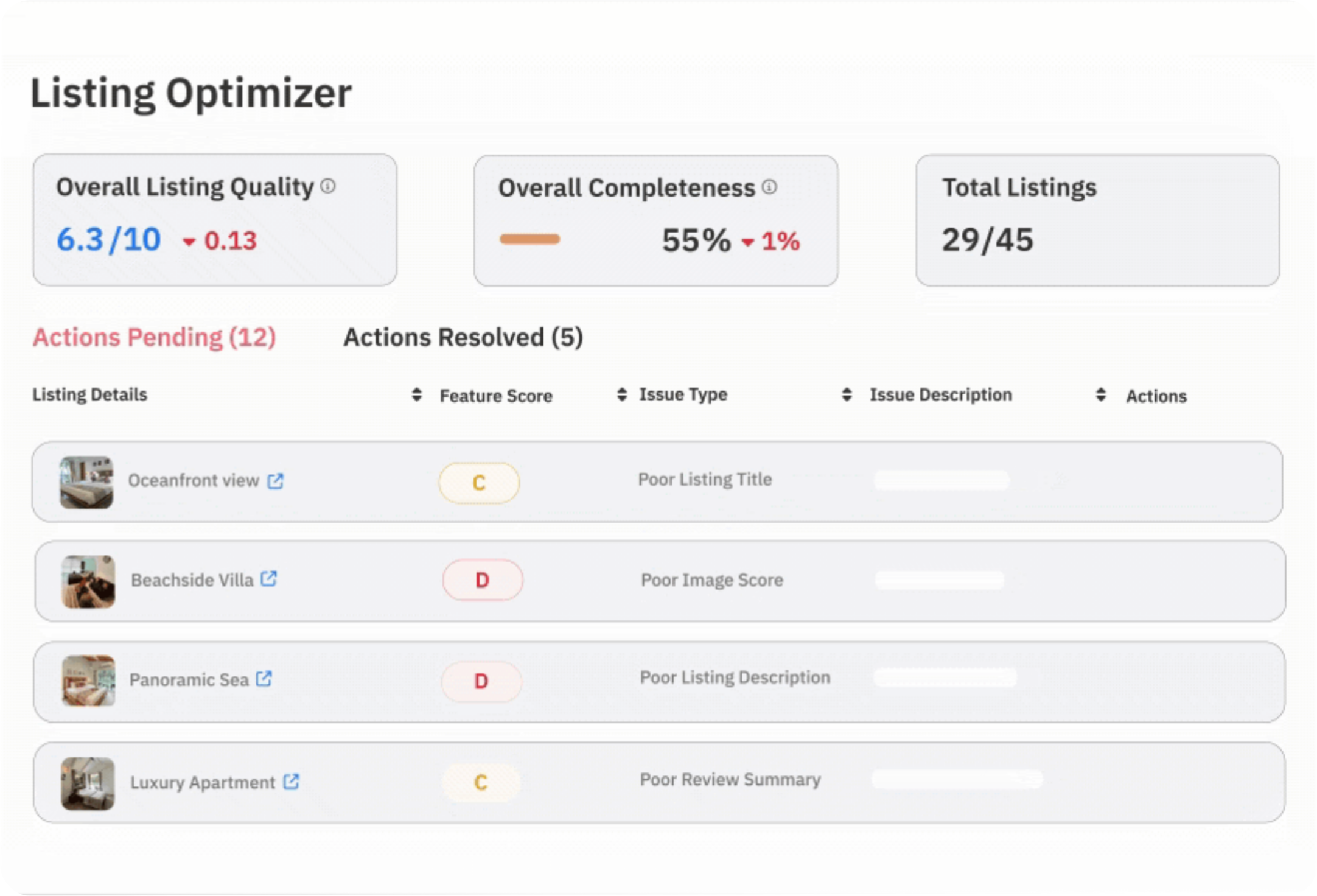
With PriceLabs Listing Optimizer You Can Analyze The Quality Of Your Competitor's Listings.
With PriceLabs Listing Optimizer, you will be able to compare your listing with other listings guests would consider your competition and optimize your listing accordingly.
Create your Account Now3. Integrating Frictionless Payment Protocols
UCP relies on seamless checkout. Ensure your direct booking site supports modern, tokenized payment methods such as Google Pay, Apple Pay, or Stripe. If a guest has to manually enter a credit card number on your site, the AI agent will likely encounter friction and the transaction will fail.
Focusing on Relationships by Outsourcing Transactions
The most common pushback to this agentic future is that it feels impersonal. But for the independent operator, the opposite is true.

The most stressful parts of hospitality are the transactional tasks:
- Responding to basic availability questions when the calendar is already marked.
- Chasing down payment failures and manual bank transfers.
- Manually updating prices across three different sites.
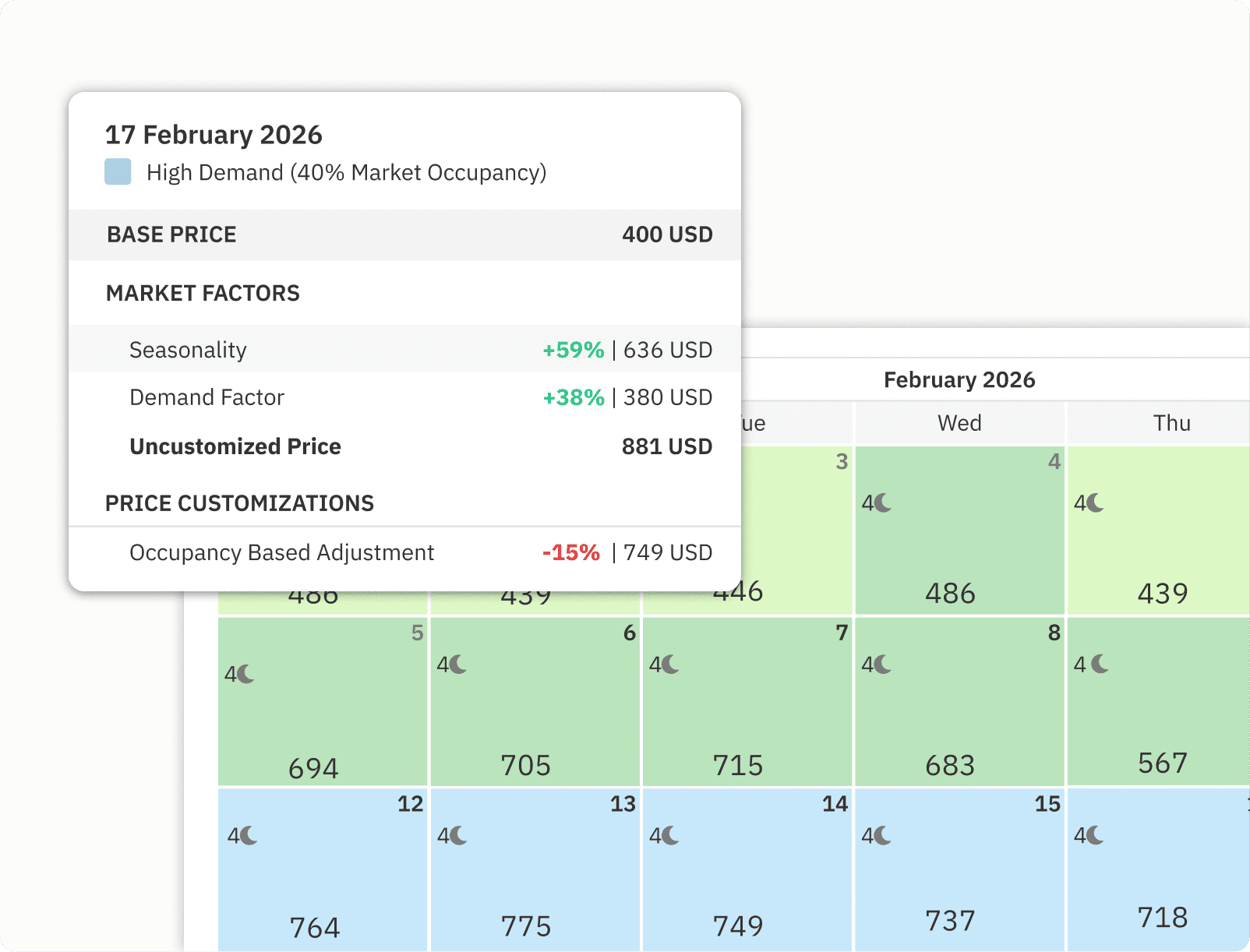
Dynamically Price Your Property and Get FREE Custom Reports Tailored To Your Property!
Use PriceLabs Dynamic Pricing to competitively and dynamically price your property according to demand shifts and analyze past performance to set a strong pricing strategy for your property.
Create your Account NowUCP is your digital concierge. By automating the transactional parts, you gain the time to focus on what actually earns a 5-star review. When the AI handles discovery, booking, and payment, your first interaction with the guest isn’t a business deal; it is a welcome. You can spend your time on high-touch hospitality:
- Designing a custom Local’s Guide for the specific guest’s interests.
- Ensuring the home is set to the guest’s preferred temperature before they arrive.
- Providing the human accountability and warmth that an AI can never offer.
Navigating the 2026 Roadmap
The shift to UCP is happening quickly. Google has already moved the target for broad implementation to the second quarter of 2026.
To stay ahead, begin by auditing your bot accessibility. Ensure your website isn’t accidentally blocking the AI crawlers that need to read your availability. Next, commit to syncing your pricing daily. If you aren’t using dynamic pricing yet, start now. Tools like PriceLabs provide the data-driven foundation that AI agents require to trust your live price. Finally, focus on the confirmation page. In a world of automated bookings, your confirmation page is your new first impression. Design it to be a high-trust, affirming experience that validates the guest’s choice.
The direct booking revolution isn’t about fighting technology; it’s about making it work for you. By embracing the Universal Commerce Protocol, you are removing the barriers between you and your guests, keeping your hard-earned revenue, and putting the hospitality back into your business.
Frequently Asked Questions
What exactly is the Universal Commerce Protocol (UCP)?
Think of UCP as the digital language that allows different systems—like a traveler’s AI assistant and your property’s booking engine—to talk to each other without needing a middleman. It is an open-source standard that standardizes how availability, pricing, and payments are communicated across the internet, ensuring that your data is machine-readable for the next generation of travelers.
Does UCP mean I have to stop using Airbnb or Vrbo?
Not at all. UCP is about expanding your options, not limiting them. While you can continue to use major platforms for their existing reach, UCP provides a high-tech pathway for guests to find and book you directly through AI interfaces like Gemini or ChatGPT. It gives your independent website the same level of instant booking power that the big platforms have.
How does this help me get more direct bookings?
Currently, when someone asks an AI for a place to stay, the AI usually provides a link to an OTA because it cannot verify your direct website’s live price or availability in real time. With UCP, the AI can see your actual data and complete the transaction on the spot. This removes the friction that usually sends guests back to the big platforms, keeping the guest on your digital doorstep.
Who is the Merchant of Record in a UCP transaction?
You are. This is one of the biggest wins for independent operators. Unlike some platform bookings where the OTA holds the funds and manages the guest data, UCP is designed so that you remain the seller. You collect the payment directly via your processor (like Stripe) and you own the guest relationship and data from day one.
Is my current website UCP-ready?
Most standard websites will need an update or a specific integration to become fully compliant. The best way to check is to look for schema.org lodging markup in your site’s code or ask your booking engine provider if they are adopting the Universal Commerce Protocol. Major providers like Salesforce and Shopify have already begun supporting these standards.
Do I need to be a tech expert to set this up?
No. The beauty of a universal protocol is that the complexity is handled by the software providers. Your job is to ensure your property data—descriptions, amenities, and policies—is accurate and structured, and that you are using a Property Management System or pricing tool that can broadcast your data to the UCP network.
Why is dynamic pricing so important for this?
AI agents expect a live pipe of information. If an AI assistant queries your property for a specific date, it needs a guaranteed, accurate price to show the guest. Using a tool like PriceLabs ensures that the price the AI sees is always optimized for the current market, preventing you from undercharging or showing an out-of-date rate that causes the booking to fail.
When will this become the industry standard?
The rollout is already well underway. Google has shifted the target for broad industry implementation to the second quarter of 2026. The operators who organize their data and modernize their tech stacks now will be the first ones recommended when travelers start using their AI assistants to book their summer vacations.