Get started with PriceLabs now!
Want to learn what PriceLabs can do for you? See for yourself with a free trial. Get started now!

If you’ve been paying attention to the shifts in our industry, you know that the “set it and forget it” era of hosting is officially over. We are currently watching Airbnb transition from a quirky, community-driven startup into a global travel engine that mirrors the mechanics of massive OTAs like Booking.com.
For the massive property management companies managing hundreds of doors, this is a logistical nightmare. They have to retrain staff, overhaul tech stacks, and rewrite protocols for thousands of guests.
But for you as a Host? This is an opportunity.
As an independent operator or boutique host, you possess the one asset big corporations can’t buy: agility. You can pivot your strategy in an afternoon. You can rewrite a listing description to match an AI query in ten minutes. You can offer a level of personal hospitality that a call center simply cannot replicate.
Based on the latest industry analysis and the 2026 predictions discussed by Thibault Masson, our Head of Product Marketing, and Uvika Wahi, content marketer at Rental ScaleUp, here is your strategic roadmap to navigating the four massive shifts coming to the platform.
The most immediate change we are seeing is the erosion of the “Strict” cancellation policy. Airbnb has made it clear: they want to be more guest-friendly, which means they want flexibility. Strict policies are no longer available for new listings, and even “grandfathered” listings now face mandatory 24-hour grace periods.
By 2026, we expect to see Dynamic Cancellation Policies. This means you won’t just pick one policy for the year. Instead, you might have a “Firm” policy for your peak August dates, a “Flexible” policy for a rainy Tuesday in November, and a “Moderate” policy for shoulder seasons.
Airbnb is adopting Booking.com’s playbook. We are seeing hotel inventory appearing in search results, “Reserve Now, Pay Later” options becoming standard, and a user interface that prioritizes conversion above all else.
This means your charming cabin is now competing directly with a boutique hotel that has a 24-hour front desk.
You cannot out-amenity a hotel. You cannot out-spend a Hilton on marketing. But you can out-human them.
The “OTA-ification” of Airbnb is actually stripping the soul out of many listings. The platform is becoming more transactional. This creates a vacuum for true hospitality, which is exactly where you thrive.
Airbnb is no longer just selling “Stays.” They are aggressively expanding into “Services,” “Experiences,” and “Lifestyle” offerings. We are seeing pilots for fridge stocking, private chefs, and mid-stay cleanings.
The prediction for 2026 is a “Host Services Marketplace” where Airbnb controls the entire vertical—hiring the cleaner, managing the chef, and taking a cut of the transaction.
For a large property manager, this is a threat to their margins. For you, it’s a cue to curate your own ecosystem before Airbnb forces theirs on you.

This is perhaps the most critical shift. AI is now Airbnb’s fourth strategic pillar. It isn’t just writing listing descriptions; it is deciding who sees your property.
We are moving toward Natural Language Search. Instead of filtering for “2 bedrooms, Wifi, Pool,” a guest will type: “Find me a quiet place near the mountains for a writer’s retreat with a great view and fast internet.”
The AI will scan your listing, your reviews, and your photos to determine if you are a match.
If your listing is generic, you will disappear. The AI needs specific “hooks” to understand what your property is.
The trajectory for 2026 is clear: Airbnb is becoming more complex, more dynamic, and more competitive. The “hobbyist” approach will struggle to survive under the weight of these new demands.
But the professional, agile owner-operator is positioned perfectly. You can adapt to dynamic cancellation policies faster. You can infuse your listing with the personality that hotels lack. You can optimize your content for AI this weekend.
However, agility requires information. You cannot make smart decisions about cancellation risk or dynamic pricing adjustments based on “gut feeling” anymore. You need real-time market data. You need to know exactly what your competitors are doing, how demand is shifting for specific dates, and where your pricing sweet spot lies to maximize revenue without sacrificing occupancy.
Here are a few frequently asked questions to help you navigate these changes.
A: You protect it by pricing for risk. Instead of relying on a rigid policy to guarantee income, you should use dynamic pricing to charge a premium for flexible bookings. By 2026, we expect to see “Dynamic Cancellation Policies” where you can set stricter terms for peak dates and flexible terms for low-demand periods. The goal is to maximize revenue potential rather than just securing a booking.
A: Don’t try to be a hotel; be the anti-hotel. Hotels offer standardization; you offer customization. While Airbnb’s interface may look more like Booking.com with “Reserve Now, Pay Later” options, your advantage lies in personal connection. Use your messaging to build a relationship before the guest arrives—hotels can’t scale that level of care.
A: Semantic density refers to how rich your text is with meaningful, descriptive keywords that AI can “understand.” Instead of a bullet point that says “Pool,” write a sentence like, “Enjoy a morning swim in the private, heated saltwater pool overlooking the valley.” This gives the AI context (private, heated, saltwater, view) to match your property with specific natural language search queries.
A: You don’t need to manage them, but you should facilitate them. The “Lifestyle” shift means guests are looking for complete experiences. If you can’t offer these services yourself, build a digital guidebook that links to trusted local vendors. This positions you as a local insider—a value add that costs you nothing but earns you loyalty.
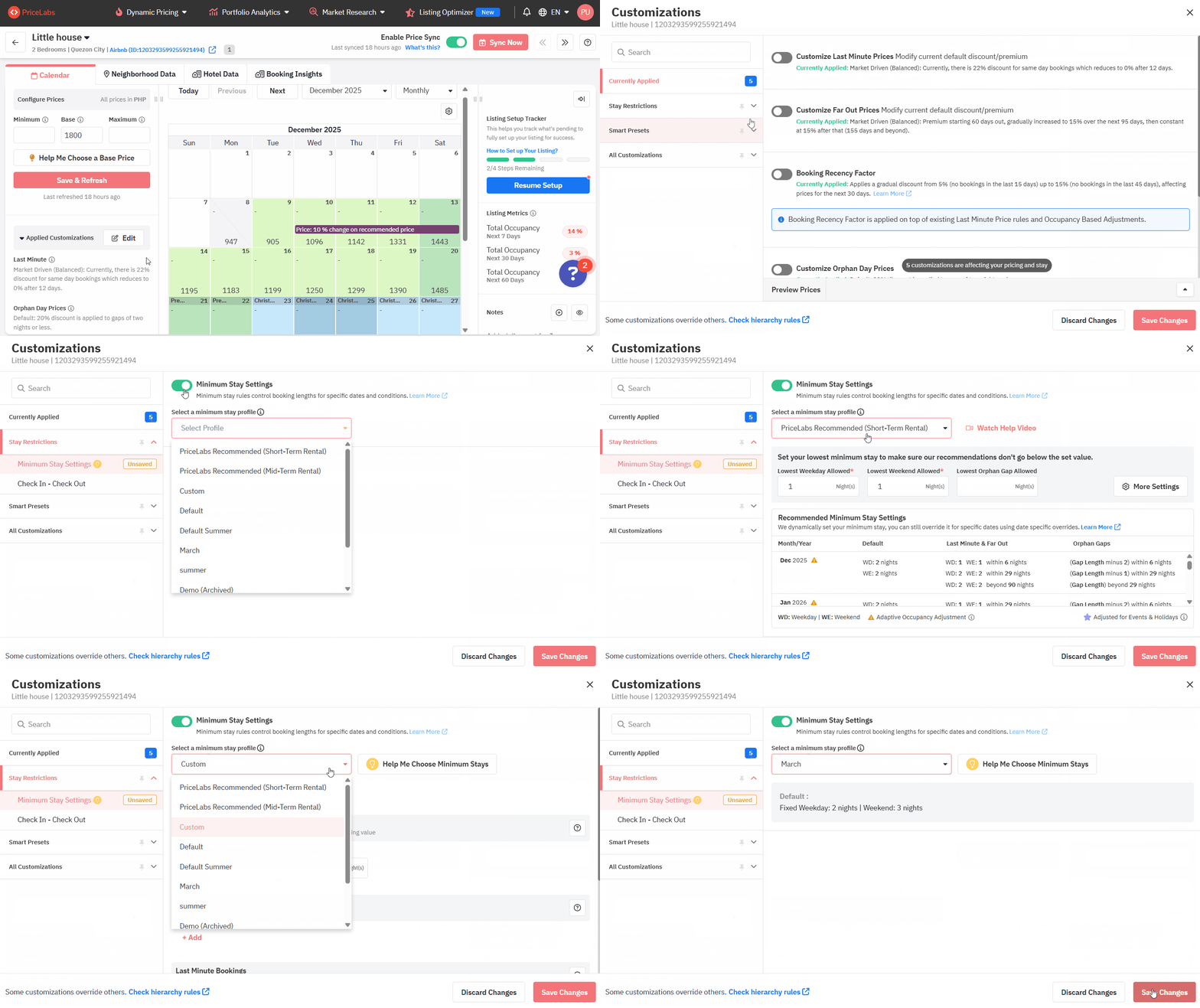
A: This is where data beats intuition. You need to see real-time market demand to know when you have the leverage to be strict and when you need to be flexible to get bookings. Using a data-driven tool like PriceLabs allows you to make these decisions based on actual market pacing, not guesswork.
These predictions build on the fundamentals in our complete guide to vacation rental revenue management.
Want to learn what PriceLabs can do for you? See for yourself with a free trial. Get started now!