


For property managers overseeing large portfolios, manual listing optimization is a recipe for burnout and lost revenue. In a market with millions of active listings, simply listing your properties isn’t enough; you need a strategic, scalable airbnb listing optimizer for large Airbnb portfolios to ensure every unit performs at its peak.
This is the age of data-driven, AI-powered STR portfolio management. We are moving from episodic, manual check-ups to a continuous momentum system. The key to scaling your STR portfolio is leveraging technology to translate market data into high-converting listings across all your properties.
Here is an expert, step-by-step framework to efficiently optimize your entire portfolio, maximize visibility, and boost your booking conversion rates.
Bonus Read: The Ultimate Airbnb Listing Optimization Strategy: Rank Higher & Get More Bookings
1. Audit Your Current Listings and Set Data-Driven Goals
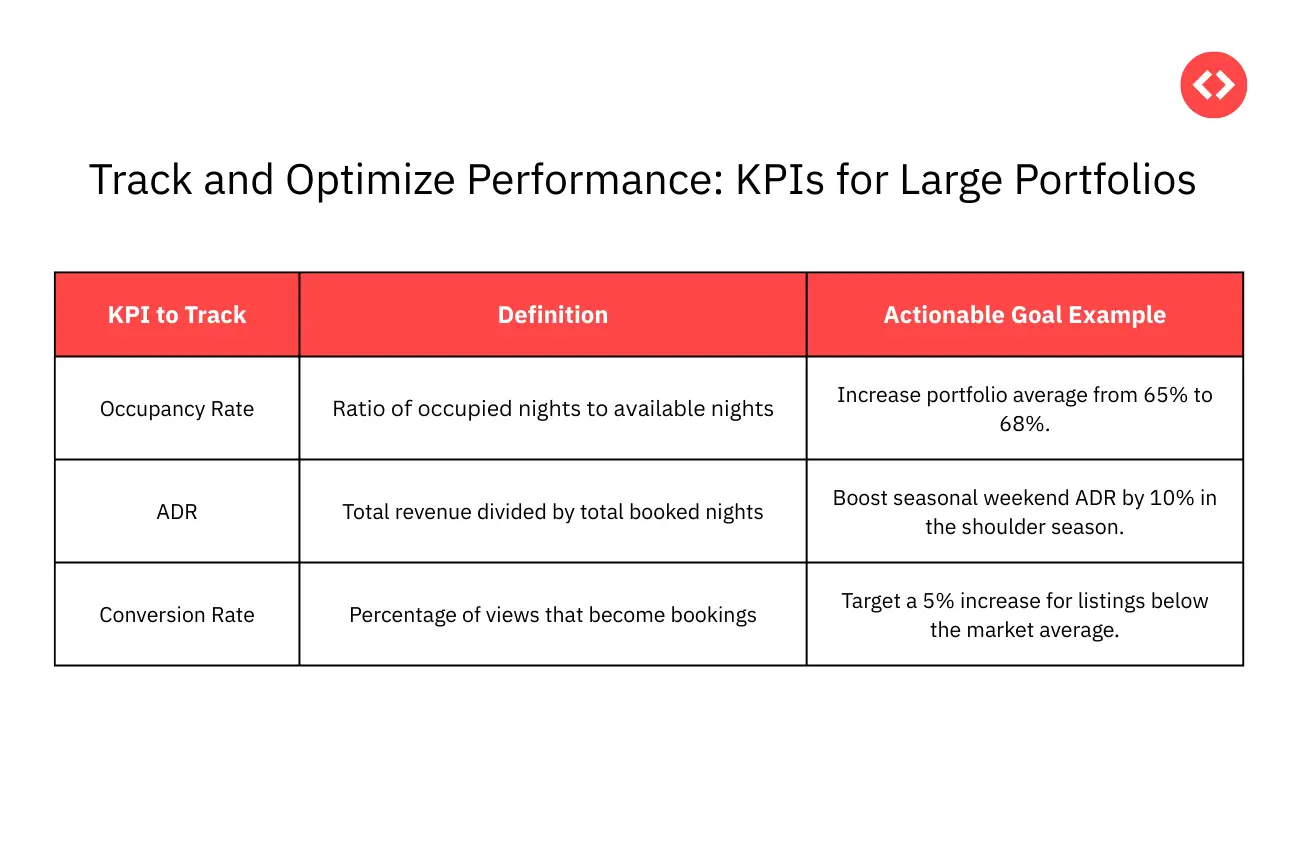
Before you can optimize, you must understand your performance baseline. Scaling is only successful if it is built on clear, measurable Key Performance Indicators (KPIs).
- Review Core Airbnb Analytics: Start by analyzing key metrics, including impressions, click-through rate (CTR), and booking conversion rate, for each listing. Focus on the views-to-bookings ratio—a low conversion rate signals a content or pricing mismatch.
- Benchmark Against Competitors: Use tools to compare your Average Daily Rate (ADR), Occupancy, and RevPAR against similar listings in your market. This instantly highlights whether your underperformance is market-wide or listing-specific.
- Define Measurable Goals: Set clear, data-backed targets for performance improvement. For example, aim to increase the booking conversion rate for your top 10 underperforming listings by 5% in the next quarter.

2. Conduct a Scalable Listing Audit with AI
The first major hurdle in large-portfolio management is conducting a thorough, consistent audit. Manually reviewing content, photo quality, and amenities across hundreds of units is tedious and error-prone.
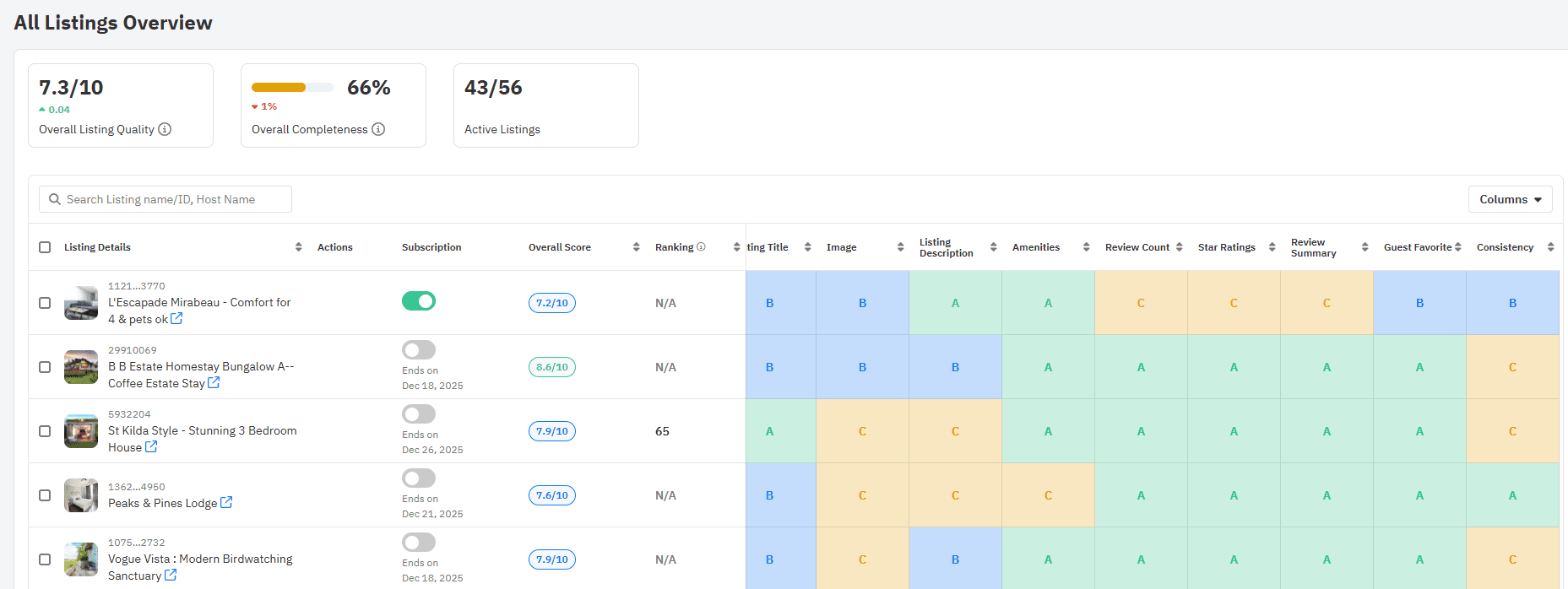
- Leverage Automated Analysis: Use AI tools designed for STR management to perform automated audits in minutes, rather than days. This provides a unified dashboard showing the overall quality scores for all your properties.
- Get Instant Quality Grading: A tool like the new PriceLabs Listing Optimizer pulls in data using just your Airbnb Host ID or Listing URL and assigns an instant quality grade (A–D) to each property. This reflects the listing’s completeness and adherence to global best practices.
- Prioritize Actionable Recommendations: Instead of guesswork, focus on AI-driven recommendations to improve the listing’s title, description, photos, and guest experience factors. The system tells you exactly what to fix.

Ready to Grade and Fix Your Portfolio?
Stop guessing why your listings aren't converting. Get instant quality scores, AI-driven recommendations, and the tools to manage 100+ properties effortlessly.
Start Optimizing Now3. Implement AI for Content Creation and SEO
After identifying deficiencies, you need a way to implement changes across your entire portfolio quickly. You need an automated solution that aligns with Airbnb’s search algorithm.
- Generate Keyword-Rich Content: Use AI tools such as the Airbnb Description Generator to quickly generate compelling, keyword-optimized titles and descriptions. This ensures consistent content quality and tone across your entire portfolio.
- Tip: Look for tools that analyze guest search behavior and automatically incorporate top-performing keywords.
- Focus on Search Intent: Every description should immediately address common guest search intents, such as proximity to local attractions, high-speed Wi-Fi for remote work, or unique amenities like a hot tub or pool.
- Fill Out Every Section: The Airbnb algorithm rewards complete listings. Use your Property Management System (PMS) to ensure all fields are filled with clear, engaging copy, including local highlights, house rules, and unique selling points (USPs).
Actionable Tip: A well-written description and a catchy headline will boost your search visibility and help you attract the right audience who is willing to pay a premium.
4. Prioritize High-Quality, Relevant Imagery
Photos are often the first impression your property makes, and they are crucial for boosting your Click-Through Rate (CTR). For a large portfolio, standardization is key.
- Standardize Photo Requirements: Develop clear, brand-consistent photo guidelines for your entire portfolio. Invest in professional photography to ensure well-lit shots of every room and any outdoor spaces.
- Showcase Top Amenities: Your Hero Photo (cover image) should be a powerful visual that highlights your most unique or high-value amenity, such as a private pool or a desirable seasonal view.
- Update Seasonally: Regularly update photos to reflect the current season, local events, or recent property upgrades. A photo of snow-capped mountains in December is more compelling than one of a summer lawn.
5. Implement Dynamic Pricing with Portfolio-Level Control
Static pricing cannot keep up with real-time market fluctuations, especially across a diverse portfolio. Dynamic pricing is essential to ensure your listing is always priced optimally to maximize occupancy and revenue.
- Automate Rate Adjustments: Tools such as PriceLabs Dynamic Pricing automatically adjust nightly rates based on real-time factors, including local demand, competition, seasonality, and upcoming events. This ensures you capture premium rates during peak demand and remain competitive during the low season.
- Set Clear Constraints: While the system automates, you remain in control. You must set appropriate Base Prices, Minimum Prices, and Maximum Prices for each property to ensure profitability. Ideally, your minimum price should be 20-30% below your base price.
- Use Comp Sets Strategically: For large portfolios, group your listings into custom Comp Sets (e.g., “Luxury Downtown Condos,” “Family-Friendly Beach Houses”) to apply highly specific, localized pricing strategies based on peer performance.
The PriceLabs Connection: Data-Driven Portfolio Optimization
For portfolio managers, guesswork is not a strategy. You need a centralized platform that unifies market data, dynamic pricing, and operational insights. Platforms like PriceLabs Revenue Management Software provide you with all the necessary tools in one place.

6. Streamline Communication and Guest Experience at Scale
A single negative review can tank a listing’s ranking and credibility. Maintaining a consistent, high-quality guest experience is critical for managing reviews and encouraging repeat bookings across a large portfolio.
- Automate Guest Messaging: Use your PMS to automate pre-scheduled messages, including house rules, check-in instructions, and post-stay review requests. This ensures a lightning-fast response rate, which is rewarded by the Airbnb algorithm.
- Standardize Turnovers: Implement clear Standard Operating Procedures (SOPs) and checklists for cleaning and maintenance across all properties. This consistency reduces errors and makes it easier to train new staff.
- Encourage Reviews Systematically: Positive reviews boost credibility and dramatically improve your search rankings and booking conversions. Make the process easy for guests and send automated reminders to leave guest feedback.
7. Implement Systematic Testing and Refinement
Successful portfolio management is about continuous improvement. You must move away from “set it and forget it” and adopt a proactive, data-driven approach to refinement.
- Monitor Core Metrics: Continuously monitor the metrics defined in Step 1 (Occupancy, ADR, Conversion Rate) at both the individual listing and portfolio level.
- Prioritize Underperformers: Use your data dashboard to quickly flag listings that underperform their peer group and the market average. This allows you to prioritize high-impact updates where they matter most.
- Track Progress with Change Log: When using the Listing Optimizer, use the Change Log to track every optimization run, including a timestamp and the resulting score improvement. This lets you quantify the ROI of your listing quality efforts.
The Bottom Line
Scaling your STR portfolio requires adopting a technology-driven revenue expert mindset. Trying to manage 100+ listings manually is a losing battle in today’s highly competitive, AI-optimized market.
The path to optimizing your RevPAR is paved with data. By integrating scalable AI tools like the Listing Optimizer for larger Airbnb portfolios, standardizing your content, and embracing dynamic pricing across your entire portfolio, you eliminate guesswork, drive higher booking conversions, and ensure your business can sustain long-term growth.
Frequently Asked Questions (FAQs)
1. What metrics define a high-converting Airbnb listing for a large Airbnb portfolio?
For a large Airbnb portfolio, the most critical metrics are the Booking Conversion Rate (the percentage of people who view your listing and book it), the Occupancy Rate, and the RevPAR (Revenue per Available Room). A high-converting listing is one that consistently outperforms its Comp Set peers on both Occupancy and RevPAR.
2. How do AI tools help me manage hundreds of listing descriptions?
AI tools use Natural Language Processing (NLP) to analyze successful listings and generate compelling, keyword-rich titles and descriptions for your properties at scale. This allows you to quickly achieve a high and consistent quality standard across your entire portfolio, keeping all listings fresh and optimized for current guest search trends.
3. How often should I update listing content across a large Airbnb portfolio?
You should review and refresh your listing descriptions and photos at least quarterly, or more frequently if there are significant changes to local events, amenities, or seasonal offerings. Pricing, however, should be updated continuously, multiple times a day, using a dynamic pricing tool to respond to real-time market demand.
4. Why is dynamic pricing critical for managing a large Airbnb portfolio?
Dynamic pricing is critical because it ensures every listing in your portfolio is priced competitively yet profitably at all times. It allows you to automatically adjust rates for day-of-the-week fluctuations, last-minute bookings, orphan gaps, and major events, capturing maximum revenue that manual pricing would miss. This is the core of scalable revenue management.jor events, capturing maximum revenue that manual pricing would miss. This is the core of scalable revenue management.