


Luxury portfolios demand precise, always-on pricing strategies. A luxury vacation rental pricing automation tool continuously analyzes live market signals—demand, seasonality, events, and competitor shifts—to update rates and availability with minimal manual work. This is particularly critical at the high end, where brand equity, premium amenities, and guest expectations amplify both upside and risk.
When done right, automation delivers three outcomes: optimized revenue, streamlined workflows, and a more consistent guest experience. In this guide, we outline the must-have automation features, how to integrate them with PMS and channel tools, and how to validate gains with vacation rental analytics—grounded in PriceLabs’ data-first approach to dynamic pricing for luxury rentals.
Dynamic Pricing Automation for Luxury Properties
Dynamic pricing automation uses algorithms to adjust nightly rates in real time based on demand signals such as pickup velocity, market compression, seasonality, special events, and competitive movement. For luxury rentals, the right feature set helps protect ADR while filling high-value nights.

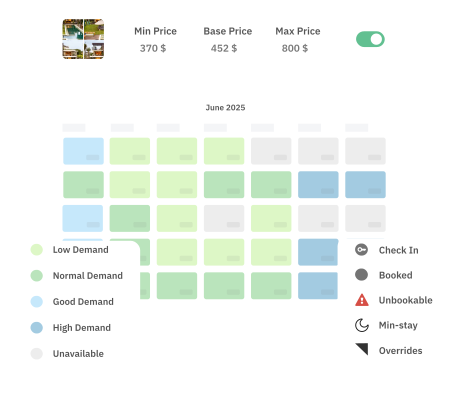
What to prioritize:
- Real-time rate updates that respond to demand surges and slowdowns without lag.
- Minimum-stay and orphan-night optimization to maintain occupancy without discounting core premium nights, supported by established best practices in dynamic pricing strategies for vacation rentals.
- Event-driven pricing that automatically identifies or applies premiums for marquee dates and peak seasons in your market.
Table: Dynamic pricing triggers and automated responses
| Trigger | Automated Response |
|---|---|
| Demand spike / fast pickup | Increase rates within guardrails; expand minimum stays to protect ADR |
| Low occupancy for target lead time | Modest price easing; relax minimum stays; highlight last-minute discounts |
| Major event or peak season window opens | Apply event premiums; require longer stays; open/close gap-night rules strategically |
| Competitor rate changes | Recalibrate relative positioning; protect floors; avoid racing to the bottom |
| Compression (few listings left nearby) | Yield up while observing max caps to protect brand |
Pricing Guardrails and Custom Rules to Protect Brand Value
Pricing guardrails are the user-defined minimum and maximum nightly rates that set hard boundaries for automation. They prevent underpricing during shoulder seasons and overpricing during demand spikes—both of which can harm luxury brand perception as much as revenue.

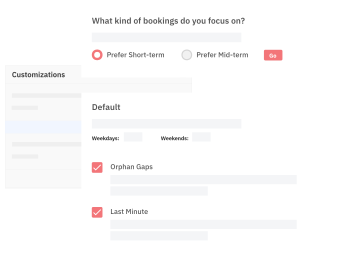
Beyond floors and caps, high-end operators should configure:
- Event or holiday overrides to pre-set premiums or bespoke rules.
- Length-of-stay policies (e.g., three-night minimums over festive periods).
- Date-specific exclusions for owner stays or brand-sensitive blackout windows.
How it works in practice: Demand signal → Rule evaluation (floors, caps, min-stays, overrides) → Final published price
Consistency matters: clear guardrails ensure that aggressive yield moves align with brand standards and guest expectations, reinforcing the premium positioning highlighted by leading industry analyses on pricing tools and data governance.
Integration with Property Management Systems and Channel Managers
A Property Management System (PMS) centralizes reservations, calendars, guest communications, and operational workflows. A channel manager pushes rates and availability to OTAs like Airbnb, Vrbo, and Booking.com while keeping calendars in sync. For luxury portfolios, the connection between your pricing engine, PMS, and channel manager must be seamless to avoid errors, maintain rate parity, and capture fast-moving demand. Expedia Group’s guidance on Vrbo rate automation stresses reliable, instant updates across channels as a cornerstone of revenue performance.

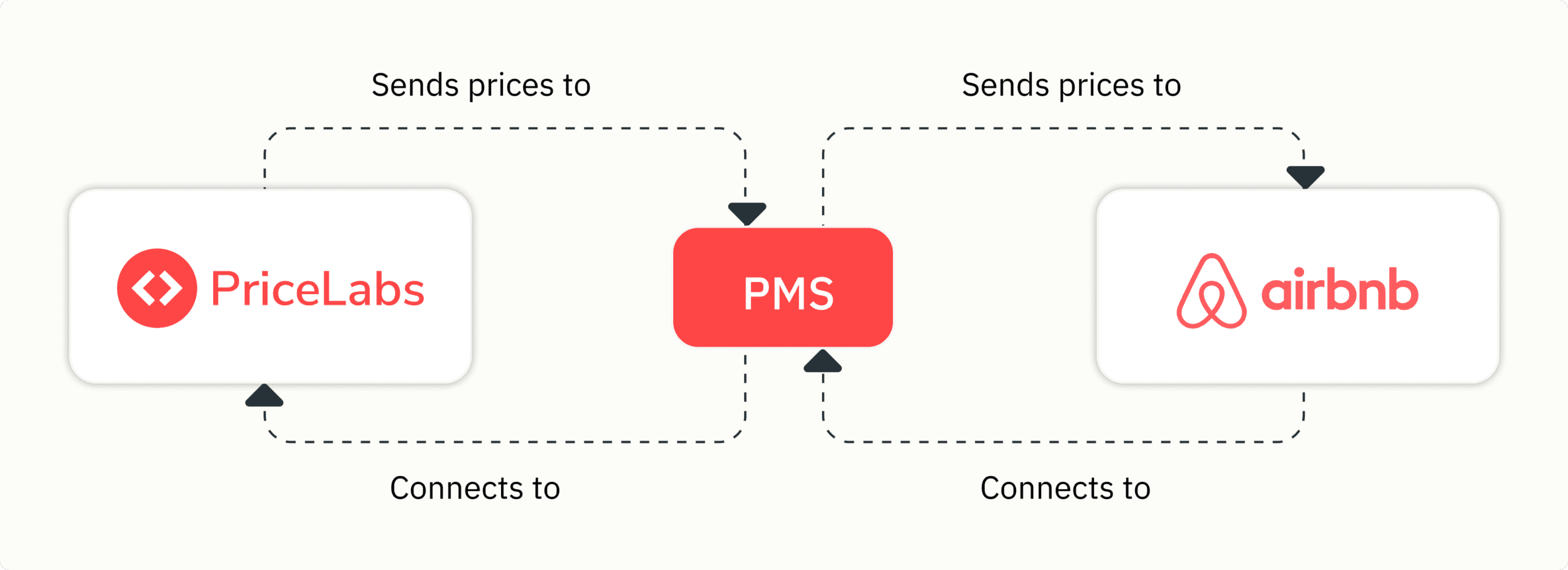
Key integration features to evaluate:
- Real-time synchronization: pricing and availability changes should be reflected across every channel instantly.
- Broad OTA and direct engine support with robust mapping.
- Two-way connectivity that returns bookings and availability changes to the PMS and pricing tool.
Table: Integration depth
| Integration Type | What Syncs | Typical Use Case |
|---|---|---|
| One-way | Pricing (from tool to channels) | Early-stage automation; simple portfolios |
| Two-way | Pricing, availability, bookings | Scalable luxury operations; full revenue governance |
Look for vendors with documented PMS automation and channel manager integration to ensure your multichannel pricing sync stays accurate around the clock.
Operations and Guest-Experience Automation Tied to Pricing
Revenue automation only works if operations can keep pace. Operations management platforms automate property readiness—from task scheduling to quality checks—and integrate with smart-home tech to deliver a high-touch experience.
Must-have operational automations for luxury rentals:
- Cleaning and maintenance dispatch that updates instantly when pricing triggers new bookings or stay extensions.
- Smart-home integrations such as climate presets, lighting scenes, and secure smart locks that activate based on reservation status (practical applications discussed in Destin Dreamers’ review of AI and automation).
Link pricing and operations closely: if a last-minute booking lands at a premium rate, adjust cleaning buffers and inspection tasks immediately. Contactless check-in allows guests to access the property via smart lock without physical keys or staff on-site—critical for late arrivals and international travelers.
Analytics, Market Intelligence, and Performance Monitoring
Automation is not “set and forget.” Strong vacation rental analytics verify impact, surface anomalies, and inform strategy. Market intelligence—insights drawn from external data such as competitor rates and events, along with your historical performance—helps you price proactively.


Essential analytics capabilities:
- Market intelligence dashboards for comp-set benchmarking and demand pacing.
- Cohort analysis and A/B testing across similar units to validate rule changes.
- Real-time alerts for outlier pickup, cancellations, or revenue shifts.
A simple workflow keeps teams aligned: data intake → analysis → dashboard validation → strategy refinement. For a scalable, data-forward approach purpose-built for premium assets, see how PriceLabs supports luxury short-term rental revenue teams with transparent automation and market insights.
Implementing Automation: Step-by-Step Checklist for Luxury Rentals
- Audit your tech stack (PMS, channel manager, ops tools) and confirm which integrations are supported.
- Set revenue goals and brand guardrails—floors, caps, min-stays, and guest-experience standards.
- Enable Dynamic Pricing; configure event premiums, lead-time rules, min-stays, and orphan-night strategies.
- Connect pricing to your PMS/channel manager; test rate pushes and calendar sync end to end.
- Implement ops automation (cleaning schedules, maintenance workflows, smart locks) that react to bookings.
- Monitor, test, iterate—change one rule at a time and benchmark ADR, occupancy, RevPAR, and guest sentiment.
Quick-start checklist
| Phase | Key Actions |
|---|---|
| Stack readiness | Verify integrations; map listings; align taxes/fees |
| Guardrails | Set floors/caps; LOS policies; blackout rules |
| Dynamic pricing | Turn on real-time updates; event premiums; orphan-night optimization |
| Channel sync | Validate push/pull; check rate parity; test edge cases (last-minute holds) |
| Ops alignment | Automate clean/inspect tasks; configure smart locks; set SLAs |
| Performance | Track KPIs; A/B test rules; schedule monthly reviews |
Best Practices and Common Trade-Offs in Pricing Automation
- Pair automation with scheduled human review; even the best models need context for unique properties and one-off events.
- Maintain tight pricing guardrails to safeguard brand value from excessive price spikes or dips.
- Don’t outrun your operations: reliable cleaning, maintenance, and access control are prerequisites for aggressive yield tactics.
- Roll out in phases and benchmark ADR, occupancy, RevPAR, and guest satisfaction to confirm net gains.
- Common pitfalls: overreacting to competitor discounts, ignoring lead-time patterns, and failing to sync rules across channels.
Frequently Asked Questions
What are the key automation features for luxury vacation rental pricing?
Essential automation features include real-time Dynamic Pricing, minimum-stay and orphan-night optimization, pricing guardrails, instant channel sync, and smart operations automations like cleaning scheduling and smart locks.
How do automation tools integrate with PMS and channel managers?
These tools connect directly to your PMS or channel manager to synchronize rates, availability, and rules in real time across all OTAs and your direct site.
How do pricing guardrails impact revenue and brand positioning?
Pricing guardrails ensure rates remain within brand-aligned floors and caps, safeguarding luxury perception while capturing demand-driven revenue safely.
What data sources drive automated pricing decisions?
Historical bookings, competitor rates, demand pacing, local events, and booking lead times inform algorithms that recommend optimal prices per property.
How can I monitor and optimize automated pricing performance?
Utilize dashboards and market benchmarking to track ADR, occupancy, and RevPAR, then adjust rules and strategies as patterns emerge.