



TL;DR:
- The Shift: Guests are moving from manual searches to “Agentic Browsers” (like OpenAI’s Atlas) that plan and validate bookings in real-time.
- Dynamic Pricing: In 2026, dynamic pricing is an advantage, not a risk. AI agents prioritize real-time value and use direct validation to prevent price disconnects.
- Host Action: To stay visible, hosts should use the Listing Optimizer, focus on structured amenity data, and trust 24-hour pricing syncs to maintain accuracy across the AI ecosystem.
For over a decade, the guest journey has been a predictable path of scrolling through OTA results and filtering by price. But in 2026, the game has changed. We have entered the era of Generative Engine Optimization (GEO) and Agentic Commerce.
Guests no longer want to browse; they want to delegate. Instead of searching for “Miami beach rentals,” they are prompting their AI assistants with highly specific, long-tail requests: “Find me a two-bedroom, two-bath on the beach in Miami with free beach service for under $400/night in June.”
This shift has created a new anxiety for vacation rental hosts: If my prices are dynamic and changing daily, will AI suggest an outdated rate? Will I lose guest trust if the AI “promises” a price that is no longer there?
The answer is actually the opposite. In this article, we’ll explore why dynamic pricing is the key to winning in an AI world and how you can prepare your listings to be the “top choice” for the next generation of digital travel agents.
The End of “Outdated Results” – How AI Agents Actually See Your Rates
One of the most persistent fears for hosts is the “price disconnect.” If you use PriceLabs to adjust your rates daily, will an AI search tool show a guest a price from yesterday, leading to frustration when they go to book?
In 2026, the answer is a firm no. We have moved beyond simple “scrapers” and into the era of Agentic Browsers (like OpenAI’s Atlas or Perplexity’s Comet).
From “Searching” to “Validating”
Unlike a traditional search engine that shows a static snapshot of the web, an AI Agent acts as a digital personal assistant. When a guest asks for a “two-bedroom under $400,” the agent doesn’t just look at a list. Instead, it executes a real-time validation.
The agent virtually “visits” your direct booking website or OTA listing, simulates the dates requested, and confirms the final “all-in” price before it ever presents the property to the guest. This live “handshake” between the AI and your listing ensures that the guest never sees a price that isn’t actually available for checkout.
The Sync Reality: Why “Daily” is the Sweet Spot
PriceLabs syncs your optimized rates with your booking platform or PMS every 24 hours as a standard, with the ability to refresh more frequently when the market moves fast.
- Live Integration: Because agents are now verifying data in real-time at the “point of interest,” they see the synced rate—the one PriceLabs just pushed—not an old cached price from a search index.
- The “Accuracy” Myth: AI models won’t prioritize “fixed price” listings for the sake of accuracy. In fact, they are programmed to find the best current value. A listing that dynamically drops its price to fill a “gap night” will be more discoverable to a budget-conscious prompt than a static listing that remains overpriced and ignored.
The Trust-Accuracy Loop – Why Dynamic Pricing Wins the AI Recommendation
A common misconception among hosts is that AI will prioritize “fixed pricing” to ensure accuracy. The logic goes: “If my price is always $350, the AI can never be wrong, so it will recommend me more often.”

In reality, AI agents are designed to be consumer-centric bargain hunters. They aren’t looking for the most stable price; they are looking for the most accurate value at the moment of the request.
Accuracy is a Technical Hurdle, Not a Strategy
Accuracy is the responsibility of the AI platform (e.g., OpenAI or Booking.com), and it addresses it through real-time validation and direct API integrations. Your job as a host isn’t to make the AI’s life easier with static pricing; it’s to ensure your property is the “best match” for the guest’s specific intent.
How AI “Chooses” You: The Shift to Personalization
By 2026, AI recommendations are driven by User Memory and Inferred Preferences.
- The “Value” Signal: If a guest has a history of booking high-end condos but sets a strict $400 budget for a specific trip, the AI will scan for “Luxury at a Discount.” If PriceLabs has lowered your rate due to a local demand dip, the AI flags your property as a high-value “deal.” A fixed-price listing at $450 remains invisible, while your dynamic listing gets the “Top Pick” badge.
- The Trust Factor: Trust in AI is built on fulfillment. If an AI suggests your property because it perfectly matches the guest’s “beach service” requirement and fits their budget today, and the agent successfully validates that price, the trust loop is closed. The AI doesn’t care what you charged yesterday; it only cares that you are the right fit now.
Dynamic Pricing is Your “Digital Voice”
Think of your pricing as a signal. In a world of AI-mediated search:
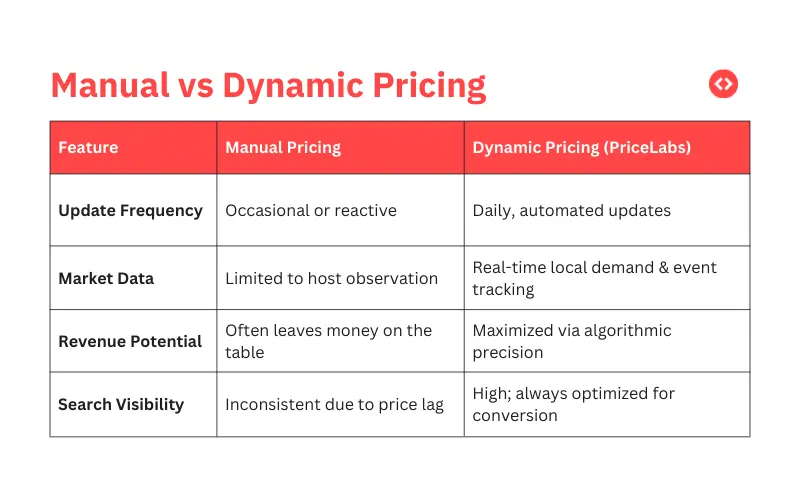
- Static pricing is a monotone signal that often misses the target.
- Dynamic pricing is an adaptive signal that lets the AI know exactly when you are ready to compete for a specific type of guest.
In 2026, AI is a matchmaker. By letting PriceLabs move your rates in response to the market, you are giving the AI more “entry points” to match you with the right traveler at the right time.
Your AI Action Plan – Preparing Your “Digital Identity”
To win the booking in 2026, your property needs to be more than just a collection of photos; it needs to be high-fidelity data. AI agents don’t “browse” like humans; they “parse” like machines. If your data is messy or your pricing signals are weak, you become invisible to the bots.
Here is how to use PriceLabs to ensure your listing is the first choice for AI agents.
1. The Listing Optimizer: Your “Agent-Ready” Grade
AI agents prioritize listings that are complete and consistent. If a guest asks for “free beach service,” the agent looks for that specific tag in your attributes.

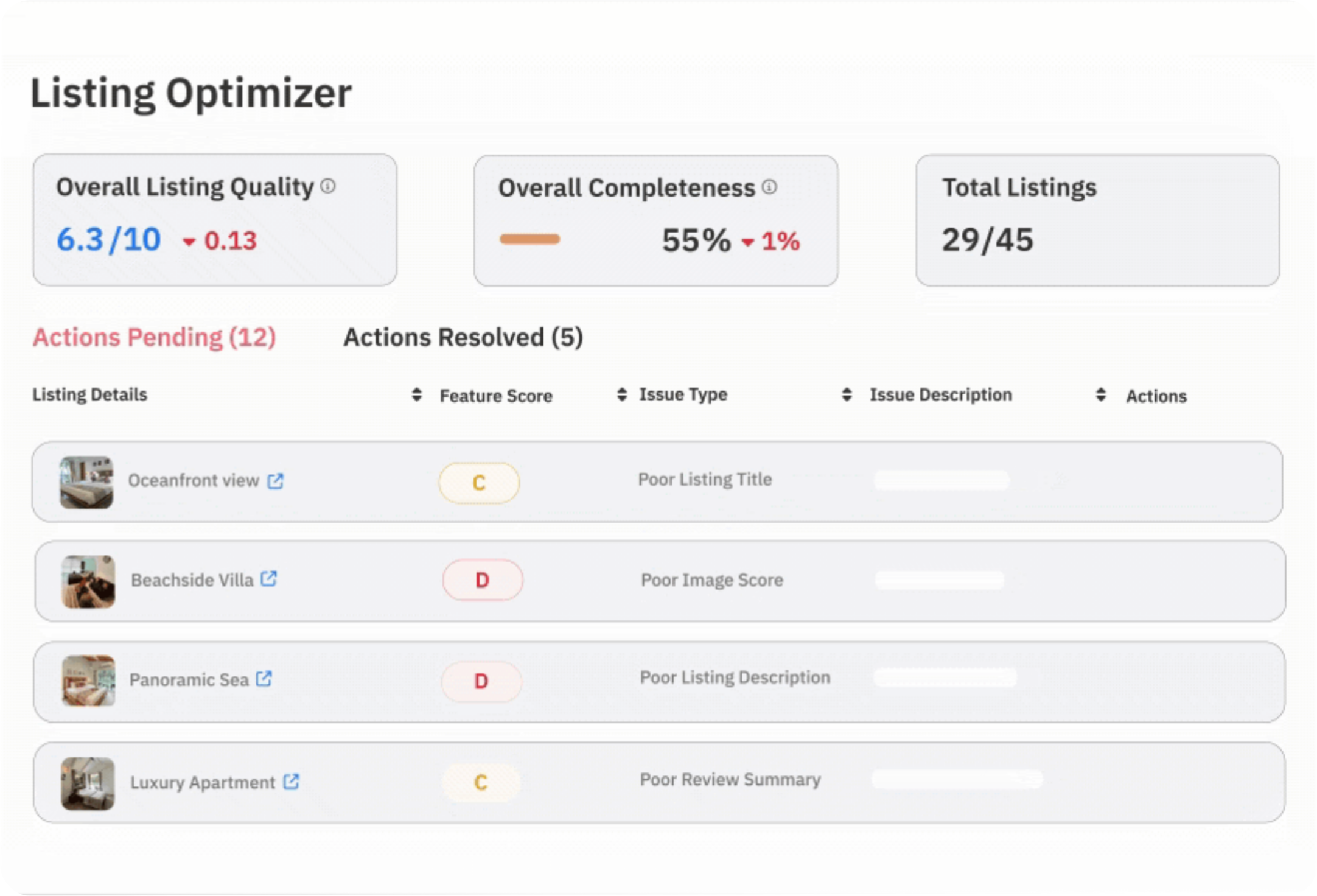
- Audit Your Quality: Use the PriceLabs Listing Optimizer to get a quality grade (A–D) for your Airbnb listing. It evaluates your title, description, and photo count against global best practices.
- Fix Trust-Breaking Gaps: The Optimizer highlights inconsistencies—like a title that says “Beachfront” but an amenity list that doesn’t check off “Waterfront.” AI agents flag these as “low-confidence” and will skip your property to avoid guest complaints.
2. Market Dashboard & Dynamic Pricing: Tuning Your Signal
AI agents love matching literal prompts to literal value. To be the “top pick” for a specific guest prompt, your listing needs to broadcast the right signal at the right time.
Identifying “Prompt-Friendly” Trends: Use the PriceLabs Market Dashboard to see beyond your own calendar. The dashboard reveals which amenities and stay patterns are driving occupancy in your neighborhood. If the data shows that “long-weekend” stays are trending or that guests are willing to pay a premium for “pet-friendly” units in June, you can adjust your strategy to match those specific AI prompts.


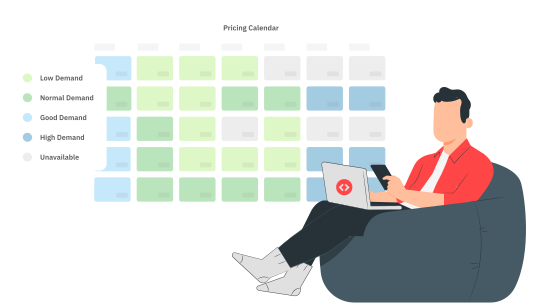
Dynamic Pricing as a Search Filter: Dynamic pricing isn’t just about maximizing revenue; it’s about discoverability. When a guest sets a hard budget cap (e.g., “under $400/night”), a fixed-price listing at $405 is invisible. PriceLabs Dynamic Pricing uses hyper-local data to automatically adjust your rates into those “search windows.” By reacting to real-time supply and demand, your price becomes a dynamic filter that ensures you appear in front of the right guest at the moment they are ready to book.

Competing on Value, Not Just Price: AI agents are programmed to find the best value for the user’s intent. By using the Market Dashboard to understand your position relative to your competitors, PriceLabs ensures your dynamic rates reflect your property’s true worth—flagging you as a “High-Value Match” when your premium amenities meet a competitive price point.
3. Data Hygiene: Mastering the Sync
Your AI “reputation” depends on your availability and pricing being accurate the moment an agent checks them. AI agents will quickly “learn” to deprioritize listings that show one price in search and another at checkout.

- Automated Reliability: By default, PriceLabs syncs your rates once every 24 hours. This occurs automatically at a set time for your account, ensuring your “digital storefront” is updated daily with the latest market-driven rates.
- The “Sync Now” Advantage: If you make a strategic change—like a last-minute price drop for an upcoming weekend—you don’t have to wait for the daily cycle. Using the Sync Now button at the listing or account level pushes your new rates to your PMS/Channel Manager immediately (usually within minutes, depending on the provider).
- Precision Timing: For hosts who need even tighter control, PriceLabs offers Timed Sync, allowing you to schedule your rate updates for specific times of day. This ensures your prices are refreshed just before peak AI “searching hours,” keeping your data as fresh as possible for the agents.
Conclusion: From Search to Matchmaking
The guest journey has changed, but the goal remains the same: getting the right guest into the right room at the right price.
In the era of AI, dynamic pricing isn’t a risk to guest trust—it’s the engine that makes you visible. By combining PriceLabs’ Dynamic Pricing with the Listing Optimizer and a disciplined Sync strategy, you aren’t just setting a rate; you are building a “Digital Identity” that AI agents can trust, validate, and recommend.
The future of search isn’t about being the most static; it’s about being the most discoverable.