



Automation now updates rental rates the moment demand shifts, not just overnight. Leading revenue management tools, such as PriceLabs, ingest booking pace, seasonal patterns, local events, competitor rates, and weather to continuously recalibrate prices—within guardrails that protect brand and margins. The upshot: faster response to spikes and lulls, stronger RevPAR, and less manual busywork. This playbook distills how to set goals, audit data, choose models, run a pilot, and scale with clear governance so teams can confidently deploy automated revenue management for short-term rentals. As 2026 approaches, systems blend explainable rules with AI and real-time signals to capture demand surges and seasonal swings efficiently, a shift reflected across hotel pricing trends for 2026 that now shape rentals as well.
Define Your Pricing Goals and Key Performance Indicators
Aligning automation to business outcomes starts with a small set of measurable goals. In hospitality, RevPAR, occupancy, ADR, and contribution margin form the core of your scorecard. Add conversion rate and inventory turns to track pace and sell-through for specific seasons or unit types. Select one or two primary KPIs—often RevPAR plus either occupancy or ADR—to avoid conflicting targets. Then set explicit guardrails: minimum and maximum rate bands by unit type, approval thresholds for large changes, and pause rules for anomalies. These simple controls prevent runaway automation and “race-to-the-bottom” behavior, a known pitfall in the absence of price floors and change limits.
Dynamic pricing is the process of adjusting rates in real time based on demand, competitor moves, inventory levels, and market signals to maximize revenue and occupancy.

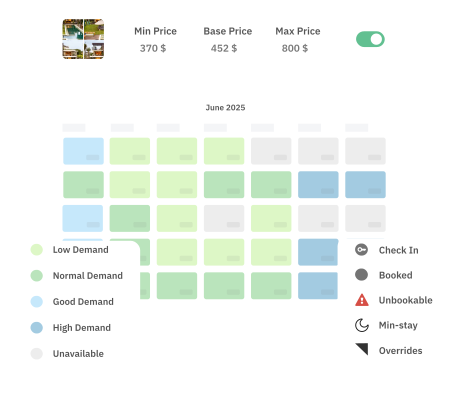
Audit and Integrate Reliable Data Sources
Your model is only as good as its inputs. Aggregate at least six to twelve months of reliable reservation and pricing history before switching on automation; that baseline sharpens seasonality curves, booking windows, and pace sensitivities. Then consolidate the live feeds that matter most for rentals: active bookings and cancellations, real-time availability, local event calendars, competitor and comp-set rates, weather and flight data, OTA/channel performance, and CRM segments. Modern platforms like PriceLabs use these feeds to learn demand curves continuously and price at the right granularity.

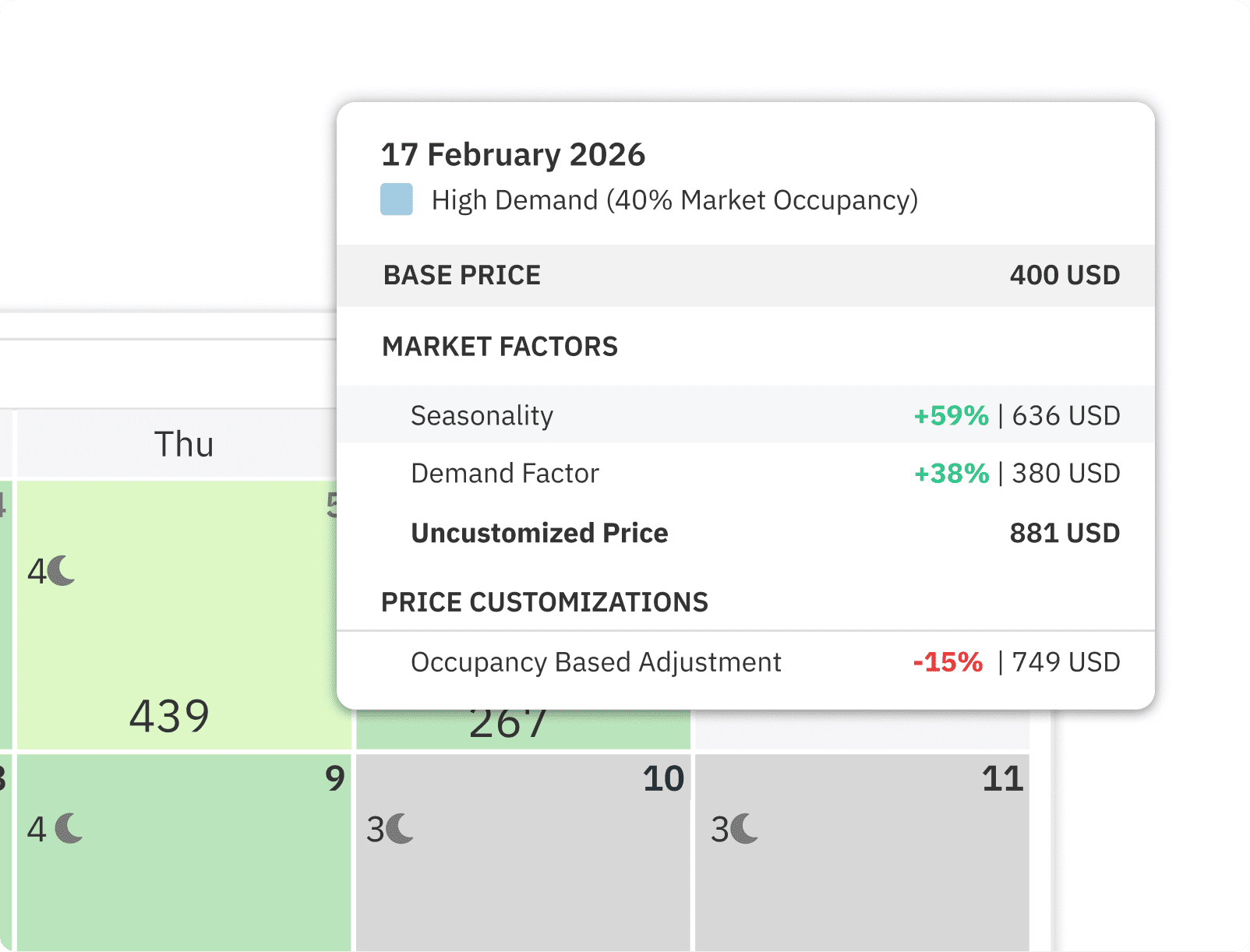
Real-time pricing means updating rates in response to market shifts as they happen instead of following daily or weekly cycles, a capability now expected in hospitality as tools move from nightly batches to streaming data).
Data-to-influence map:
- Live bookings and booking pace: signals demand surges or slumps; drives immediate price raises or softening.
- On-hand inventory and availability by stay length: informs scarcity premiums or occupancy-boosting discounts.
- Local events and seasonality: captures event-driven spikes and shoulder-season tails; adjusts length-of-stay rules.
- Competitor and comp-set prices: benchmarks relative positioning; prevents over- and under-pricing.
- Weather and travel disruptions: anticipates sudden demand shifts; promotes flexible terms when risk rises.
- Channel/OTA analytics: optimizes by channel elasticity; aligns rate and restriction strategies to conversion.
- CRM and guest segments: enables high-value offers and fences; avoids blanket discounts that erode ADR.
For a deeper primer on cadence by season and market, see Hostaway’s overview of seasonal pricing for rentals.
Select the Right Automation Model and Pricing Rules
Different operating models suit different portfolio maturities and data richness. Most teams start with transparent rules, then layer in machine learning and collaborative AI as comfort grows.
- Rule-based engines use if-then logic and demand thresholds (e.g., “if occupancy > 80% 21 days out, raise rates 8%”). They are explainable and fast to implement.
- Machine learning models predict demand by date, lead time, channel, and segment, adjusting prices to optimize KPIs under your constraints.
- Collaborative AI blends models with operator input. It learns from overrides and outcomes to refine recommendations rather than operating as a black box.
Collaborative AI models adapt by learning from operator input and real-world outcomes, rather than operating in a fully autonomous black box model. For a scan of common tooling approaches, Monday.com’s guide to pricing software outlines the spectrum from rule-based to predictive engines.

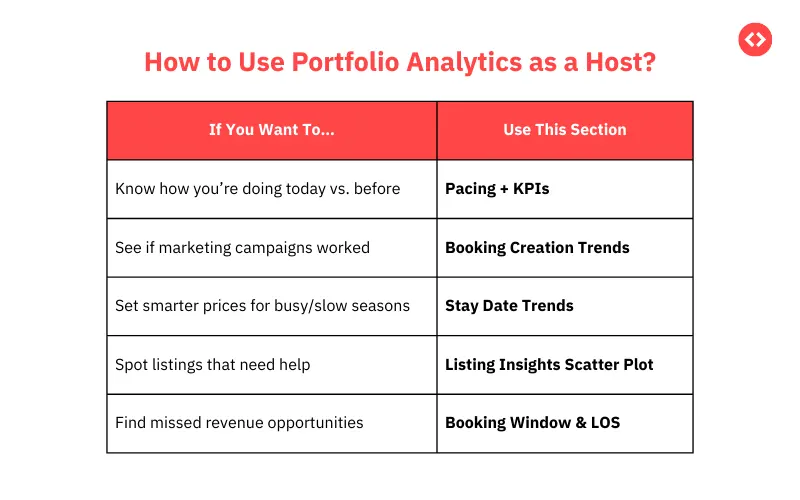
Model comparison at a glance:
- Rule-based: Benefits—transparent, controllable, easy to govern. Risks—can miss subtle demand shifts; requires upkeep. Best for—smaller sets, early-stage automation, regulated markets needing strict bounds.
- Machine learning: Benefits—captures nonlinear patterns, improves with data. Risks—needs clean data and monitoring; can be opaque. Best for—multi-property portfolios with rich history and varied demand.
- Collaborative AI: Benefits—balances accuracy with operator trust; improves via feedback loops. Risks—requires process discipline; governance design. Best for—scaled teams seeking explainability plus performance.
Regardless of model, maintain a transparent rationale for each change and enable human override for high-value dates. These mechanisms protect against over-discounting and support team trust in automation.
Pilot Test Your Pricing Automation With Real-Time Data
Run a tightly scoped pilot to validate impact and build confidence before a portfolio-wide rollout.
- Select a representative cohort
- Pick 10–20 units across at least two demand profiles (e.g., urban weekend-focused and coastal seasonal).
- Define control (manual) vs. test (automation) groups.
- Instrument KPIs and guardrails
- Track RevPAR, ADR, occupancy, pickup pace, conversion rate, and guest sentiment.
- Apply rate floors/ceilings and approval thresholds for sensitive dates.
- Go live with real-time inputs
- Connect bookings, competitor rates, events, and channel data.
- Enable automated daily and intra-day updates when pace shifts.
- Tune and iterate
- Adjust demand thresholds, elasticity parameters, and comp-set weights weekly.
- Document operator overrides; feed them back into collaborative models.
- Validate and decide
- After 6–8 weeks, compare test vs. control on RevPAR lift and margin.
- Lock in winning settings for the next rollout wave.
For setup checklists and KPI templates, see our guide to a data-driven revenue management strategy.
Scale Automation With Oversight and Human Governance
Scale in phases, not leaps. Expand to additional markets or unit types only after you hit pre-agreed thresholds (e.g., sustained 6–10% RevPAR lift and stable review scores in the pilot). Establish role-based approvals so analysts can greenlight large deviations on peak dates while routine changes flow automatically. Require human review for high-risk periods—holidays, citywides, weather-impacted windows—where brand, OTAs, and guest expectations intersect.
Institutionalize governance:
- Centralize change logs and automated reasoning for every price update.
- Maintain an immutable audit trail for internal reviews and external compliance.
- Standardize escalation paths when models conflict with market intelligence.
PriceLabs customers often pair automated updates with role-based workflows and dashboards that ensure accountability at scale (see how PriceLabs helps revenue managers streamline governance).
Continuously Monitor, Review, and Optimize Pricing Models
Treat automation as a living system. In the first two months, review model outcomes weekly to catch anomalies early; shift to a monthly cadence once performance stabilizes. Refresh demand signals as markets change—new flight routes, venue reopenings, or channel algorithm updates can alter booking curves quickly. Retire stale rules, recalibrate comp sets, and retrain models after meaningful data drift.
Keep decision logic transparent so teams can explain rates to owners, auditors, and OTAs. That clarity sustains trust and speeds consensus when exceptions arise.
Operational Best Practices for Dynamic Pricing Automation
- Enforce price floors and ceilings by unit type to prevent excessive swings and protect brand position.
- Segment offers by customer value, stay length, or booking window instead of blanket discounts; segment-based pricing can lift revenue by 10–20% when properly fenced.
- Use psychological cues judiciously—left-digit anchoring (e.g., 199 vs. 200) and threshold pricing can nudge conversion without eroding ADR when tied to demand.
- Preserve a granular audit trail for all adjustments to speed troubleshooting, prove compliance, and enable continuous improvement.
For multi-channel control, consider centralizing rules across OTAs to keep positioning consistent (see our overview of multi-OTA rate automation).
Expected Outcomes and Risk Management Strategies
Across portfolios, typical performance ranges are:
- Demand-based dynamic pricing: 8–15% RevPAR uplift.
- Inventory and pace triggers: 5–12%.
- AI-optimized combinations with collaborative feedback loops: 15–25%. These deltas are directionally consistent with cross-industry pricing studies in 2026 (see Digital Applied’s revenue optimization guide).
Common risks and mitigations:
- Over-automation leading to margin erosion: set floors/ceilings; require approvals for large drops; audit weekly early on.
- Race to the bottom with comp matching: optimize relative to demand, not just parity; weight comp sets dynamically.
- Data quality issues: validate feeds; fall back to safe rules when inputs degrade; monitor data freshness.
- Black-box models and low trust: use explainable signals; log reasoning; enable simple overrides for peak dates.
- Event misses and shock demand: subscribe to event and disruption data; build surge rules; keep rapid-review playbooks.
Quick-reference safeguards:
- Guardrails: hard rate bands, maximum daily change limits, anomaly pauses.
- Governance: role-based approvals, audit trails, change logs.
- Monitoring: KPI dashboards, data freshness alerts, model drift checks.
- Playbooks: event surge settings, cancellation spikes, channel outages.
Frequently asked questions
What is dynamic pricing and how does it differ from static pricing?
Dynamic pricing updates rates automatically based on real-time demand, competitor moves, and market signals, while static pricing keeps fixed rates regardless of changes.
How can automation improve seasonal and event-driven pricing adjustments?
Automation ingests event calendars and seasonal patterns to raise or lower rates instantly when demand shifts, capturing spikes and smoothing shoulder periods with minimal manual effort.
What data sources are essential for real-time dynamic pricing?
Core inputs include booking pace, availability, competitor prices, local events, weather, OTA/channel analytics, and CRM segments.
How do you balance AI automation with human decision-making?
Use AI for continuous updates within guardrails, and require human review for high-value dates, anomalies, and large deviations to ensure accountability.
What key metrics indicate successful dynamic pricing implementation?
Track RevPAR, occupancy, ADR, conversion rate, pickup pace, and guest sentiment; sustained gains in RevPAR with stable reviews signal success.