



If you manage listings on Booking.com and other channels, the fastest path to unified pricing is a two-part stack: a channel manager with real-time, two‑way connectivity, plus an AI-driven pricing engine (like PriceLabs) that automates rates and restrictions across all OTAs from one dashboard. Modern channel managers sync availability, rates, and reservations to prevent double bookings, while PriceLabs’ dynamic pricing tool optimizes nightly prices portfolio‑wide. Together, they coordinate rate plans, enforce guardrails, and push instant updates—so you can stay competitive without manual busywork. This guide explains how multi‑OTA pricing control works, what features matter, and a step‑by‑step rollout plan tailored to Booking.com hosts.
Understanding Multi‑OTA Pricing Control
Multi‑OTA pricing control is the coordinated management and automation of pricing, availability, and restrictions across multiple online travel agencies from a single dashboard. Instead of hand‑editing each channel, hosts set rules once and let the system push consistent updates across all channels.

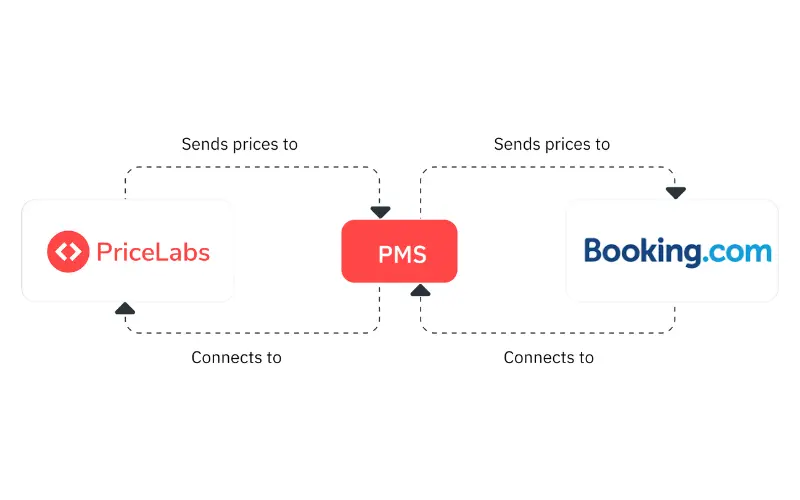
Manual updates are slow and error‑prone—leading to inconsistent rates and a higher risk of double bookings. With multi‑OTA rate automation, nightly rates and rules are updated simultaneously across channels to ensure consistency and real‑time responsiveness, improving both the guest experience and operations. OTA synchronization and unified rate management reduce workload, increase pricing accuracy, and create a scalable foundation for revenue growth.
The Importance of Coordinated Pricing for Booking.com Hosts
Uncoordinated prices across OTAs can erode trust and confuse guests. Discrepancies trigger revenue leakage (e.g., guests choosing the cheaper OTA), and manual workflows invite costly mistakes such as double bookings and missed demand windows—especially around events or peak seasons. Automation closes these gaps by standardizing rate logic and instantly reflecting changes across channels.
For many operators, Booking.com is a critical source of demand and an efficient channel for filling vacancies and expanding reach; treating it as a core part of a coordinated pricing strategy is essential to protect conversion and margins. Aligning rate parity, availability, and restrictions across OTAs protects brand consistency while enabling data‑driven revenue optimization.
Key Components of Multi‑OTA Pricing Solutions
1. Connectivity via Two‑Way APIs and Channel Managers
Two‑way API connectivity is the backbone that keeps rates, availability, and reservations perfectly in sync—transmitting data instantly between your system and OTAs with no lag. Channel managers provide this infrastructure, syncing availability, rates, and reservations across OTAs to avoid double bookings and calendar conflicts.
Key connectivity requirements:
- Reliable, continuous syncing with minimal downtime
- Support for ARI/XML standards (Availability, Rates, Inventory)
- Broad integration compatibility (PMS, RMS, OTAs)
- Instant rate and rule updates with conflict resolution
Feature Comparison—Direct OTA vs Channel Manager Integration
| Capability | Direct OTA Login Management | Channel Manager Integration |
|---|---|---|
| Connections to maintain | One per OTA | One to many via hub |
| ARI/XML support | Varies by OTA | Standardized across OTAs |
| Two‑way reservation sync | Manual or limited | Native, automated |
| Overbooking risk | Higher | Low (conflict prevention) |
| Update speed (rates/restrictions) | Manual/lagged | Instant, automated |
| Centralized dashboard | No | Yes |
| Bulk edits across portfolio | No | Yes |
Best‑in‑class channel managers and PMSs emphasize this real‑time hub model for scalable, error‑free distribution.
AI‑Driven Dynamic Pricing Engines
An AI-driven dynamic pricing engine uses algorithms to adjust nightly rates based on market trends, occupancy, events, lead time, and competitor changes—often in real time. AI detects demand signals and adjusts prices to capture spikes while protecting margin during soft periods.

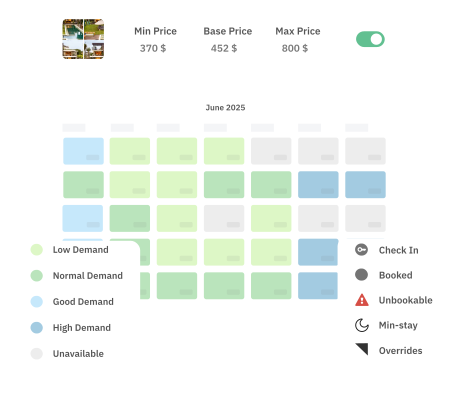
This intelligence layer:
- Eliminates repetitive manual edits
- Scales to hundreds or thousands of listings with portfolio‑level controls
- Offers audit‑friendly transparency
- Supports custom rules, minimums, and guardrails per market or property
Rate Plan Mapping and OTA‑Specific Promotions
Rate plan mapping links each OTA’s room types, policies, and fare conditions to your pricing platform so every update lands correctly. For Booking.com, leverage OTA‑specific tools—such as Genius, mobile rates, and limited‑time deals—to shape conversion and occupancy without breaking parity where required. Consider the margin and guest‑mix impact of each lever, and measure outcomes carefully.
Common promotion types to consider:
- Flexible vs. non‑refundable rate plans
- Channel‑exclusive offers for targeted lift
- Minimum‑stay incentives and mobile‑only deals
Analytics and Performance Tracking
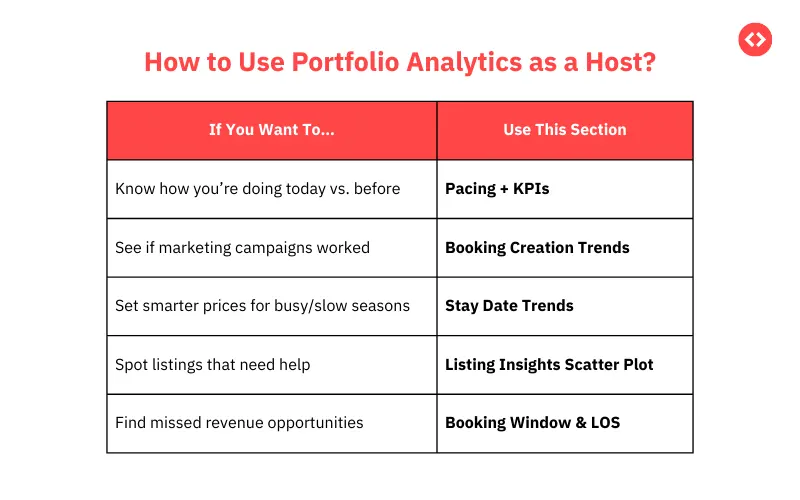
Performance tracking captures KPIs like search rank, views, conversions, Net ADR (Average Daily Rate net of commissions/discounts), and Net RevPAR (Revenue per Available Room net of costs). For Booking.com, the funnel typically runs: search rank → listing views → conversion → Net ADR. Improving earlier steps compounds the benefits of later outcomes; proactive monitoring helps you identify where to intervene. Use before-and-after comparisons to validate pricing changes and establish a consistent review cadence.
Step‑by‑Step Implementation for Multi‑OTA Pricing Control
Auditing Channels, Rate Plans, and Integrations
Start with a complete audit of your current setup: list each OTA, every rate plan, commission structure, and all integrations. Map data flows end‑to‑end to expose manual bottlenecks and identify parity gaps. A precise baseline simplifies automation and speeds up troubleshooting later.
Centralizing Distribution with PMS and Channel Managers
Your PMS is the operational backbone that organizes listings, reservations, payments, and calendars. Pair it with a channel manager to unify calendars and enable ARI/API updates across Booking.com and other OTAs, reducing errors and allowing changes from a single place. This integration is foundational for scalable automation, especially as your portfolio grows.
Setting Up a Dynamic Pricing Engine and Custom Rules
Deploy a dynamic pricing tool such as PriceLabs to automate market‑responsive rates with guardrails:
- Establish base price logic (e.g., by bedroom count and quality tier)
- Configure demand‑based modifiers (events, seasonality, lead‑time curves)
- Set minimum‑night rules and floor/ceiling prices
- Create custom overrides for special events or owner constraints
- Apply portfolio‑level policies, then fine‑tune per listing
Static pricing sets a single rate that changes only through manual edits; dynamic pricing continuously adapts based on real‑time demand, competition, and your goals.
Mapping Rate Plans and Policies Across OTAs
Explicitly synchronize rate plans, restrictions, and fees per OTA. For Booking.com, map flexible vs. non‑refundable rate types, extra‑guest fees, and any promotional fares (e.g., Genius, mobile deals) so each lever behaves as intended.
Example rate plan mapping snapshot
| OTA | Listing/Room | Base plan | Policy (flex/NREF) | Extra‑guest fee | Promotions enabled |
|---|---|---|---|---|---|
| Booking.com | Apt A | Standard BAR | Flexible 5 days | $15/night | Genius 10%, Mobile 5% |
| Airbnb | Apt A | Standard | Flexible | $15/night | Length‑of‑stay discounts |
| Vrbo | Apt A | Standard | Strict | $15/night | Seasonal markdowns |
Testing Price Uploads and Running A/B Experiments
Treat testing as both a safeguard and an optimization engine.
- Validate upload success, check for OTA rate caps and min/max rules, and confirm parity exceptions
- Define A/B experiments as parallel rate plans (control vs. test) with a single variable (e.g., +5% weekend uplift)
- Run tests across relevant windows (peak events, shoulder periods) and measure impact on conversion, Net ADR, and Net RevPAR
Monitoring Performance and Refining Strategies
Adopt a weekly rhythm to review search rank, views, conversion, Net ADR, and Net RevPAR. Visualize before/after results in dashboards or line charts to isolate the effects of pricing changes, promotions, and policy tweaks. Regular micro‑adjustments compound into healthier occupancy and stronger net revenue over time.
Scaling Operations with Role-Based Controls and Logging
As portfolios grow, implement role‑based access control and detailed logging to prevent mistakes and create accountability. An audit trail records who changed what and when; rollback control lets you quickly revert unintended updates. Key features for resilient operations include:
- Activity logs and timestamped changes
- Rollback/undo capabilities for rate and rule updates
- Customizable permissions by user, role, or property group
Well‑designed RBAC reduces operational risk and is a proven best practice in complex systems (see this overview of role‑based access control foundations).
Best Practices and Trade‑Offs for Successful Multi‑OTA Pricing
Managing Promotions and Guest Mix on Booking.com
Booking.com’s promotions (e.g., Genius, time‑limited deals) can lift visibility and occupancy but may change guest behavior and effective payout. Track the impact of each promotion on Net RevPAR and guest reviews, and prefer targeted offers over broad discounts that dilute margins without improving the quality of the stay (learn how hosts use Booking.com tools to scale and fine‑tune outcomes).
When to go broad vs. targeted:
- Use broad deals for low‑season compression or urgent fill
- Use targeted, time‑bound offers for events, mobile users, or specific lengths of stay
- Pause or cap promos if guest quality or net yield declines
Balancing Rate Parity and Direct Booking Differentiation
Rate parity means keeping consistent prices across all channels—important for trust and OTA compliance—while still protecting your direct channel’s economics. Because OTA commissions can materially reduce owner revenue and complicate cash flow, use non‑price perks (early check‑in, free parking, loyalty points) to differentiate direct bookings without undercutting public rates (see analysis of OTA costs vs. custom booking software strategies).
Prioritizing Audit Trails and Rate Limit Controls at Scale
For enterprise‑level portfolios, put integrity controls front and center.
- Audit trails: full history for every change, by user and property
- Role permissions: least‑privilege access to sensitive settings
- Rate limit control: automatic guardrails that cap daily or hourly price movements to prevent wild swings or cascading errors
Risk‑mitigation feature comparison
| Feature | What it does | Risk mitigated | Enterprise must‑have |
|---|---|---|---|
| Audit logs | Records who/what/when of every change | Undetected errors, compliance gaps | Yes |
| Role permissions | Restricts actions by role or user | Accidental or unauthorized changes | Yes |
| Rate limiters | Caps magnitude/frequency of price updates | Volatility, pricing shock | Yes |
| Staging/sandbox | Tests changes before live push | Production incidents | Recommended |
Frequently Asked Questions
1. What is multi‑OTA rate automation and why is it essential for Booking.com hosts?
Multi‑OTA rate automation updates rates, availability, and restrictions across all OTAs at once, ensuring consistency, fewer errors, and improved revenue by reacting to real‑time demand.
2. How do Booking.com hosts integrate dynamic pricing with multiple OTAs?
Use an AI-driven pricing tool like PriceLabs connected via real‑time APIs through your PMS/channel manager to synchronize recommendations and push optimal rates portfolio-wide.
3. What best practices optimize rate and availability updates on Booking.com?
Sync only delta changes, batch bulk updates, and use dedicated APIs or a channel manager to manage rate plans and restrictions by date and room type.
4. How can hosts monitor competitor pricing across OTAs effectively?
Adopt automated tools that track competitor rates, policies, and promotions across channels, with alerts for timely adjustments.
5. What role does AI play in improving multi‑OTA pricing strategies?
AI analyzes market signals and competitor moves to recommend personalized pricing and detect demand shifts, outperforming manual strategies with faster, precise updates.