



Massive events like the Super Bowl are supposed to be the “winning touchdown” for short-term rental (STR) hosts. But as many Phoenix hosts discovered during the 2023 Big Game, a lack of data-driven strategy can quickly lead to an “Airbnbust”. While headlines initially promised skyrocketing rates of up to $7,000 a night, the reality after the final whistle was a market “fumble”—half-empty homes and oversaturated inventory.
To optimize revenue during peak demand, you need to replace gut feelings with a robust strategy built on Dynamic Pricing, Neighborhood Data, and Market Dashboards.
1. Play Defense: Protecting Your Calendar from the “Unknown”
The most dangerous events are the ones you don’t see coming. Whether it’s a surprise stadium tour announcement or a last-minute political rally, “Unknown Events” can fill your calendar at standard rates before you have a chance to adjust.


- Protect Your Dates with Automated Rules: Use technology to set higher far-out prices for unexpected surges.
- Yield Mapping: Leverage Portfolio Analytics to automatically raise prices if specific days start booking up faster than normal.
- The “Taylor Swift” Effect: PriceLabs’ data successfully captured occupancy shifts following major event announcements, allowing proactive hosts to adjust before the wave hit.
Dynamically Price Your Property and Get FREE Custom Reports Tailored To Your Property!
Use PriceLabs Dynamic Pricing to competitively and dynamically price your property according to demand shifts and analyze past performance to set a strong pricing strategy for your property.
Create your Account Now2. Scout the Competition: Use Market Dashboards
A major reason for the 2023 Phoenix “fumble” was a massive surge in supply. In Glendale, supply nearly doubled leading up to the event. New Orleans saw an 18% year-over-year increase in active listings ahead of Super Bowl 2025.


When the number of available homes skyrockets, simply raising your price because “everyone else is” can leave you vacant.
- Monitor Active Listings: Use a Market Dashboard to track if your area is becoming oversaturated.
- Track Hotel Infrastructure: Are local hotels full, or are they undercutting STR prices?
- Analyze the Tiers: In Santa Clara for Super Bowl 2026, data shows a downward shift in the 50th percentile pricing, while high-tier luxury listings are shifting up. Knowing which tier you occupy is critical to setting a realistic premium.
Dynamically Price Your Property and Get FREE Custom Reports Tailored To Your Property!
Use PriceLabs Dynamic Pricing to competitively and dynamically price your property according to demand shifts and analyze past performance to set a strong pricing strategy for your property.
Create your Account Now3. The Power of Dynamic Pricing vs. “Stable” Pricing

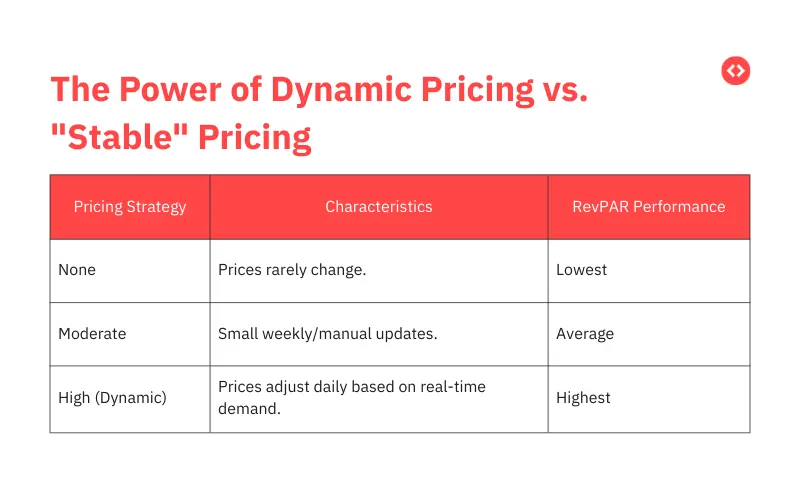
Data proves that “set it and forget it” strategies lose money. In Santa Clara, only 12.1% of listings use high-frequency dynamic pricing. However, these listings consistently capture higher RevPAR (Revenue Per Available Room) than those with stable or manual pricing.
Dynamically Price Your Property and Get FREE Custom Reports Tailored To Your Property!
Use PriceLabs Dynamic Pricing to competitively and dynamically price your property according to demand shifts and analyze past performance to set a strong pricing strategy for your property.
Create your Account Now4. Tailor Your Minimum Stays to Real Demand
Don’t guess how long people want to stay; look at the Neighborhood Data.
- Gulf Coast Jam Case Study: For the 2026 festival, 81% of bookings are for 3–6 nights.
- Super Bowl Trends: During Super Bowl 2025, 50% of bookings were for 3–4 night stays.
- The “2-Night Premium”: Interestingly, while less common (22%), 2-night bookings for Super Bowl 2026 are currently coming in at a significantly higher ADR of $399, compared to $234 for 3–4 night stays.
A “Cascading Minimum Stay” rule lets you hold out for longer bookings early on, then automatically open your calendar to high-premium, short stays as the event nears.
Final Takeaway: Data Over Intuition
Occupancy is a moving target. While last year’s data is a starting point, layering in real-time market signals is the only way to avoid the fumble. When pricing events and holidays, you must stay on top of market changes. Data provides more informed predictions than intuition alone.
To boost the SEO and provide additional value for the reader, here are 5-6 FAQs tailored to the article “The Super Bowl Slump Prevention Guide.”
Frequently Asked Questions
1. Why did so many hosts lose money during the 2023 Super Bowl?
The “Phoenix Fumble” occurred due to a massive oversupply of listings and unrealistic pricing expectations. Many hosts relied on sensationalist headlines suggesting $7,000 nightly rates rather than looking at real-time Neighborhood Data. When supply doubled and hotels remained competitive, overpriced listings stayed empty.
2. How far in advance should I set my prices for a major event?
You should start planning as soon as the event dates are announced. Use Market Dashboards to monitor early booking trends. However, the key is to remain flexible; using Dynamic Pricing allows your rates to automatically adjust as the “booking window” nears and actual demand becomes clearer.
3. What is a “Cascading Minimum Stay” and how does it help?
A cascading strategy involves setting longer minimum stay requirements (e.g., 4 or 5 nights) far in advance to capture high-value guests. As the event date approaches and the calendar remains unbooked, the system automatically “cascades” down to shorter stays (e.g., 2 nights) at a premium rate to ensure you don’t end up with an empty house.
4. How can I identify “Unknown Events” before my calendar gets booked?
“Unknown events” are unscheduled surges, like a sudden concert announcement or a local festival. Portfolio Analytics can alert you to abnormal booking lead times. If you notice an influx of bookings for a random weekend in the future, it’s a sign to pause your calendar and check local news before you’ve sold your nights too cheaply.
5. Is it better to have a higher price or higher occupancy during a big event?
The goal is to maximize RevPAR (Revenue Per Available Room). High occupancy at a low price leaves money on the table, while a high price with zero occupancy results in a total loss. Data-driven pricing helps you find the “sweet spot” where your price is high enough to capitalize on the event but competitive enough to ensure you actually get booked.
6. Do I need to track hotel prices if I only manage an Airbnb?
Yes. Hotels are your biggest competitors during major events. If local hotels have high vacancy and lower rates, travelers will choose them over an expensive STR. Monitoring hotel infrastructure through your Market Dashboard ensures your listing remains a viable and attractive alternative.