



Global sporting events can temporarily reshape travel demand, and the Winter Olympics are a clear example of this. Unlike typical seasonal peaks, the Olympics concentrate international travel into a short, high-intensity window, often in winter destinations that already have established tourism patterns.
For hosts, such demand surges can feel unpredictable. Prices rise quickly, booking windows change, and guest expectations shift almost overnight. Without data, it’s easy to either underprice and miss revenue or overprice and lose bookings.
Also read: Why the Paralympics Matter for Short-Term Rental Hosts?
This article looks at historical short-term rental performance around the Winter Olympics, using data alone to understand how demand, pricing, and revenue actually behave—and what that means for small-scale hosts planning ahead.
What the Data Shows: Demand Patterns During the Winter Olympics
Data from past Winter Olympics periods shows a clear increase in booking activity during the event window, but the scale of demand varies by location.

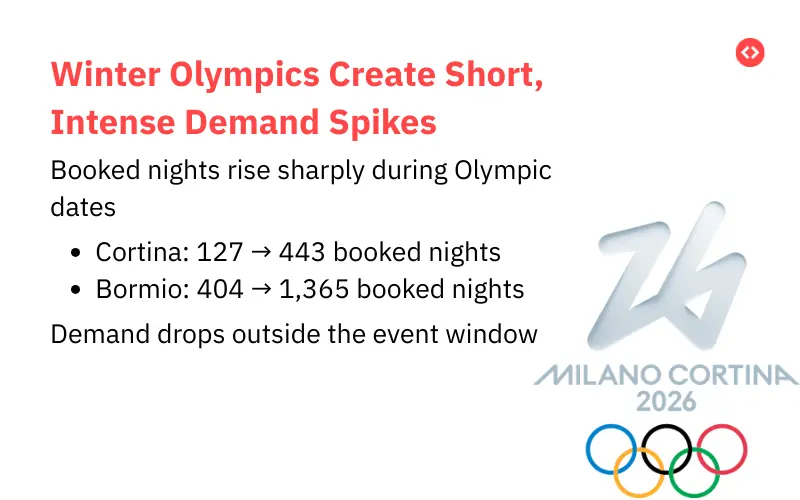
In Cortina, booked nights increased from 127 nights in 2024 to 443 nights in 2025, reflecting a sharp rise in demand during the Olympic period. Occupancy also increased, moving from 1% in 2024 to 32% in 2025, indicating stronger calendar fill closer to the event.
A similar pattern appears in Bormio, where booked nights rose from 404 in 2024 to 1,365 in 2025. Occupancy increased from 1% to 32%, showing that demand concentrated heavily within the Olympic window rather than spreading evenly across the season.
In Verona, booked nights grew from 216 to 404, while occupancy moved from 1% to 32% year over year. This reinforces a consistent trend across markets in the sheet: demand increases substantially during Winter Olympic periods but remains tightly clustered around event dates.
Overall, the data shows that Winter Olympics drive short, high-intensity booking spikes, not prolonged demand. For hosts, this means performance during a small number of peak nights has an outsized impact on overall results.
Dynamically Price Your Property and Get FREE Custom Reports Tailored To Your Property!
Use PriceLabs Dynamic Pricing to competitively and dynamically price your property according to demand shifts and analyze past performance to set a strong pricing strategy for your property.
Create your Account NowPricing Trends: ADR During the Winter Olympics
During past Winter Olympics periods, average daily rates increased across all markets.
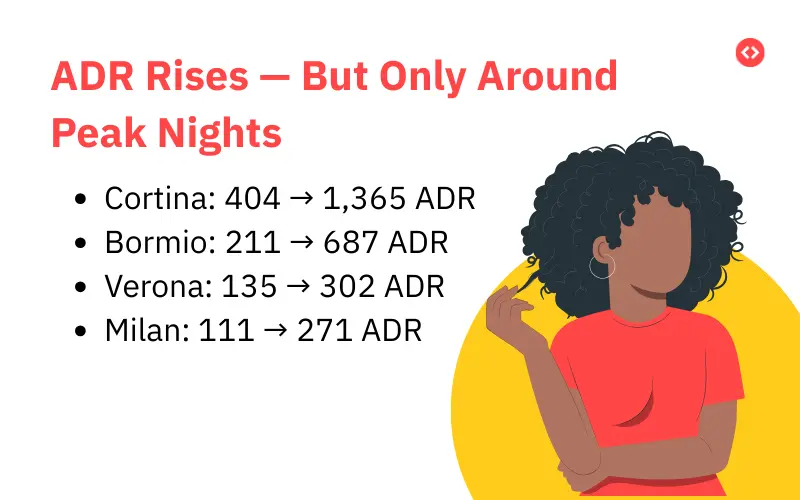
In Cortina, ADR rose from 404 in 2024 to 1,365 in 2025. Bormio saw ADR increase from 211 to 687, while Verona moved from 135 to 302. Larger markets showed similar trends, with Milan increasing from 111 to 271, and Anterselva/Antholz rising from 225 to 375.
Overall, the data shows that Winter Olympics improve pricing power, but only within a short, event-driven window rather than across the entire season.
Length of Stay & Booking Behavior During the Winter Olympics
Our data shows that booking behavior tightens during the Winter Olympics, with stays clustering around key competition dates rather than spreading across longer trips.
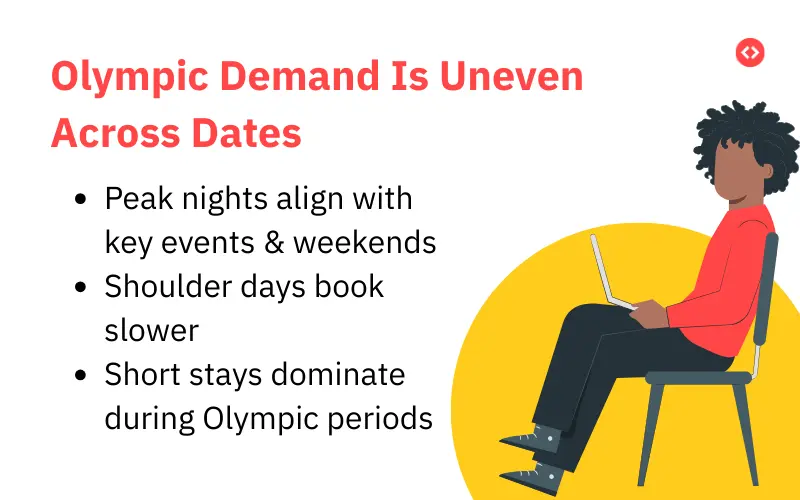
Across the markets listed, bookings are concentrated into short, event-driven stays, with demand strongest on peak Olympic days and weekends. The data does not show extended multi-week stays dominating performance during the Olympic window, reinforcing that most guests are traveling specifically for the event rather than for longer winter holidays.
Our also indicates that bookings are time-sensitive, with demand building closer to the event rather than far in advance. For small hosts, this means calendar performance during the Olympics is shaped more by which nights are available than by overall seasonal availability.
In short, Winter Olympic demand favors shorter, tightly timed bookings, making minimum-stay settings and last-minute availability especially important for hosts with limited inventory.
Bonus: How to Become an Airbnb Host: The Complete Guide
What This Means for Hosts With 1–5 Listings
The data shows that during the Winter Olympics, performance is driven by a small number of high-demand nights, not sustained seasonal uplift. In markets like Cortina, Bormio, and Verona, both occupancy and ADR rise sharply year over year, but only within a narrow event window.
Dynamically Price Your Property and Get FREE Custom Reports Tailored To Your Property!
Use PriceLabs Dynamic Pricing to competitively and dynamically price your property according to demand shifts and analyze past performance to set a strong pricing strategy for your property.
Create your Account NowFor small hosts, this creates two practical risks:
- Overpricing too early: Even though ADR increased (for example, Cortina: 404 → 1,365), demand is concentrated. Pricing too aggressively outside peak nights can leave gaps.
- Underutilizing peak dates: With booked nights rising significantly (for example, Bormio: 404 → 1,365 booked nights), missing just a few key dates can materially impact total revenue.
This is where market context matters more than instinct. Tools like STR Index and Market Dashboard help confirm whether Olympic demand in your market is outperforming baseline trends, while Market Dashboards let hosts track pacing during the Olympic window versus surrounding weeks—critical when demand builds closer to the event.

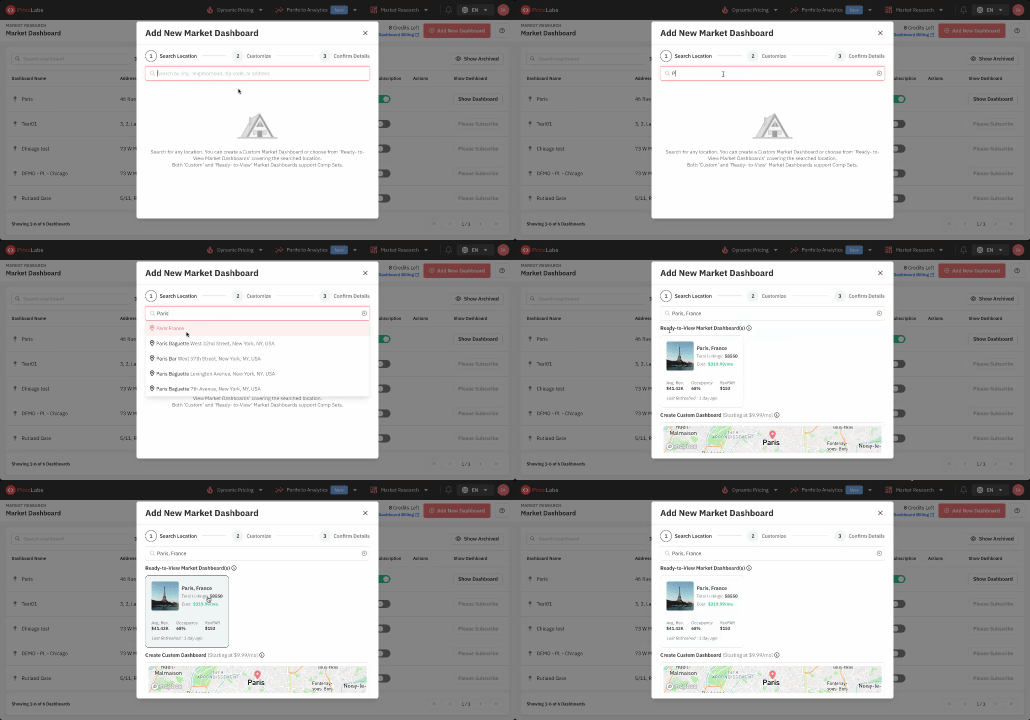
For hosts with limited inventory, the takeaway from the data is clear: Olympic demand rewards precision, not blanket pricing or availability changes.
Hosting Strategy: How to Approach the Next Winter Olympics
The data shows that Winter Olympics demand is short, concentrated, and price-sensitive outside peak nights. For hosts, strategy matters more than scale.
Based on the sheet-backed patterns:
- Stay flexible outside peak dates. While ADR rose sharply in markets like Cortina (404 → 1,365) and Bormio (211 → 687), demand clustered around specific Olympic days. Avoid locking in high rates across the entire window.
- Protect peak nights first. With booked nights increasing materially (for example, Bormio: 404 → 1,365 booked nights), missing a handful of key dates has an outsized impact on revenue.
- Adjust closer to the event. Booking activity builds nearer to Olympic dates, making pacing-based adjustments more effective than early, one-time price hikes.
- Optimize visibility and expectations. During high-competition periods, clear titles, photos, and amenity details matter. This is where Listing Optimizer can help ensure your listing converts the added Olympic traffic you’re paying for with higher rates.
With PriceLabs Listing Optimizer You Can Analyze The Quality Of Your Competitor's Listings.
With PriceLabs Listing Optimizer, you will be able to compare your listing with other listings guests would consider your competition and optimize your listing accordingly.
Create your Account NowIn short, the data supports a measured, responsive approach—optimize for peak nights, stay realistic elsewhere, and let pacing guide decisions.
FAQs: Winter Olympics & Short-Term Rental Performance
Do the Winter Olympics always increase short-term rental demand?
Based on the sheet, demand does increase, but it is highly concentrated. For example, Cortina saw booked nights rise from 127 (2024) to 443 (2025), and Bormio increased from 404 to 1,365. The lift is real, but limited to a narrow event window.
Does higher demand always mean higher prices?
Often, but not uniformly. ADR increased across markets—Cortina: 404 → 1,365, Bormio: 211 → 687, Verona: 135 → 302, Milan: 111 → 271—showing stronger pricing power during the Olympics. However, these increases were concentrated around peak Olympic dates, not the entire season.
Are all markets affected the same way?
No. While multiple markets show higher occupancy and ADR (for example, occupancy rising from 1% to 32% in several locations), the scale of impact varies. Proximity to events and connectivity influence how much demand translates into bookings.
What should small hosts focus on most?
For hosts with 1–5 listings, the data suggests focusing on capturing peak Olympic nights. With demand compressed and booked nights rising sharply in short periods, missing even a few key dates can significantly affect overall performance during the Winter Olympics.