


The 2026 World Cup isn’t just a global sporting event; it is a monumental, once-in-a-lifetime revenue opportunity for short-term rental (STR) property managers across North America. With 16 host cities across the U.S., Canada, and Mexico, this tournament is has already sols 1 million tickets and expected to drive roughly 7.1 million ticket sales, creating massive regional compression and international travel surges.
In a special Revenue Radar episode, industry experts Sarah Franzen (RevZen), John An (TechTape), and host Becca Madigan (PriceLabs) unpacked early data signals and actionable strategies for professional managers overseeing 10+ listings.

Early Pacing and Multi-Market Trends
The 2026 World Cup behaves differently than localized events like the 2026 Super Bowl. Because it spans multiple phases and countries, demand is materializing in diverse patterns across urban hubs.
Vancouver: High Lead Times and Media Demand
PriceLabs Market Dashboard and STR Index Data shows Vancouver is already seeing significant early pacing, with occupancy levels reaching 6%–8% for June 2026—double the occupancy recorded during the same period in previous years.
- Key Match Dates: June 13, 18, 21, 24, 26, and early July.
- Expert Insight: Early occupancy is likely driven by media teams and logistics planners who require long lead times.
- Regulatory Note: While British Columbia has strict STR regulations, there is ongoing discussion about relaxing these rules specifically to accommodate World Cup demand.
Get the Data-Driven Edge
Want to see the specific pacing and median booked price for your city during the 2026 World Cup? Use PriceLabs Market Dashboards to spot compression before your competitors do.
Start Your Free Trial NowGuadalajara: Regional Spikes
Mexico’s deep soccer culture is driving distinct spikes corresponding exactly to the four early-round matches on June 11, 19, 23, and 26.
- Pacing Signal: While current occupancy is lower (maxing at 4%), the market shows a “compression within a compression” specifically for match dates.
Atlanta: The Semifinal Surge
Atlanta is emerging as a high-demand market, particularly for the semifinals.
- Pricing Opportunity: Data shows the median booked price for the semifinal weekend already exceeds the top asking price of the general market.
- The “Ultimate Fan”: High-value guests are currently booking the “cream of the crop” inventory regardless of the specific matchup.
Miami: The Outlier
Interestingly, Miami is currently pacing slower for the 2026 World Cup than other host cities.
- The “F1 Effect”: As a destination city used to mega-events like Formula 1, Miami’s market is currently “sleeping” on World Cup potential.
- Latin American Behavior: Travelers from Latin America often have shorter booking windows, which may explain the delayed surge.
Bonus: How to Become an Airbnb Host: The Complete Guide
Strategic Framework: The Professional Manager’s Playbook
To optimize RevPAR, professional operators must move away from “set-and-forget” pricing settings and adopt tactical defensive dynamic pricing strategy.
1. Protect Your Calendar Until the December 5th Draw
The December 5th final tournament draw is the most critical date on your calendar. This is when teams are assigned to specific cities, triggering a surge in fan bookings.
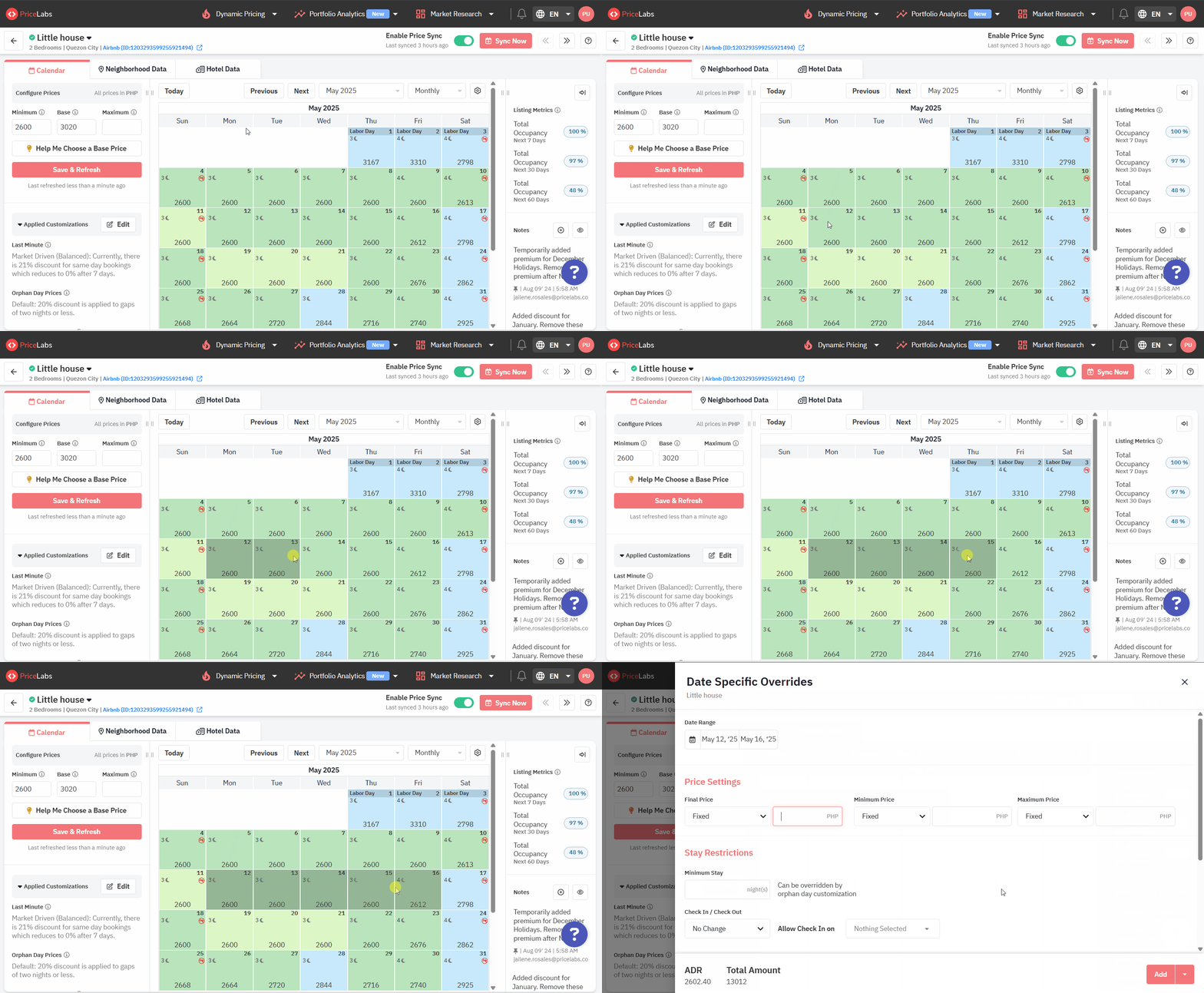
- Action: Maintain high static pricing and strict Minimum Length of Stay (MinStay) requirements until this date. Use PriceLabs Date Specific Override to customize stay settings for specific dates.
- The Goal: Prevent “jackpot” hunters from booking your best inventory at standard peak rates before the true demand surge hits.

2. Implement the Taylor Swift Strategy
Treat the 2026 World Cup like a mega-concert tour like Taylor Swift ERAS tour. In high-compression events, the goal is to be the “last man standing” with available inventory at the highest possible rate.
- Avoid Mental Caps: Experts noted that many managers in markets like Atlanta and Guadalajara are capping rates at perceived maximums (e.g., $1,400/night). Data indicates fans are already willing to pay significantly more for premium proximity.
3. Use Length of Stay (LOS) as a Shaping Tool
Professional managers should use stay restrictions to force high-value booking patterns.
- Close to Arrival (CTA): Implement CTA restrictions on actual match days to force guests to arrive a day or two early, capturing shoulder-night revenue.
- Gap Management: Do not allow small gaps (1–2 nights) between matches. Use MinStay rules (5–7 nights) to capture international fans and media teams staying for the duration of a city’s match cluster.
Operations and Portfolio Risks
Managing 10+ listings requires awareness of secondary risks during global events:
- Rental Arbitrage: Be wary of guests booking at low early rates to “re-list” your property at a markup.
- International Group Travel: Guests traveling for the World Cup often travel in larger groups and expect professional-level communication and “money-making” content (fast Wi-Fi, streaming services, and clear transit directions).
Actionable Takeaways for Property Managers
- Set Defensive Anchors: Implement static rates at 2x–3x your standard peak for June and July 2026 immediately to protect your calendar.
- Aggressive MinStay Rules: Set a 5-to-7 night minimum for all match-related dates to capture long-term media and international demand.
- Monitor the “Median Booked Price”: Use PriceLabs to track what guests are actually paying. If the median booked price exceeds your asking price, raise your rates immediately.
- Target Shoulder Nights: Close arrivals on match days and use gap rules to prevent unbookable 1-night stays between games.
Frequently Asked Questions (FAQ)
When will the 2026 World Cup demand peak?
Expect the first major booking surge immediately following the December 5th draw, when match locations for specific countries are finalized.
Should I use dynamic pricing right now?
While dynamic pricing is the backbone of STR revenue management, for the 2026 World Cup, experts suggest starting with high static prices. Transition back to dynamic adjustments once demand signals confirm after December 5th.
What is a “FIFA Draw”?
The draw is the official event where the 48 qualifying teams are placed into groups and assigned to the specific stadiums and cities where they will play.