Get started with PriceLabs now!
Want to learn what PriceLabs can do for you? See for yourself with a free trial. Get started now!

Mexico City isn’t just a global cultural hub; it’s now one of Latin America’s most dynamic and sought-after short-term rental (STR) markets. Property managers are navigating Mexico City’s short-term rental trends for 2025, which showcase a fascinating landscape where demand continues to soar, new rules are constraining supply, and the need for an optimized pricing strategy is more critical than ever.
For savvy property managers, 2025 is a year of opportunity. Strong market occupancy signals readily available demand. The focus is no longer just on getting a booking, but on getting the optimal rate for that booking. If you’re relying on static rates, you’re almost certainly leaving money on the table.
In this guide, including real-time insights from PriceLabs World STR Index, we break down the latest trends in Mexico City to help you with your revenue management strategy.
The underlying strength of the Mexico City short-term rental market in 2025 is defined by an intriguing dynamic: stable pricing and superior demand absorption. This combination is responsible for the market’s continued vitality and is a critical insight for your revenue strategy.
Our data reveals the following critical formula at work:
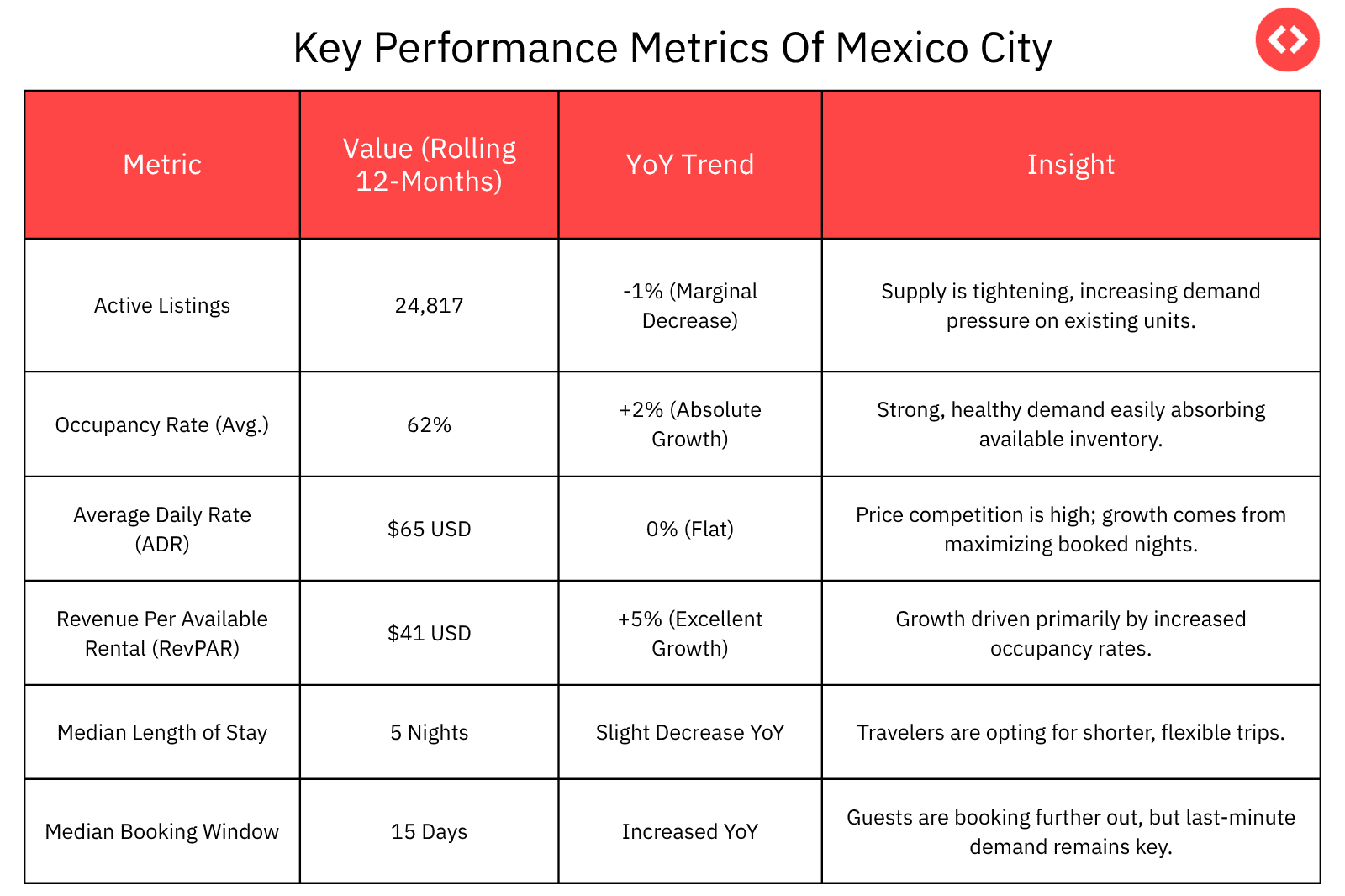
The Mexico City market exhibits clear seasonality, with certain months generating strong demand spikes that property managers must capitalize on.
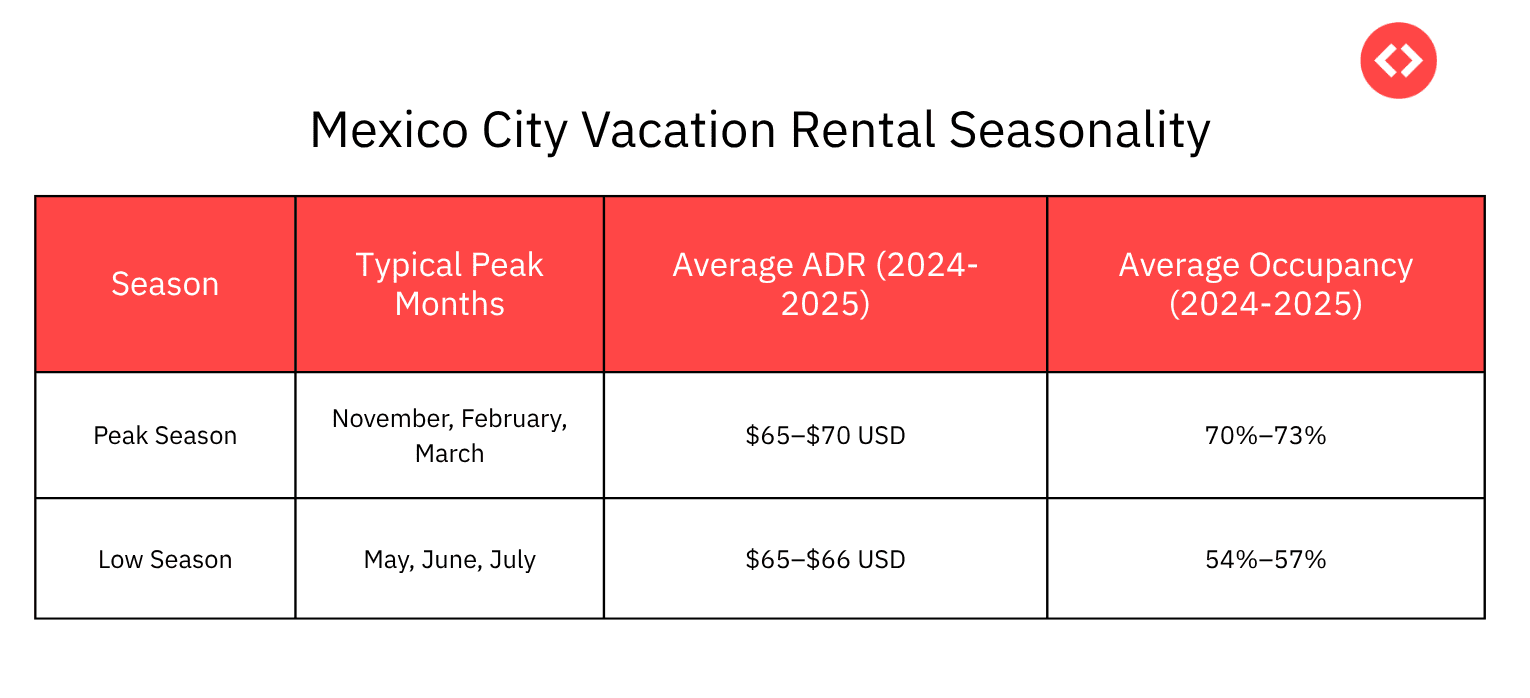
November often leads the year in both occupancy (73%) and strong ADR, driven by Dia de Muertos and key holiday travel. February and March are also strong, benefiting from excellent weather and events like Festival Vive Latino.
Key Traveler Segments:
Regulatory measures in Mexico City are the single most significant factor influencing future market supply.
While the final implementation of the most restrictive rules is currently subject to ongoing legal challenges, property managers must prepare for the core requirements:
In this high-demand, high-competition market, dynamic pricing is the key differentiator. PriceLabs data shows a compelling gap between properties that proactively adjust rates and those that don’t:
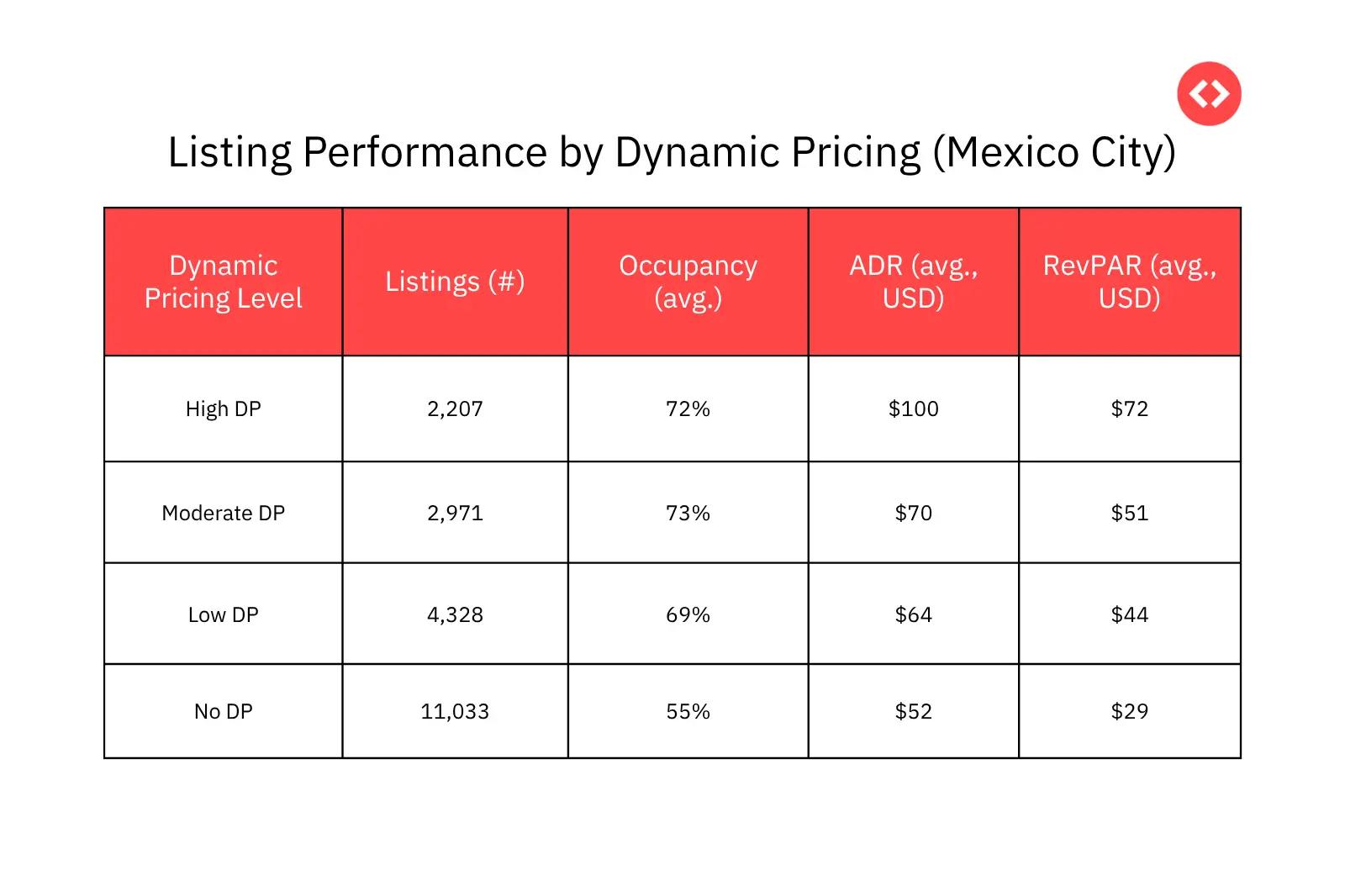
Properties using a High Dynamic Pricing strategy achieved an average RevPAR of $72 USD, which is a staggering 148% advantage over properties using No Dynamic Pricing ($29 USD). They accomplish this by capturing a higher ADR while simultaneously gaining a massive 17 percentage-point occupancy advantage.
The most profitable months are generally November and February/March, due to a combination of high demand (occupancy in the 70s) and strong rates. Aggressively raise rates for long weekends and major events using PriceLabs dynamic pricing.
If enforced, the cap requires you to maximize revenue on every available night. You must use pricing automation to aggressively increase rates on peak days and events, ensuring you achieve your annual revenue goal in a shorter window.
The summer months of May through July are typically softer. Focus on attracting digital nomads and long-stay guests by offering competitive 7-day and 30-day discounts. Ensure your amenities (fast Wi-Fi, dedicated workspace) are highlighted to target this crucial segment.
The median booking window has actually increased to 15 days. This means your pricing needs to be agile and responsive to capture last-minute demand (1–7 days out) and reward early planners (30+ days out) with appropriate discounts, a process best handled by dynamic pricing.
The Mexico City short-term rental market is strong, resilient, and entering a new phase of regulatory-driven competition. The days of set-it-and-forget-it pricing are over. With occupancy rates up and a considerable revenue gap between top and bottom performers, success in 2025 hinges on precision revenue management.
Want to learn what PriceLabs can do for you? See for yourself with a free trial. Get started now!