PriceLabs para Enterprise
Receita mais inteligente, um episódio por vez
O RevLabs é onde revenue managers e operadores encontram táticas de verdade: estratégia de preços, dados do mercado e times capazes de cuidar de centenas de propriedades.
- Weekly Episodes
- Monthly Newsletter
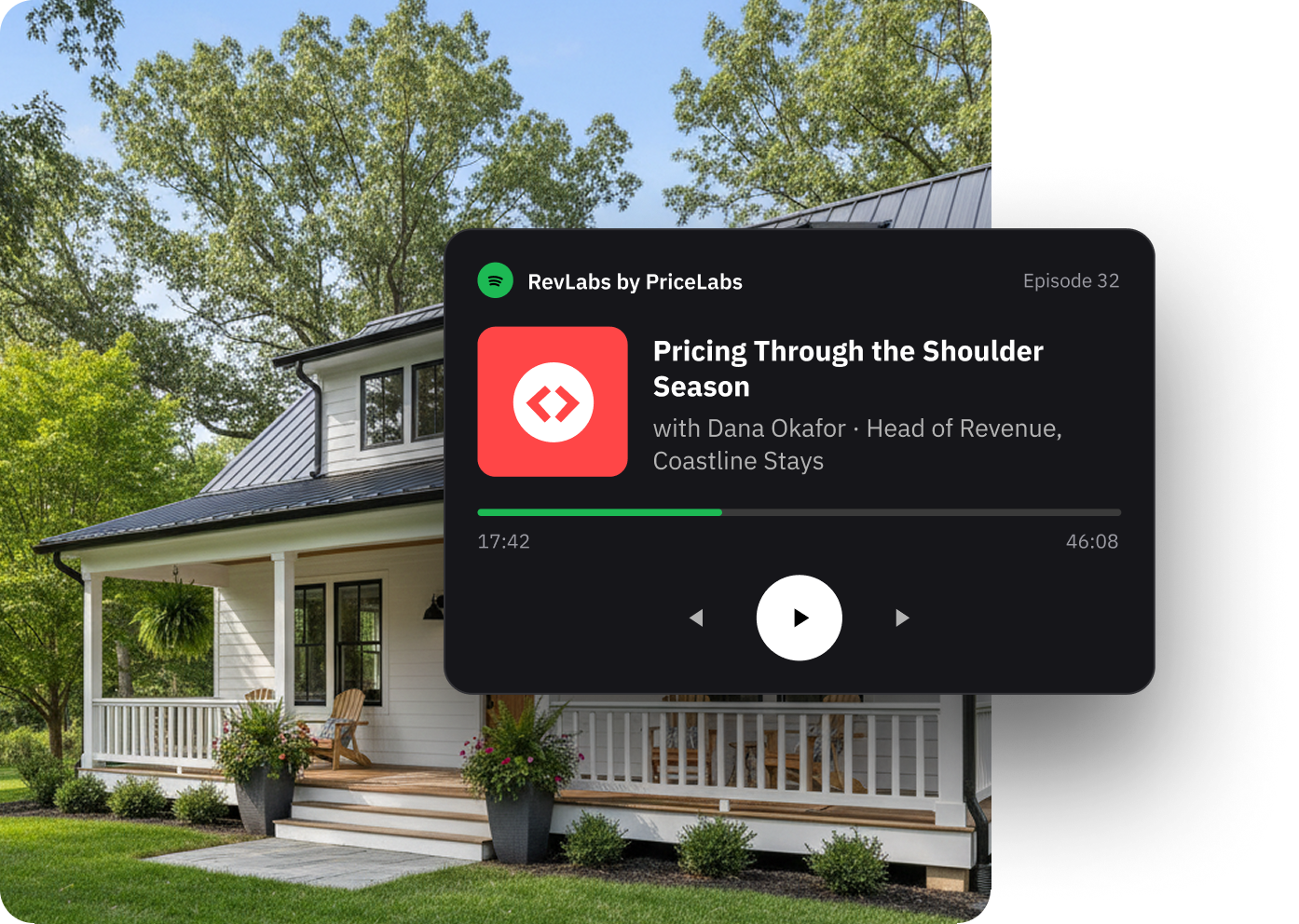
A escolha dos gestores de propriedades Enterprise em mais de 150 países

EUA · 16.000 propriedades

Reino Unido · 17.797 propriedades

EUA · 4.124 propriedades

Itália · 3.470 propriedades

França · 1.474 propriedades

Brasil · 1.305 propriedades
Podcast RevLabs
As novidades do estúdio
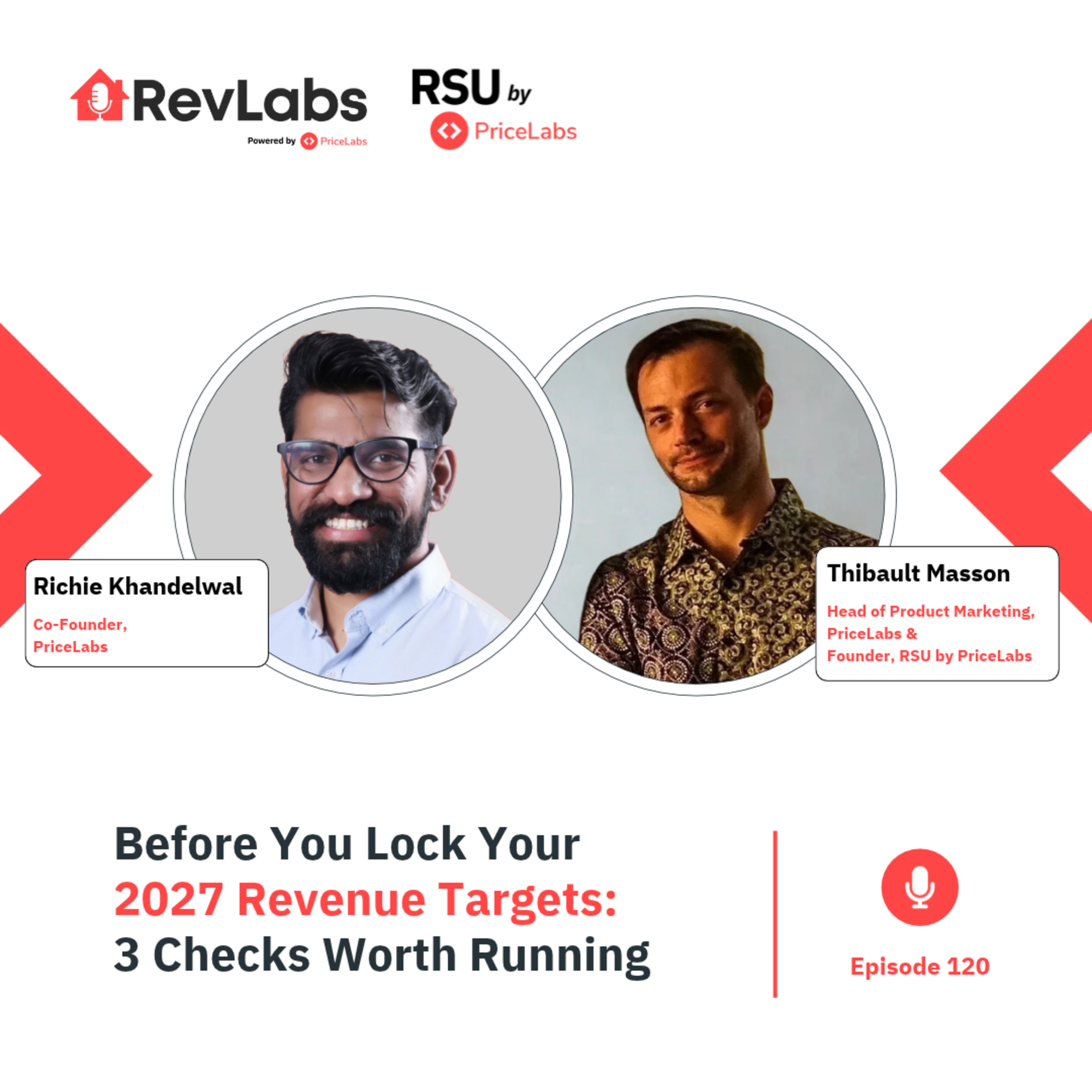 EP 120
Mais recente · 19 de nov. de 2026
Before You Lock Your 2027 Revenue Targets: 3 Checks Worth Running
A 10% growth target is just a guess until you strip out what 2026 won’t repeat and check it listing by listing. In this RSU x RevLabs Masterclass, Thibault Masson (Head of Product Marketing, PriceLabs) sits down with Richie Khandelwal (Co-founder, PriceLabs) to pressure-test 2027 revenue goals. Most operators copy last year and add a growth number. But last year had one-offs, and portfolio averages hide the homes that are slipping. Three checks, backed by PriceLabs market data: clean your base, pick the right comparison set, and plan peaks and quiet weeks around revenue. Richie demos it live in Market Dashboards, Report Builder, Manage Goals, and Athena, the PriceLabs AI revenue analyst. ✅ You’ll learn how to: Check for calendar shifts, events, and weather one-offs from your 2026 baseline Measure true growth with same-home comparisons and a peer comp set Set goals at listing level, then discount the roll-up for misses Set revenue goals for peak dates instead of chasing occupancy Spot hidden underperformers For property managers and revenue managers running 100s of listings and locking 2027 targets now. The shift: precision matters less than a granular North Star you can track. To learn more, visit https://www.pricelabs.co/enterprise Join RevLabs Newsletter and get curated insights from Kyle, featuring the best podcast conversations, market trends, upcoming live sessions, and practical trainings to help you grow as a revenue manager: https://survey.zohopublic.com/zs/NaBB1d Thinking of giving it a try? Sign up for a free 30-day trial period at https://pricelabs.co/users/sign_up
62 min
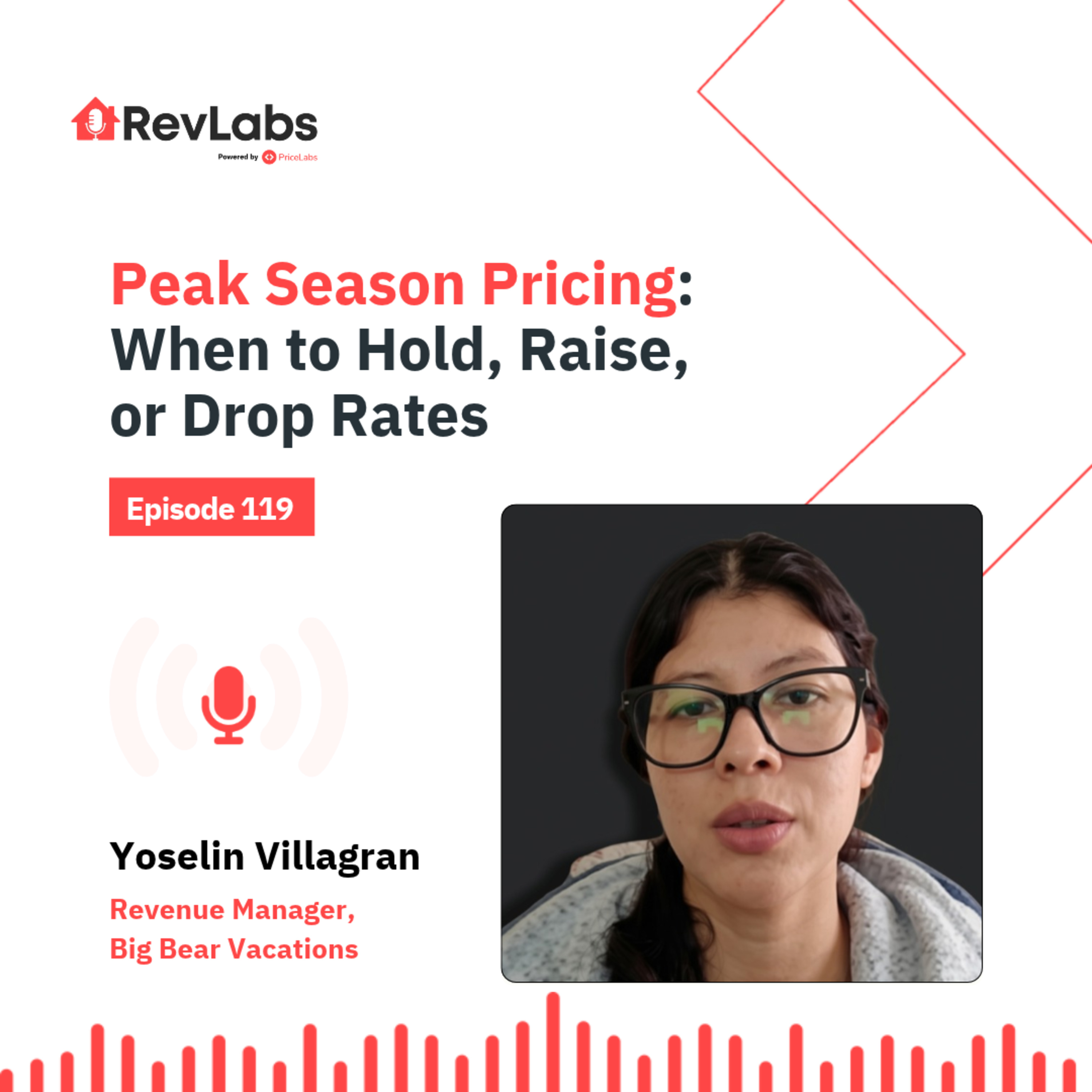 EP 119
13 de nov. de 2026
Peak Season Pricing: When to Hold, Raise, or Drop Rates ft. Yoselin Villagran
In a ski market, the weather forecast decides whether you raise, hold, or drop rates. Host Kyle Driskell sits down with Yoselin Villagran, Revenue Manager at Big Bear Vacations , who went from managing about 100 properties to around 300 cabins and homes in Big Bear Lake, CA, right before her first peak season in the role. How do you take control of a portfolio that size without breaking what already works? Yoselin breaks down her “perfect day” routine, her Monday-to-Friday cadence, and the “last booked” check she runs before touching price: titles, open calendars, active channels, owner blocks. ✅ You’ll learn how to: Build a daily routine that keeps 300 listings under control Diagnose visibility issues before you cut rates Use pacing vs. the market and snow forecasts to hold or drop rates Set minimum stays by property size and peak date Use Thanksgiving booking windows to plan Christmas and New Year’s For revenue and property managers running 100+ listings, especially anyone new to a market or role, a great episode to learn the market first and protect your peak rates. To learn more, visit https://www.pricelabs.co/enterprise Join RevLabs Newsletter and get curated insights from Kyle, featuring the best podcast conversations, market trends, upcoming live sessions, and practical trainings to help you grow as a revenue manager: https://survey.zohopublic.com/zs/NaBB1d Thinking of giving it a try? Sign up for a free 30-day trial period at https://pricelabs.co/users/sign_up
31 min
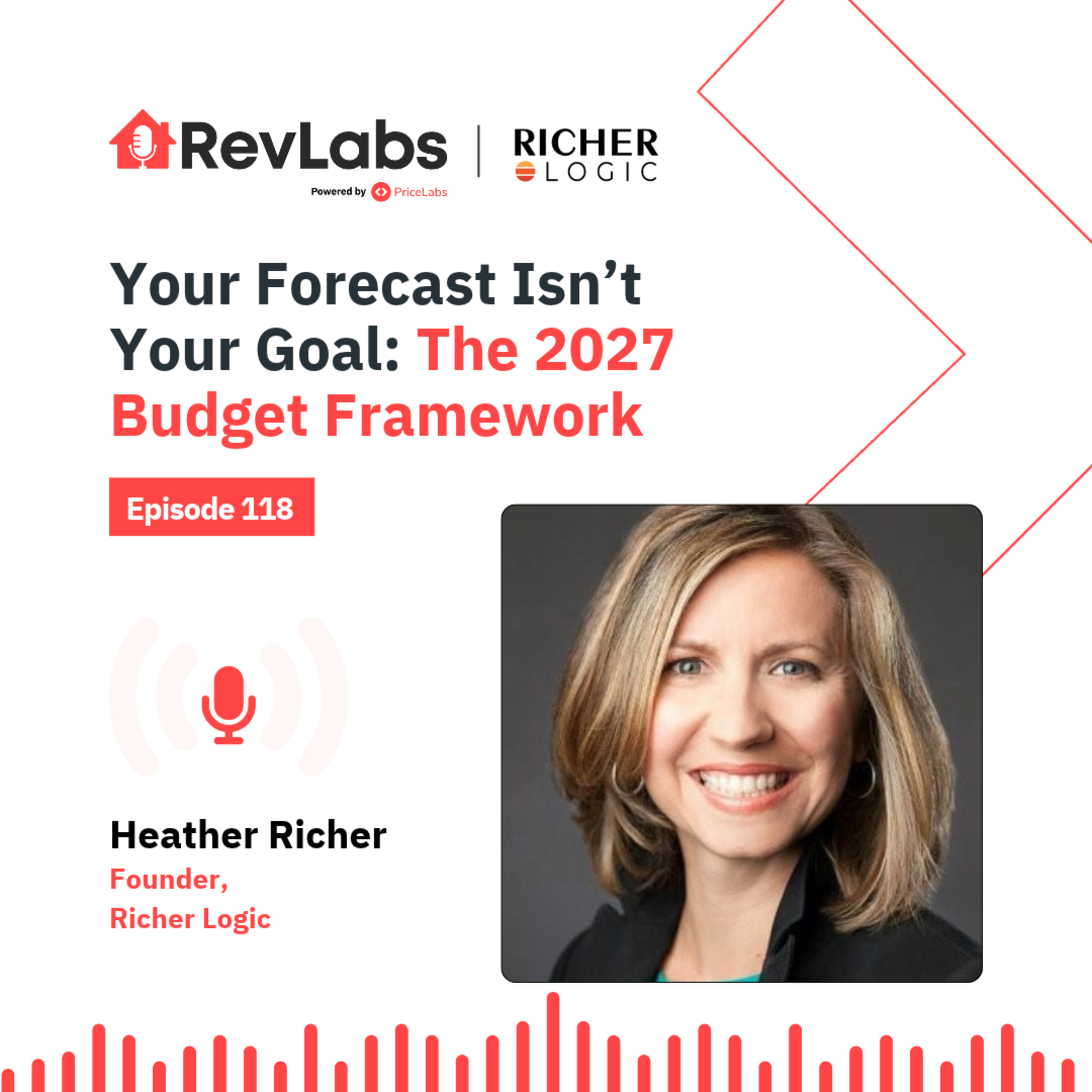 EP 118
6 de nov. de 2026
Your Forecast Isn’t Your Goal: The 2027 Budget Framework ft. Heather Richer
If your 15% growth target can’t survive a real model, it isn’t a forecast. It’s a hope. It’s budget season. In episode 4 of The Revenue Playbook, host Kyle Driskell sits down with Heather Richer, Founder of Richer Logic , to separate three numbers most STR teams blur together: the budget, the forecast, and the goal. Mix them up and you price to stale targets and disappoint owners. Heather walks through how to build a forecast from the outside in. She covers why “what’s different from last year” beats last year’s actuals, how shifting holidays move revenue between months, and how to stress-test a stretch goal. ✅ You’ll learn how to: Separate budget, forecast, and goal so your team agrees on success Build a top-line forecast from market outlook and available nights Adjust for what changed vs. last year: holiday shifts, new supply, owner use Test whether a goal is ambitious or unrealistic using a simple model Reforecast the next three months monthly and diagnose shortfalls against the market first For revenue managers setting 2027 numbers, this episode is all about the shift from defending a fixed number to running a living forecast backed by data. To learn more, visit https://www.pricelabs.co/enterprise Join RevLabs Newsletter and get curated insights from Kyle, featuring the best podcast conversations, market trends, upcoming live sessions, and practical trainings to help you grow as a revenue manager: https://survey.zohopublic.com/zs/NaBB1d Thinking of giving it a try? Sign up for a free 30-day trial period at https://pricelabs.co/users/sign_up
25 min
 EP 117
30 de out. de 2026
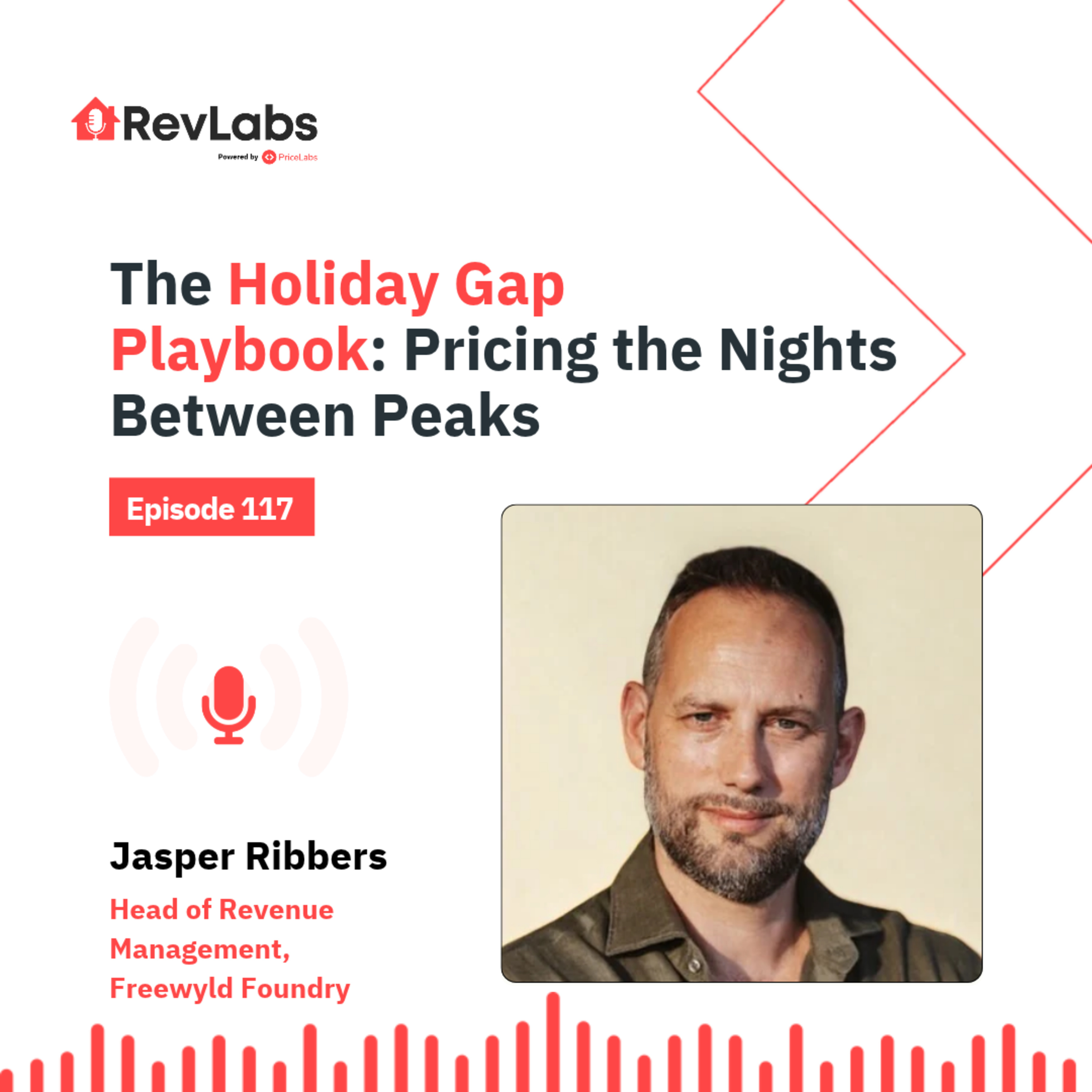
The Holiday Gap Playbook: Pricing the Nights Between Peaks ft. Jasper Ribbers
The holidays fill themselves. The nights around them are where Q4 is won or lost. Host Kyle Driskell sits down with Jasper Ribbers , Head of Revenue Management at Freewyld Foundry. Most operators assume Christmas and New Year’s will be fine. The real leak is everything else: low-season nights between peaks, rules that quietly block bookings, and big homes priced too high, too far out. Jasper breaks down his polarized approach: maximize ADR on the holidays, push occupancy on low-demand nights to protect OTA ranking. They cover reading booking-window shifts with Labor Day as a benchmark, risk for owner-operators vs. managed portfolios, why Freewyld runs two-night minimums through Christmas, and when strict rules (like Saturday-to-Saturday ski weeks) make sense. ✅ You’ll learn how to: Track holiday pacing and MPI separately from low-season dates Avoid overpricing peak dates far out, then scrambling last minute Set risk tolerance based on who owns the homes- Use shorter minimum stays to capture higher ADR holiday bookings Fill gap nights through adjacent guests, past guests, and your email list Walk restriction-heavy owners back with data For PMs, revenue managers, and owner-operators heading into Q4, especially with large or high-value homes, this is an episode packed with insights. To learn more, visit https://www.pricelabs.co/enterprise Join RevLabs Newsletter and get curated insights from Kyle, featuring the best podcast conversations, market trends, upcoming live sessions, and practical trainings to help you grow as a revenue manager: https://survey.zohopublic.com/zs/NaBB1d Thinking of giving it a try? Sign up for a free 30-day trial period at https://pricelabs.co/users/sign_up
42 min
Newsletter RevLabs
Se você cuida da receita, isto é para você
Uma newsletter, todo mês, cheia de estratégias de receita de especialistas, tendências do setor, guias práticos, histórias de clientes, webinars e as últimas novidades de produto para você sair na frente.
Entre na lista
Grátis, mensal, cancele quando quiser.

Escute. Evolua. Encha o calendário.
Episódios novos toda semana. Assine onde você costuma ouvir e não perca nada.
 Spotify
 YouTube
 Apple Podcast
Feito para grandes portfólios, com resultados comprovados
600,000+
Unidades sincronizadas por dia
160+
PMS e conexões
150+
Países atendidos
FAQ
As perguntas que os times Enterprise mais fazem
Precisa de algo mais específico? Nossos consultores de soluções respondem em detalhe em uma call de 30 minutos.