



The 2026 FIFA World Cup is more than just a global sporting event. It’s a monumental, once-in-a-lifetime opportunity for short-term rental (STR) property managers across North America. With matches set in 16 cities across the US, Canada, and Mexico, local tourism and accommodation demand will skyrocket.
As property and portfolio managers, you must move past setting static rates. It is time to embrace a data-driven revenue management strategy to capitalize on this massive influx of high-value guests. This article analyzes early market trends in key host cities and provides insights to optimize your occupancy rates and RevPAR.
Early Market Data: Trends in Host Cities
The surge in demand is already visible in forward-looking data. Markets are seeing significantly higher ADR (Average Daily Rate) and RevPAR (Revenue per Available Room) compared to the same dates last year.
The key takeaway from the early data is to push prices on the higher end now and not worry about low occupancy for the match dates in the near term.
Key Performance Indicators (KPIs) Around Group Stage Matches
Analysis of the 2016 FIFA Group Match dates shows a significant increase in occupancy and pricing power across several host-city stadiums. The tables below compare 2026 performance against the same dates in 2025.

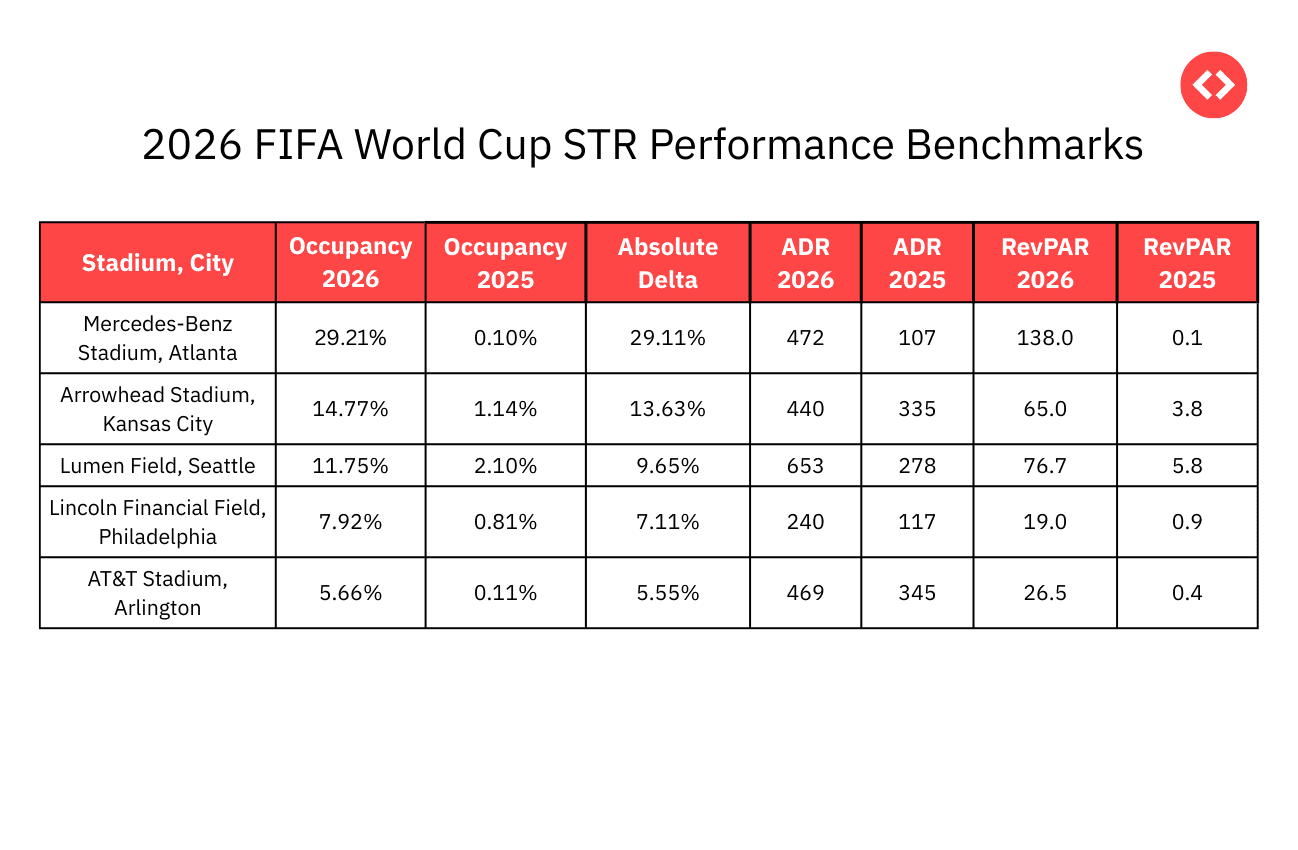
- Atlanta (Mercedes-Benz Stadium): Shows the largest projected increase in occupancy (Absolute Delta of 29.11%), with a staggering 340% relative increase in ADR. Property managers in Atlanta should maintain premium pricing, given the market’s status as a major travel hub, especially with its airport, which drives high demand.
- Kansas City (Arrowhead Stadium): Experienced a significant delta of 13.63% in occupancy and a 31% rise in ADR.
- Seattle (Lumen Field): Also shows strong early performance, with a 9.65% occupancy delta and a 135% increase in relative ADR.
DON'T GUESS YOUR WORLD CUP PRICE: Maximize STR Revenue with Real-Time Data
The 2026 FIFA World Cup means record demand, but static pricing will make you miss peak revenue. Get the dynamic pricing and market data you need to capture the maximum ADR for every match day.
Start Your Free Trial NowYour 7-Point STR Strategy for the World Cup
For property managers with listings in host cities, the preparation window is closing. Here are the most effective, data-driven strategies to secure maximum revenue.

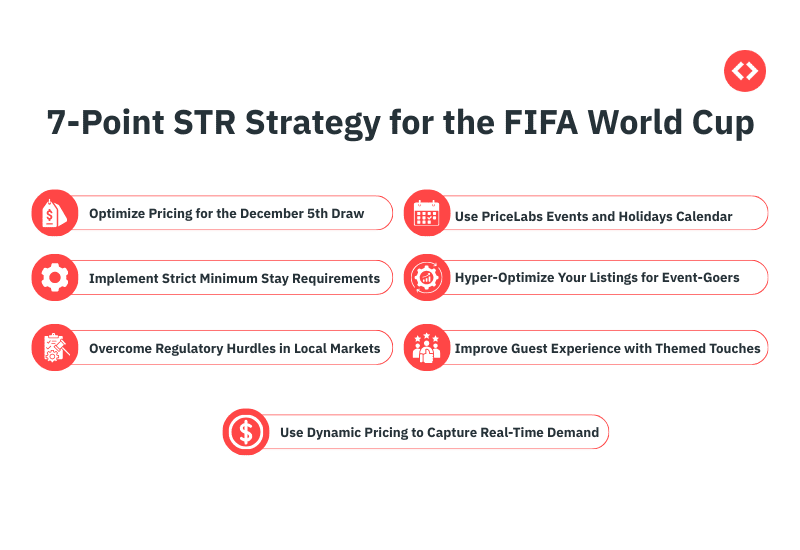
1. Optimize Pricing for the December 5th Draw
The December 5th draw is the single most critical turning point for pricing and short-term rental pacing. This is when the group-stage teams will be confirmed, allowing you to identify which high-demand countries (like Argentina, France, the United States, England, and Germany) will be playing in your city.
- Strategy Shift: The moment the match-ups are announced, demand will surge from specific international fan bases. You must be ready to make dramatic rate adjustments.
- Knockout Rounds: Pricing for the knockout stage should be pushed even higher relative to the group-stage matches, as the uncertainty around advancing teams means fans will pay even higher premiums for accommodations.
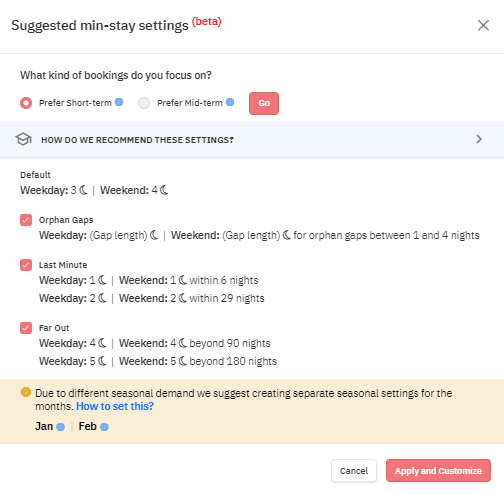
2. Implement Strict Minimum Stay Requirements (MinStay)
To reduce turnover costs and maximize event revenue, set a longer minimum stay requirement immediately.
- Avoid Gaps: If an event lasts 7 days, aim for a MinStay that encourages booking the entire duration. Failing to set the right minimum can leave unbooked days between stays, costing you potential premium revenue.
- PriceLabs Minimum Stay Recommendation Engine: Use a dynamic tool like PriceLabs to automate your nightly restrictions and minimize gaps.

3. Overcome Regulatory Hurdles in Local Markets
Some markets are already facing regulatory changes. For example, Kansas City defines STRs as less than 30 days and LTRs (Long-Term Rentals) as 30+ days. They also instituted a 90-day short-term permit near downtown that applies to the 90 days around the World Cup, which is currently restricting bookings.
- Compliance is Key: Property managers must stay up to date on local regulations to avoid fines or legal challenges, as cities often tighten rules ahead of major events to ensure housing supply.
- Targeted Outreach: Consider modifying your offering to target the mid-term rental market (30+ days) to attract event staff, media, and corporate clients seeking longer stays.
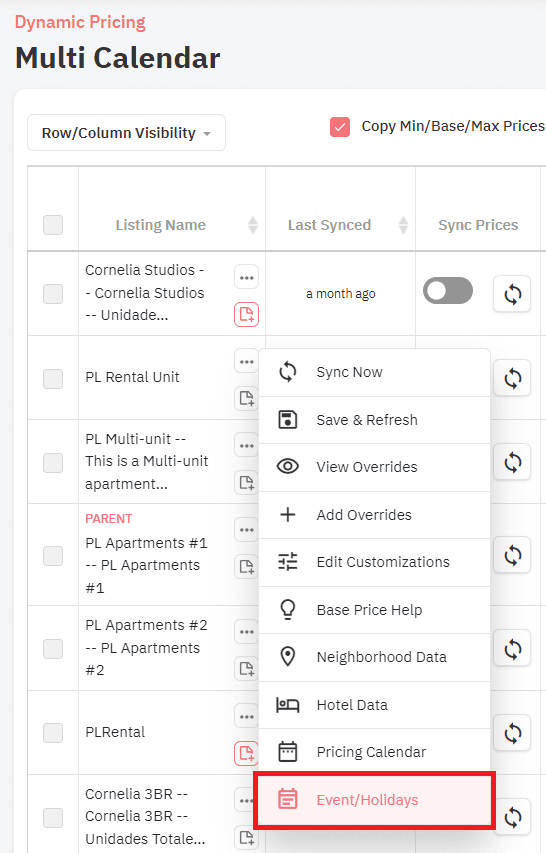
4. Leverage the PriceLabs Events and Holidays Calendar
You cannot manage what you don’t track. To streamline your research and planning, utilize the PriceLabs Events and Holidays Calendar feature.
- Early Insight: This tool highlights local events and high-demand dates, eliminating the need for manual research and keeping you informed.

5. Hyper-Optimize Your Listings for Event-Goers
Your listing title and description must be tailored to the event attendees to maximize discoverability. Free tools like Airbnb Description generator can help you write optimized titles and descriptions for your vacation rentals.
- Keyword Focus: Use keywords like “Spacious Apartment Near [Stadium Name] – Perfect for World Cup Fans!” or “Proximity to Fan Zone”.
- Amenity Focus: Showcase amenities that appeal to sports fans and international travelers:
- Access to local sports channels or live streaming services.
- Large-screen TVs and spacious gathering areas.
- Dedicated storage for sports gear (for participants).
- Proximity to the stadium, public transport options, and official Fan Zones.
6. Enhance the Guest Experience with Themed Touches
Since guests are paying a premium rate, their experience must match the price. Go above and beyond with personalized touches:
- Event Welcome Package: Include an event guide with local sports bars, shuttle services, Fan Zone details, and a small, themed amenity, such as a local team scarf or a branded snack pack.
- Increase Essentials: For back-to-back turnovers during busy event periods, ensure you stock up on extra towels, linens, and cleaning supplies well in advance.
7. Use Dynamic Pricing to Capture Real-Time Demand
In a fluctuating, high-stakes market like the 2026 FIFA World Cup host cities, a static pricing model is a significant revenue management mistake. Your rates must adjust in real time alongside your customizations as demand builds.
This is where a data-driven solution like PriceLabs Dynamic Pricing becomes essential. The tool automatically tweaks your STR property’s nightly rates based on critical market metrics, ensuring your pricing is competitive yet profitable.

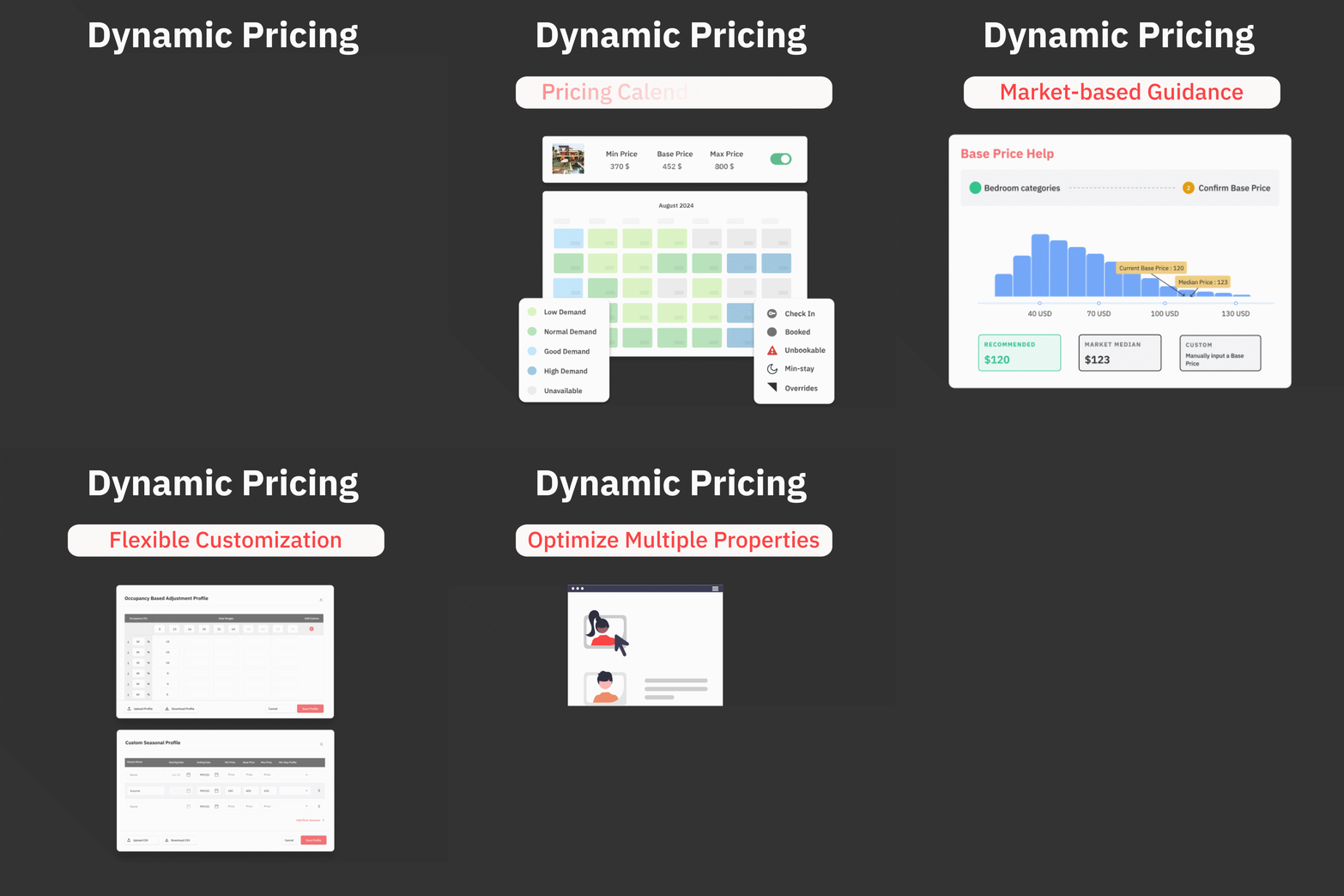
Here is how Dynamic Pricing maximizes your revenue for major events:
- Real-Time Rate Adjustment: The algorithm analyzes daily data from platforms like Airbnb and Vrbo to reflect sudden shifts in market demand. This allows you to capture high-value, last-minute bookings as the event approaches.
- Optimal Seasonality and Demand Capture: Dynamic Pricing accounts for both predictable seasonality and unpredictable demand surges related to specific match dates, team confirmations, and local festivities. This prevents you from being booked too early at a lower rate or being priced too high and missing out on bookings entirely.
- Competitor Awareness: It continuously monitors local competition. This allows you to set a base price and a minimum price that align with the market, but are adjusted dynamically based on occupancy and lead time.
- Automation of Restrictions: Beyond just nightly rates, the tool manages minimum-stay restrictions. Thus, helping you avoid unbooked gaps between reservations and ensuring you’re booked for the full, high-value duration of the event.
PriceLabs Market Dashboard: Your Competitive Edge
To execute these strategies, you need real-time, comparative data. The PriceLabs Market Dashboard is essential for a winning competitive analysis.


- Performance Benchmarking: Compare your property’s performance against the market average using real-time KPIs such as Estimated Revenue, Average RevPAR, and Average ADR.
- Visualize the Competition: Use the Listing Map and Comp Sets to map the competitive landscape, identify competitors in your area, and explore their offerings.
- Forecasting Tools: Anticipate future occupancy trends to identify emerging high-demand periods and proactively adjust your pricing strategies, allowing you to front-load higher prices.
Final Thoughts
The 2026 FIFA World Cup is a unique opportunity to achieve a more substantial return on investment. While early booking data and pricing trends look highly promising across host cities, the key to success lies in remaining agile and data-driven.
The confirmation of group-stage teams on December 5th will be a pivotal moment. By leveraging dynamic pricing and cutting-edge market analysis tools, you can strategically position your property to maximize revenue and secure your place at the top of the competitive leaderboard.
Frequently Asked Questions
1. What are the knockout rounds of the FIFA World Cup 2026?
The tournament features an expanded 48-team format with 12 groups of four. The knockout stage will begin after the group stage, with the top two from each group—plus the eight best third-placed teams—progressing to a new 32-team knockout round. The rounds include the Round of 32, Round of 16, Quarter-finals, Semi-finals, and the Final.
2. Which countries are confirmed to qualify for the 2026 FIFA World Cup?
As co-hosts, the United States, Mexico, and Canada automatically qualified. A total of 42 of the 48 teams have qualified as of the draw date, with the remaining six being determined in March 2026 via playoffs. The top seeds in the draw include major teams like Spain, Argentina, France, England, and Brazil.
3. How should I adjust my MinStay for the World Cup?
You should adjust your MinStay to align with the whole duration of a match or a cluster of matches in your city to reduce turnover and maximize your ADR during the high-demand period. Tools like PriceLabs’ MinStay Recommendation Engine can help you set these restrictions dynamically based on your market’s booking patterns for similar events.