Get started with PriceLabs now!
Want to learn what PriceLabs can do for you? See for yourself with a free trial. Get started now!

Owners set rules for reasons that feel solid to them. A three-night minimum keeps cleaning costs down. A 300 rate floor protects the property's image. A week-only rule in summer avoids wear and tear. Each rule has a cost, and owners rarely see it because the bookings they block never show up anywhere.
This guide covers one job: putting a number on that cost, including the turnover costs owners worry about, and turning the result into a pilot the owner agrees to. For how minimum stays work in general, see our guide to setting minimum stays. The full pricing framework sits in the revenue management guide.
Most restriction conversations go wrong because the manager argues revenue and the owner is thinking about expenses. More, shorter stays mean more cleans, more laundry and more chances for damage. An owner who pays for turnovers is right to ask about them.
So price the objection in. Compare the owner's current rules with a proposed change on the number that matters to them: what lands in their account after the management fee and turnover costs. If the change still wins on that number, the objection is answered with their own logic. If it does not, the owner was right, and you have saved yourself an argument.
Before proposing anything, look back at a recent period under the current rules. You are looking for nights that went unsold because of a rule, not because of demand:
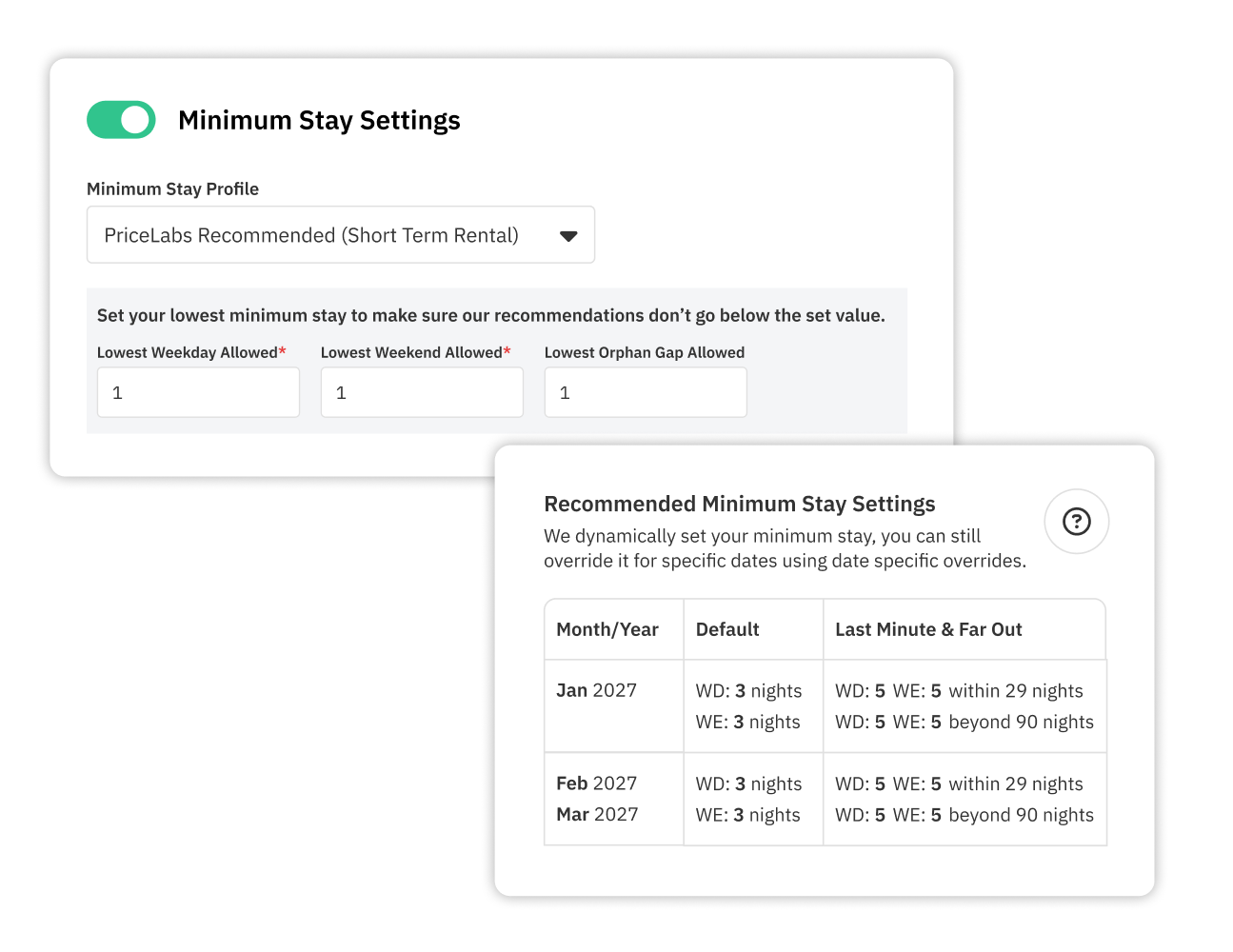
In PriceLabs, a quick check is how many of the next 7 and 15 days are sitting at the minimum price. PriceLabs guidance treats a high share as a sign the minimum is set too high for current demand, and suggests keeping the minimum 20% to 30% below the base price so pricing has room to move.
Use the calculator below with real figures from that period. For the pilot side, use a realistic estimate: what similar homes with shorter minimums booked over the same dates, or what your own calendar suggests would have filled.
Use the comp set the owner has already agreed to for those similar homes. Our guide to defending your comp set covers how to choose it.
In the default example, the current rules book 18 nights across 5 stays at an average of 310. The pilot books 23 nights across 9 stays at 292. The pilot has a lower average rate and nearly twice the turnovers. After a 20% management fee and 40 per turnover, the owner still ends up with 749 more.
The pilot does not always win. Change the turnover cost to 150 and the gap falls to about 309. The owner can see exactly which assumption decides the answer.
Owners agree to tests more readily than to changes. A good pilot has four parts:
Write the success measure down before the pilot starts. A pilot whose goal is set after the results come in will convince nobody.
Restrictions do not have to be all or nothing. PriceLabs gives you several ways to relax a rule only where it costs money:
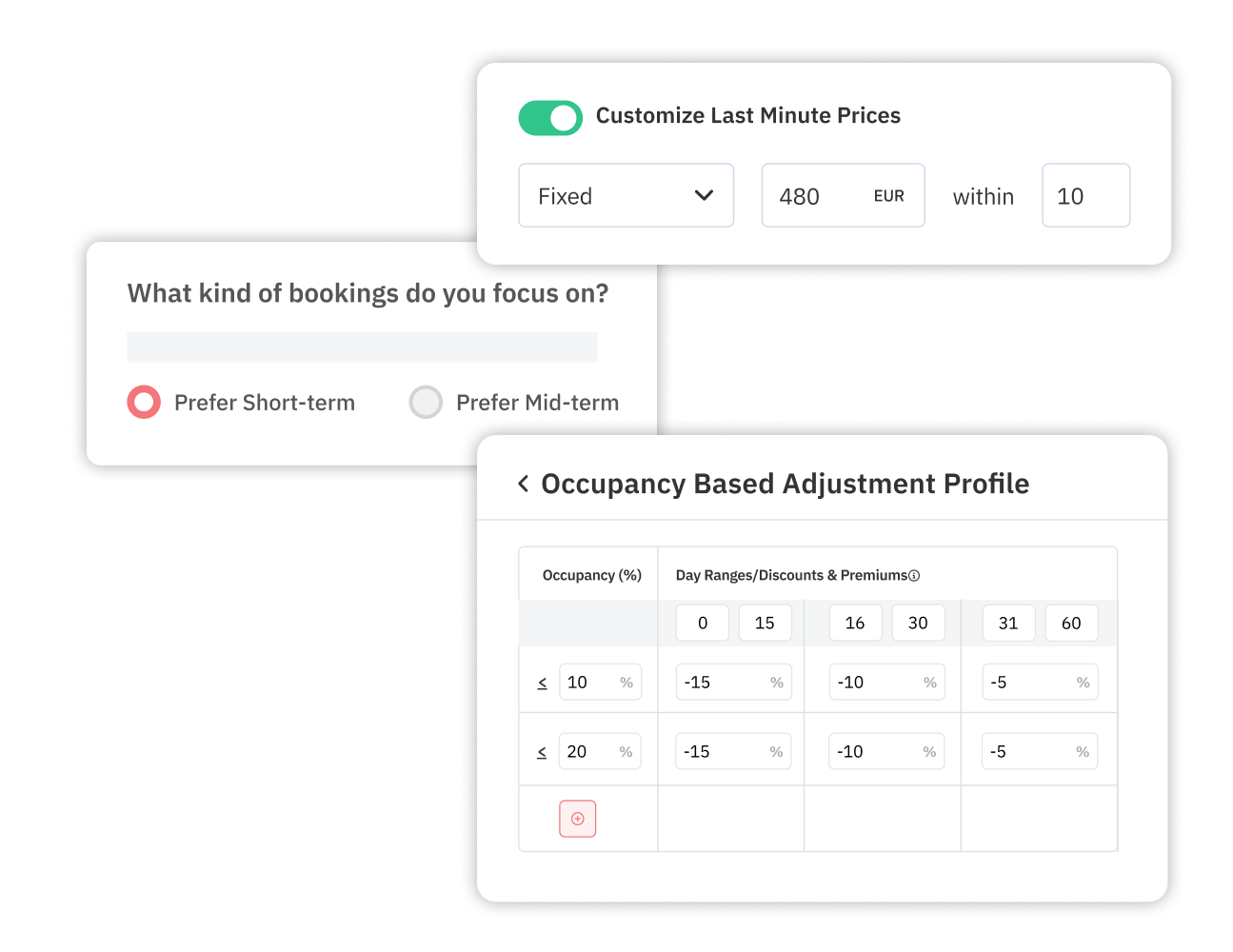
For more on filling gaps between bookings, see orphan gap strategies.
Some rules have nothing to do with money. An owner who blocks the last two weeks of August for family use is not making a revenue decision, and a calculator should not be used to argue with it. Block those dates and leave them out of the comparison.
The same goes for owners who simply want a quieter property. If an owner prefers fewer, longer stays and accepts the cost, record the decision and the number. When they later ask why revenue trails similar homes, the record answers for you. Different owners want different things from the same pricing tools, and our piece on owner pricing strategies covers matching strategy to the owner.
When the pilot ends, send the owner the same comparison with actual numbers. If it won, propose extending it to a wider set of dates. If it lost, restore the old rule and say so plainly.
Managers who report losing pilots get to run the next one. Managers who only report wins find owners stop agreeing to tests.
A rate floor set too high has a cost that is easy to miss, because the lost bookings never appear on any statement. Our guide on why lowering prices is not always the answer covers the other side of that trade-off.
Want to learn what PriceLabs can do for you? See for yourself with a free trial. Get started now!