Get started with PriceLabs now!
Want to learn what PriceLabs can do for you? See for yourself with a free trial. Get started now!
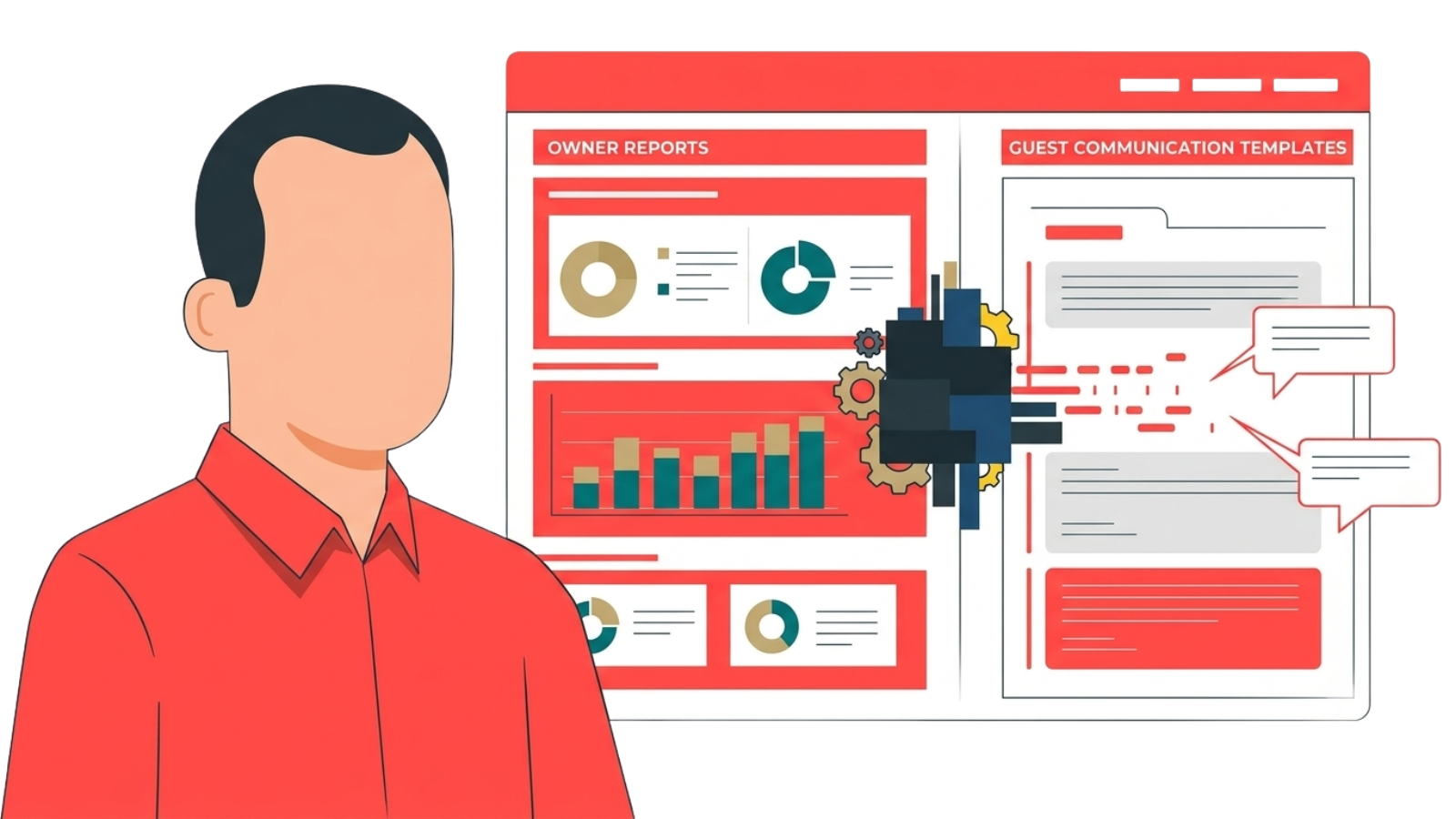
Your owner statements go out in three different layouts. The guest welcome sheet still carries a logo you retired last spring. Your newest flyer was built in a hurry by someone who could not find the brand colours. None of this is a crisis, and all of it quietly costs you credibility with the owners who are deciding whether to renew.
AI branding for vacation rentals is the shortcut that a lot of property managers are now testing, and it works best when you treat it as a formatting layer sitting on top of data you already trust. This guide covers what these tools actually do today, where they fall short, and how to set one up without handing your brand to a black box. If you are still assembling the wider stack, the vacation rental automation guide is the right starting point.
AI branding for vacation rentals means giving an AI design tool your logo, colours, fonts, and sample layouts once, then asking it to produce owner reports, guest documents, and marketing assets that follow those rules. The tool handles layout and styling. It does not pull your booking data on its own, and it does not replace the reporting you already run.
That distinction matters more than the marketing around these tools suggests. A design system holds your visual rules. Your numbers still come from your rental software stack and your revenue tooling. Getting those two things confused is how managers end up with a beautiful report full of stale figures. Brand consistency is a styling problem. Accuracy is a data problem.
Property managers already use AI in narrow, useful ways. Plenty are running it for listing copy and campaign planning, which the AI marketing guide walks through, and for pattern spotting in demand data, covered in generative AI revenue management. AI branding for vacation rentals is simply the next narrow job on that list.
Ask most managers where their week goes and reporting is near the top. Nobody is bad at their job. The format just resets every month, and every reset invites a small error.
The owner relationship is where this bites hardest. Owners read presentation as competence, and a scrappy statement undercuts strong numbers. That dynamic is covered well in the guidance on building owner trust, and it gets sharper during soft months, which is why the notes on slow season conversations are worth a read before your next review call.
Guest documents carry the same risk on the other side of the business. Arrival instructions, house manuals, and checkout notes shape reviews long before anyone comments on the beds. Managers running tight cleaning processes and a clear turnover checklist already know how much a single outdated detail costs.
Setting up AI branding for vacation rentals is far less involved than the output suggests. Budget a few hours across a week and test on something low risk before you touch a live owner statement.
Collect your logo in vector form, your hex codes, your font names, a screenshot of your website, and three property photos you are happy to reuse. If you have never written these down, this step is the real win regardless of which tool you pick. Managers running distributed teams will recognise the value here from the same discipline that makes remote management workable.
Upload everything, then name it something obvious like "Coastline Properties system" so the whole team reaches for the same thing. Most tools will ask clarifying questions about spacing, tone, and hierarchy. Answer them properly. Ten minutes here saves a month of corrections, and it gives you the shared reference that makes team collaboration less painful.
Take last month's owner statement and ask the tool to lay it out again. Compare side by side. You are checking whether the numbers survived the move intact, not whether the design looks impressive. Keep a running note of what you had to correct, in the same spirit as listing notes.
Owner report automation works when the data hand off is clean. Export your figures, paste them in, let the tool style the page. Anything requiring judgement, such as a note explaining a weak month, still gets written by a person. That balance is the same one described in smart customisation.
Once the owner side holds up, move to guest facing documents. Arrival guides, house manuals, and post stay notes benefit most, and they feed directly into the repeat business logic behind repeat guest strategy and wider direct booking growth.
This market moved quickly through 2026, and several claims circulating about it are out of date. Here is where the main options actually stand, along with the limits worth knowing before you commit.
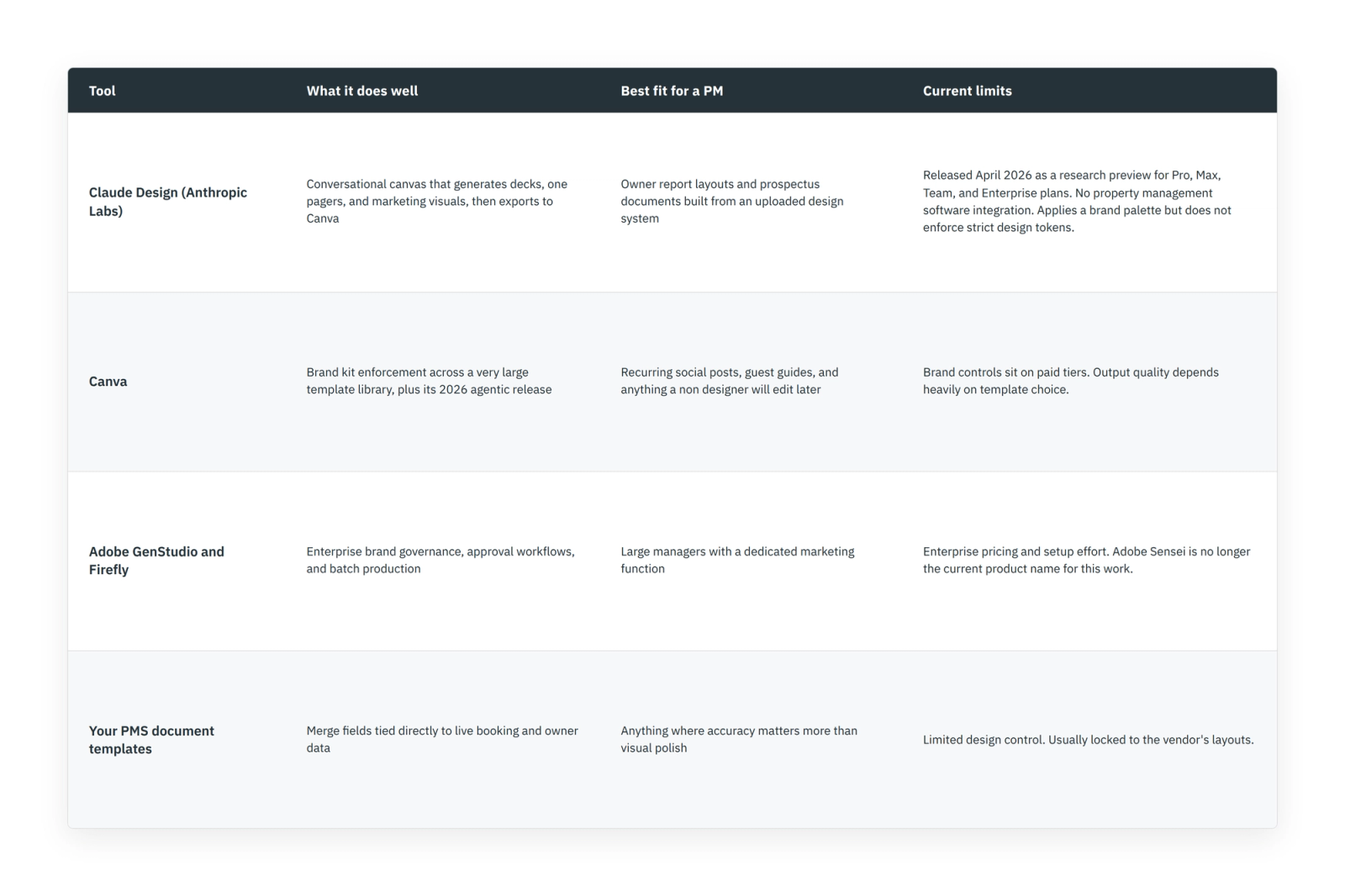
For most managers between six and fifty properties, a design tool paired with your existing PMS templates covers the ground. Enterprise platforms solve a brand consistency governance problem you probably do not have yet. The property management guide sets out where each layer of the stack earns its keep.
One honest caveat on results. You will see impressive time saving figures quoted for these tools, and almost none of them are traceable to a published study of vacation rental operators. Time a month of reporting before you switch, then time it after. Your own baseline is the only number worth quoting to an owner.
A design system is only as good as the numbers you feed it. This is where AI branding for vacation rentals connects back to revenue work rather than sitting off to the side as a marketing toy.
Owner reports need occupancy, rate, and pacing figures that hold up to questions. Portfolio Analytics gives you portfolio wide performance views, and the portfolio analytics walkthrough shows how managers structure that data before it reaches an owner.
For forward looking figures, pacing reports answer the question owners actually ask, which is what the next ninety days look like. The report builder lets you shape those outputs before they hit your design template.
Rate decisions sit underneath all of it. Dynamic Pricing is what gives you something worth reporting, and the practical view from a property manager's workflow shows how those decisions become an owner conversation. Managers tracking improvement over time will find the framework in performance tracking useful.
AI is already doing quiet work on the analysis side too, described in AI driven insights and the AI powered feature set. Design is the presentation layer on top of that work.
Pick your single most repeated document. For most managers that is the monthly owner statement. Rebuild it once inside a design system, send it to two owners you trust, and ask them directly whether it reads better. Then move to guest documents, then marketing. Handled this way, AI branding for vacation rentals earns its place gradually instead of all at once. The sequencing advice in the vacation rental marketing guide applies here as well. Consistent branding is worth having, and it is now cheap enough that there is little reason to keep rebuilding the same layout every month. Start with the automation guide if you want to map the rest of your stack first.
Upload your logo, hex codes, fonts, a website screenshot, and a few property photos to an AI design tool, then save the result as a named design system. Every new document you generate inherits those rules. Test it on a document you have already sent before using it with owners.
Canva suits teams who want templates and easy editing by non designers. Claude Design suits managers who prefer describing what they want and refining it through conversation, though it is still a research preview available on Anthropic's paid plans. Both handle brand consistency at well under enterprise cost.
Partly. Most property management systems export owner data as CSV or PDF, which you then bring into a design tool for layout. Direct integration between a PMS and an AI design tool is rare today, so plan for an export step rather than a fully hands off pipeline.
They reduce formatting and version errors because every document draws from one saved set of rules. They do not check whether your content is accurate. An outdated wifi code will still go out looking beautifully branded, so keep a human review step for anything guest facing.
There is no reliable published benchmark specific to vacation rental operators, so treat any quoted percentage with caution. Measure your own baseline by timing one full reporting cycle before you switch, then repeat the measurement a month later.
Want to learn what PriceLabs can do for you? See for yourself with a free trial. Get started now!