Get started with PriceLabs now!
Want to learn what PriceLabs can do for you? See for yourself with a free trial. Get started now!
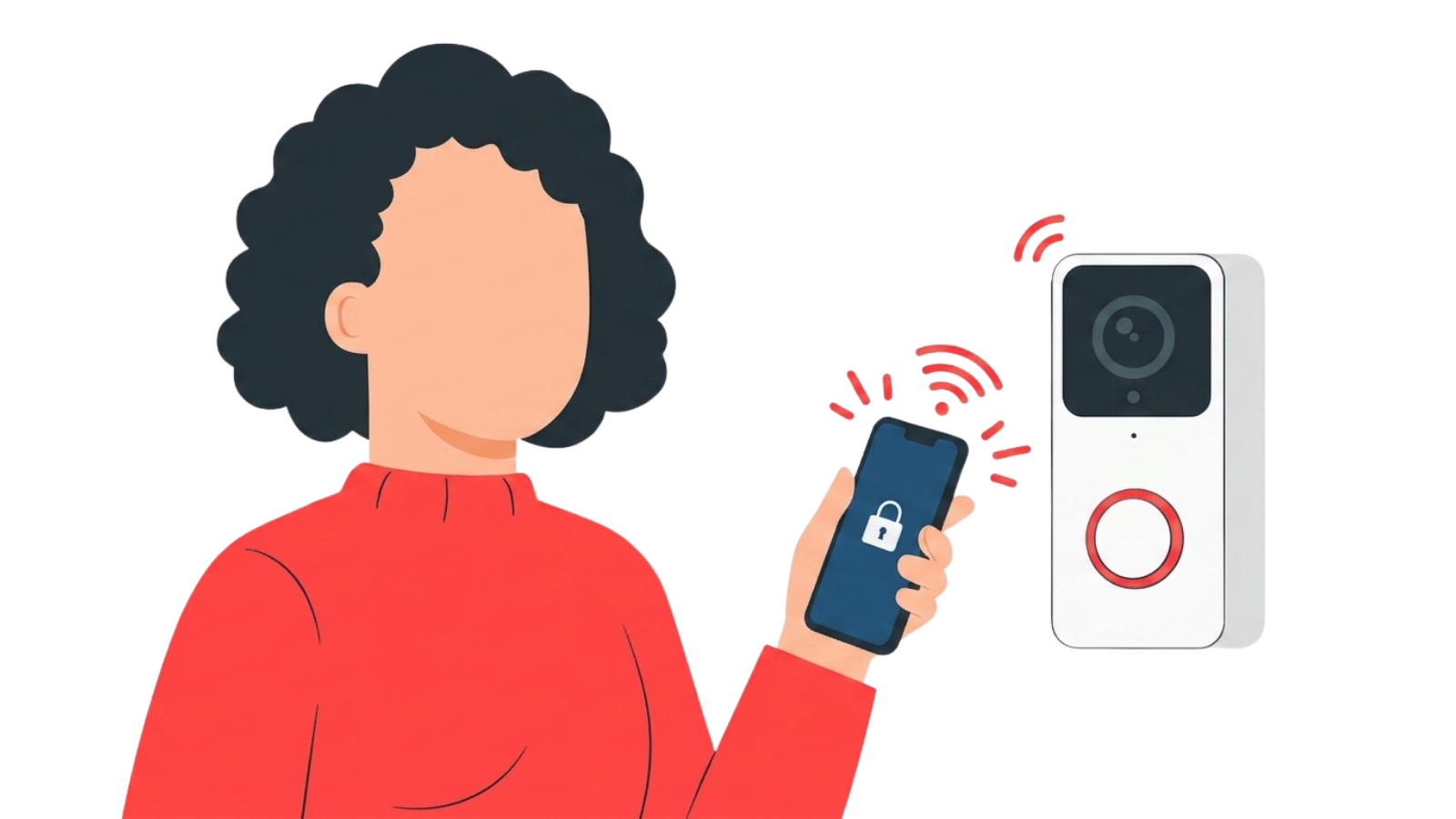
It is 11 PM on a Friday and a neighbor calls you. There is a party happening at your rental. You don't know how many people are there, whether they are damaging anything, or how your guests will react when you call. You have no footage, no noise data, and no leverage. Smart security systems for Airbnb exist specifically to prevent this scenario — and to put you in a much stronger position when it happens anyway. This guide covers the four security device categories every independent host needs in 2026: smart locks, noise monitors, exterior cameras and video doorbells, and environmental sensors.
Before going further: guest privacy is a real consideration and Airbnb takes it seriously. Every device in this guide is legal and policy-compliant when installed and disclosed correctly. Privacy-respecting security is not a contradiction. The tools covered here protect your property without recording guests' conversations, monitoring their behavior inside your home, or in any way crossing the line that Airbnb's camera policy defines clearly.
Smart locks are the most important single security investment an Airbnb host can make — ahead of cameras, ahead of noise monitors, ahead of every other device on this list. The reason is structural: smart locks solve the key handoff problem permanently. Every guest gets a unique access code generated for their reservation. The code activates at check-in time and expires automatically at checkout. No key exchange, no locksmith calls, no risk of a copied key granting access after the guest has departed.
The auto-expiring code system works through integration between your smart lock and your booking platform. When a reservation is confirmed, a unique 4 to 8-digit code is generated, sent to the guest as part of their pre-arrival instructions, and programmed to deactivate at the checkout time on their departure date. For hosts using a PMS, this process is fully automated — the code generation, delivery, and expiration happen without any manual action. Airbnb smart locks with direct platform integration or PMS integration eliminate what is otherwise one of the most time-consuming and error-prone manual steps in the hosting cycle. Vacation rental automation starts with the front door.
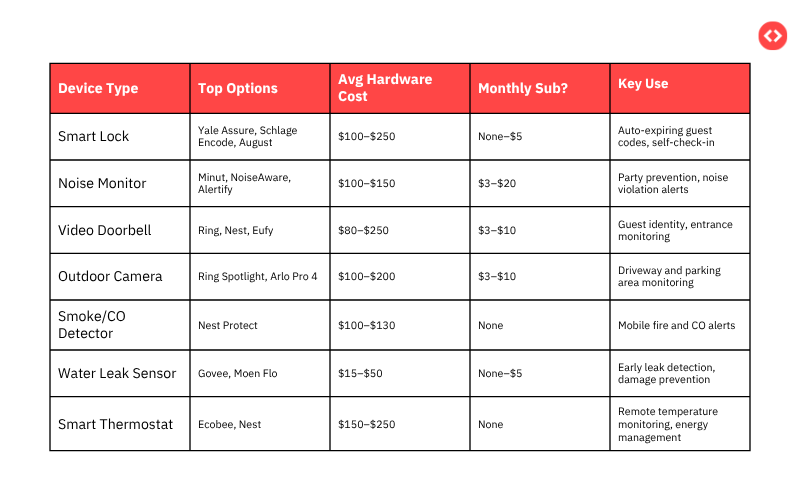
The top smart lock brands for Airbnb hosts in 2026:
Keyless entry for vacation rental properties delivers its value not just in access control but in the guest experience it enables. Self-check-in is consistently one of the top-rated elements of a stay in Airbnb guest reviews. When guests can arrive at their own pace, let themselves in without waiting for anyone, and have a code that works exactly when promised, the stay starts positively. Smart lock integration is a guest satisfaction investment as much as a security one. Airbnb hosting best practices consistently include smart lock installation as a near-universal recommendation.
One practical backup to always maintain: a small lockbox with a physical key for genuine emergencies — dead phone, code communication failure, or the rare lock malfunction. Smart locks are highly reliable, but a physical key backup prevents a guest from being locked out while you troubleshoot remotely at 2 AM.
Vacation rental noise monitoring devices measure sound decibel levels in real time but do not record audio, capture conversations, or collect any identifiable sound. They detect how loud a space is, not what is being said. This is the critical distinction that makes noise monitors legally permitted inside STR properties and compatible with Airbnb's privacy policies. A noise monitor is not a recording device. It is a volume sensor with a wireless alert system.
The alert workflow is straightforward: the device detects sound levels above your configured threshold, sends a push notification or SMS to your phone, and you message the guest to let them know the volume needs to come down. Most situations resolve at this step. Guests who know the monitor exists and receive a polite message from the host almost always comply. The monitor's existence as disclosed in your listing also functions as a deterrent — guests who are planning to host a large party will often book a different property when they see the noise monitoring disclosure. Management best practices for noise-sensitive neighborhoods include making the noise monitor prominent in your listing description rather than buried in the house rules.
Leading noise monitor options for Airbnb in 2026:
Airbnb requires disclosure of noise monitoring devices in your listing description. A straightforward sample disclosure: "This property uses a privacy-safe noise level monitor (no audio or voice recording) to help maintain good neighbor relations and protect the home." This language is accurate, reassuring, and sets expectations without creating anxiety. The noise monitor for Airbnb also provides documented evidence if a damage or noise complaint claim ever needs to be filed — a record of when noise levels spiked and for how long is meaningful documentation that informal recollections cannot provide. Vacation rental reviews from guests who encountered issues are significantly less damaging when you have documentation of how and when those issues were addressed.
Airbnb's camera policy is clear: exterior cameras covering entrances, driveways, and outdoor spaces are permitted and must be disclosed in your listing. Interior cameras in any living space, bedroom, or bathroom are strictly prohibited. Violation of this policy results in permanent removal from the Airbnb platform. The permitted cameras are meaningful tools for host protection; the prohibited ones are not a gray area.
The primary use case for a video doorbell is guest identity verification. Knowing that the person who entered your property at check-in matches the reservation guest — and that their arrival time was recorded — is valuable documentation for any security deposit claim or damage dispute. Airbnb home security cameras at the entrance also detect unauthorized guests arriving after check-in, which is one of the most common sources of house rule violations in urban markets and near-event venues.
Top video doorbell options for Airbnb hosts:
For driveway and parking area monitoring, Ring Spotlight Cam and Arlo Pro 4 are both reliable options that cover outdoor spaces without any intrusion into the property interior. Frame camera disclosures positively in your listing: "For your safety and ours, we have exterior cameras at the front entrance and driveway." This language positions the cameras as a safety feature rather than a surveillance system, which is accurate and reduces guest friction. Airbnb security devices that are disclosed professionally add to the listing's credibility rather than creating concern.
Smoke and CO detectors are required by Airbnb's safety standards and by law in most jurisdictions. Smart smoke detectors that send mobile alerts are the standard for STR hosts because a standard alarm that sounds in an unoccupied property alerts no one. The Nest Protect (smoke and CO combined, Wi-Fi alerts to your phone) is the standard recommendation for short-term rental properties. Vacation rental technology at the safety layer is not optional; it is the baseline for responsible hosting.
Temperature monitoring serves a different but equally important function: it protects the property from HVAC failures and pipe freezes that can cause catastrophic damage without triggering any visible alarm. Smart thermostats like Ecobee and Nest allow hosts to monitor the property's temperature remotely, receive alerts if the temperature goes outside a safe range, and allow guests to self-adjust within host-defined limits. A $200 smart thermostat can prevent a $10,000 pipe burst during a cold snap. Revenue performance is undermined instantly by a major property damage event; environmental sensors are an inexpensive form of revenue protection.
Water leak sensors are perhaps the most overlooked item in the STR security toolkit. Inexpensive sensors (Govee, Moen Flo, Phyn) placed under sinks, beside washing machines, and near water heaters can detect a leak in minutes rather than hours or days. Water damage is the single most expensive property insurance claim category for vacation rental hosts. A $15 to $50 sensor placement at each high-risk location is among the highest-ROI investments in the entire security stack.
For budget-conscious hosts, multi-sensor devices like Minut and Alertify cover noise, temperature, humidity, and smoke detection in one unit, replacing several single-purpose sensors. For a property where you want comprehensive coverage without mounting multiple devices in every room, a multi-sensor approach reduces both cost and installation complexity while maintaining smart home security for short-term rentals across all critical categories.
The priority order for building a smart security stack is clear:
Priority 1 — Smart lock: Non-negotiable. Install before the first guest checks in. Approximately $100 to $250 in hardware, zero to $5 per month in subscription fees. This is the one automation that affects every single reservation.
Priority 2 — Noise monitor: Essential for any property in a neighborhood-sensitive area or managed remotely. Approximately $100 to $150 hardware, $3 to $20 per month in subscription. Best smart locks for Airbnb hosts in 2026 are almost always paired with a noise monitor by experienced operators for this reason.
Priority 3 — Video doorbell: Highly recommended for guest identity verification and entrance monitoring. Approximately $80 to $250 hardware, $3 to $10 per month. Prioritize before an outdoor camera if the budget requires a choice.
Priority 4 — Smoke/CO plus environmental sensors: Required by platform policy and most local laws. Approximately $100 to $200 for Nest Protect plus a smart thermostat. Water leak sensors add $15 to $150 depending on coverage level.
A complete basic security stack — smart lock, noise monitor, video doorbell, Nest Protect, smart thermostat — runs approximately $400 to $700 in hardware plus $15 to $35 per month in subscriptions. This is a business expense with direct impact on claim outcomes, review scores, and guest satisfaction. Revenue management and property protection work together: a well-secured, well-reviewed property commands higher rates and experiences fewer costly disruptions.
Integration tip: choose smart lock and noise monitoring devices that connect with your PMS so code generation, noise alerts, and guest communication flow through one operational system. PriceLabs integrates with 150+ PMS platforms, meaning pricing optimization and property security operate within the same connected technology ecosystem. PriceLabs Market Dashboards let you benchmark your rates against comparable, well-reviewed properties and ensure that your security and quality investments are reflected in your pricing position.
No. Airbnb's policy strictly prohibits interior cameras in any living space, bedroom, or bathroom. Exterior cameras covering entrances, driveways, and outdoor areas are allowed but must be disclosed in your listing description. Placing undisclosed interior cameras is grounds for permanent removal from the Airbnb platform and may carry legal liability as well.
The top privacy-safe noise monitors for Airbnb are Minut (noise, occupancy, temperature, smoke; approximately $15/month), NoiseAware (indoor plus weatherproof outdoor; approximately $20/month), and Alertify (noise, temperature, smoke, humidity; Airbnb-partnered). All three detect decibel levels only and do not record conversations or audio.
Yes. Airbnb requires hosts to disclose any cameras or noise monitoring devices in their listing description. Smart locks and environmental sensors like thermostats and smoke detectors do not require specific disclosure under Airbnb's policy, though transparent communication about the property's smart features is always good hosting practice and sets accurate expectations.
The Yale Assure Lock 2 (direct Airbnb integration), Schlage Encode Plus, and August Wi-Fi Smart Lock are consistently recommended among the best for Airbnb hosts. Each generates unique per-guest access codes and integrates with major PMS platforms for automated code delivery, eliminating manual code management entirely.
Positively and consistently. Smooth self-check-in enabled by smart locks is one of the highest-rated elements of a guest stay. Disclosed noise monitors signal to guests that you take neighborhood relations seriously, which filters out guests who are planning policy violations. Properties with documented security infrastructure also have stronger documentation for damage claim resolutions, reducing costly disputes that damage review scores.
If a full smart-lock system is more than you need right now, a simple lockbox gets you affordable self-check-in.
Want to learn what PriceLabs can do for you? See for yourself with a free trial. Get started now!