Get started with PriceLabs now!
Want to learn what PriceLabs can do for you? See for yourself with a free trial. Get started now!
When you book an Airbnb, you expect the comforts of home, not the creeping suspicion that someone might be watching. Over the years, some travelers have stumbled upon tiny hidden cameras tucked inside clocks, smoke detectors, or even phone chargers. Naturally, these discoveries sparked outrage and serious concerns about privacy. In response, Airbnb introduced a sweeping Airbnb camera policy in 2024: a global ban on all indoor cameras, even in shared spaces. This article will help you understand what that means for you and help you prepare your property for your next guest.
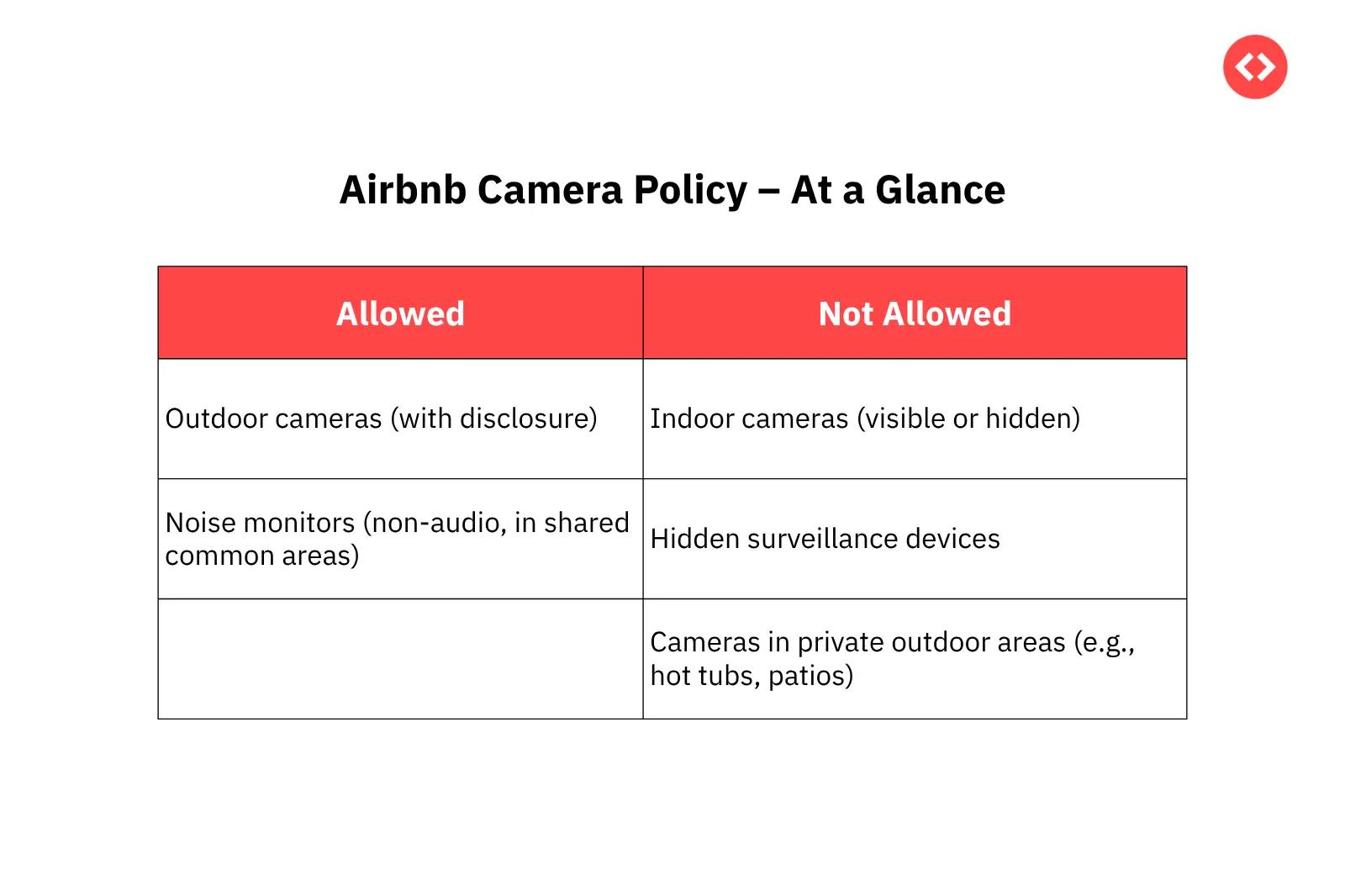
As of April 30, 2024, Airbnb officially prohibits any type of indoor camera in a listing. That includes obvious security cams, covert devices, smart home assistants with cameras, and even unplugged or non-functional units. If it looks like a camera and it’s indoors, it’s not allowed.
There’s one small exception: certain countries like Japan may require limited surveillance in hotel-style properties for regulatory reasons. Even then, the camera must face a non-private entry and cannot record audio. It must also be disclosed. You should check the short-term rental regulations in your region to better understand this.
Simply put, people don’t want to worry about being watched while they sleep, eat, or relax. Airbnb’s internal research showed guests were significantly less likely to book listings with any kind of surveillance, disclosed or not. Trust is at the core of their business model, and this change reflects that.
Yes, outdoor cameras are still allowed but they come with strict conditions. The idea is to help hosts monitor the property for safety, not invade a guest’s personal space. You shoud disclose it in your Airbnb listing description.
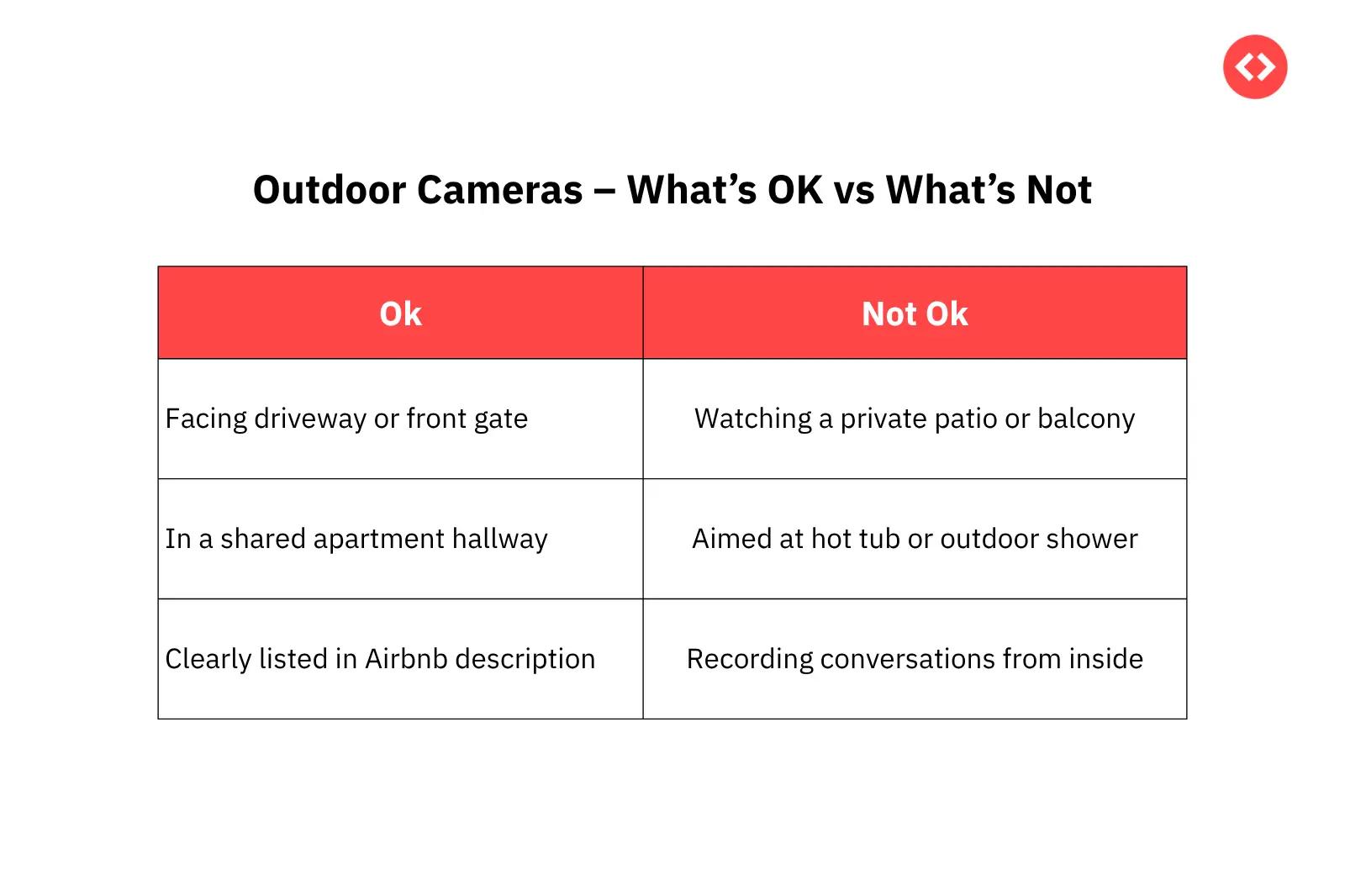
And it’s not just about the visuals. Airbnb also bans outdoor cameras that record audio if there’s any chance they could pick up indoor conversations.
Here’s what you need to do to stay on Airbnb’s good side:
Being upfront with guests builds trust and keeps your listing out of trouble.
If you’re booking an Airbnb and want to protect your privacy, here are some practical steps:
And remember, if you discover a hidden or undisclosed camera, report it to Airbnb right away. They take these reports seriously.
Not all monitoring tech is visual. Airbnb allows hosts to use noise monitors, but only under specific conditions.
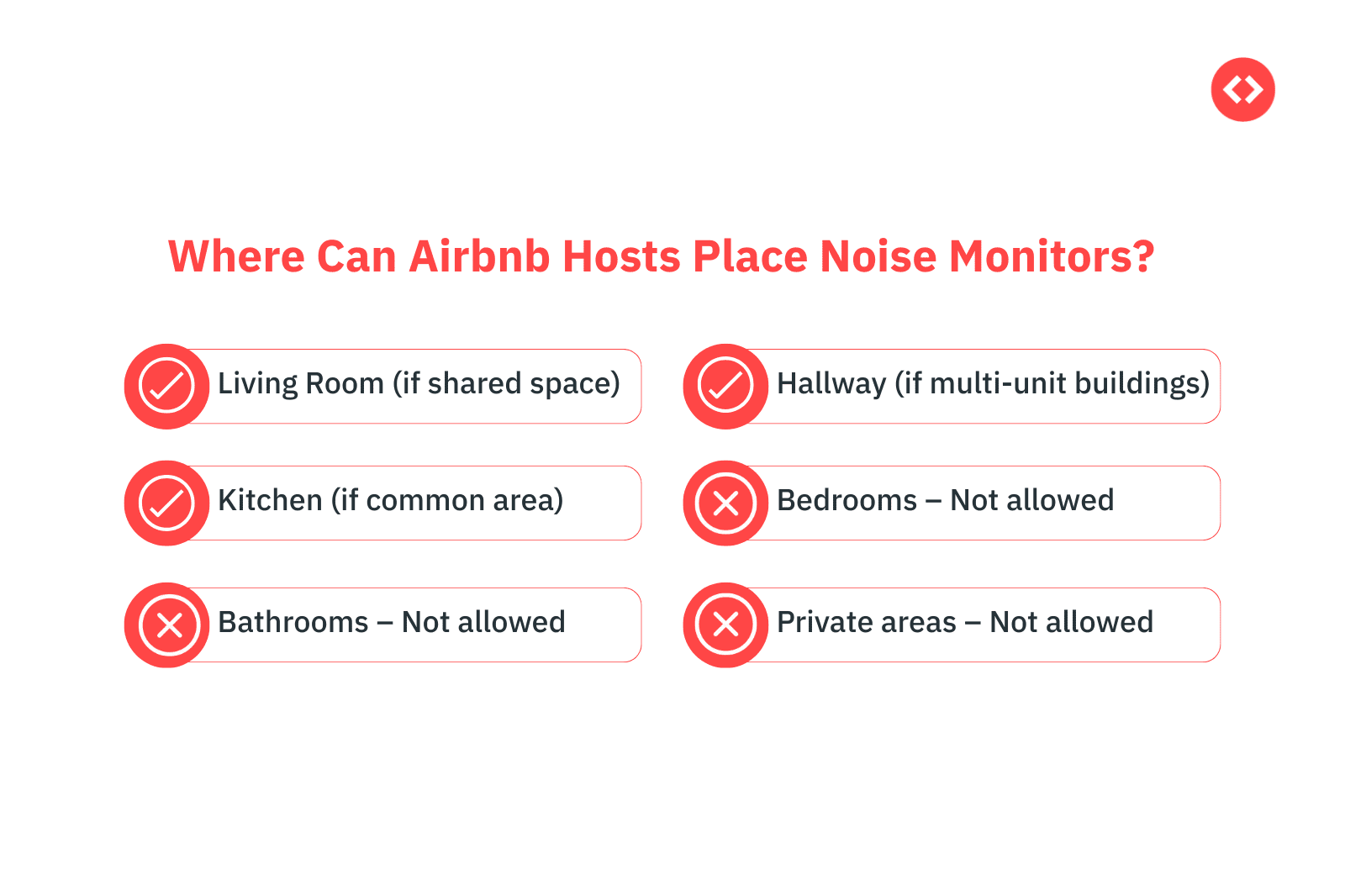
Just like with cameras, hosts are required to disclose the use of noise monitors before a guest books. The idea is to prevent parties, not spy on conversations.
Airbnb doesn’t mess around when it comes to surveillance violations. If a host is found using a banned or undisclosed device, the consequences are serious:
The company uses guest reports, listing audits, and automated tools to detect non-compliant properties as per their Airbnb camera policy. Thousands of listings have already been removed for not following the updated rules.
Staying in someone else’s home should feel safe, simple, and respectful. The same goes for opening your home to strangers. Trust is what makes Airbnb work—and that trust depends on clear boundaries.
With this updated Airbnb camera policy, Airbnb is taking a firm stance: your right to privacy comes first.
That clarity goes a long way in helping the short-term rental community grow with integrity.
Yes, but only outdoors, and only in shared/public-facing areas. They must be disclosed in the listing.
Yes, as long as the cameras are not pointing into private areas and are disclosed before the guest books.
Absolutely. Any camera or monitoring device must be disclosed clearly in the listing.
Yes, but only if they don’t record audio and are placed in shared indoor areas. Disclosure is required as per the Airbnb camera policy.
Stop using the property and report the issue to Airbnb immediately. They will investigate and take action to protect your privacy.
Camera policy is one part of a broader safety approach — see our full vacation rental security tips.
Camera policy is one part of the fundamentals covered in our complete guide to becoming an Airbnb host.
Want to learn what PriceLabs can do for you? See for yourself with a free trial. Get started now!