Get started with PriceLabs now!
Want to learn what PriceLabs can do for you? See for yourself with a free trial. Get started now!

Hosts understand the importance of getting good reviews on Airbnb. A good Airbnb guest review example highlights the guest’s stay experience, location, ease of communication with you, cleanliness, check-in process, and the overall accuracy of the listing description. While it is easy to deliver an extraordinary experience by following Airbnb hosting tips and tricks, it is also important to know how to respond and provide feedback.
This article provides Airbnb guest review example templates you can replicate as needed.
Bonus Read: The Ultimate Airbnb Listing Optimization Strategy: Rank Higher & Get More Bookings
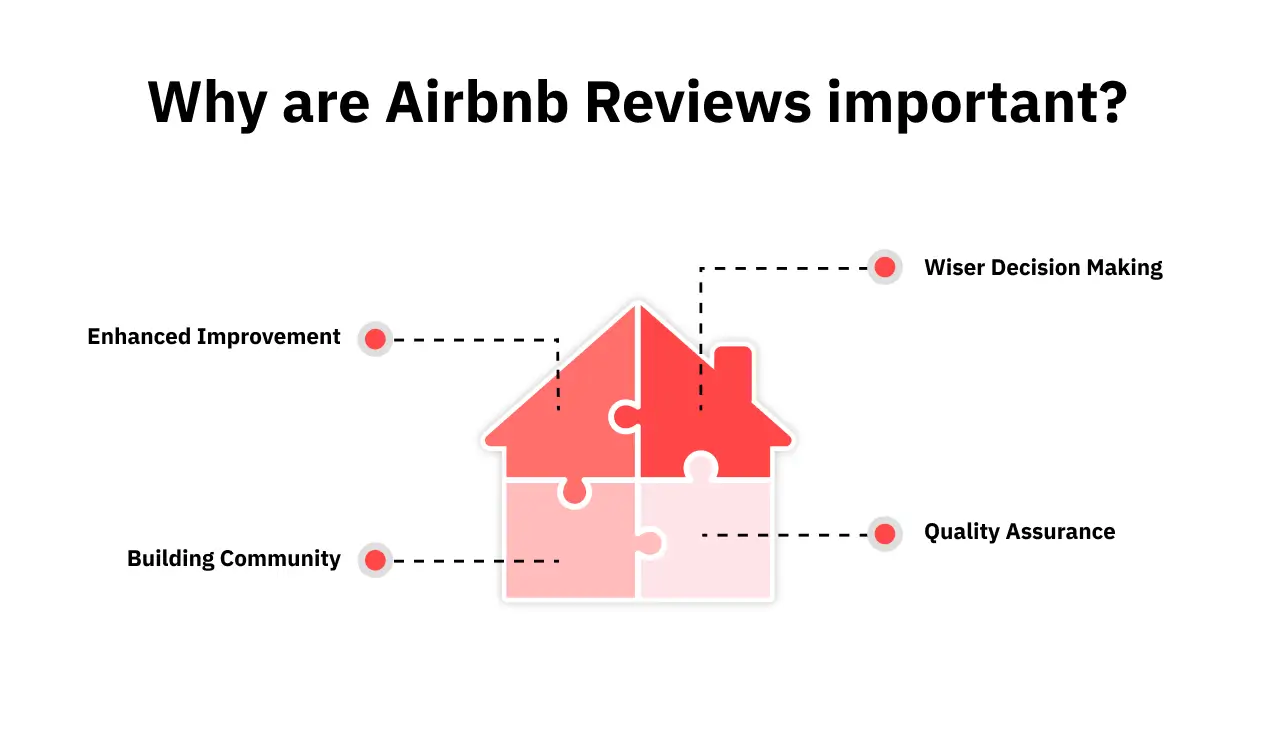
Airbnb guest reviews foster trust and transparency. It enables guests to make wiser decisions and holds hosts responsible for providing top-notch experiences. Ratings also influence pricing and search ranking, impacting a host’s revenue and bookings while ensuring guest satisfaction, which is the top priority.
Check why Airbnb reviews are important:
Note: Airbnb has a limit on changing or editing reviews for both guests and hosts to maintain transparency, honesty, and authenticity. They follow a first-come-first-serve approach. The one who reviews first can edit their review within the 14 days following checkout until the other party submits it. After these 14 days pass or both parties submit their reviews, no changes are applicable.
Make your reviews helpful and constructive by following these simple tips:
Writing concise, honest, and specific reviews helps build a trustworthy Airbnb community.
Follow these Airbnb guidelines to ensure your reviews are meaningful and appropriate:
By adhering to these rules, you help maintain the integrity of the Airbnb review system.
Airbnb has guidelines and policies that help you be strict with your accountability while writing reviews. Airbnb guest review examples must be relevant, unbiased, and based on real-life experience.
Note: You can’t remove a bad review, but you can report it if it violates Airbnb’s review policy. Always feel free to provide your own perspective with a factual context and relevant information whenever you report a bad review.
“[Guest Name] stayed at our property for [X nights]. While their booking process was smooth and communication was prompt, we did receive feedback from neighbors about noise levels that exceeded our house rules. We kindly recommend [Guest Name] be mindful of noise policies during future stays. Thank you for choosing our home.”
“[Guest Name] stayed at our property for [X nights]. They communicated well during their stay, but we did notice the space was left messier than expected, requiring extra cleaning. We recommend [Guest Name] pay closer attention to checkout instructions in the future. Wishing them the best for future travels!”
“[Guest Name] stayed at our property for [X nights]. While they were friendly and responsive, there was a misunderstanding regarding our house rules, particularly [mention specific issue, e.g., guest limits or smoking policies]. We encourage [Guest Name] to review property rules more carefully in the future. Best of luck with your travels!”
“Unfortunately, [Guest Name] had to cut their stay short due to [brief reason if known, e.g., personal circumstances]. While we wish they could have stayed longer, they communicated their plans promptly and handled the change professionally. We hope to host [Guest Name] in the future under better circumstances!”
“[Guest Name] stayed at our property for [X nights]. While their communication was good, we noticed [describe damage briefly, e.g., a broken lamp]. [Guest Name] was cooperative during the resolution process, but we recommend they exercise more care in the future. Wishing them safe travels!”
“[Guest Name] stayed with us for [X nights]. While they were clear about their needs and expectations, hosting them required a bit more effort than usual to meet their requests. We hope their future stays match their specific preferences more closely. Best of luck!”
“[Guest Name] stayed for [X nights]. They were pleasant guests, but they missed a few checkout steps, such as [e.g., not taking out the trash or leaving the key behind]. A quick review of the host’s guidelines can make their future stays even smoother. Thank you for visiting!”
“[Guest Name] stayed at our property for [X nights]. While most of the stay went smoothly, we encountered [briefly describe issue, e.g., maintenance problem] and struggled to get timely responses from them. Clear communication would have greatly improved the experience. We hope this feedback helps for future stays!”
“We sincerely apologize to [Guest Name] for the inconvenience caused by an overbooking situation during their stay. We appreciated their patience and understanding as we worked to resolve the issue. We hope to host them in the future under better circumstances and provide a seamless experience.”
“We are grateful to [Guest Name] for bringing [specific issue, e.g., the broken heater or plumbing problem] to our attention during their stay. We acknowledge that this impacted their experience and apologize for the inconvenience. Their cooperation and understanding were greatly appreciated, and we hope to welcome them back to a fully improved space.”
“We want to thank [Guest Name] for their stay and apologize for any delays in our responses during their trip. While we strive to be prompt and helpful, we fell short this time. We value their understanding and hope to provide a much smoother communication experience if they choose to stay with us again.”
“We regret having to cancel [Guest Name]’s reservation at the last minute due to [brief reason, e.g., unforeseen maintenance]. We deeply apologize for the disruption this caused to their plans and appreciate their understanding. We hope to make it up to them by offering an exceptional experience in the future.”
“We appreciate [Guest Name] for choosing our property and apologize for any discrepancies between the listing and their experience. We’ve updated [specific issue, e.g., amenities information or photos] to ensure future guests have an accurate understanding. We value their feedback and hope to host them again.”
“We sincerely apologize to [Guest Name] for any cleanliness issues they encountered during their stay. This does not reflect the standard we aim to maintain, and we have addressed this with our cleaning team to prevent future occurrences. Thank you for your honest feedback and patience.”
“We thank [Guest Name] for their patience during their stay and apologize for the difficulties they faced with check-in/key handover. We understand how important a smooth start is to any trip and have since refined our process to ensure a hassle-free experience for future guests.”
“We appreciate [Guest Name]’s understanding regarding the noise from [specific source, e.g., nearby construction or loud neighbors]. We’re working on addressing these challenges to ensure a quieter environment for our guests. Thank you for your patience!”
“We want to thank [Guest Name] for bringing the issue with [specific amenity, e.g., Wi-Fi, air conditioning] to our attention. We sincerely apologize for the inconvenience and are actively resolving this. We appreciate their understanding and hope to host them again with all amenities fully functional.”
“We apologize to [Guest Name] if the shared spaces felt busier than anticipated during their stay. We value their feedback and are adjusting our guest policies to ensure a more comfortable experience. Thank you for your honesty and understanding!”
Yes, Airbnb hosts can leave reviews for guests within 14 days after checkout. Hosts can provide a written review and a one- to five-star rating based on the guest’s communication, adherence to house rules, and cleanliness. These ratings are combined into an average score for the guest’s stay.
No, reviewing guests is optional for hosts. However, leaving reviews is highly encouraged as they help future hosts decide whether to accept a reservation.
If a host doesn’t review a guest, no review will appear on the guest’s profile. However, if the guest submits a review of the host, it will only become visible after the 14-day review period ends. To see a guest’s review sooner, hosts must submit their review as well.
Yes, guest reviews are public and appear on the guest’s profile. Reviews are published after both parties have submitted their reviews or after the 14-day review window closes—whichever comes first.
Airbnb allows changes to reviews during the 14-day review period or until the other party submits their review. Once the review period ends or both reviews are posted, neither guests nor hosts can make further edits.
Yes, guests can publicly respond to reviews written about them. This feature allows guests to provide context or address any concerns raised by the host.
No, guests cannot delete reviews left by hosts. However, reviews can be reported to Airbnb for removal if they violate the platform’s Reviews Policy, such as by containing biased, irrelevant, or confidential information.
When writing a review, focus on your experience with the guest. Mention whether you would host them again and explain why.
The best reviews are honest, specific, and helpful. Highlight any positive or negative experiences and consider what future hosts would want to know.
For hosts managing properties from a distance, gather feedback from your property manager, cleaning staff, or anyone who interacted with the guest. Encourage them to use an inventory checklist to ensure everything is intact. If you have friendly neighbors, ask if they noticed any issues like noise during the guest’s stay.
Dynamic pricing in Airbnb refers to the practice of adjusting rental rates in real time based on various factors such as demand, seasonality, local events, and market conditions. This approach allows hosts to optimize their earnings by automatically increasing or decreasing prices to match supply and demand fluctuations. By utilizing data and algorithms, dynamic pricing aims to find the optimal balance between attracting guests and maximizing revenue, ensuring that prices reflect the current market dynamics.
To implement dynamic pricing for vacation rentals, collect relevant data, identify key factors, set pricing rules, use dynamic pricing software, monitor performance, and adjust as needed to optimize revenue.
The aim of dynamic pricing is to optimize revenue and occupancy rates. It is done by adjusting prices in real time based on factors such as demand, market conditions, competition, and other variables. Dynamic pricing software seeks to find the optimal balance between attracting guests and maximizing profitability by dynamically setting prices that reflect current market dynamics. The goal is to capture the highest possible value for each booking while ensuring competitiveness in the market.
Reviews are one signal among many — see our complete guide to airbnb optimization for everything else that affects your ranking.
Great reviews often start with guests knowing exactly what to expect — see our guide to writing clear Airbnb house rules.
For becoming a Guest Favorite specifically, or if you're starting out with no reviews yet, see our dedicated guides. For broader tactics, see our piece on improving your vacation rental reviews.
Want to learn what PriceLabs can do for you? See for yourself with a free trial. Get started now!