
Get started with PriceLabs now!
Want to learn what PriceLabs can do for you? See for yourself with a free trial. Get started now!

You're managing properties for a few owners informally. It's working. Now a new owner is asking you to formalize the arrangement, and the question is: what model do you propose? The choice between co-hosting vs property management is not just a vocabulary question. It is a business model decision that shapes your income structure, liability exposure, software requirements, and long-term scalability. This article is written for the growing property manager making that decision, not for the property owner trying to hire someone.
Understanding the practical differences between these two vacation rental management models before you formalize any client relationship is how you avoid building the wrong infrastructure for the business you're actually trying to run. The four dimensions that matter most are structure and control, fees and income, operations and software, and scalability.
Co-hosting is an arrangement where a property owner adds a co-host to their existing Airbnb listing. The co-host receives access to the owner's account to handle day-to-day operations: guest communication, check-in coordination, cleaning oversight, and review management. Critically, the listing remains under the owner's profile. Every review accrues to the owner's account, and Superhost status, when earned, belongs to the owner — not the co-host.
Airbnb has formalized this through its co-hosting marketplace, where property owners can search for and hire co-hosts directly through the platform. For growing property managers, this marketplace functions as a legitimate lead generation channel. Owners searching for operational help can find you without any marketing spend on your part. Vacation rental automation tools and PMS platforms integrate with Airbnb's co-hosting system so co-hosts can manage their client properties efficiently.
On the payout side, co-hosts can receive split payouts directly through Airbnb, where the platform automatically diverts the co-host's agreed percentage to a separate bank account. Alternatively, the owner receives the full payout and pays the co-host via invoice. Both approaches are in active use. Airbnb hosting tips recommend documenting the payout arrangement in writing regardless of which method is used, since informal arrangements frequently create disputes when the relationship scales or strains.
What co-hosts typically handle: guest messaging, check-in and checkout coordination, cleaning team scheduling, basic pricing oversight, and review management. What co-hosts typically do not handle: initial listing creation, professional photography, regulatory compliance filings, or formal financial reporting to the owner. The scope is flexible, which is both a feature and a risk in this model.
Full-service property management is a different structure entirely. The property manager operates as a business entity, runs listings under their own Airbnb profile (or a dedicated management account), and takes full operational ownership of the property. Reviews accrue to the PM's account. Superhost status, when earned, belongs to the PM business. The listing equity compounds with the PM, not the individual property owner.
The full service scope is comprehensive: property onboarding (photography, listing setup, copy, initial pricing strategy), ongoing operations (all guest communications, cleaning, maintenance oversight), financial reporting and owner disbursements, regulatory compliance, and market benchmarking. Vacation rental management models at this level require formal management agreements with defined fee structures, renewal terms, and termination clauses. These contracts protect both parties and define exactly what is and is not included in the management fee. Short-term rental property management at scale requires this contractual clarity.
A compliance reality that growing PMs often underestimate: many US states and a growing number of international jurisdictions require property managers to hold a real estate broker's license or a specific property management license to legally manage properties for compensation on behalf of others. Co-hosting avoids this requirement in most cases because the co-host is operating within the owner's account. Full property management at a professional level does not. Research the licensing requirements in your market before positioning yourself as a full-service PM. Airbnb rules and regulations at the state and local level are just as important as Airbnb's platform policies.
Co-host fee ranges run from 10% to 25% of gross booking revenue. The lower end (10 to 15%) typically covers only guest communication and key handoff. The higher end (20 to 25%) reflects full operational management including cleaning coordination, pricing oversight, and review management. Co-host fees vs property management fees are a direct reflection of the scope of responsibility assumed by each model.
Full-service property management fees range from 20% to 40% of gross booking revenue for the majority of US markets, with luxury or remote markets commanding higher. The higher PM fee reflects full operational ownership, regulatory compliance accountability, and the PM's liability exposure as the named manager of record. Property management vs co-hosting income looks different when you factor in fixed costs: a full PM carries higher monthly overhead (PMS subscription, insurance, licensing fees, staff) that a co-host with a lighter tool stack avoids.
A critical distinction that operators on both sides frequently overlook: whether the fee is calculated on gross revenue (total booking amount before OTA fees and taxes) or net revenue (after platform commissions). A 25% fee on gross is materially different from 25% on net. Always define the basis in your written agreement. Revenue management for any STR business starts with knowing exactly what percentage of what number you are charging and receiving.
One cost efficiency that applies to both models equally: PriceLabs charges a flat subscription fee with no revenue-sharing component. Many legacy revenue management tools take a percentage of incremental revenue generated — meaning the PM pays more as the tool performs better. PriceLabs' pricing model means the PM keeps 100% of the revenue improvement their pricing strategy generates, which directly protects margin regardless of which management model they operate. Dynamic pricing is essential for both co-hosts and full PMs; the cost structure of the tool matters for margin planning.
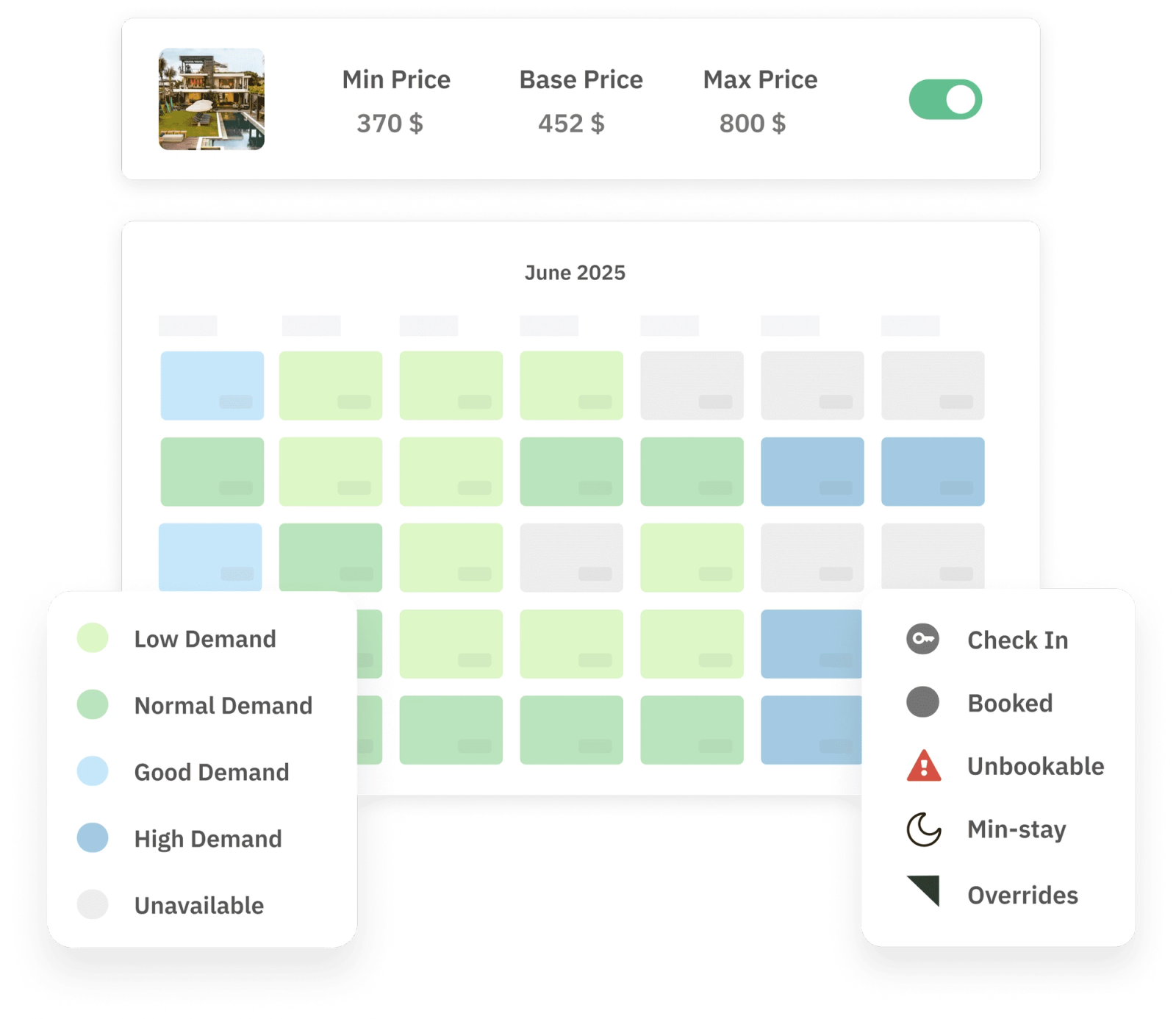
Co-host tech stack requirements are lighter. Many co-hosts operate effectively with Airbnb's native messaging and calendar tools, a standalone scheduling app for their cleaning team, and a pricing tool. Monthly SaaS costs for a co-host managing five properties might run $50 to $100 per month. This lower overhead is part of the model's appeal for PMs who are still building their portfolio.
Full property management requires a full PMS for multi-platform channel management, centralized guest communications, owner reporting, and task management. Without a PMS, a full PM attempting to manage 15 properties across Airbnb, Vrbo, and Booking.com will spend all their time on platform-switching rather than growing the business. The monthly SaaS cost for a full-service PM tech stack runs $200 to $500 per month for most mid-sized portfolios, but this cost is recoverable in the efficiency gains it enables.
Pricing automation applies to both models equally and with equal impact. Whether you're a co-host managing 4 properties or a PM managing 40, static pricing consistently underperforms dynamic pricing by 20 to 40% in most markets. Airbnb co-hosting for property managers who want to compete on revenue performance — not just service delivery — requires a dynamic pricing tool from day one. Vacation rental automation at the pricing layer is the highest-ROI automation in either model.
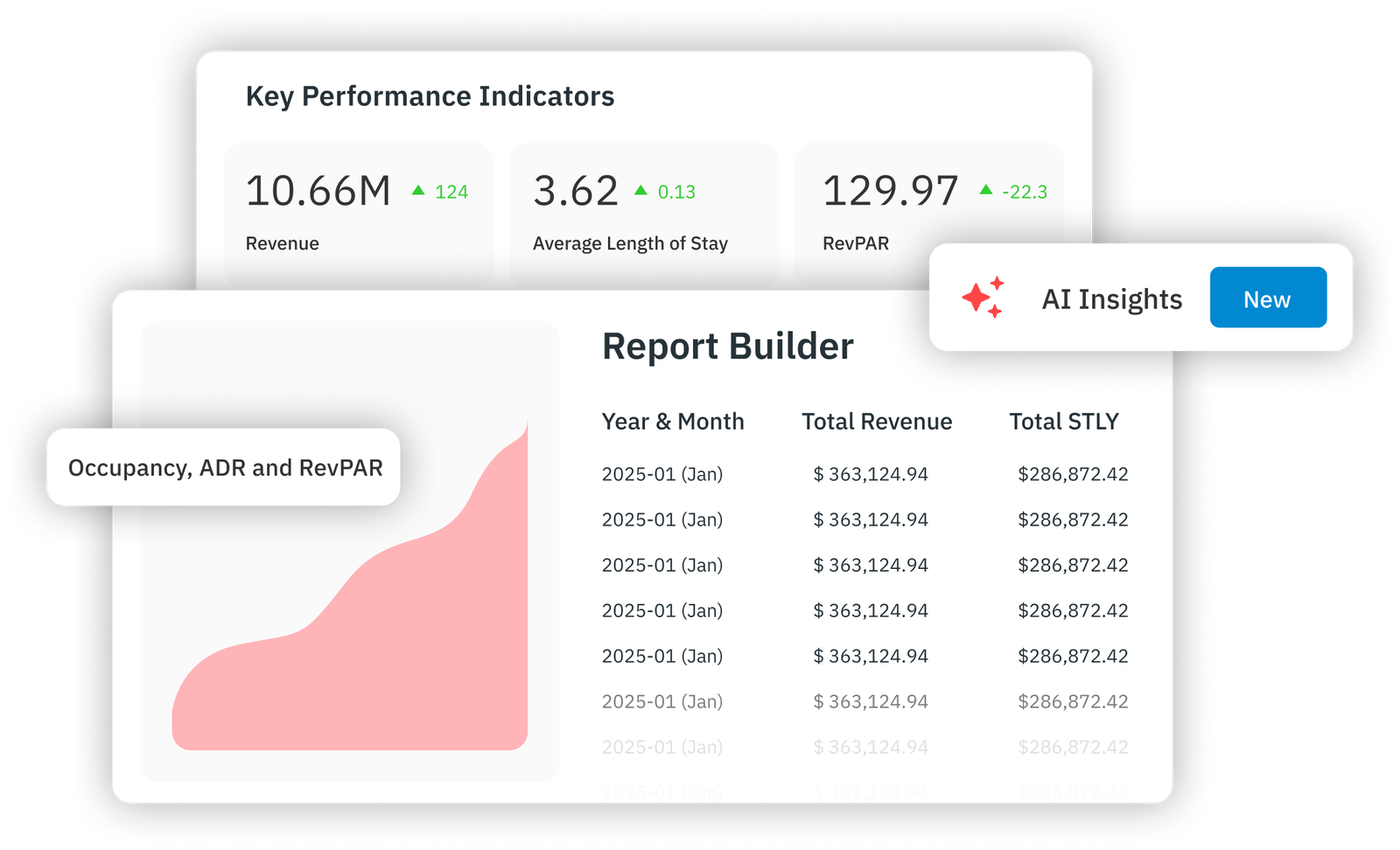
PriceLabs Market Dashboards give both co-hosts and full PMs the competitive benchmarking data needed to have informed conversations with property owners about pricing strategy. When an owner asks "why aren't my rates higher?" a PM using Market Dashboard data can show exactly where their rates sit relative to comparable listings, what the market occupancy trend looks like, and what is driving the pricing recommendations. This evidence-based approach to owner conversations is one of the most powerful retention tools available to any property manager. Portfolio Analytics provides the per-property performance view across all managed listings, making it practical to monitor every property's performance without auditing each one individually.
Co-hosting at scale has a structural ceiling. Because reviews and Superhost status accrue to the property owner rather than the co-host, the co-host's professional reputation on the Airbnb platform does not compound in the same way. If a co-host relationship ends, that review history stays with the owner. Building a branded PM business on top of a co-hosting model requires creating value through operational excellence and client retention rather than platform equity.
The Airbnb co-hosting marketplace makes client acquisition easier for co-hosts than for full PMs who have to generate leads through other channels. But the business defensibility is lower: co-hosting relationships are often more informal, shorter-term, and more easily replicated by competitors entering the same marketplace.
Full property management at scale creates a more defensible business. Listing ownership, review equity, and Superhost status all accrue to the PM's account over time, making the PM's business increasingly valuable as it grows. The challenge is that acquiring the first 10 to 15 properties as a full PM requires more upfront investment in licensing, software, and sales than co-hosting does. STR business automation is what makes full PM scale financially viable: the PMs who manage 30 to 50 properties without proportionally scaling headcount are those who invested in pricing, messaging, and reporting automation early.
A hybrid approach used by many successful growing PMs: start as a co-host to acquire clients with lower friction, build a track record of strong performance, and then offer to migrate high-value clients to a full management agreement once trust is established. This path reduces the barrier to entry while preserving the option to build toward a branded PM business. Short-term rental business model comparison strongly favors this gradual migration path for operators entering property management from a hosting background. Revenue management proficiency is what makes this transition compelling to owners: when you can show an owner that your pricing strategy outperforms self-management by 25%, the move to a formal management agreement is an easy sell.
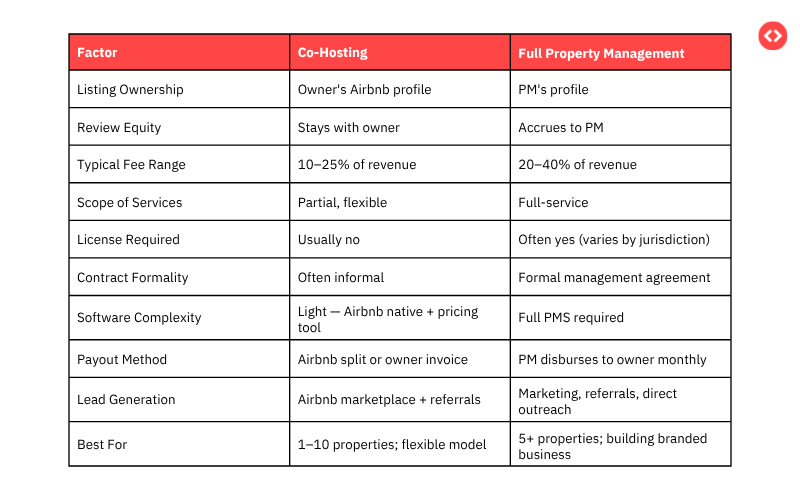
A co-host operates within the property owner's Airbnb account — all reviews and Superhost status belong to the owner. A full property manager typically runs listings under their own business profile, with listing equity, reviews, and Superhost status accruing to the PM over time. The structural distinction determines long-term business defensibility for the operator.
Co-hosts typically charge 10–25% of gross booking revenue depending on service scope. Full-service property managers charge 20–40% of gross booking revenue, with the higher rate reflecting full operational ownership, regulatory compliance accountability, and formal management contracts. Co-host fees vs property management fees reflect fundamentally different levels of accountability and service delivery.
In most jurisdictions, co-hosting is informal enough that a specific license is not required — you're assisting an owner manage their own listing. Full property management, particularly when managing properties for multiple unrelated owners for compensation, often requires a real estate broker's or property management license under state law. Always verify local requirements before operating.
Yes. PriceLabs works regardless of whether you operate as a co-host managing a handful of properties or a full PM running a portfolio of 50+. The platform supports individual property connections, bulk management features, and integrates with over 150 PMS and channel manager platforms. The pricing model is flat subscription with no revenue-sharing fee.
Full property management generates higher revenue per property due to higher fees and greater operational control. Co-hosting has lower overhead and easier client acquisition through the Airbnb marketplace. The most profitable path for many growing PMs is a hybrid: start as a co-host to acquire clients, build a performance track record, then migrate high-value relationships to full management agreements as trust is established.
Related reading: for the full picture of what running a management business day to day looks like, see our guide to short-term rental property management.
Weighing co-hosting against full property management still comes down to the fundamentals in our complete guide to property management.
Want to learn what PriceLabs can do for you? See for yourself with a free trial. Get started now!