Get started with PriceLabs now!
Want to learn what PriceLabs can do for you? See for yourself with a free trial. Get started now!
Three guests in a row mention the same broken air conditioner. The fix costs the owner 1,200. The owner says no, or "next season", and the reviews keep coming. Most managers then argue that bad reviews hurt revenue. The owner already believes that in general. What they doubt is that this repair, at this price, will pay for itself.
This guide is about making that specific case: reading reviews for problems only the owner can fix, working out what the fix needs to earn back, and deciding what to do when the owner still refuses. Fixing the listing itself is a separate job, covered in our guide to improving vacation rental reviews. The owner relationship as a whole sits in the property management guide.
Review complaints fall into two groups. Some are yours to fix: slow replies, unclear check-in instructions, a missing item in the welcome guide. Fix those first and do not bring them to the owner.
The rest need the owner's money: worn mattresses, an air conditioner that cannot keep up, Wi-Fi too slow for remote work, a dated bathroom. These are the only complaints that belong in an owner conversation.
Read the review text as well as the star rating. Tag each review by theme and note the date. A problem mentioned once is an anecdote. The same problem in three of the last eight reviews is a pattern, and patterns are what owners respond to.
Owners respond to evidence about their own property. Two views help.
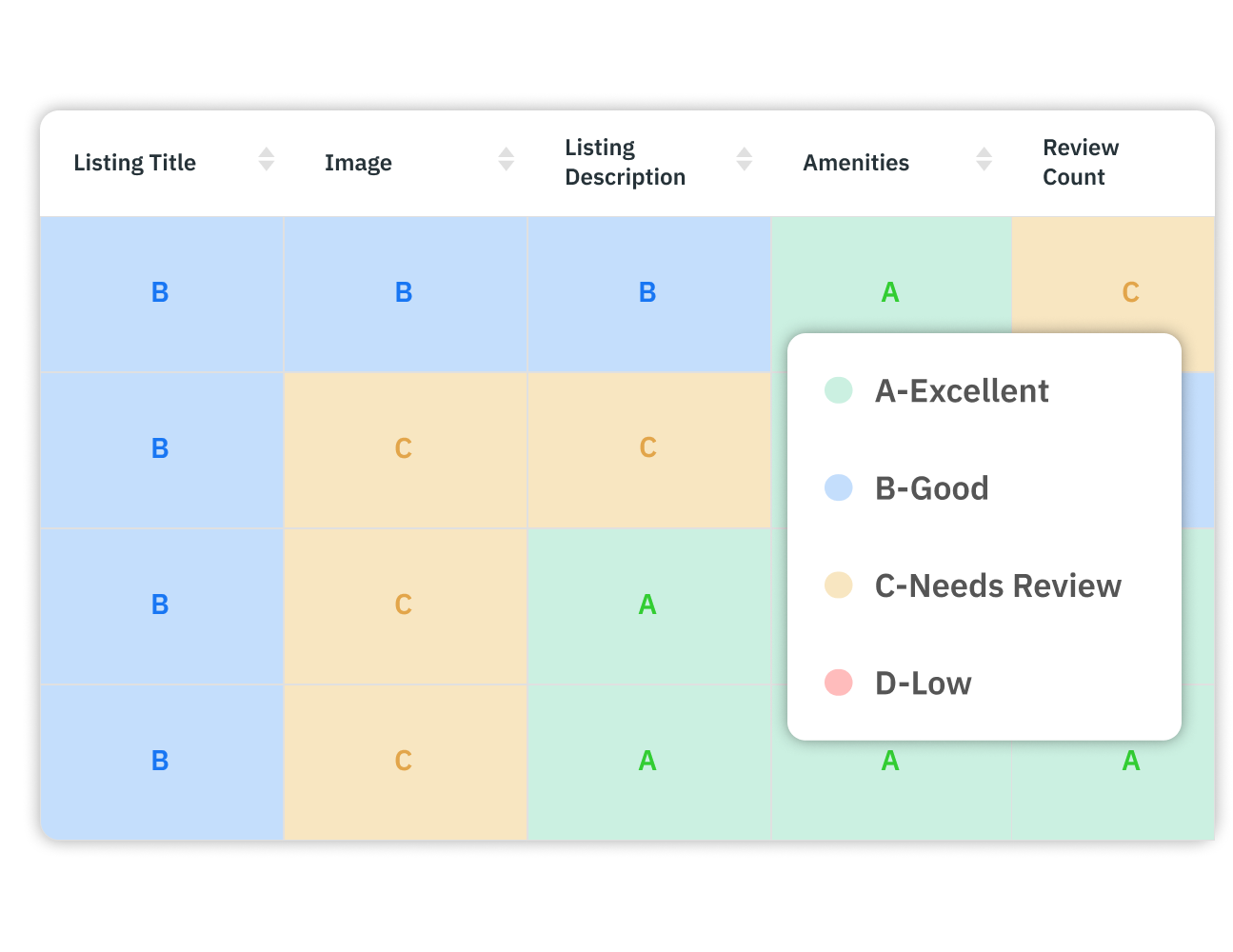
The first is listing quality. PriceLabs Listing Optimizer analyses an Airbnb listing's content, photos, guest experience factors and amenities, then grades it from A to D with recommendations. A grade that dropped as complaints rose gives the owner something concrete to look at.
The second is search position. Listing Optimizer's Ranking Overview shows where the listing appears in Airbnb search results within its neighbourhood over the past 12 weeks. If ranking slid during the same weeks the complaints arrived, put both on one page.
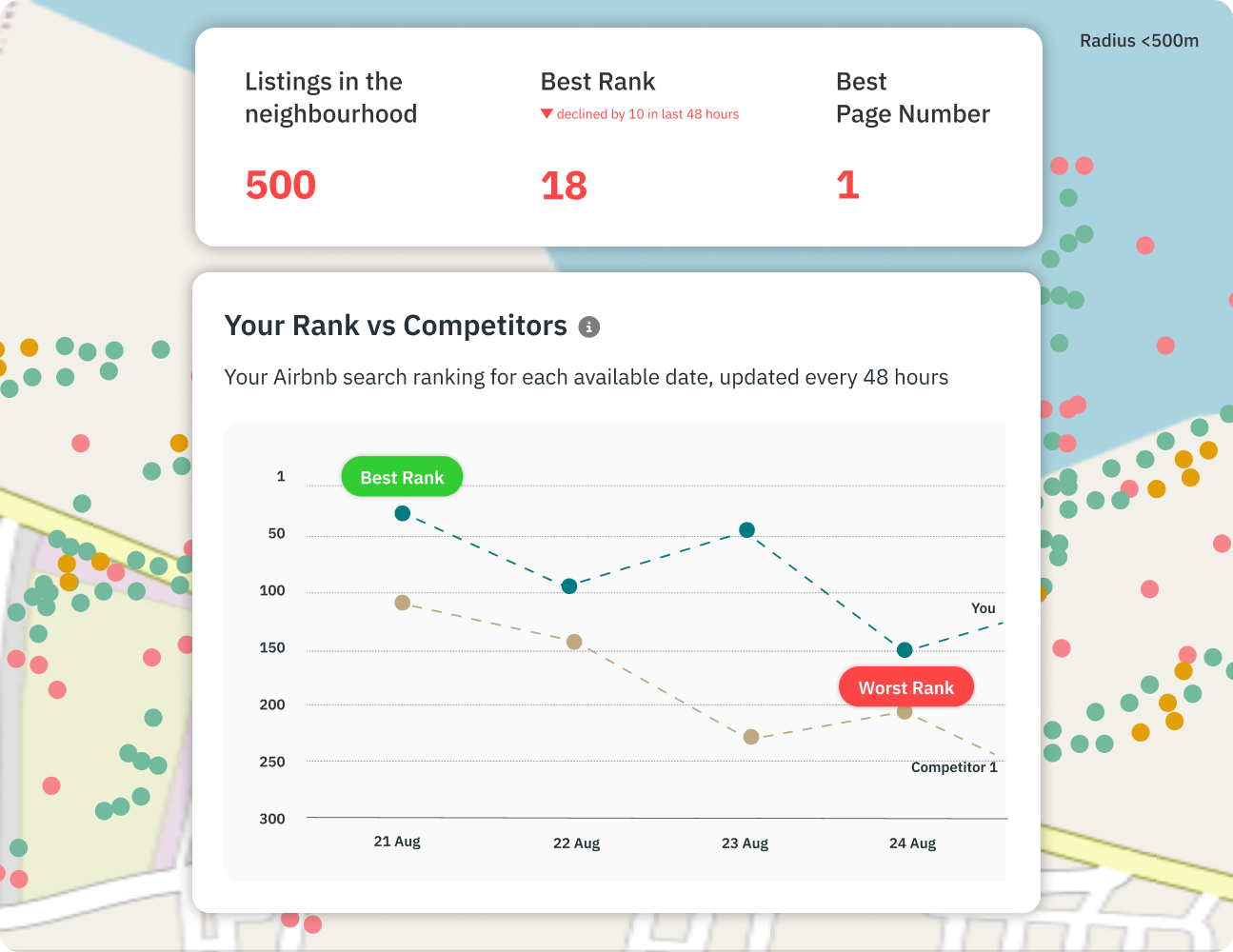
Be honest about what this shows. A drop in ranking alongside a run of complaints is a strong sign, but other things move rankings too. Present it as a pattern worth acting on, not as proof. For how Airbnb reads review content, see Airbnb's review AI.
This is where most upgrade pitches go wrong. The manager promises a revenue lift, the owner asks how they know, and the honest answer is that nobody knows exactly.
Turn the question around. Work out the smallest improvement that pays the upgrade back within a period the owner accepts, then ask whether that improvement is believable.
With the default figures, a 1,200 upgrade on a home earning 220 a night at 62% occupancy, with a 20% management fee, needs 125 more nightly revenue a month to pay back in 12 months. That is about 1.9 extra points of occupancy, or a 3.1% higher average rate, with the other held flat.
Put that way, the question becomes small and specific: will fixing the air conditioner win back a little more than one extra night every two months? Most owners can answer that themselves. The optional estimate fields let you test your own view of the lift, labelled as an estimate.
Bring the owner one page:
Options matter. An owner given one recommendation can only say yes or no. An owner given a range can choose, and an owner who chose is more likely to follow through. Include doing nothing as a real option with its consequence spelled out, so the decision is clearly theirs.
Once the fix is done, track it. Note the date, then watch three things over the following months: whether the complaint stops appearing in reviews, whether the listing grade and ranking recover, and whether occupancy or rate move against the comp set.
Report back to the owner whatever the result. A fix that paid back makes the next request easy. A fix that did not still ends the complaint, which protects future reviews, and the report shows you are measuring rather than guessing. If the property keeps trailing similar homes after the fix, our guide to underperforming listings walks through the remaining causes.
Where that report fits within your regular owner updates is covered in owner versus internal reporting.
Some owners will decline every upgrade, whatever the numbers show. At that point the question shifts from the owner's revenue to yours.
A property that keeps collecting the same complaint affects more than one owner. Guests who stayed there may avoid your other listings. Your team spends time apologising for a problem it cannot fix. Pricing has to absorb the gap, which can mean holding the rate lower than similar homes.
Record each refusal with the date, the complaint pattern and the break-even figure you presented. If the pattern continues, that record supports a frank conversation about whether the arrangement still works for both sides. Ending a management agreement is a serious step, so check its notice terms and any legal requirements in your area first.
Most owners never reach that point. Shown a specific, modest break-even number for a problem guests keep naming, they usually fix it.
Want to learn what PriceLabs can do for you? See for yourself with a free trial. Get started now!