Get started with PriceLabs now!
Want to learn what PriceLabs can do for you? See for yourself with a free trial. Get started now!

Running a successful vacation rental business is not just about welcoming guests and offering a comfortable stay. Behind every booking, there are costs and service charges that impact your earnings. One of the most important of these is the host fee.
Understanding what a host fee is, how it works across different listing platforms, and how to manage it effectively can make a real difference to your bottom line. In this article, we’ll explain what a host fee means, review the most common types, and share tips on saving money. Finally, we’ll also look at what other expenses you should consider as a host.
Bonus: How to Become an Airbnb Host: The Complete Guide
A host fee – sometimes also referred to as a hosting fee – is the service charge that booking platforms collect from property owners or managers for the services that they provide to them. It’s typically calculated as a percentage of each reservation and deducted automatically before you get your share of the booking revenue.
The exact amount of host fees depends on:
The host fee matters in the short-term rental business because it directly affects your profit. It gets subtracted from your revenue to determine your cash flow and your return on rental property, whether cash on cash return or cap rate.
A small percentage difference may seem negligible, but it can add up to a significant amount across dozens of bookings. Hosts who understand how host fees work are better equipped to set competitive prices, maximize net income, and plan their rental strategy in the long term.
Hosting fees vary across booking websites. Here’s what you need to know about the major players in the industry if you’re listing your vacation rental on multiple platforms:
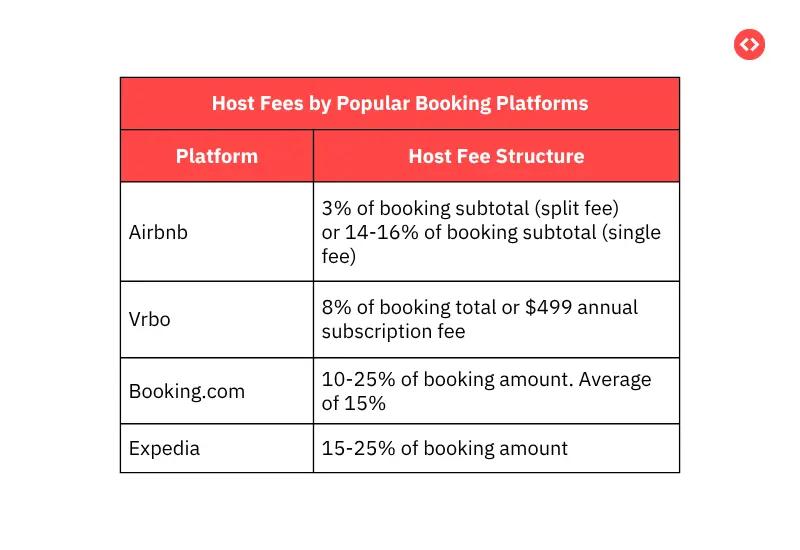
Airbnb applies two types of host fee models: 1) Split fee and 2) Single fee.
The majority of hosts pay an Airbnb service fee of 3%, while guests cover 14.1-16.5%. This percentage is calculated on the booking subtotal which includes the nightly fees and additional fees (such as Airbnb cleaning fees, extra guest fees, pet fees, etc.) but excludes taxes.
Some listings fall under the single fee model where the host fee is equivalent to 14-16% of the booking subtotal, while guests don’t pay any Airbnb service fees. These rates will soon be unified to 15.5%, except for hosts in Brazil who will pay 16%.
This model applies to certain locations, traditional hospitality listings such as hotels and serviced apartments, and hosts who use vacation rental management software. Additionally, hosts with a Super Strict cancellation policy might need to pay extra 2% and those with long-term rentals (28 days+) may pay lower rates.
Vrbo offers two fee structures: 1) Pay-per-booking and 2) Annual subscription.
The pay-per-booking Vrbo host fees include a 5% Vrbo service fee and a 3% payment processing fee, bringing the total hosting fee to 8%. This is calculated on the booking total.
This fee structure is usually a good option for part-time hosts who occasionally welcome guests as an income supplement.
Alternatively, Vrbo hosts can pay an annual subscription fee of $499 and have unlimited reservations. This model works better for full-time hosts who list their property on Vrbo year-round.
The Booking.com fees for hosts follow a standard commission-based model at a rate of 10-25%, with an average of 15%. This commission is charged on the total booking amount.
The exact Booking.com host fee rate depends on:
Hosts need to pay a commission of 15-25% when listing a property on Expedia. The percentage is deducted from the booking amount.
The main factors that affect the Expedia service fee rate are location and property type.

While host fees are unavoidable, you can reduce their impact with smart strategies:
As you’ve already seen, not all booking platforms charge the same. Analyze your typical guest source, booking volume, and applicable host fee structures to decide which platform works best for your property
On platforms like Vrbo, a flat annual subscription can save you money if you receive frequent bookings.
Use PriceLabs to set up a vacation rental dynamic pricing strategy. With smart pricing, you can automatically adjust daily rates to cover host fees while still attracting bookings.
Build a solid vacation rental direct booking website to attract reservations outside listing platforms. Promote your website and social media accounts to generate direct bookings and cut platform host fees altogether.
Keep a detailed record of every fee and expense. This allows you to optimize pricing strategies and make informed financial decisions.
Beyond the hosting fee, short-term rental property owners should plan for the following recurring costs:
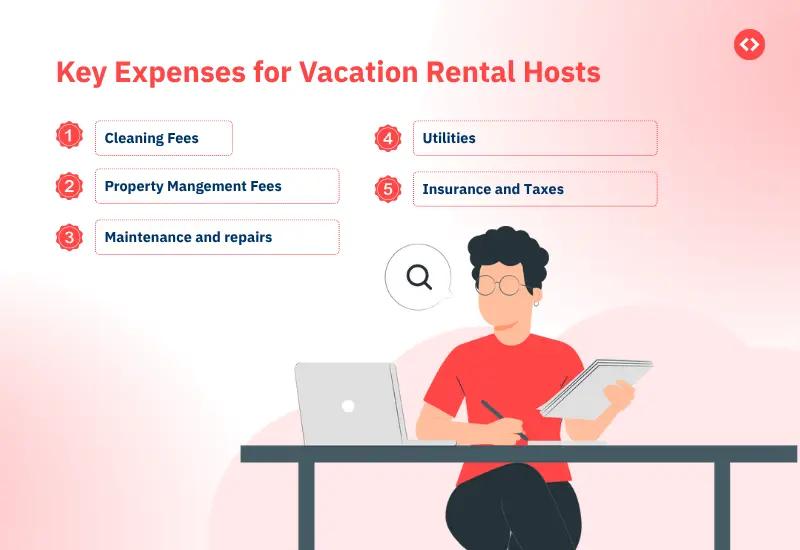
You should take all these costs into consideration when budgeting and calculating your expected ROI.
A host fee may seem like a small percentage, but it plays a big role in the profitability of your vacation rental business. By understanding how different platforms calculate and collect their fees and applying cost-saving strategies, you can protect your income.
PriceLabs’ Dynamic Pricing & Revenue Management tool helps you stay competitive by adjusting nightly rates to cover recurring expenses and maximize earnings. This ensures you get the most of every booking without leaving money on the table.
A host service fee is the percentage of booking revenue that listing platforms deduct for each reservation as payment for using their marketplace and services.
The host or the property manager is responsible for paying the hosting fee. It is usually automatically deducted from the booking payout before funds are transferred.
The standard Airbnb service fee for hosts is 3%, but in some cases it can go up to 14-16%, depending on the pricing model.
Want to learn what PriceLabs can do for you? See for yourself with a free trial. Get started now!