Table of Contents
Updated : Apr 3, 2026
Think of your hotel’s pricing like a seat on an airplane: its value changes every second based on how many people are looking to fly and how close the plane is to takeoff. If you sell every seat a year in advance at a low rate, you lose out on the high-paying business traveler; if you wait until the last minute and the plane is empty, that revenue is gone forever. Hotel dynamic pricing software acts as your digital co-pilot, using real-time pricing to constantly adjust your “altitude” so you land the perfect balance of occupancy and profit, ensuring you never leave money on the tarmac.
Running an independent hotel is a rewarding journey, but let’s be honest: the “manual” way of doing things is becoming a major hurdle. If you are still relying on static seasonal rates or manually updating spreadsheets to decide your nightly prices, you are likely leaving money on the table. In today’s fast-paced market, travelers expect flexibility, and your competitors—especially the big chains—are already using technology to adjust prices in the blink of an eye. This guide will show you how to embrace dynamic pricing to work smarter, not harder.
Understanding Dynamic Pricing in Hotels
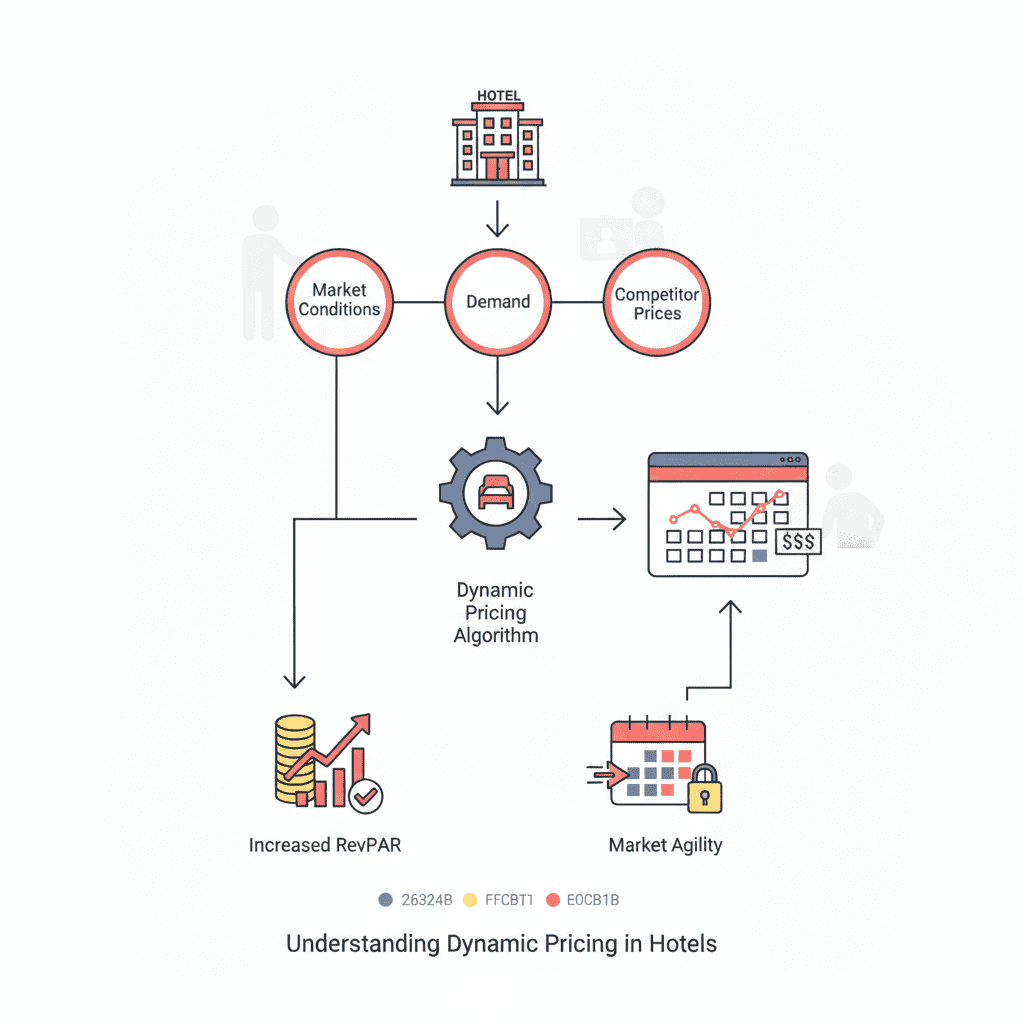
At its core, dynamic pricing is the practice of adjusting your room rates in based on changing market conditions, demand, and competitor prices. The objective is simple: to ensure you are selling the right room to the right guest at the optimal price at any given moment.
For independent hoteliers, this strategy is the cornerstone of modern revenue management systems. It moves you away from “set it and forget it” pricing and toward a model that prioritizes:
- Increased RevPAR: By optimizing both your occupancy optimization and your Average Daily Rate (ADR).
- Market Agility: The ability to respond instantly when a local festival is announced or when a competitor suddenly drops their rates.
- Inventory Control: Ensuring you don’t sell out too early at a low price or sit with empty rooms because your rates were too high for a slow Tuesday.
| Factor | Impact on Pricing |
| Seasonality | High demand periods (summer, holidays) allow for higher rates. |
| Local Events | Festivals or conferences drive sudden demand spikes. |
| Competitor Rates | Monitoring your “comp set” ensures you remain attractive. |
| Booking Pace | If rooms are filling faster than usual, it’s a signal to raise rates. |
A Guide to Implementing Dynamic Pricing
Below, we have outlined the essential steps that will help you implement a robust dynamic pricing framework and take full control of your revenue potential.
Step 1: Analyze Your Market and Competitive Set
Before you can price effectively, you need to know where you stand. This starts with defining your comp set—a group of similar hotels in your area used as a benchmark for your own performance.
Don’t just look at the hotel next door. A smart market analysis includes:
- Identifying Direct Competitors: Look for properties with similar star ratings, amenities, and guest reviews.
- Tracking Patterns: Observe how they change their prices during weekends vs. weekdays.
- Location & Demand Drivers: Is there a new corporate headquarters nearby? Is the local stadium hosting a concert? These factors dictate the “market ceiling” for your rates.
Practical Tip: Use a hybrid strategy. Compare yourself not just to other hotels, but to high-quality short-term rentals in your area, as many modern travelers cross-shop these categories.
Step 2: Utilize Dynamic Pricing Software Effectively
The truth is, no human can track market shifts 24/7. This is wherehotel dynamic pricing software becomes your most valuable team member. These AI-powered solutions analyze thousands of data points to update your rates automatically, often multiple times a day.
Key features to look for in a tool include:
- Real-Time Price Optimization: Automatically pushing updates to your Channel Manager and PMS.
- Demand Forecasting: Predicting busy periods based on historical data and current market signals.
- Customizable Rules: You stay in control by setting “guardrails”—minimum and maximum rates that the software must stay within.
Step 3: Segment Your Guests for Targeted Pricing
Not every guest has the same budget or booking behavior. Guest segmentation means grouping your visitors to tailor your offers.
- Business Travelers: Often book last-minute and prioritize location and Wi-Fi over price.
- Leisure/Family Guests: Usually more price-sensitive and book further in advance.
- Mid-Term Renters: Guests staying 30+ days who expect a discounted monthly rate in exchange for the stability they provide.
By understanding these segments, you can implement real-time pricing tweaks, such as offering a “Length of Stay” (LOS) discount to fill a gap between two bookings.
Step 4: Implement Real-Time Price Adjustments
Dynamic pricing isn’t just about changing rates once a week. In a high-demand market, prices might need to change several times a day.
The Real-Time Workflow:
- Syncing: Your software pulls live data from your PMS and the wider market.
- Analysis: The algorithm detects a sudden surge in searches for your city.
- Update: Rates are instantly adjusted across your website, Booking.com, Expedia etc
- Monitoring: You track the booking pace to see if the new rate is being accepted by guests.
Step 5: Monitor Key Performance Metrics
You can’t manage what you don’t measure. To see if your occupancy optimization strategy is working, keep a close eye on these KPIs:
- Occupancy Rate: The percentage of available rooms that are in.
- ADR (Average Daily Rate): The average rental income per paid occupied room.
- RevPAR (Revenue Per Available Room): The ultimate metric—it combines occupancy and rate to show how much revenue every room in your building is actually generating.
Balancing Occupancy and Revenue Goals
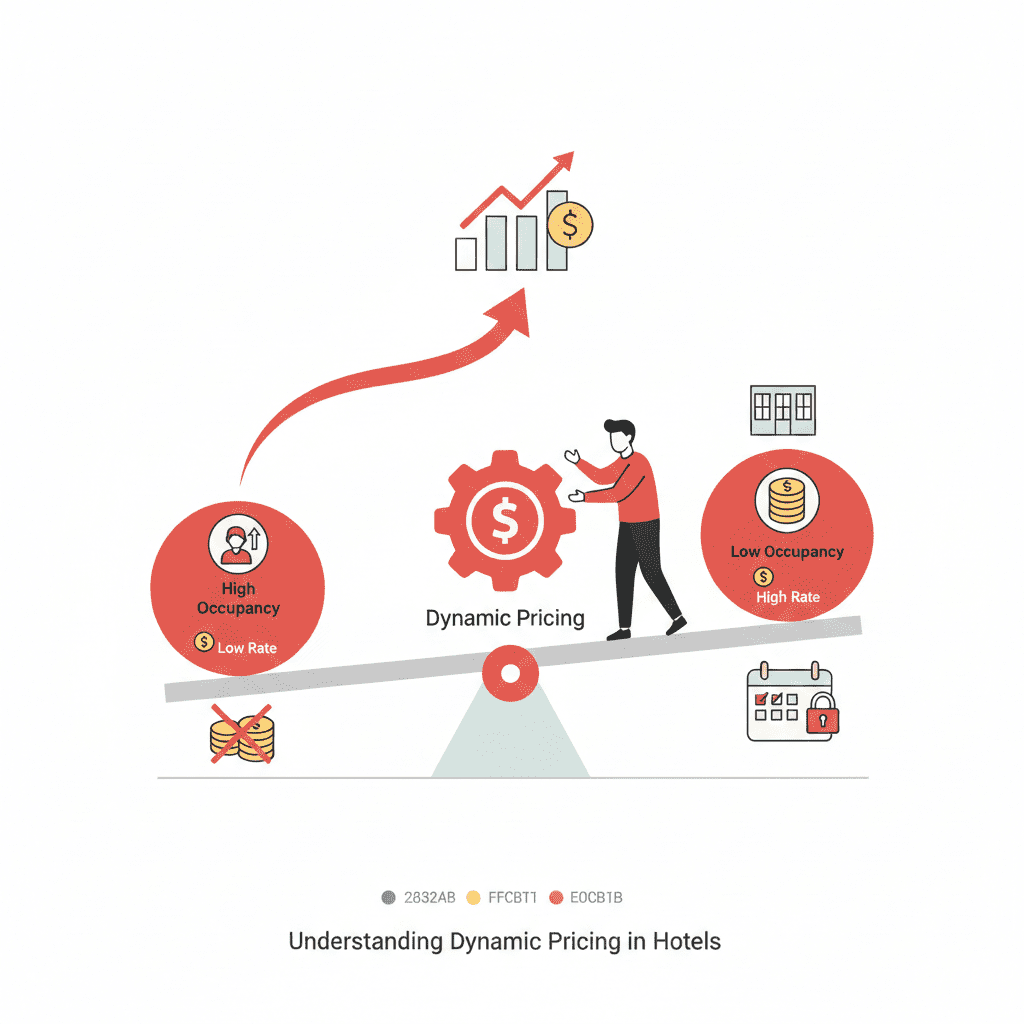
The “holy grail” of revenue management is finding the perfect balance.
- High Occupancy, Low Rate: You’re full, but you’re working too hard for too little money.
- Low Occupancy, High Rate: Your rooms are empty, and you’re losing out to competitors.
Dynamic pricing helps you pivot.
For example, if your occupancy for next weekend is already at 80%, you can aggressively raise rates for the remaining 20% to maximize profit. Conversely, if you are at 30% occupancy only two days out, the system can trigger a “last-minute discount” to ensure you aren’t left with empty beds.
How PriceLabs Can Help
At PriceLabs, we specialize in empowering independent hoteliers with the same data-driven tools used by the big chains. Our platform integrates seamlessly with your Property Management System(PMS) and Channel Manager to automate your entire pricing strategy.
With PriceLabs, you get:
- Automated Dynamic Pricing: Rates that adjust daily based on market demand, competitor trends, and your own occupancy.
- Market Dashboards: Clear insights into your local area, showing you exactly where you can capture more revenue.
- Hyper-Customization: Set minimum stays, seasonal profiles, and last-minute discounts that align with your specific business goals.
Wrapping Up
Adopting a dynamic pricing strategy is no longer “optional” for independent hotels—it is a necessity to remain competitive. By using real-time data to guide your decisions, you can reduce manual errors, save hours of work, and ensure your property is always priced to win.
Frequently Asked Questions
What is the difference between a PMS and a dynamic pricing tool?
A PMS (Property Management System) handles your daily operations like check-ins and housekeeping. A dynamic pricing tool like PriceLabs focuses specifically on analyzing market data to set the most profitable room rates, which then sync back to your PMS.
Will frequent price changes frustrate my guests?
While rates fluctuate, transparency is key. Guests are now accustomed to dynamic pricing in flights and ride-sharing. To maintain trust, focus on offering “best rate guarantees” for direct bookings on your website.
How often should I update my hotel prices?
With an automated system, your prices should ideally be updated daily. This ensures you never miss a sudden spike in demand or fall behind a competitor’s price drop.