Table of Contents
Updated : Mar 13, 2026
Managing hotel rates without length-of-stay controls is like trying to fill a bucket with a massive hole in the bottom—you might pour in a lot of demand, but you’ll never actually enhance your revenue capacity. Are you still manually tweaking minimum stay requirements every time a busy weekend pops up? What if your pricing could automatically adapt not just to who is booking, but how long they want to stay? As traveler behavior shifts, using a top-tier hotel dynamic pricing software with length-of-stay restrictions is the ultimate game-changer for independent properties. Let’s dive into how blending these two powerful strategies can stop revenue leakage, boost your RevPAR (Revenue Per Available Room), and put your boutique hotel’s profitability on autopilot.
Why Boutique Hotels Need Integrated AI Pricing and LOS Controls
Dynamic pricing adjusts room rates in real time based on demand, seasonality, events, and competitor behavior. But when you only adjust the price, you leave inventory vulnerable to awkward, unfillable one-night gaps during your busiest seasons.
Large hospitality organizations utilizing integrated systems report RevPAR increases of 20-30%, streamlined operations, and accurate rule enforcement at scale. This is exactly where PriceLabs steps in. Tailored specifically for independent properties, PriceLabs is an AI-driven hotel revenue management platform that perfectly blends automated pricing with length-of-stay (LOS) enforcement. With connections to 160+ PMS and channel systems, it removes the guesswork from revenue management.
For more details on how this transforms independent properties, you can explore the PriceLabs hotel-specific solutions page
Here are 7 proven boutique hotel dynamic pricing strategies that blend rate automation with LOS rules.
1. LOS-Based Base Price Tiers
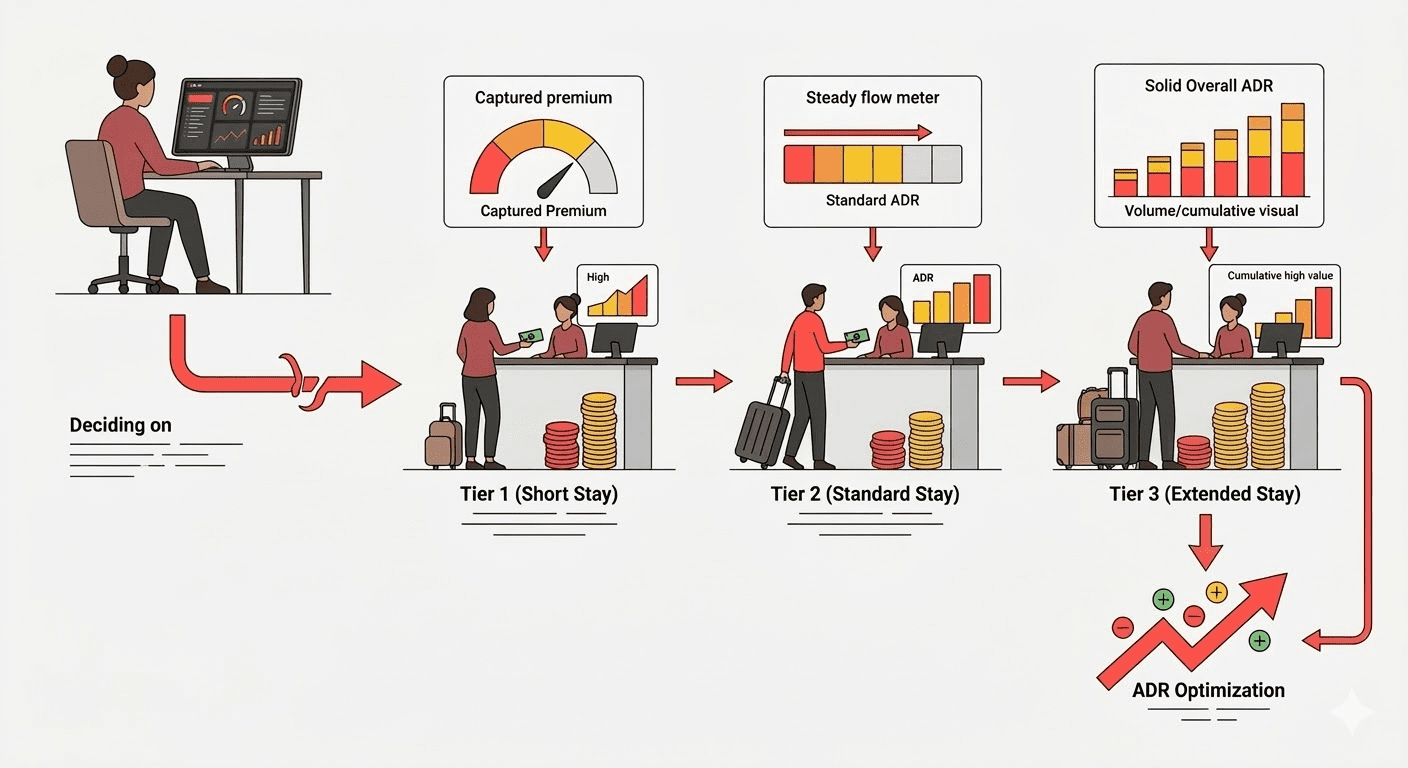
Creating LOS-based base price tiers means linking different base rates to short, standard, and extended stays. This ensures that longer bookings maintain a solid, higher overall ADR (Average Daily Rate) while capturing incremental revenue through smart, short-stay premiums.
How to implement it:
If a guest only wants to stay for a single night during a busy weekend, they should pay a premium. If they book for five nights, they provide you with guaranteed occupancy and lower turnover costs, so they earn a slightly more competitive rate.
| Length of Stay (LOS) | Strategy | Example Pricing Impact |
| 1 Night | Premium Tier | Base Rate + 15% |
| 2-3 Nights | Standard Tier | Standard Base Rate |
| 4+ Nights | Value Tier | Base Rate – 10% |
Practical Tip: Calibrate your tiers using annualized averages and market sensitivity so you don’t over-discount your longer stays.
How PriceLabs Helps:
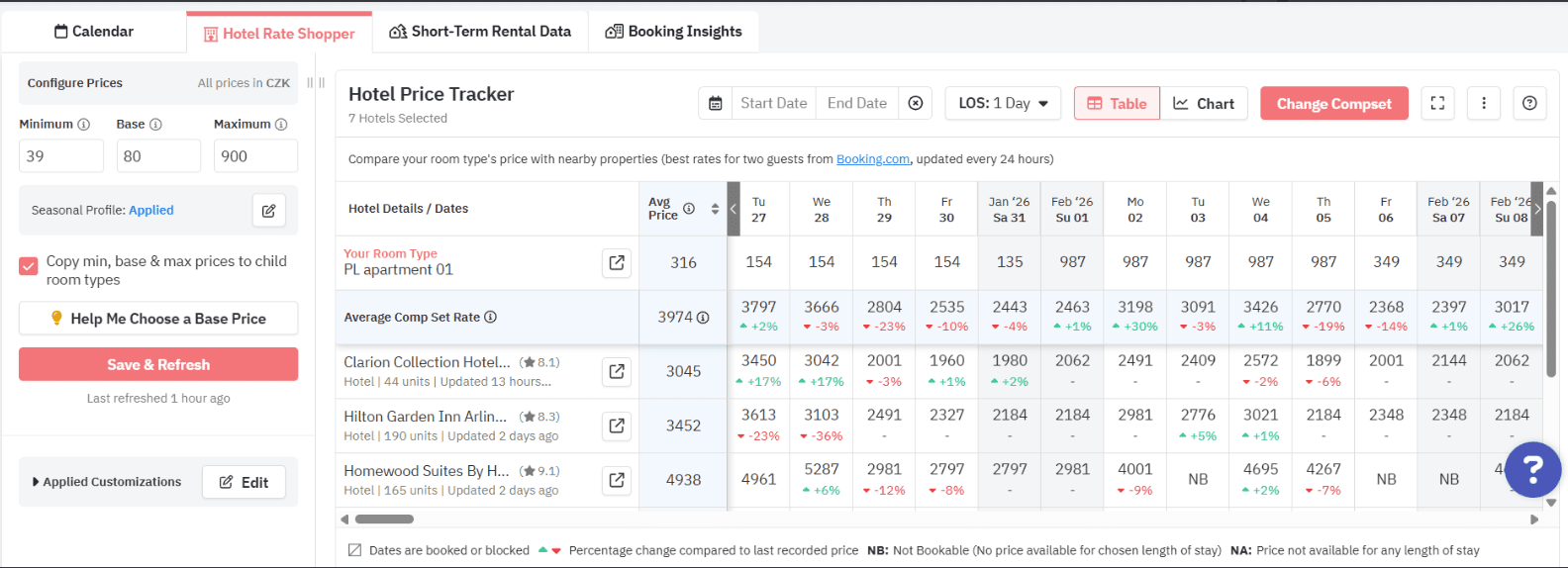
You can easily build this foundation using Base Price Guidance, which provides data-informed recommendations for setting your annual average rate grounded in historical performance. Combine this with the Hotel Data Tab to see exactly what the market is doing, ensuring your baseline tiers are always competitive.
2. Booking-Window and LOS Combinations
The “booking window” is the period between a reservation and the actual arrival date. Shorter windows usually correlate with last-minute demand, while longer windows attract planners. By combining booking-window rules with LOS controls, you react dynamically to lead time and booker behavior.
How to implement it:
Tighten your minimum stays for popular future dates to capture high-value, multi-night guests first. As the date gets closer, relax those restrictions to capture last-minute inventory.
- 30+ Days Out: Enforce a 3-night minimum stay.
- 7-29 Days Out: Drop to a 2-night minimum stay.
- <3 Days Out: Remove LOS restrictions to fill remaining gaps.
How PriceLabs Helps
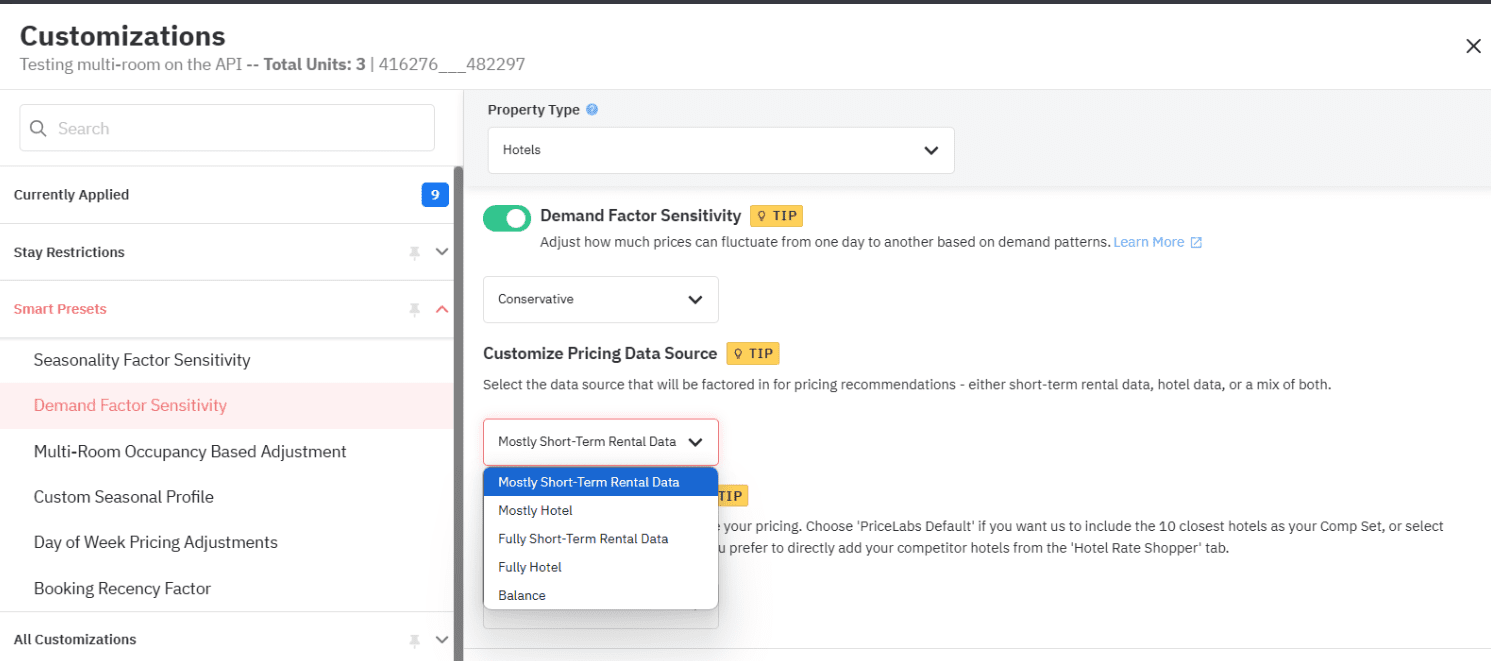
PriceLabs allows you to shape pricing recommendations for dates far in advance using Far-Out Pricing Adjustments, protecting your value for early planners. As the date approaches, Last-Minute Pricing Adjustments and automated Minimum Stay Rules adapt your suggestions based on seasonality, booking patterns, and close-in market demand to support optimal occupancy.
3. Event-Aware LOS Adjustments
Event-aware LOS means automatically raising price floors and setting higher minimum stay lengths during periods of forecasted high demand due to local or seasonal events. You must adjust both to prevent rate dilution and orphan gaps during peak windows.
Examples:
- Local Music Festival: 3-night minimum stay + aggressive rate uplift.
- Citywide Conference: Extended minimum stay + restrict short-lead bookings.
How PriceLabs Helps:
PriceLabs uses Hyper Local Pulse to generate daily pricing recommendations using internal occupancy, lead time, local events, and publicly available hotel market data. When a massive event is announced, you can also use Date-Specific Overrides to lock in custom pricing, stay restrictions, and availability for those specific high-demand dates.
4. Multi-Room Occupancy LOS Rules
Applying tailored minimum stay and rate controls when bookings involve multiple rooms or suites. This ensures large groups don’t inadvertently drive down your overall ADR on peak nights.
Best Practices:
Enforce longer stays for groups on high-demand dates. If a wedding party wants to block out half your boutique hotel on a peak summer Saturday, they should be required to book the Friday night as well. Offer incremental group rate discounts only for off-peak seasons or extended stays.
How PriceLabs Helps:
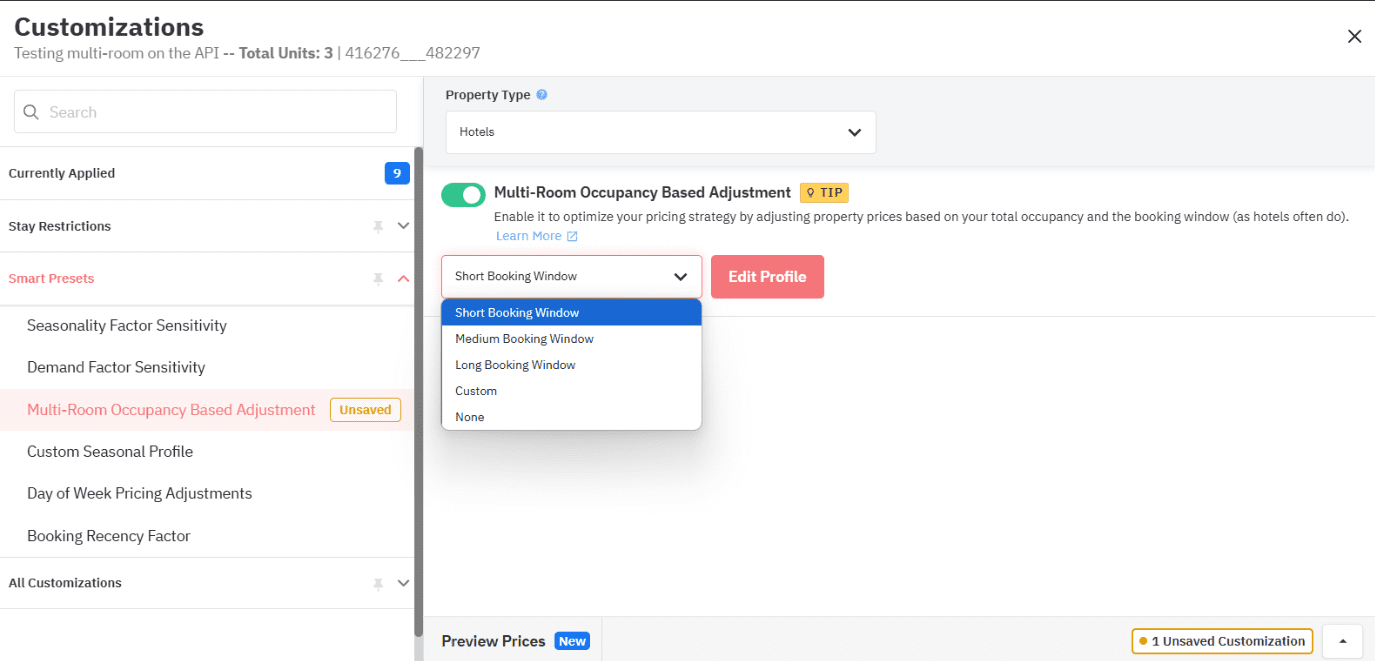
PriceLabs supports Multi-Room Occupancy-Based Adjustments. This feature adjusts pricing recommendations based on occupancy trends within specific room types, supporting a perfectly balanced sell-through across your inventory so groups don’t eat up your most profitable individual rooms for just a single night.
5. Channel and Rate-Plan LOS Controls
Enforcing LOS controls differently by channel (like OTAs vs. direct website) and rate plan (refundable vs. non-refundable) prevents revenue leakage and protects your channel mix.
| Channel / Plan | LOS & Rate Strategy |
| OTAs (Booking/Expedia) | Stricter minimum stays; standard dynamic rates. |
| Direct Website | Flexible LOS; value-adds (e.g., late checkout). |
| Corporate Contracts | Fixed minimums based on negotiated terms. |
Practical Tip: Regularly monitor for OTA mismatches. You want to offer the most flexible and appealing options directly on your site to save on hefty commission fees.
How PriceLabs Helps:
PriceLabs seamlessly handles this via Rate Plan Support (via select PMSs). This allows you to sync your customized pricing recommendations across multiple rate plans, ensuring your refundable and non-refundable options perfectly align with your channel strategy.
6. Real-Time Sync and Automated Enforcement
Automating your rate and LOS updates reduces manual work, eliminates human error, and ensures your boutique hotel responds instantly to market shifts 24/7.
When you manually manage rates, you lose time. Automation saves hotel staff hours of tedious data entry and dramatically reduces disparities across your PMS and OTA channels.
How PriceLabs Helps:
The true magic happens with Real-Time Sync (Select PMSs). This high-frequency add-on uses webhooks to trigger up to 24 price updates per day instantly following new reservations or cancellations. If you get a sudden rush of bookings on a Tuesday afternoon, PriceLabs recalculates and updates your pricing across all channels instantly.
7. Predictive Last-Room Optimizations
Predictive last-room optimization leverages predictive analytics to identify when inventory is scarce. As your hotel fills up, the system dynamically raises rates or enforces stricter LOS rules on those final few rooms to maximize last-minute revenue.
Step-by-Step Flow:
- Inventory drops to ≤ 3 rooms.
- AI detects scarcity and triggers a price lift.
- Minimum stay increases to protect the final rooms from 1-night bookings.
- Automated updates push to OTAs instantly.
How to get the data: Effective optimization requires competitor benchmarking for small hotels. You need to know if the hotel down the street is also sold out.
How PriceLabs Helps
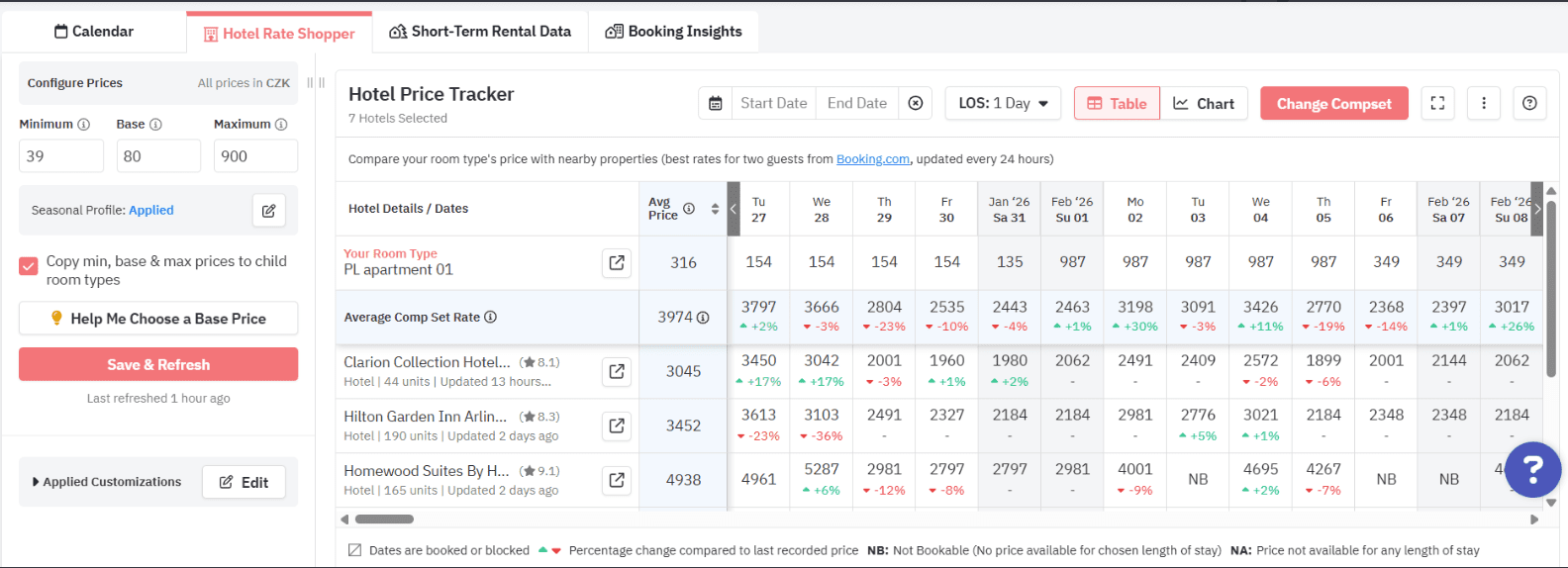
Before making these last-room decisions, use the Hotel Data Tab / Rate Shopper to monitor pricing trends across up to 350 nearby hotel-like properties. You can also manually select specific rivals using Custom Comp Sets. Once you know the market is compressed, PriceLabs’ automated rules take over, securing the highest possible rate for your final rooms.
The Way Forward
Combining dynamic pricing with length-of-stay controls is no longer a luxury reserved for massive resort chains; it is a necessity for any boutique hotel looking to survive and thrive. By shifting from manual rate updates to intelligent, automated strategies, you stop leaving money on the table and start capturing the true value of your property. Adopting a hotel dynamic pricing software with length-of-stay restrictions like PriceLabs ensures that every room is priced perfectly, every day, automatically—freeing up your time to focus on what really matters: delivering an unforgettable guest experience.
Frequently Asked Questions
What is dynamic pricing and how does it work with LOS rules in boutique hotels?
Dynamic pricing in boutique hotels means adjusting room rates in real time based on factors like demand, occupancy, and events. When combined with LOS rules, it also allows hotels to set minimum or maximum stay requirements to maximize revenue and prevent unfillable one-night gaps for each booking pattern.
How can small boutique hotels use competitor benchmarking to improve pricing decisions?
By monitoring competitor rates, booking pace, and occupancy, small boutique hotels can adjust their own pricing to stay competitive. Using automated tools allows you to compare market data and ensure your rates are aligned with the properties guests consider alongside yours.
What are common challenges when implementing LOS rules with dynamic pricing?
Common challenges include over-restricting bookings (which can lower overall occupancy), mismatches between different booking channels, and manual data entry errors. Using automated, integrated tools helps ensure LOS rules are enforced consistently and adapt seamlessly to market changes.
How often should boutique hotels review and adjust their LOS and pricing strategies?
While boutique hotels used to review LOS and pricing strategies weekly, modern real-time tools allow adjustments to be made multiple times daily as demand, competitor rates, and market conditions shift instantly.
What metrics should hotels track to measure the impact of dynamic pricing combined with LOS controls?
Key metrics include average daily rate (ADR), revenue per available room (RevPAR), booking lead time, occupancy rates, and cancellation patterns. Tracking these helps assess the true effectiveness of both your dynamic pricing and LOS rules.