Table of Contents
Updated : Feb 26, 2026
Managing a small, independent hotel without the right technology is like trying to win a Formula 1 race on a bicycle. You might have the passion, the local knowledge, and the hospitality skills to deliver an incredible guest experience, but the big corporate teams have the million-dollar engines to leave you in the dust before the race even starts.
Today, AI hotel pricing is the great equalizer. By democratizing enterprise-level data, artificial intelligence allows independent hoteliers to price their rooms with the same surgical precision as the global giants.
The Shift: What Exactly is AI Hotel Pricing?
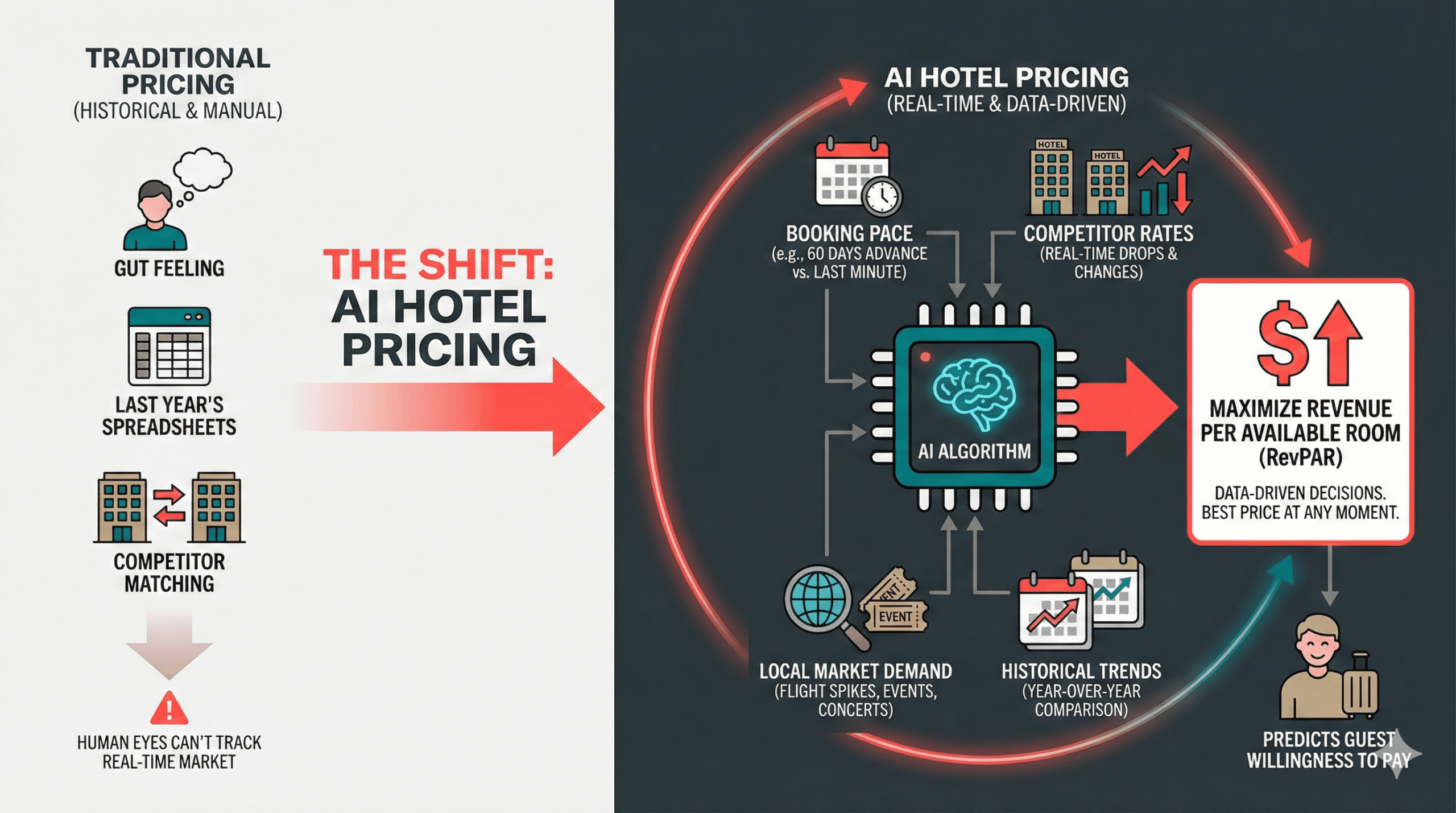
To understand how revolutionary this is, we have to look at how things used to be. Historically, independent hoteliers relied on “gut feeling,” looking at last year’s spreadsheet, or simply matching whatever the hotel across the street was charging. But in 2026, the travel market moves far too quickly for human eyes to track manually.
AI hotel pricing is a technology that continuously analyzes vast amounts of real-time data to determine the absolute best price for your hotel room at any given moment. It doesn’t just look at what happened last year; it looks at what is happening right now.
An intelligent algorithm processes millions of data points simultaneously:
- Booking Pace: Are rooms filling up 60 days in advance, or are people booking at the last minute?
- Competitor Rates: What are the five hotels nearest to you charging today, and have they dropped their rates in the last hour?
- Local Market Demand: Is there a sudden spike in flight searches to your city? Is there an unannounced concert, a youth sports tournament, or a corporate convention driving hidden demand?
- Historical Trends: How does this specific Tuesday compare to the same Tuesday three years ago?
By synthesizing all this information, the AI predicts exactly how much a guest is willing to pay. This means you are never blindly guessing. You are making data-driven decisions that maximize your Revenue Per Available Room (RevPAR).
The Fatal Flaw of Static Pricing And Why You Need an AI Revenue Management System
If your rates stay the exact same week after week, you are leaking money. It is a dual-edged sword that hurts your business in two distinct ways: leaving money on the table during high demand, and leaving rooms empty during low demand.
Imagine a major tech conference is quietly announced down the street from your 20-room boutique hotel.
- The Static Approach: You don’t hear about the conference. Your rooms are listed at your standard $150/night. Savvy conference-goers book you out instantly. You achieve 100% occupancy, which feels great, but you missed the point that guests would have happily paid $300/night for the convenience of your location. You left thousands of dollars on the table.
- The AI Approach: An AI revenue management system detects the sudden surge in local search intent and competitor occupancy long before the news hits your desk. It automatically bumps your rates incrementally. You still sell out, but your Average Daily Rate (ADR) doubles.
Conversely, during a sudden seasonal slump or unexpected bad weather, static pricing keeps your rates stubbornly high, driving potential guests to competitors who have lowered their prices. Your rooms sit empty, generating zero revenue.
How PriceLabs Solves This
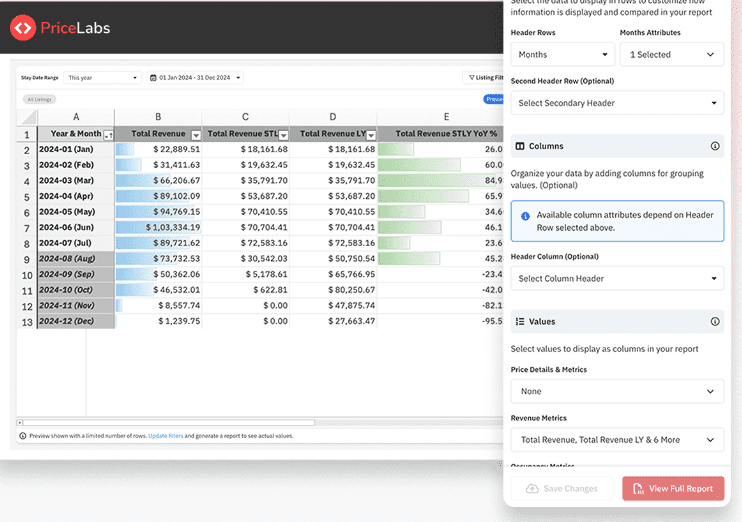
PriceLabs acts as your dedicated, 24/7 digital revenue manager. By navigating to the Market Dashboards within the PriceLabs platform, you gain instant, visual access to real-time supply and demand data for your specific neighborhood. You can see exactly when the market is compressing (filling up) and when it’s softening, ensuring your foundational pricing is always rooted in reality, not guesswork.
Dynamic Pricing for Small Hotels: Speed Over Size
There is a common misconception that you need 500 rooms to benefit from sophisticated revenue strategies. In reality, dynamic pricing for small hotels is often more impactful. When you have only 15 or 30 rooms, every booking represents a significant share of your total daily revenue. You cannot afford to misprice even one room.
Small hotels actually have a distinct advantage: agility. Large chains are often bogged down by corporate red tape and rigid brand standards. Independent operators can turn on a dime.
Practical Example: The “Orphan Day” Strategy
Let’s say a guest books a stay from Monday to Wednesday, and another guest books from Friday to Sunday. You are left with a single, unbooked Thursday right in the middle. This is an “orphan day.” It is notoriously hard to sell because most travelers want weekend blocks or full work-week stays.
If you don’t adjust your strategy, that room stays empty.
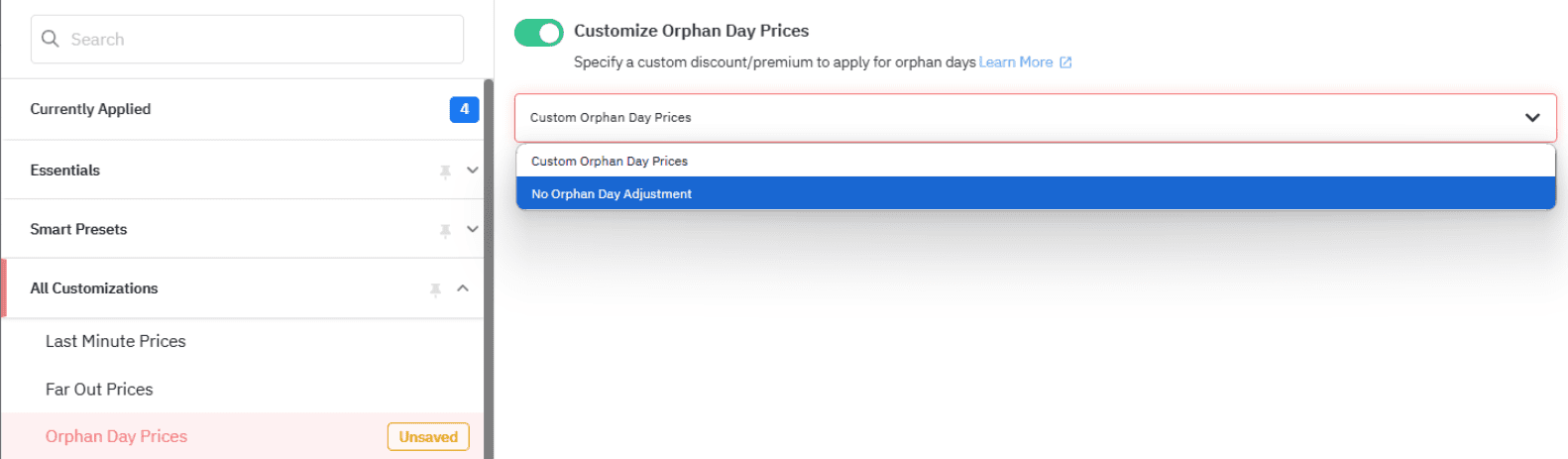
How to Navigate this on PriceLabs: PriceLabs has a specific, automated feature to fix this exact problem.
- Log in to your dashboard, then navigate to Customizations.
- Find the Orphan Day Pricing setting.
- You can tell the system: “If there is a 1-night gap between two bookings, automatically apply a 20% discount to that specific night, and waive any minimum-stay restrictions.” The AI seamlessly drops the price for that single Thursday, making it highly attractive to a last-minute road-tripper, turning zero dollars into unexpected revenue.
The Magic of Real-Time Hotel Rate Automation
The biggest hurdle for independent hotel managers isn’t a lack of talent or ambition; it’s a sheer lack of time. You are wearing a dozen hats—managing housekeeping, dealing with guest complaints, handling marketing, and fixing the Wi-Fi. Who has the time to sit at a computer and manually update prices across Expedia, Booking.com, and your own direct website three times a day?
This is where real-time hotel rate automation changes your life. It breathes hours back into your day by handling the administrative “grunt work” of price updates.
Step-by-Step: Setting Up Automation
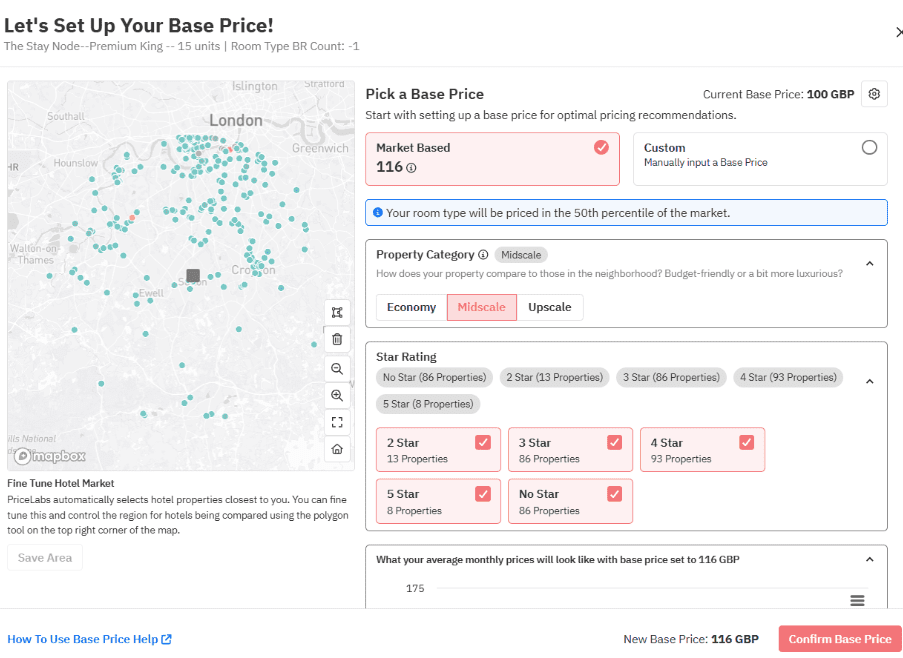
- Step 1: Connect Your Tech Stack. Integrate your Property Management System (PMS) or Channel Manager directly with your AI pricing tool. PriceLabs integrates seamlessly with over 150 different PMS platforms.
- Step 2: Establish Your Boundaries. You will set your “Base Price” (your anchor), your “Minimum Price” (the absolute lowest you will accept to cover operational costs), and your “Maximum Price” (your ceiling).
- Step 3: Enable Daily Sync. Once configured, the system will automatically push newly optimized rates to all your booking channels every single day (or multiple times a day).
If setting up rules sounds intimidating, PriceLabs offers Smart Presets. When you first connect your hotel, you simply select your property type (e.g., Independent Hotel, B&B, or Resort). The system instantly applies industry-best-practice rules tailored specifically to your niche, saving you hours of manual configuration while guaranteeing professional-grade revenue management from day one.
Retaining Control Over the AI
A major fear among independent hoteliers is that handing the reins over to an algorithm means losing control of their brand. “Will the AI drop my rates to $20 and attract the wrong crowd?”
The answer is a resounding no. The best AI hotel pricing tools are designed to be your assistant, not your dictator. You hold the ultimate veto power.
Customizing Your Competitor Set (Comp Set)
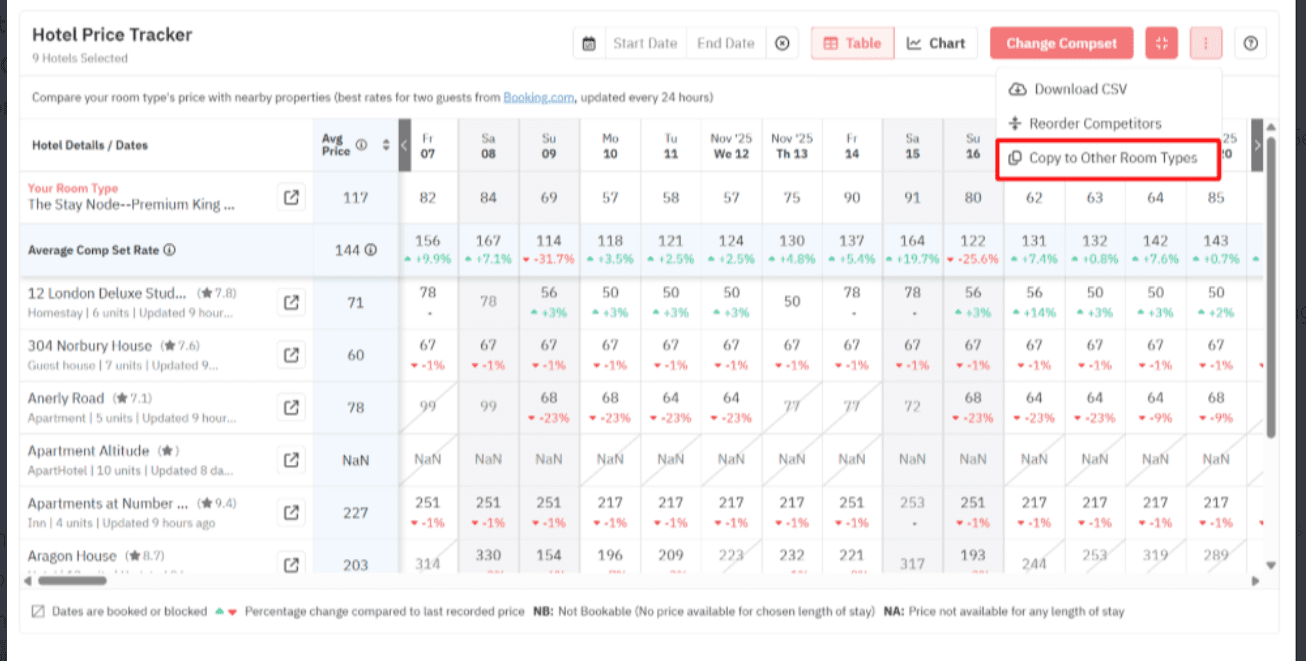
One of the most powerful ways to guide the AI is by carefully selecting who it watches. You don’t want your luxury boutique hotel’s prices being influenced by the budget motel out by the highway.
How to Navigate this on PriceLabs:
- Go to the Hotel Comp Sets Customization tab.
- Hand-pick 5 to 10 specific neighboring properties that you know your guests compare you against.
- Adjust the Demand Factor Sensitivity. If you want aggressive, rapid price changes during peak seasons, set it to “High.” If you prefer a more stable, conservative pricing structure to protect brand prestige, set it to “Low.”
- You can also use Date-Specific Overrides. If you have a VIP wedding block and want to manually lock the remaining rooms at a premium rate for that specific weekend, you simply override the AI.
Practical Tips to Enhance Your Revenue Engine
To truly master AI hotel pricing, you need to pair the technology with strategic human oversight. Here are actionable tips to ensure you are getting the most out of your software:
- 1. Watch the “Lead Time” (Booking Pace): Are guests booking 60 days out, or 2 days out? AI tracks this. If your rooms are filling up too fast, too early, your base price is likely too low.
- 2. Leverage Last-Minute Discounts Intelligently: In PriceLabs, you can use Last-Minute Customizations to automatically apply a gradual discount (e.g., 10% off at 5 days out, 20% off at 2 days out) to capture spontaneous travelers and fill remaining inventory without cannibalizing your early bookings.
- 3. Track Your Stars and Dogs: Use the Portfolio Analytics tab in PriceLabs to see which room types are your high-performers and which are lagging. You can group your underperforming rooms and apply more aggressive pricing rules to them, boosting your overall portfolio occupancy.
- 4. Focus on Value-Added Pricing: Instead of just dropping your minimum rate during the off-season, maintain your rate but add value. Offer free breakfast, late checkout, or a local dining credit. The AI will handle the baseline pricing, while you handle the human element of perceived value.
The Way Forward
The massive corporate giants no longer have a monopoly on big data. By adopting AI hotel pricing, independent hoteliers can stop playing defense and start playing offense. You can stop reacting to the market after the fact and start anticipating it before it shifts.
The future of hospitality isn’t about having the deepest marketing pockets; it’s about having the smartest, most agile pricing engine. As we push further into 2026, the revenue gap between hotels that leverage AI and those that cling to static spreadsheets will only widen. Your way forward is simple but profound: automate the routine, algorithmic calculations so you can dedicate your energy to humanizing the guest experience.
Frequently Asked Questions (FAQs)
Q: Is an AI revenue management system too expensive for a small 10-room hotel?
A: Not at all. Modern platforms like PriceLabs offer affordable, flat-fee per-unit pricing models. Because the AI immediately begins capturing “rate gaps” and filling orphan days that you would have missed manually, the software almost always pays for itself within the first few incremental bookings of the month.
Q: Will the AI drop my rates too low and damage my brand’s perceived value?
A: Only if you let it. You have total control over the parameters. By setting a strict “Minimum Price” (your floor), the algorithm is mathematically restricted from ever dropping your rates below that threshold, ensuring your brand prestige and profit margins are always protected.
Q: How often does real-time hotel rate automation actually update my prices?
A: It depends on your settings, but systems generally sync with your PMS at least once every 24 hours. However, tools like PriceLabs are constantly monitoring the market behind the scenes and can push dynamic updates multiple times a day if they detect significant demand shifts, keeping you perfectly optimized.