Table of Contents
Are you staring at a forecasted occupancy chart that looks like a steep cliff, wondering exactly how to increase hotel sales in low season without completely destroying your Average Daily Rate (ADR)? You aren’t alone; the post-summer drop in Europe and the post-holiday slump in the US are notoriously stressful for independent hoteliers. But what if I told you that panicking and dropping your room rates to rock bottom is actually the worst thing you can do for your brand? Instead of playing a losing game of price-cutting, let’s explore data-backed, actionable ways to turn your quietest months into a steady stream of revenue.
Quick Answer: The most effective tactics for how to increase hotel sales in low season include targeting the local staycation market, designing value-added packages, hosting corporate or wellness retreats, and leveraging smart dynamic pricing that focuses on length-of-stay rather than deep discounts.
Target the Local “Staycation” Market
When international or cross-country flights drop, your best guests might just be a short drive away. Locals often want a weekend escape to celebrate an anniversary, escape their noisy house, or just enjoy a change of scenery, but they rarely think to book a hotel in their own city unless you give them a reason. If you want to know how to increase hotel sales in low season, look at your immediate 50-mile radius.
Practical Tip: Create a “Local Residents Rate.” Ask for a local ID at check-in and offer a compelling perk, like free parking or a complimentary breakfast.
How to do it:
- Run geo-targeted ads on Facebook and Instagram aimed exclusively at users within a 1-to-2-hour driving distance.
- Highlight amenities that locals love, such as your heated indoor pool, award-winning restaurant, or proximity to local theaters.
- Partner with local influencers to showcase your property as the ultimate weekend hideaway.
Build Creative Hotel Packages for Off Season
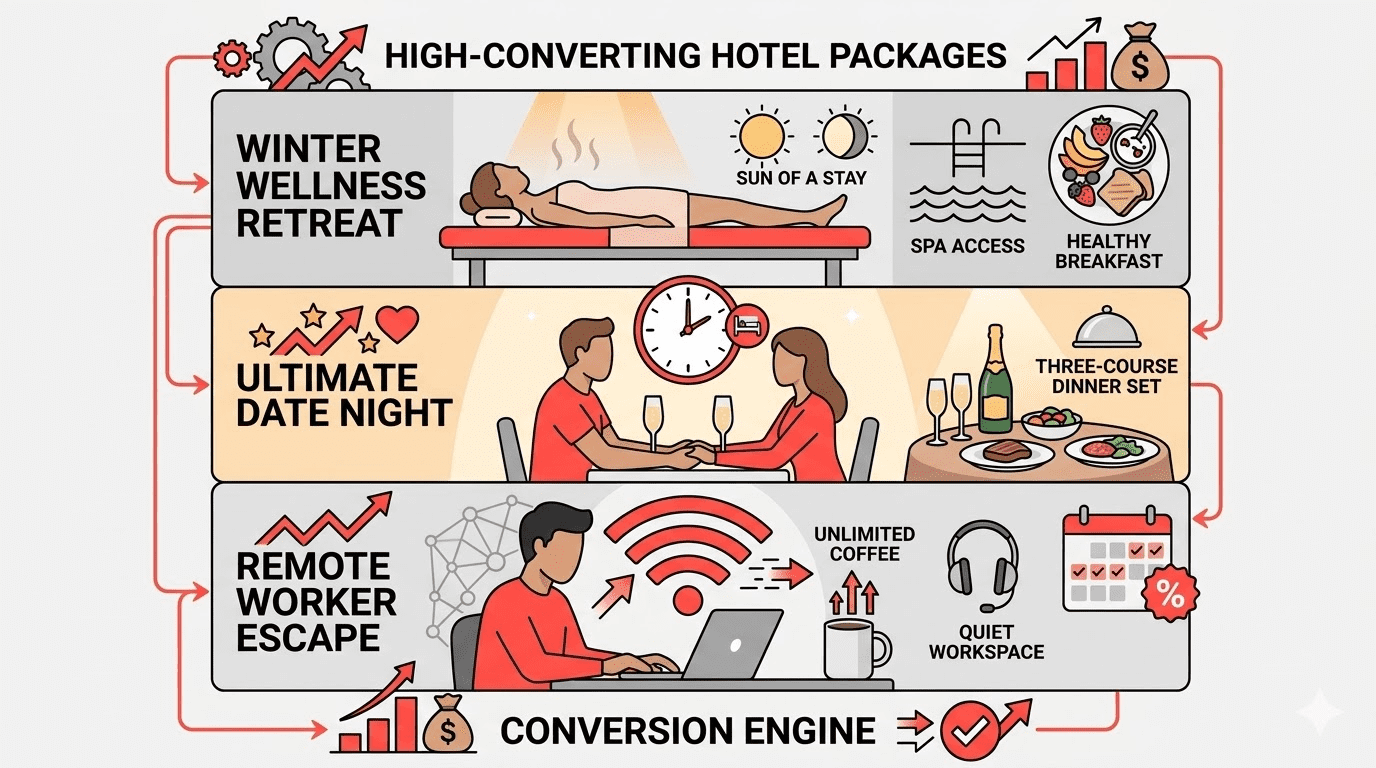
The golden rule of the off-season is to add value instead of dropping the price. Guests love feeling like they are getting a steal, and creative hotel packages for off season are the perfect way to provide that feeling while protecting your public room rates. Bundling services makes the actual cost of the room opaque to the guest.
Examples of High-Converting Packages:
- The Winter Wellness Retreat: Bundle a two-night stay with a 60-minute massage, access to the spa, and a healthy breakfast.
- The Ultimate Date Night: Include a room, a bottle of champagne on arrival, a three-course dinner at your restaurant, and a guaranteed late check-out at 2:00 PM.
- The Remote Worker Escape: Offer blazing-fast Wi-Fi, unlimited coffee, a quiet workspace, and a discount on multi-night mid-week stays.
When you master the art of bundling, figuring out how to increase hotel sales in low season becomes an exercise in creativity rather than a math problem.
Optimize Hotel Marketing Strategies for Low Season
Your past guests are your warmest leads. They already know and trust your property, making them much cheaper to convert than brand new customers. Developing targeted hotel marketing strategies for low season is essential to keeping your property top-of-mind when travel intent is generally low.
Steps to activate your past guests:
- Segment your email list: Pull a list from your Property Management System (PMS) of guests who stayed with you during the off-season last year. Send them a highly personalized email welcoming them back with a special loyalty perk.
- Run a limited-time flash sale: Create a sense of urgency. Offer a 48-hour window where past guests can book an off-season stay and receive a massive value-add, like a complimentary room upgrade.
- Highlight off-season local events: Don’t just sell your hotel; sell the destination. If there is a winter festival, a special museum exhibit, or a concert series in town, build an email campaign around it.
Implement Smart Dynamic Pricing and LOS Rules
If you are wondering how to improve hotel occupancy during slow periods, you need to look at how you are restricting your inventory. Having strict minimum Length of Stay (LOS) requirements during a slow month is a fast way to turn away perfectly good one-night bookings.
During the low season, your dynamic pricing strategy needs to be fluid. It is crucial to understand that knowing how to increase hotel sales in low season means knowing when to drop your restrictions.
Practical Tips for Off-Season Pricing:
- Remove two-night or three-night minimum stay restrictions to capture passing road-trippers or quick overnight business travelers.
- Use a dynamic pricing tool to offer gentle, automated discounts for guests who do choose to stay longer (e.g., “Stay 3 Nights, Save 15%”).
- Monitor your competitors closely. If the hotel down the street drops their rate by $50, you don’t necessarily have to match it, but you should instantly pivot to highlighting why your property offers better value.
In this context a hotel revenue management system like PriceLabs can be valuable. PriceLabs is an AI-driven revenue management platform tailored specifically for independent and boutique hotels. It automates your pricing strategy and stay restrictions by analyzing real-time market data, competitor rates, and your own booking pace, allowing you to enahnce revenue without the complexity or cost of an enterprise system.
When it comes to tackling the low season, PriceLabs takes the guesswork out of your off-peak strategy:
- Set Targeted Off-Peak Rules: With Seasonal Profiles, you can define distinct pricing and stay-rule strategies specifically for your shoulder and off-peak months. This ensures your baseline pricing adjusts logically to the market rather than dropping out of panic.
- Automatically Relax Restrictions: Instead of manually dropping minimum night requirements when the calendar looks bare, automated Minimum Stay Rules adapt your length-of-stay suggestions based on the current season and demand periods to capture quick, one-night staycations.
- Capture Last-Minute Bookings: Last-Minute Pricing Adjustments dynamically tweak your pricing recommendations for close-in dates based on actual occupancy and pickup, helping you fill those empty rooms at the best possible rate.
- Watch the Competition: Use the Hotel Data Tab / Rate Shopper to monitor pricing trends and recent rate changes across up to 350 nearby properties. This ensures your off-season offers remain perfectly competitive without accidentally starting a race to the bottom.
Partner with Local Businesses for B2B Sales
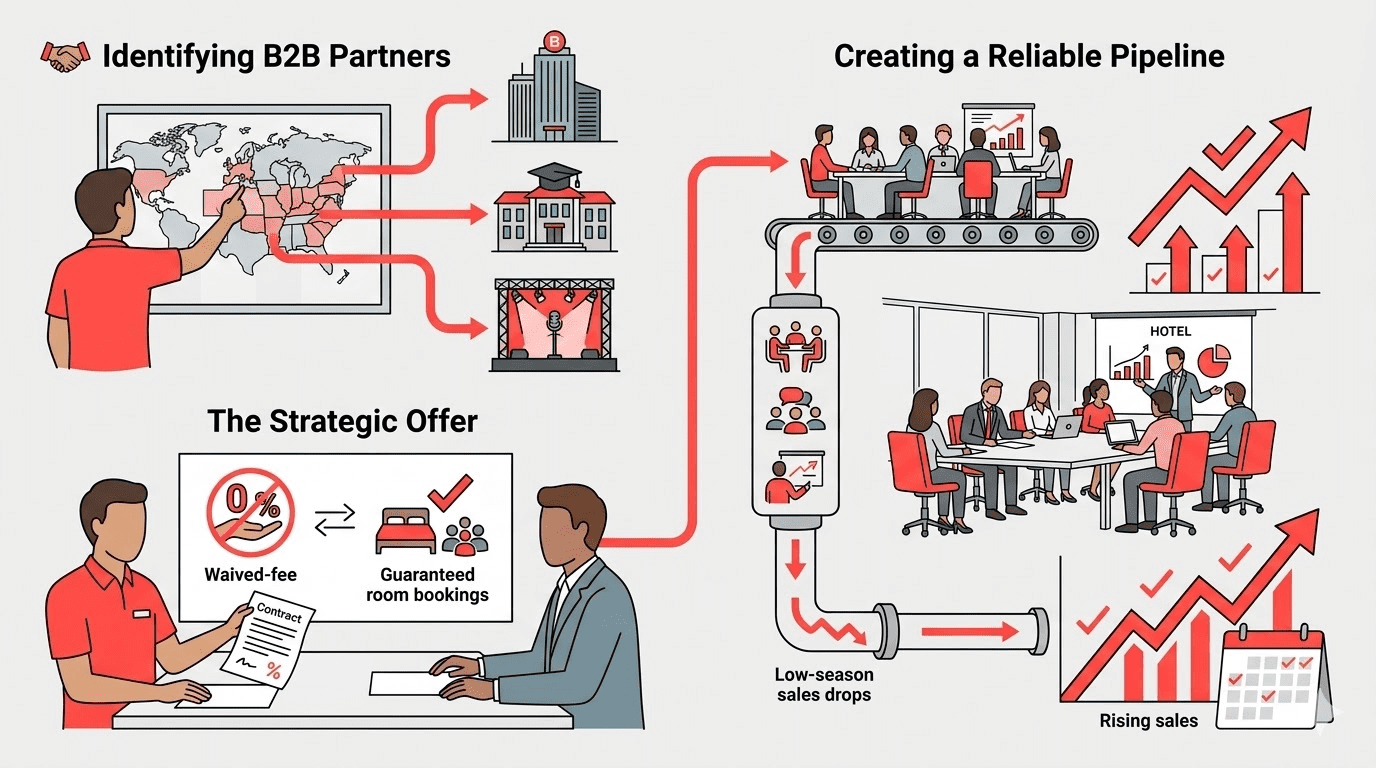
When leisure travel dries up, corporate and group travel can save your bottom line. Companies are always looking for spaces to host off-site meetings, team-building retreats, or year-end planning sessions.
Reach out to local businesses, universities, and event planners. If you have meeting spaces, offer to waive the room rental fee if they guarantee a certain number of booked sleeping rooms. By turning your focus to B2B relationships, you create a reliable pipeline that answers the persistent question of how to increase hotel sales in low season year after year.
The Way Forward
Surviving and thriving during the slower months requires a proactive shift in mindset. Instead of waiting for the phone to ring, successful hoteliers actively create demand by targeting locals, bundling incredible value, and leaning into targeted marketing. If you consistently apply these strategies on how to increase hotel sales in low season, you will transform your quietest months into a period of predictable, sustainable revenue, setting your property up for massive success when the peak season finally returns.
Frequently Asked Questions
What is the best way to attract guests to a hotel during the low season?
The best way is to pivot from targeting out-of-town tourists to targeting local residents for staycations. Focus on creating value-added packages, such as spa bundles or romantic getaways, rather than simply discounting your room rates.
Should I lower my room rates during the off-season?
While slight seasonal rate adjustments are normal, drastically slashing your rates can damage your brand’s perceived value and trigger a price war with competitors. Instead of dropping the base rate, offer hidden discounts through bundled packages or offer perks like free parking and late check-out.
How can I market my hotel when tourist demand is low?
Focus your marketing efforts on your warmest audience: past guests. Segment your email database and send personalized offers to guests who have visited during the off-season before. Additionally, run geo-targeted social media ads promoting your property as a cozy local escape.
How do length-of-stay (LOS) rules affect low season occupancy?
Strict LOS rules, like a 2-night minimum, can hurt your occupancy during the low season by blocking people who just want a quick overnight stay. Relaxing these restrictions helps capture last-minute, short-term bookings that you would otherwise miss.