Introducing Revenue Accelerator : 30 new features to power your entire revenue strategy.

Learn more

Use AI to turn data charts into easy-to-understand sentences. Know More
Revenue Estimator Pro: Get Instant Revenue Estimates for Any Address.

Learn How

The 2026 FIFA World Cup: Your STR Revenue Playbook for Host Cities

FIFA World Cup 2026
Spread the love

Updated : Apr 14, 2026

The 2026 FIFA World Cup is more than just a global sporting event. It’s a monumental, once-in-a-lifetime opportunity for short-term rental (STR) property managers across North America. With matches set in 16 cities across the US, Canada, and Mexico this June and July, local tourism and accommodation demand is skyrocketing.

As property and portfolio managers, you must move past setting static rates and relying on surface-level assumptions. It is time to embrace a data-driven revenue management strategy to capitalize on this massive influx of guests. However, early data proves that you cannot simply hike your prices and expect guaranteed bookings. This article analyzes the real market trends in key host cities and provides insights to optimize your occupancy rates and RevPAR.

Early Market Data: A “Tale of Market Types” and Geopolitical Barriers

Forward-looking STR data reveals that World Cup demand is heavily influenced by geopolitical frictions, normal summer seasonality, and a strict price ceiling. We are currently seeing a “Tale of Market Types” where massive global demand is colliding head-on with a traveler’s actual ability to pay.

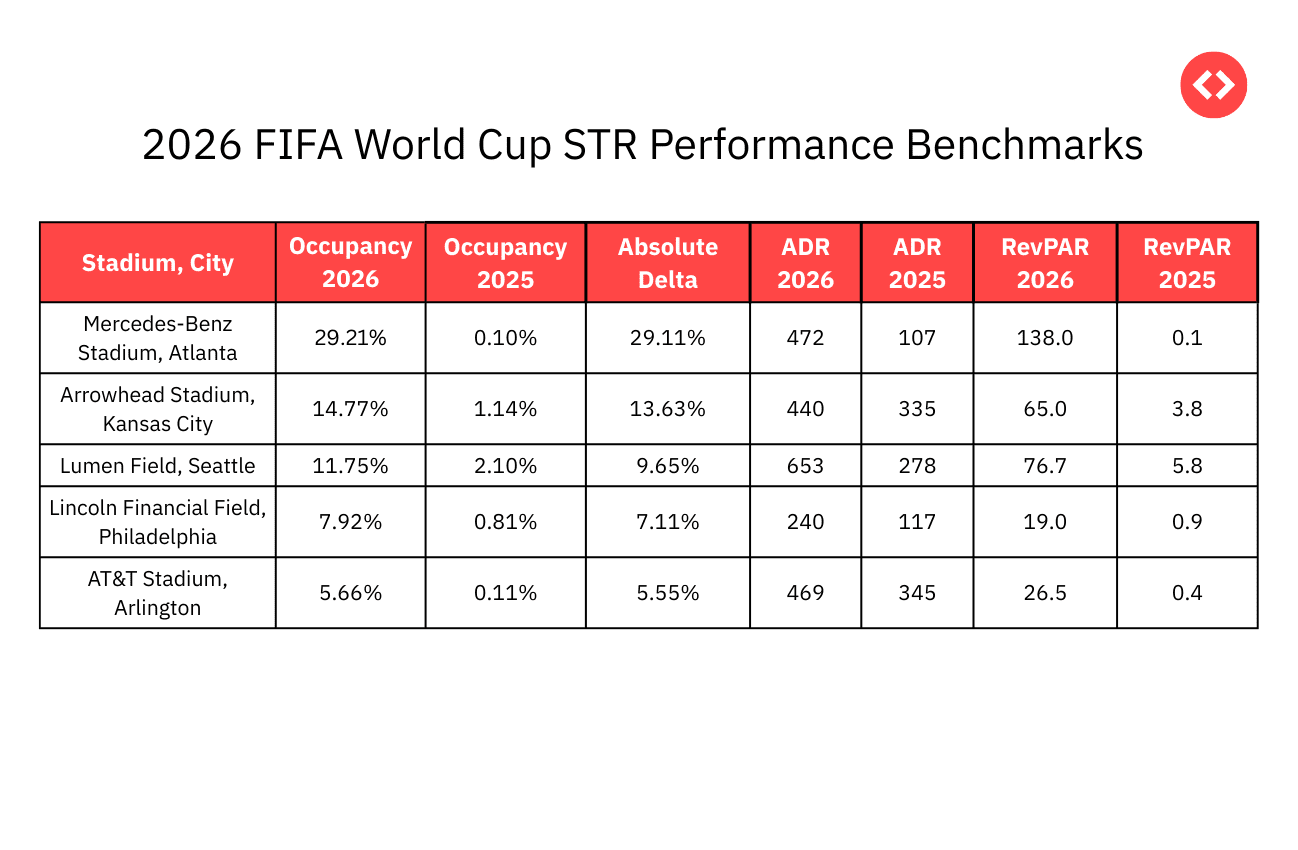
2026 FIFA World Cup STR Performance Benchmarks

Host City / RegionStadium2026 Projected OccupancyOcc. Absolute Growth (vs STLY)*2026 Projected ADR (USD)ADR Relative Growth (vs STLY)
Guadalajara, MexicoAkron Stadium23%+20%$90+159%
Boston, MA (Foxborough)Gillette Stadium34%+17%$290+72%
Monterrey, MexicoEstadio BBVA15%+13%$109+197%
Kansas City, MOArrowhead Stadium22%+13%$356+120%
Monterrey, MexicoBanorte Stadium18%+12%$70+133%
Dallas, TX (Arlington)AT&T Stadium17%+12%$236+83%
Houston, TXNRG Stadium18%+11%$176+57%
Miami, FLHard Rock Stadium19%+10%$286+64%
Atlanta, GAMercedes-Benz Stadium15%+10%$218+94%
Philadelphia, PALincoln Financial Field19%+8%$228+89%
New York / New JerseyMetLife Stadium19%+6%$259+82%
Toronto, ON, CanadaBMO Field19%+6%$201+76%
Los Angeles, CA (Inglewood)SoFi Stadium13%+4%$244+52%
Seattle, WALumen Field28%+4%$320+80%
San Francisco, CA (Santa Clara)Levi’s Stadium18%+3%$166+36%
Vancouver, BC, CanadaBC Place24%+1%$342+149%

*STLY = Same Time Last Year. Absolute growth indicates the raw percentage point increase in occupancy compared to baseline seasonal dates.

  • Guadalajara (Akron Stadium): Shows the largest projected increase in occupancy (Absolute Delta of +20%) across all host cities. Thanks to highly accessible pricing ($90 ADR), Mexico is successfully capturing the budget-conscious, high-friction traveler.
  • Boston (Gillette Stadium): Demonstrates the power of the domestic suburban market. Boasting the highest total occupancy in the dataset (34%) and a massive +17% absolute growth, its sprawling 40km radius is perfectly suited to absorb US domestic “drive-to” demand.
  • Vancouver (BC Place): Serves as a cautionary tale for the $300 pricing ceiling. Despite massive ADR hikes (+149% relative growth pushing rates to $342), the city is seeing the lowest occupancy growth (+1%) across all 16 stadiums, as high costs and international friction stifle demand.

1. The Rerouting Effect: Mexico Booms While Canada Hits a Wall

International travelers are actively rerouting based on costs and visa friction. Mexico is capturing the bulk of this budget-conscious, high-friction traveler demand. Markets like Zapopan (Akron Stadium) are seeing the highest absolute occupancy growth across all host cities (+20%), followed closely by Monterrey (Estadio BBVA) at +13%. Why? Because their Average Daily Rates (ADRs) remain highly accessible at $90 to $109.

Conversely, Canada is hitting a massive pricing wall. Vancouver (BC Place) currently has the lowest absolute occupancy growth across all 16 stadiums at just +1%. Because managers spiked ADRs by 149% to a staggering $342, the “triple threat” of accommodation costs, flight inflation, and baseline summer pricing has made the city unaffordable for many travelers.

2. The US “Domestic Pivot” & The Suburban Advantage

Demand in the US remains incredibly strong, but it is heavily reliant on the domestic “drive-to” market. Markets like Foxborough (Gillette Stadium) and Arlington (AT&T Stadium) are surging with +17% and +12% absolute occupancy growth. Because these stadiums are located in sprawling suburbs, they offer a high inventory of large, multi-bedroom homes perfectly suited for groups of domestic fans. They successfully bypass international travel barriers entirely.

3. The California Squeeze and the International Barrier

Traditional international coastal gateways are feeling the squeeze of geopolitical friction. Inglewood (SoFi Stadium) and Santa Clara (Levi’s Stadium) are seeing severely suppressed occupancy growth (just +4% and +3%). While Los Angeles is expensive, Santa Clara actually has one of the lower US ADRs at $166—yet its growth remains flat. This proves that for markets highly dependent on long-haul international tourists, the heavy burden of ESTA requirements, visa wait times, and flight inflation is actively capping demand.

4. The $300 Pricing Ceiling

Across all host markets, there is a clear breaking point in price elasticity. Whenever ADRs cross the $300–$340 threshold (such as Seattle’s Lumen Field at $320 or Vancouver’s BC Place at $342), absolute occupancy growth plummets to the low single digits.

DON'T GUESS YOUR WORLD CUP PRICE: Optimize STR Revenue with Real-Time Data

The 2026 FIFA World Cup means record demand, but static pricing will make you miss peak revenue. Get the dynamic pricing and market data you need to capture the maximum ADR for every match day.

Start Your Free Trial Now

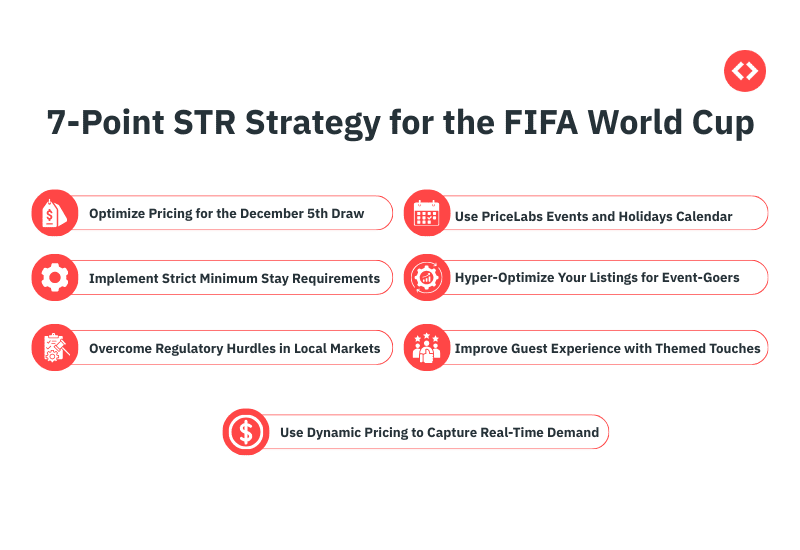
Your 7-Point STR Strategy for the World Cup

With the tournament just weeks away, the preparation window is closing. Here are the most effective, data-driven strategies to secure maximum revenue without hitting the pricing ceilings we are seeing in the data.

1. Pivot Your Marketing Based on Your Market Type

Now that the December 5th draw has confirmed the group-stage teams, you know exactly who is playing in your city. However, you must align this with your geographic market type.

  • Strategy Shift: If you operate in an international gateway like San Francisco or Los Angeles, do not blindly rely on international fan bases to fill your calendar. Pivot your marketing to target domestic travelers to bypass visa and travel friction. For the knockout rounds, stay agile; demand will shift rapidly as teams advance.

2. Implement Strict Minimum Stay Requirements (MinStay)

To reduce turnover costs and maximize event revenue, set a longer minimum stay requirement immediately.
  • Avoid Gaps: If an event or a cluster of matches lasts 7 days, aim for a MinStay that encourages booking the entire duration. Failing to set the right minimum can leave unbooked days between stays, costing you potential premium revenue.
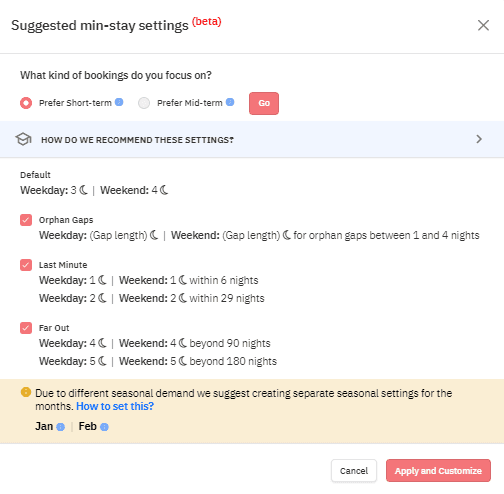
  • PriceLabs Minimum Stay Recommendation Engine: Use a dynamic tool like PriceLabs to automate your nightly restrictions and minimize gaps.
PriceLabs Minimum Stay Recommendation Engine Screenshot from PriceLabs
PriceLabs Minimum Stay Recommendation Engine

3. Overcome Regulatory Hurdles in Local Markets

Many markets have tightened regulations. For example, Kansas City defines STRs as less than 30 days and instituted a 90-day short-term permit near downtown specifically for the World Cup period.

  • Compliance is Key: Property managers must stay up to date on local regulations to avoid fines or legal challenges.
  • Targeted Outreach: Consider targeting the mid-term rental market (30+ days) to attract event staff, media, and corporate clients seeking longer stays and bypassing strict STR limits.

4. Leverage the PriceLabs Events and Holidays Calendar

You cannot manage what you don’t track. To streamline your last-minute planning, utilize the PriceLabs Events and Holidays Calendar feature.
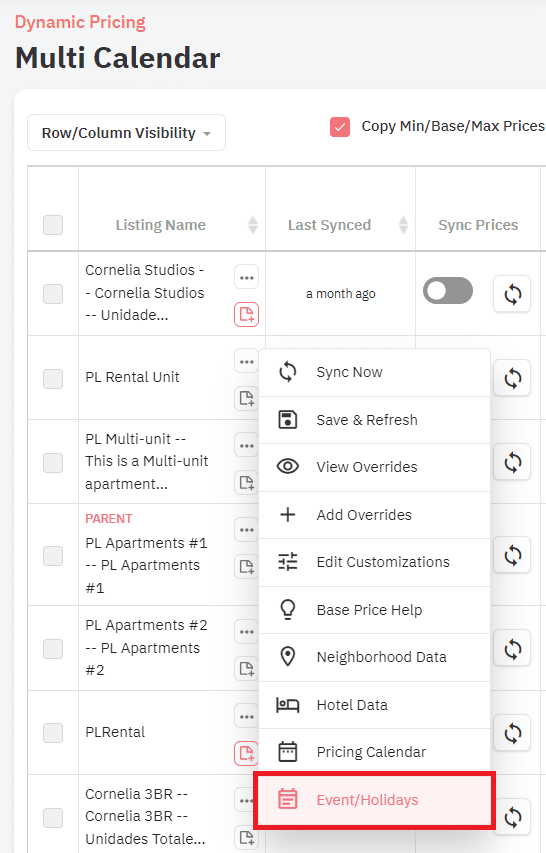
  • Early Insight: This tool highlights local events, fan festivals, and high-demand dates, keeping you informed of micro-surges in demand outside of just the match days.
PriceLabs Events Calendar Screenshot from the product
PriceLabs Events Calendar

5. Hyper-Optimize Your Listings for Event-Goers

Your listing title and description must be tailored to the event attendees to maximize discoverability.

  • Keyword Focus: Use keywords like “Spacious Apartment Near [Stadium Name] – Perfect for World Cup Fans!” or “Proximity to Fan Zone.”
  • Amenity Focus: Showcase amenities that appeal to sports fans: large-screen TVs, spacious gathering areas, and proximity to public transport. Note: If you are in a suburban market like Arlington or Foxborough, heavily highlight your parking availability and capacity for large groups.

6. Enhance the Guest Experience with Themed Touches

Since guests are paying a premium rate, their experience must match the price. Go above and beyond with personalized touches:

  • Event Welcome Package: Include an event guide with local sports bars, shuttle services, Fan Zone details, and a small, themed amenity.
  • Increase Essentials: For back-to-back turnovers during busy event periods, ensure you stock up on extra towels, linens, and cleaning supplies well in advance.

7. Use Dynamic Pricing to Capture Real-Time Demand

In a fluctuating, high-stakes market like this, a static pricing model is a massive mistake. As we’ve seen with the $300+ pricing ceiling, overpricing will leave you empty. This is where a data-driven solution like PriceLabs Dynamic Pricing becomes essential.

  • Real-Time Rate Adjustment: The algorithm analyzes daily data from platforms like Airbnb and Vrbo to reflect sudden shifts. If your market is hitting a pricing wall, the system will adjust to ensure you remain competitive.
  • Competitor Awareness: It continuously monitors local competition. This allows you to set base and minimum prices that align with the market, adapting dynamically based on occupancy and lead time.
PriceLabs Dynamic Pricing Engine product image
PriceLabs Dynamic Pricing Engine

PriceLabs Market Dashboard: Your Competitive Edge

To execute these strategies, you need real-time, comparative data. The PriceLabs Market Dashboard is essential for a winning competitive analysis.

  • Performance Benchmarking: Compare your property’s performance against the market average using real-time KPIs.
  • Visualize the Competition: Use the Listing Map and Comp Sets to map the competitive landscape, identify competitors in your area, and explore their offerings.
  • Forecasting Tools: Anticipate future occupancy trends to identify emerging high-demand periods and proactively adjust your pricing strategies.
PriceLabs Market Dashboard Market Summary Section Screenshot from the product
PriceLabs Market Dashboard Market Summary Section

Final Thoughts

The 2026 FIFA World Cup is a unique opportunity for incredible ROI, but only if you understand the underlying market forces. The early STR data proves that success isn’t just about raising prices—it’s about understanding your local market type, the geopolitical barriers capping international travel, and the hard pricing ceilings dictating traveler behavior. By leveraging dynamic pricing and cutting-edge market analysis tools, you can strategically position your property to maximize revenue and secure your place at the top of the competitive leaderboard.

Frequently Asked Questions

1. What are the knockout rounds of the FIFA World Cup 2026?

The tournament features an expanded 48-team format with 12 groups of four. The knockout stage will begin after the group stage, with the top two from each group—plus the eight best third-placed teams—progressing to a new 32-team knockout round. The rounds include the Round of 32, Round of 16, Quarter-finals, Semi-finals, and the Final.

2. Which countries are confirmed to qualify for the 2026 FIFA World Cup?

As co-hosts, the United States, Mexico, and Canada automatically qualified. A total of 48 teams have now been locked in following the final playoffs in March 2026, with top seeds including major powerhouses like Spain, Argentina, France, England, and Brazil.

3. How should I adjust my MinStay for the World Cup?

You should adjust your MinStay to align with the whole duration of a match or a cluster of matches in your city to reduce turnover and maximize your ADR. Tools like PriceLabs’ MinStay Recommendation Engine can help you set these restrictions dynamically based on your market’s booking patterns for similar events.

Dynamic pricing in Airbnb refers to the practice of adjusting rental rates in real time based on various factors such as demand, seasonality, local events, and market conditions. This approach allows hosts to optimize their earnings by automatically increasing or decreasing prices to match supply and demand fluctuations. By utilizing data and algorithms, dynamic pricing aims to find the optimal balance between attracting guests and maximizing revenue, ensuring that prices reflect the current market dynamics.
To implement dynamic pricing for vacation rentals, collect relevant data, identify key factors, set pricing rules, use dynamic pricing software, monitor performance, and adjust as needed to optimize revenue.
The aim of dynamic pricing is to optimize revenue and occupancy rates. It is done by adjusting prices in real time based on factors such as demand, market conditions, competition, and other variables. Dynamic pricing softwares seeks to find the optimal balance between attracting guests and maximizing profitability by dynamically setting prices that reflect current market dynamics. The goal is to capture the highest possible value for each booking while ensuring competitiveness in the market.
0%

About PriceLabs

PriceLabs is a revenue management solution for the short-term rental and hospitality industry, founded in 2014 and headquartered in Chicago, IL. Our platform helps individual hosts and hospitality professionals optimize pricing and manage revenue by adapting to changing market trends and occupancy levels.

Every day, we price over 600,000+ listings globally across 150+ countries, offering world-class tools like the Base Price Help and Minimum Stay Recommendation Engine.

With dynamic pricing, automation rules, and customizations, we manage pricing and minimum-stay restrictions for any portfolio size, with prices automatically uploaded to preferred channels such as AirbnbVrbo, and 150+ property management and channel integrations.

Sign up for a free 30-day trial for optimized revenue.

Get started with PriceLabs

Want to learn what PriceLabs can do for you? See for yourself with a free trial

This site is registered on wpml.org as a development site. Switch to a production site key to remove this banner.