
Table of Contents
Updated : Feb 11, 2026
For independent hoteliers and managers looking to protect their profit margins in 2026, understanding how to transition from deceptive pricing to transparent, value-driven revenue is crucial. Let’s dive into how you can restructure your pricing strategy, keep your guests happy, and boost your bottom line without ruining your reputation.
What is Amenity Fee Hotel Revenue All About?
If you are searching for “what is amenity fee hotel policies”, the simplest answer is this: An amenity fee is a mandatory daily charge added to a guest’s base room rate to cover the cost of specific on-site services, perks, and facilities. Historically, hotels used these fees as a loophole to keep their advertised base rates artificially low on Online Travel Agencies (OTAs) like Expedia or Booking.com, only to hit the guest with the actual cost upon arrival. But today’s travelers are savvy, and legislative crackdowns on hidden fees mean transparency is no longer optional—it’s mandatory.
An amenity fee should never be a sneaky way to charge for basic electricity or standard housekeeping. Instead, it should be a carefully curated bundle of services that enhances the guest’s stay. Think of premium high-speed Wi-Fi, streaming service access, daily local coffee and pastries in the lobby, bicycle rentals, or access to a state-of-the-art fitness center.
Navigating this on PriceLabs
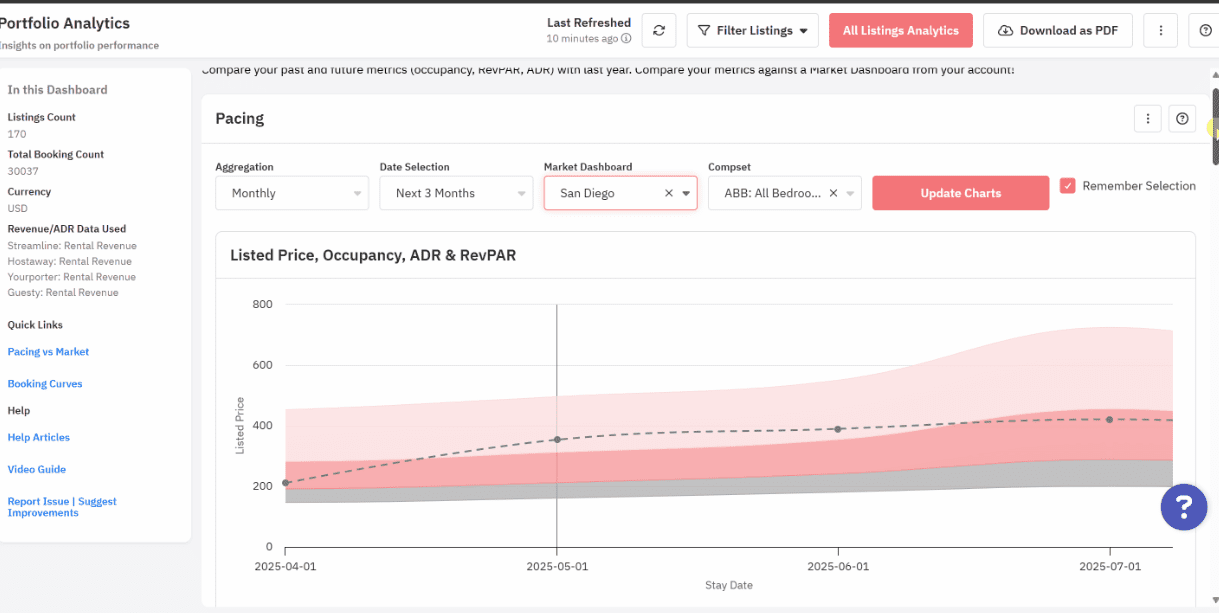
While PriceLabs dynamically adjusts your base room rate, understanding your total revenue (Base Rate + Amenity Fee) is vital. You can use the Portfolio Analytics dashboard in PriceLabs to track your total Revenue Per Available Room (RevPAR). If you introduce a new amenity fee and notice your occupancy pacing starts to drop in the analytics dashboard, it might indicate that your total price (Base + Fee) has pushed you out of your competitive bracket.
Hotel Resort Fees vs Amenity Fees: What’s the Difference?
While they are often used interchangeably in casual conversation, there is a distinct difference between hotel resort fees and amenity fees, both in legal terms and in guest perception. Understanding this distinction is vital for independent hoteliers who want to position their brand correctly.
- Resort Fees: These are typically found at large-scale, destination properties. They cover sprawling, high-maintenance facilities that justify a higher daily charge (often $30 to $100+ per night). This includes amenities such as private beach access, multi-pool water parks, lazy rivers, tennis courts, kids’ club activities, and on-site shuttle services.
- Amenity Fees: These are usually implemented by urban boutique hotels, smaller independent properties, or city-center chains. The fee is generally lower (often $10 to $35 per night) and covers lifestyle enhancements rather than massive physical infrastructure. This might include a welcome cocktail, upgraded digital news access, in-room smart tech, or partnerships with a local off-site gym.
Practical Tip for Hoteliers
Don’t call it a “resort fee” if you are a 20-room boutique hotel in downtown with no pool. Guests will feel cheated. Call it an “Urban Amenity Fee” or a “Destination Fee” and clearly list the urban perks it includes.
Navigating this on PriceLabs
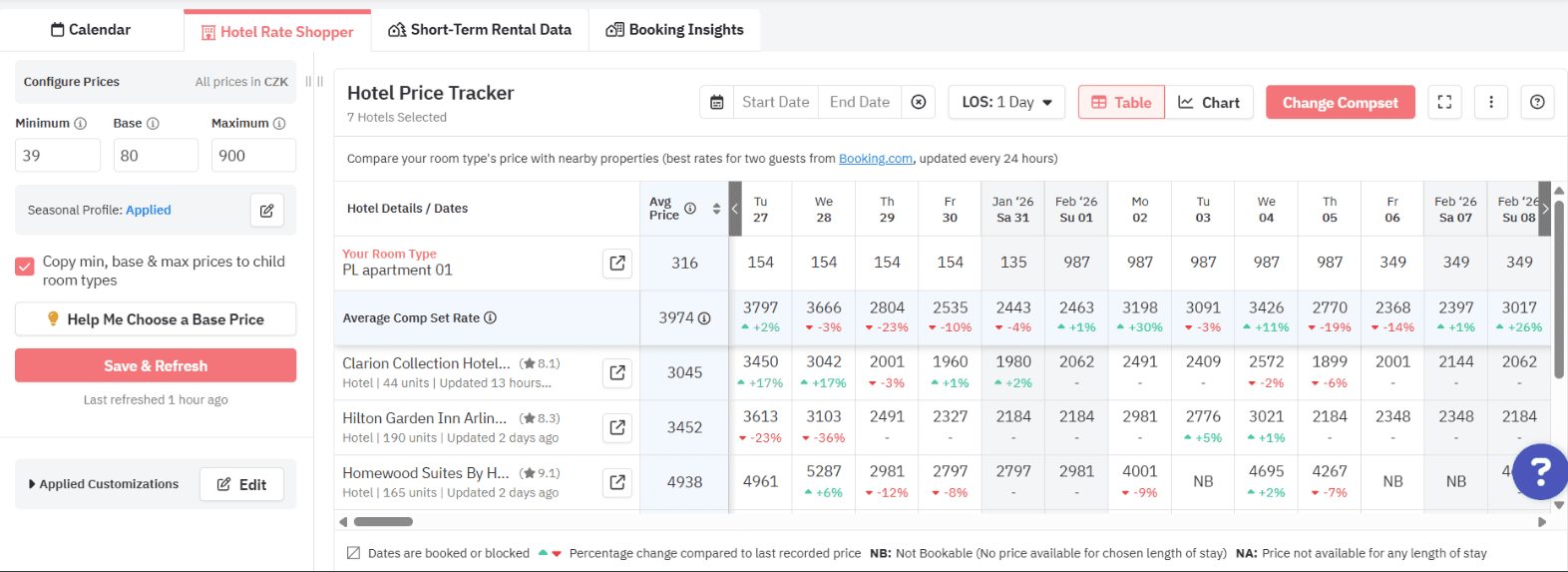
When you are setting up your “Comp Set” (Competitor Set) in PriceLabs, you must compare apples to apples. If the five hotels you compete against charge a $40 resort fee, and you only charge a $15 amenity fee, your final price to the guest is actually much cheaper. You can use the Base Price Adjustment in PriceLabs to safely raise your base room rate, knowing your lower fee structure still makes you highly competitive on total price.
The Transparency Era: Managing Mandatory Hotel Facility Charges
In recent years, governments and consumer protection agencies have severely cracked down on what they call “drip pricing” or “junk fees.” If you are going to implement mandatory hotel facility charges, transparency must be the foundation of your strategy.
If a fee is mandatory, the guest must know about it before they click “Book.” Hiding it in the fine print is a surefire way to earn devastating one-star reviews.
How-To: Ensure Compliance and Transparency
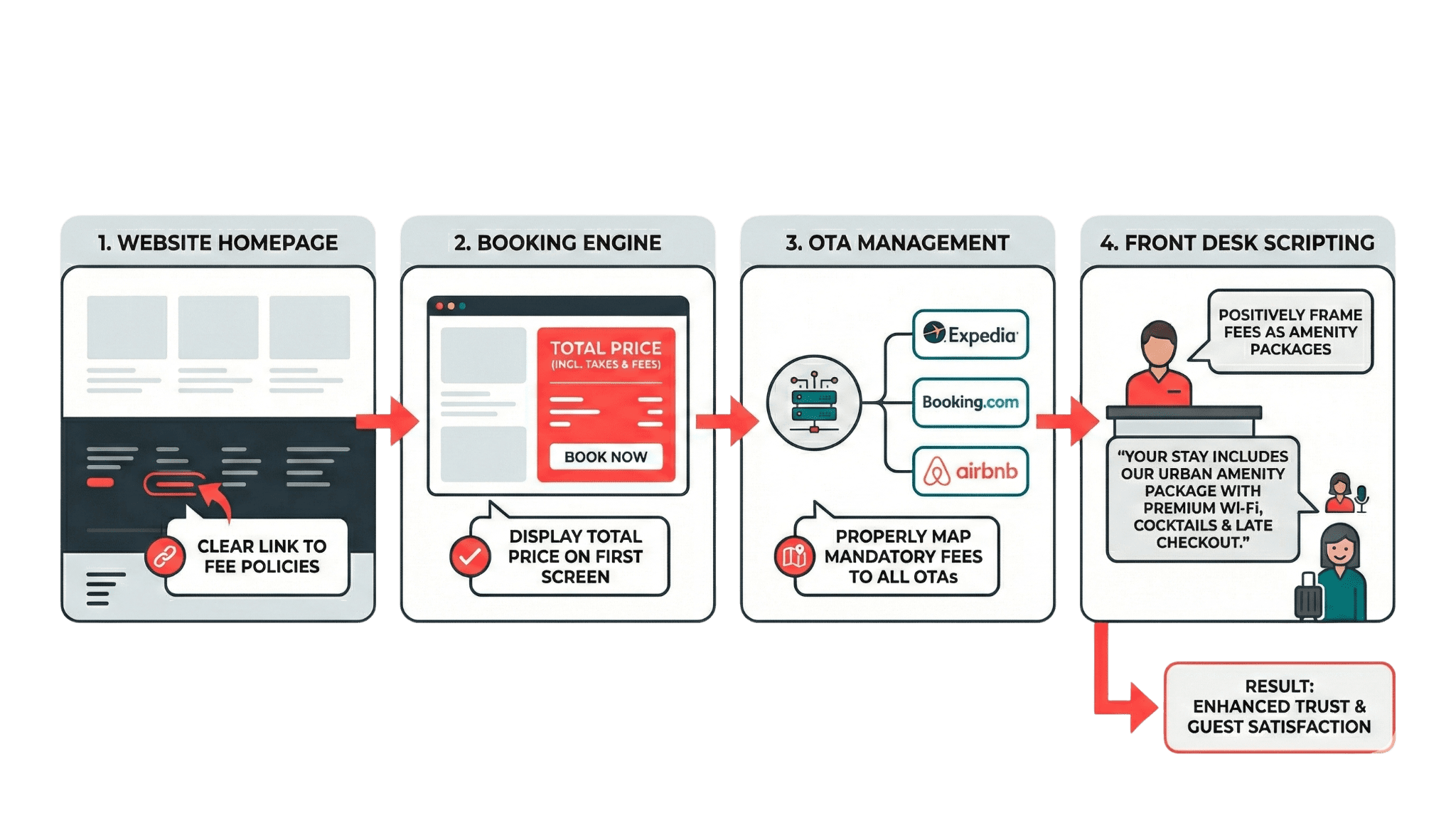
- Website Homepage: Add a clear, easily accessible link in your footer explaining your fee policies.
- Booking Engine: Ensure your direct booking engine displays the “Total Price including taxes and fees” on the very first screen, not just on the final credit card checkout page.
- OTA Management: Work with your channel manager to ensure that your mandatory hotel facility charges are properly mapped to Expedia, Booking.com, and Airbnb so they display correctly in the guest’s initial search results.
- Front Desk Scripting: Train your front desk staff to positively frame the fee at check-in. Instead of saying, “There is a $20 mandatory fee,” they should say, “Your stay includes our Urban Amenity Package, which gives you access to our premium Wi-Fi, two complimentary craft cocktails at the bar, and late checkout.”
The Art of Value Creation: What Should Be Included?
The secret to making an amenity fee palatable—and even appealing—is providing undeniable value. If you charge $25 a day, the guest should feel like they are getting $50 worth of perks. You cannot simply take things that used to be free (like standard Wi-Fi or a generic bottle of water) and suddenly slap a fee on them. You have to innovate.
Examples of Value-Driven Amenities:
- The Wellness Bundle: Yoga mats in the room, access to a premium meditation app during the stay, and a partnership with a local health-food cafe for a daily smoothie.
- The Remote Worker Package: Upgraded gigabit internet, complimentary printing at the business center, endless artisan coffee in the lobby, and late checkout at 1:00 PM.
- The Local Experience: Two tickets to a nearby museum, complimentary use of hotel bicycles, and a curated guidebook of local guide hidden gems.
Practical Tip: The Break-Even Analysis
Calculate the hard cost of your bundle. If a local brewery charges you $4 for a welcome beer, and your premium Wi-Fi costs $2 per room, your hard cost is $6. Charging a $20 amenity fee yields a $14 pure profit margin per room, per night, while the guest feels they are getting a great deal on a craft experience.
Dynamic Pricing for Hotel Amenities
While fixed amenity fees are the standard, the industry is rapidly moving toward more sophisticated revenue models. We are beginning to see the concept of dynamic pricing for hotel amenities take shape.
Think about it: the value of your amenities changes based on demand, just like your rooms. A guaranteed late checkout is worth much more on a busy Sunday morning when everyone is leaving, compared to a slow Tuesday. While fully dynamic amenity fees are still evolving, the relationship between your fees and your dynamic room rates is critical right now.
If you have a strict, non-negotiable $30 amenity fee, it might make sense during peak season when your base rate is $250. But during the off-season, if your base rate drops to $80, a $30 fee suddenly represents a massive percentage of the total cost, which will absolutely kill your conversion rate.
Navigating this on PriceLabs
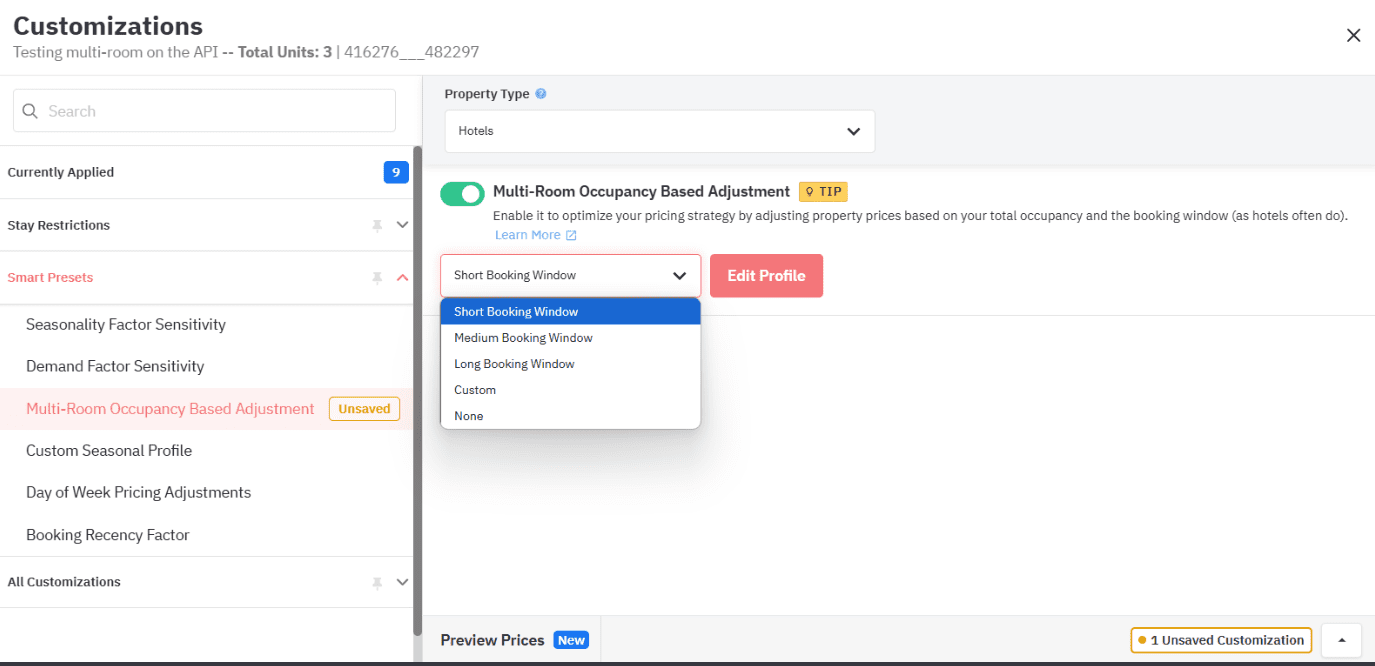
This is where the magic of AI hotel pricing comes into play. You need to ensure your base rates are perfectly optimized to account for your fixed fees.
- Go to the Customizations tab in PriceLabs.
- Use the Minimum Price setting. If your amenity fee is high, you might want to set a slightly lower minimum base price during the off-season to ensure the total price doesn’t scare off budget-conscious travelers.
- Utilize the Occupancy-Based Adjustments. If PriceLabs sees that your hotel is empty for the upcoming weekend, it will automatically drop your base rates to stimulate demand, helping to offset the psychological barrier of your mandatory amenity fee.
Step-by-Step: How to Roll Out a Fair Amenity Fee
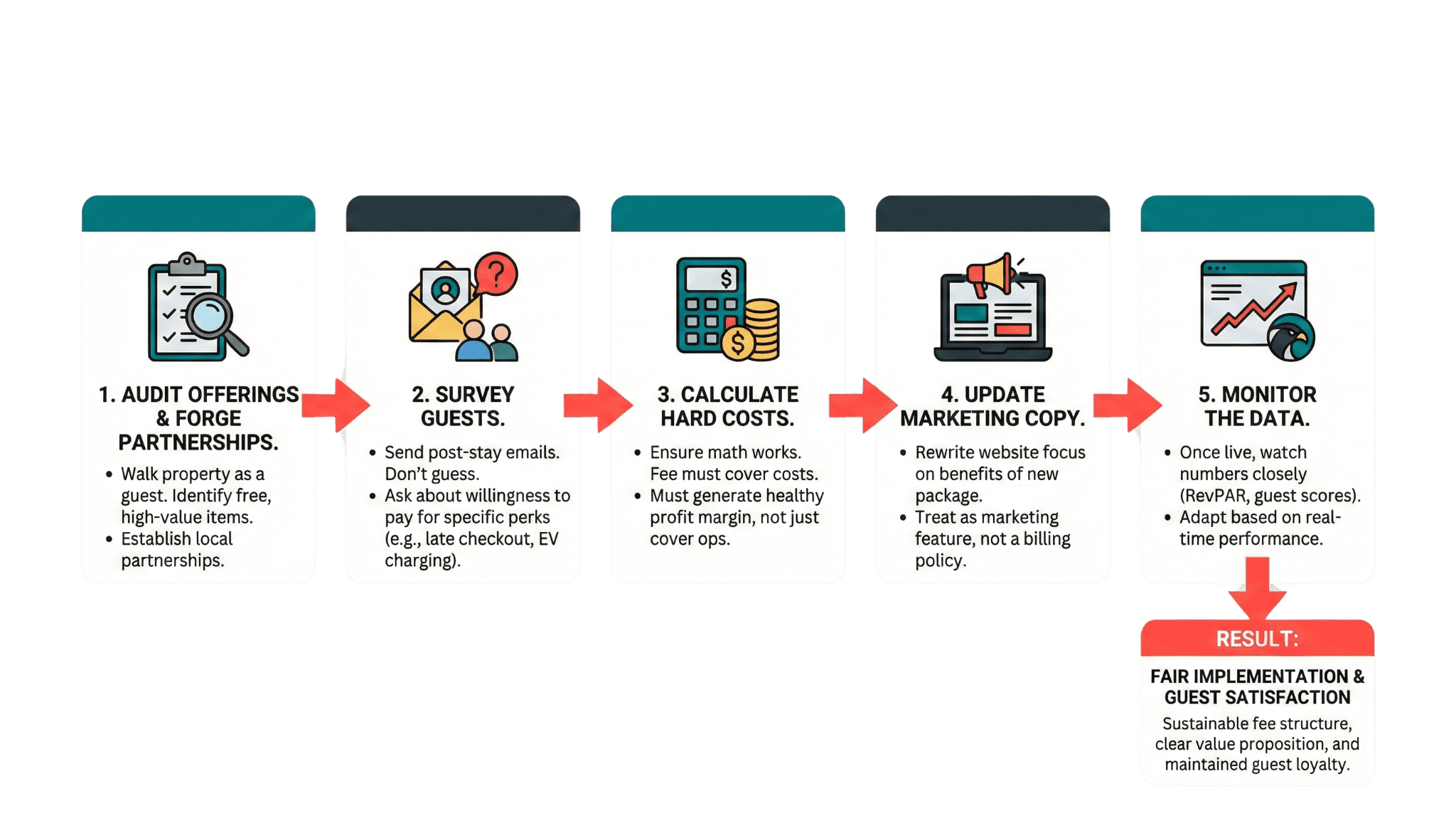
Implementing a new fee structure requires finesse. Here is how you can roll it out without alienating your loyal guest base.
- Step 1: Audit Your Current Offerings. Walk your property as a guest. What are you currently giving away for free that has high perceived value? What local partnerships could you easily forge?
- Step 2: Survey Your Guests. Don’t guess what they want. Send a post-stay email asking, “Would you be willing to pay $15 a day for guaranteed 2 PM checkout and unlimited electric vehicle charging?” * Step 3: Calculate the Hard Costs. Ensure the math works. The fee must cover the cost of the goods and generate a healthy profit margin, otherwise, it’s just an operational headache.
- Step 4: Update Your Marketing. Rewrite your website copy to focus heavily on the benefits of the new amenity package. Treat it like a marketing feature, not a billing policy.
- Step 5: Monitor the Data. Once the fee goes live, watch your numbers like a hawk.
After rolling out your new fee, dive into the Neighborhood Data section of PriceLabs. This is your truth-teller. If your competitors (who don’t have fees) are seeing their occupancy rise, while your occupancy suddenly flatlines, it tells you that the market does not perceive your new amenity package as valuable enough to justify the cost. You can then use PriceLabs to quickly adjust your base rates downward to remain competitive while you retool your amenity offerings.
The Way Forward
Today, the most successful independent hoteliers understand that an amenity fee is not a trick; it is an opportunity to curate a better, more memorable guest experience while simultaneously padding the bottom line. By shifting your mindset from “junk fees” to “value-driven packages,” and by leveraging intelligent AI hotel pricing tools to keep your base rates perfectly aligned with market demand, you can compete with the massive corporate chains on your own terms. The way forward is clear: package incredible value, be relentlessly transparent about the cost, and automate your revenue strategy so you can focus on what you do best—hosting.
Frequently Asked Questions (FAQs)
Q: What is the main difference between hotel resort fees and amenity fees?
A: Resort fees are typically higher and cover large-scale property facilities like water parks, private beaches, and extensive fitness centers at destination resorts. Amenity fees are usually lower and cover lifestyle perks like premium Wi-Fi, welcome drinks, and local gym access, often found at urban or boutique hotels.
Q: Are mandatory hotel facility charges legal?
A: Yes, they are legal, provided they are transparently disclosed to the guest before the booking is finalized. Hidden “drip pricing” that only appears at the final checkout screen or at the physical front desk is increasingly facing legal crackdowns worldwide.
Q: Can I use dynamic pricing for hotel amenities?
A: While most hotels currently use a fixed daily rate for amenity fees, the industry is exploring dynamic pricing for specific add-ons (like charging more for late checkout on high-demand days). However, you should always use a dynamic pricing tool, like PriceLabs, to adjust your base room rate in real time to ensure your total price (Base + Fee) remains attractive to travelers.