
Get started with PriceLabs now!
Want to learn what PriceLabs can do for you? See for yourself with a free trial. Get started now!

Every host wants to be in the right market at the right time — but how do you know if your market is still growing or if you've already missed the wave? The best short-term rental markets 2026 aren't necessarily the most famous destinations. They're the ones where demand is growing faster than supply — and the hosts who understand that distinction are the ones consistently outperforming their local benchmarks. This article uses a short-term rental analytics framework to turn that data into a practical decision tool for independent hosts evaluating their market position.
The best short-term rental markets in 2026 are those where demand is growing faster than supply — typically smaller coastal towns, emerging mountain destinations, and suburban areas of major cities. Saturated markets like large urban cores have seen supply outpace demand, compressing occupancy rates. Hosts can identify growth markets by tracking supply-to-demand ratios, booking pace, and occupancy benchmarks using tools like PriceLabs Market Dashboards.
This article will define what separates a growth market from a mature one, highlight key markets in each category, and show you how to use real data to make smart decisions for any property — whether you're already invested or evaluating your next move.
All data mentioned here are PriceLabs data from the Market Dashboard and the STR Index. You can also run your own market-by-market analysis directly in PriceLabs Market Dashboards.
The terms "growth market" and "mature market" get used loosely. Here's what they actually mean in terms of data, and why the distinction matters for your pricing and strategy: market type directly shapes which vacation rental revenue management strategy makes sense.
A growth market is one where demand is rising faster than supply. New visitors or travel use cases are driving incremental bookings. Occupancy rates are stable or improving. New listings entering the market are absorbed by rising guest volume rather than competing for a fixed pool. In a growth market, early positioning and competitive pricing can compound over time.
A mature market is one where supply growth has caught up with or exceeded demand. Competition is high, and differentiation matters more than availability. Occupancy is under pressure. ADR growth for standard-tier properties is flat or declining, while luxury and well-differentiated properties may still hold up. To determine whether this is a market problem or a listing issue, consider ADR and occupancy together rather than treating either metric in isolation.
The metrics that signal each category are what you want to monitor — not just general impressions or anecdotes from other hosts.
| Signal | Growth market | Mature market |
|---|---|---|
| Occupancy trend | Stable or rising | Flat or declining for standard-tier properties |
| Supply growth | Below demand growth | At or above demand growth |
| ADR movement | Room to raise rates; early-mover premium available | Flat or declining for standard tier; roughly 5% YoY growth holds for the differentiated/luxury tier |
| Recommended strategy | Capture demand early, hold rates | Differentiate aggressively, price with precision |
Growing vs. mature rental markets require fundamentally different strategies. In a growth market, the right move is to capture demand early and hold rates. In a mature market, the right move is to differentiate aggressively and price with precision. In both cases, dynamic pricing helps your rates respond to local demand signals instead of relying on a static seasonal calendar.
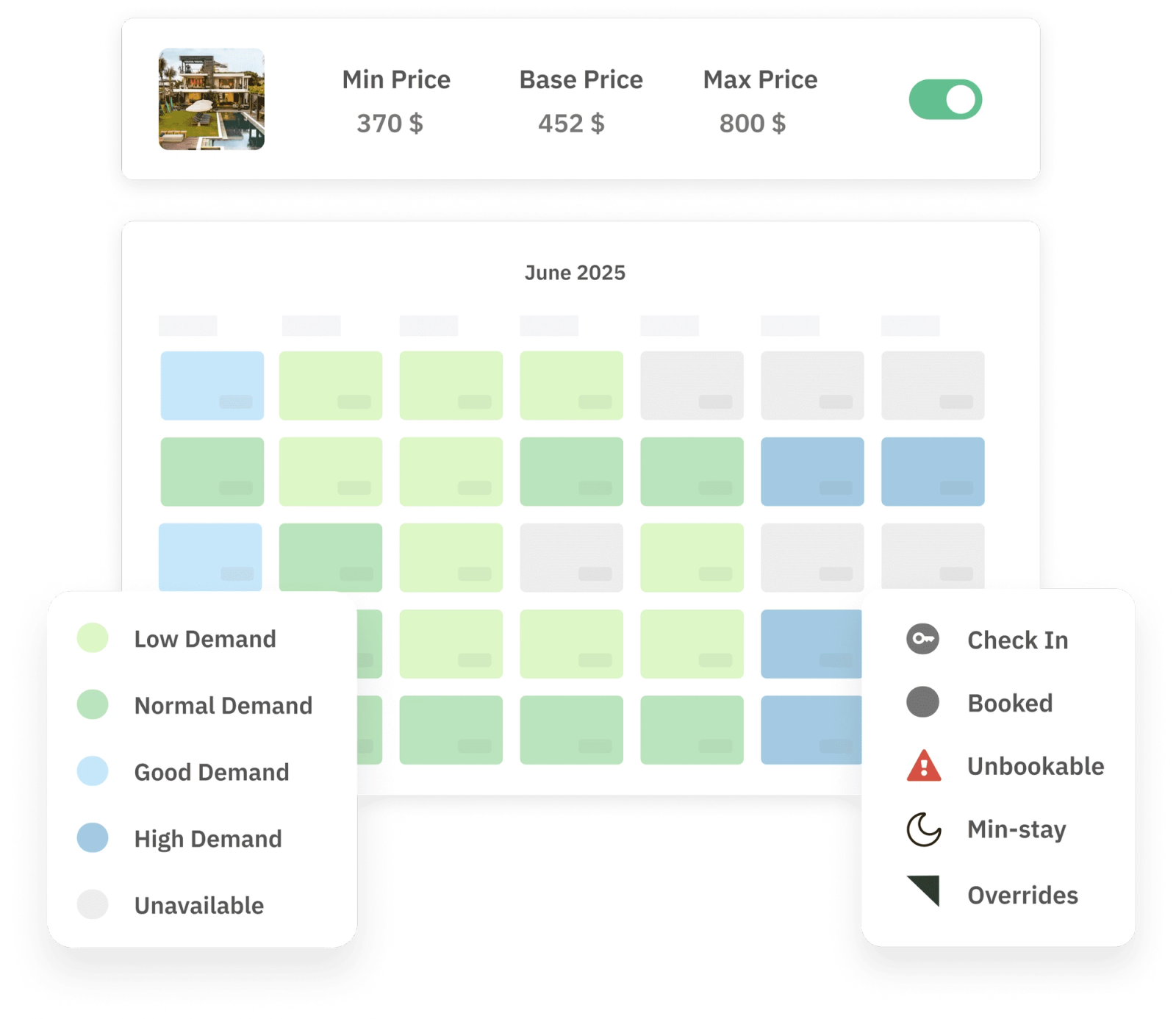
Three categories of markets are showing the strongest STR market growth areas signals heading into 2026. Before acting on any trend, verify whether demand is actually outpacing supply in your specific market using PriceLabs Market Dashboards.
Category 1 — Emerging coastal and mountain towns. Markets adjacent to saturated destinations are absorbing demand overflow. Properties in the suburban rings of Asheville NC, smaller coastal towns in the Southeast, and drive-to leisure markets within 3 hours of major metros are seeing meaningful supply-demand gaps. These are the emerging vacation rental markets where early hosts are capturing ADR premiums that will compress as supply catches up. For anyone still deciding where to buy or launch, evaluating the market before becoming an Airbnb host is essential before committing capital.
Category 2 — Suburban commuter belt markets. Remote work has permanently expanded the viable STR market beyond traditional leisure destinations. Suburban corridors of major metros — close enough for weekend trips, far enough for a change of scenery — are generating consistent demand from a growing base of hybrid workers and weekend travelers. Large-group properties (5 to 6 bedrooms) grew 10 to 12% in demand in 2025 according to PriceLabs Market Dashboard data, concentrated in these suburban growth markets. For suburban properties, the opportunity depends on matching pricing, stay rules, and guest segments to these new demand patterns.
Category 3: international growth markets. Japan, and Okinawa in particular, saw 22% guest capacity growth year-over-year according to PriceLabs STR Index data. Okinawa skews toward beach and resort stays with strong seasonal peaks around Japanese national holidays. Japan's minpaku licensing law caps most short-term rentals at 180 nights per year nationally, and individual municipalities can set stricter limits or ban short-term rental outright in residential zones, so confirm local registration requirements before listing or buying.
Rio de Janeiro saw a 17% inventory spike driven by digital nomad demand according to PriceLabs STR Index data, and Mérida in Mexico is showing strong international traveler inflow from a similar remote-work guest base. Both markets skew toward longer average stays than typical weekend leisure bookings, and guests respond more to reliable wifi, a dedicated workspace, and monthly or extended-stay pricing than to standard nightly discounts.
PriceLabs Market Dashboards cover Okinawa, Rio de Janeiro, and Mérida, so hosts with existing properties in these markets, or those evaluating international expansion, can compare supply, demand, and pacing data directly instead of relying on anecdote.
"Mature" doesn't mean "dead." Large coastal destinations, popular mountain markets, and major urban cores still generate enormous traveler volume — but the operating environment is fundamentally different. In these destinations, success depends on a sharper strategy for high-competition markets, not simply lowering prices.
In a saturated Airbnb market, occupancy pressure from supply growth is real. Standard-tier properties — average photos, average amenities, average reviews — face compressing ADR and occupancy as guests have more choices. But the luxury and well-differentiated tier is holding up. Properties with professional photography, premium amenities (hot tubs, pools, dedicated workspaces), and strong review profiles are still growing ADR at approximately 5% year-over-year even in mature markets. The gap between differentiated and undifferentiated listings in mature markets is widening. That makes Airbnb listing optimization — better photos, stronger amenities, clearer positioning, and review quality — a core revenue lever in mature markets.
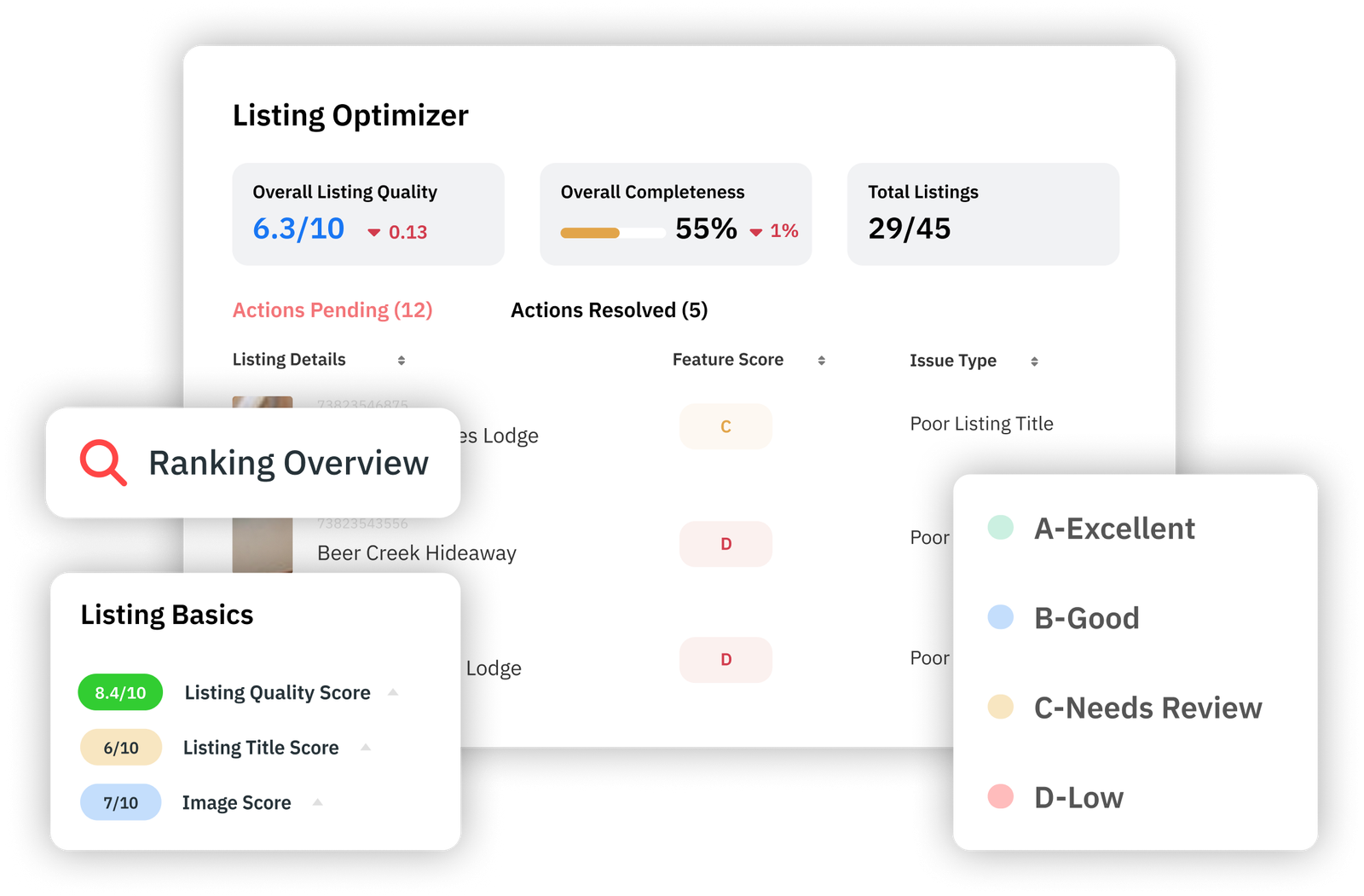
Mature markets also carry higher regulatory risk — STR licensing requirements, permit caps, and short-term rental restrictions are most prevalent in high-density, high-competition destinations. For new investors, regulatory due diligence should be part of the broader market evaluation process.
The key insight for mature-market hosts: smarter pricing matters more than lower pricing. Competitive benchmarking, Smart Minimum Stay adjustments, and Custom Pricing Rules are especially valuable in competitive, supply-heavy markets.
Hosts facing sustained occupancy pressure in mature or oversaturated markets have an option that is often underused: shifting some or all of their calendar to mid-term rentals (30+ night stays). Mid-term rentals attract a different guest profile than typical short-term bookings — travelling professionals, remote workers, and people in transition — whose demand is less seasonal and less sensitive to short-term booking fluctuations.
The strategic case for mid-term is strongest when your market shows consistent occupancy below 55% in shoulder months, your short-term nightly rate no longer compensates for high turnover costs, or your market has faced regulatory tightening that limits short-term flexibility.
Mid-term rentals also require a different pricing approach than short-term stays. Monthly rates need to account for reduced turnover costs and longer vacancy risk, and setting up a mid-term furnished rental means thinking through occupancy, amenities, and lease terms differently from a typical nightly listing. Done right, these rates still benefit from dynamic adjustment based on local demand signals for furnished monthly accommodation — the same logic behind extended-stay pricing strategy more broadly. PriceLabs supports mid-term rental pricing with tools built specifically for the 30-day+ segment.
Here's a five-step framework for any host to categorize their market's current position and identify the right strategy. You can evaluate each step in PriceLabs Market Dashboards, which bring supply, occupancy, ADR, and pacing data into one market-level view.
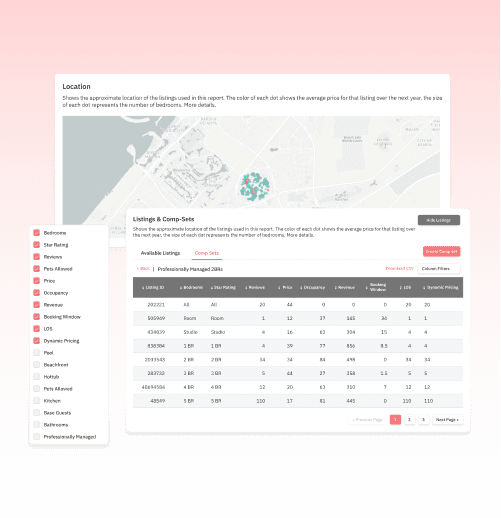
Step 1: Check supply growth rate. How many new listings were added in your market in the past 12 months? Supply growth above 15% year-over-year in your zip code, combined with flat demand, is a saturation signal. PriceLabs Market Dashboards surface supply growth data for any market. This is the most direct indicator of vacation rental market analysis health, but it only matters when interpreted relative to demand.
Step 2: Review occupancy trend. Is average occupancy rising, flat, or falling over the past four quarters? Falling occupancy despite stable or reduced pricing is the clearest signal of a demand-supply imbalance. A temporary seasonal dip calls for a different response than a structural market shift.
Step 3: Assess booking pace vs. prior year. Are your dates filling faster or slower than they were at the same point last year? Forward-pacing data in PriceLabs Market Dashboards gives you this comparison automatically, especially around peak seasons and local events.
Step 4: Compare your ADR to the market benchmark. If your ADR is at or above the market median for comparable properties, you're positioned correctly. If it's consistently below, there's likely a listing quality issue driving lower demand for your specific property rather than a market-level problem.
Step 5: Check forward-looking demand signals. Events, search trends, pacing data. PriceLabs Market Dashboards make this visible for any market with a Future Pricing view, so you can turn forward-looking demand into pricing actions.
Market type determines strategy. Once you know whether you're in a growth or mature market, translate that diagnosis into pricing, minimum-stay, and positioning decisions.
Both scenarios benefit from Custom Pricing Rules for local events that temporarily spike demand even in mature markets. A concert or conference weekend in a mature market can produce growth-market-level demand for those specific dates — and hosts who set event-specific minimum prices capture revenue that static pricers miss.
Some market situations call for a strategic reassessment rather than more optimization. When multiple red flags appear at once, the question shifts from small pricing tweaks to broader market and portfolio decisions.
Occupancy has declined for three or more consecutive quarters despite pricing adjustments. New regulations are limiting nightly stays. Supply growth in your zip code exceeds 15% year-over-year with flat demand. Your ADR is declining even for well-reviewed, premium-amenity properties. Your booking pace is consistently behind the market benchmark by 20% or more across multiple months.
If two or more of these apply, the right response is to assess alternatives — diversify to an emerging market, upgrade amenities to move into the differentiated tier, adjust your property's positioning (shorter stays, corporate guests, mid-term rental windows), or switch platform strategy to reduce OTA dependence. Use PriceLabs data to diagnose whether you're facing a market-level or listing-level problem before making a major decision.
The best short-term rental markets 2026 reward hosts who read their data and adapt quickly. The vacation rental landscape is bifurcated — growth markets reward early movers while mature markets reward smarter operators. The only way to know your market's position is through real-time data. PriceLabs Market Dashboards give you exactly that: supply trends, pacing, and ADR benchmarks in one place.
One of the positioning adjustments above deserves a closer look: shifting some or all of your calendar to mid-term rentals (30+ night stays). Hosts facing sustained occupancy pressure in mature or oversaturated markets often overlook this option. Mid-term rentals attract a different guest profile than typical short-term bookings, travelling professionals, remote workers, and people in transition, whose demand is less seasonal and less sensitive to short-term booking fluctuations.
The strategic case for mid-term is strongest when your market shows consistent occupancy below 55% in shoulder months, your short-term nightly rate no longer compensates for high turnover costs, or your market has faced regulatory tightening that limits short-term flexibility, all of which overlap directly with the red flags above.
Mid-term rentals also require a different pricing approach than short-term stays. Monthly rates need to account for reduced turnover costs and longer vacancy risk, and setting up a mid-term furnished rental means thinking through occupancy, amenities, and lease terms differently from a typical nightly listing. Done right, these rates still benefit from dynamic adjustment based on local demand signals for furnished monthly accommodation, the same logic behind extended-stay pricing strategy more broadly. PriceLabs supports mid-term rental pricing with tools built specifically for the 30-day+ segment.
The best short-term rental markets in 2026 are those where demand is growing faster than supply. Top growth areas include suburban corridors of major US cities, smaller coastal towns, mountain destinations like Asheville NC suburbs, and international markets including Japan and parts of Latin America. Which short-term rental markets are still growing in 2026? Markets where supply growth has plateaued while demand rebounds — select resort and coastal destinations — also offer strong opportunity. To verify these patterns in your own area, compare supply growth, occupancy, ADR, and pacing together.
Signs of oversaturation include falling occupancy despite competitive pricing, supply growth exceeding demand growth year-over-year, and declining ADR for standard-tier properties. Is my Airbnb market oversaturated? Check supply growth rate, occupancy trend, and booking pace together — a single metric in isolation can be misleading. PriceLabs Market Dashboards let you compare all three simultaneously. How to identify an underserved vacation rental market: look for the inverse — supply growth below 8%, rising occupancy, and pacing ahead of prior year.
US demand growth has moderated to a more measured pace year-over-year, and some urban markets face supply pressure. But the broader market is maturing rather than shrinking, which means strategy and data use matter more than ever. Hosts in mature markets who differentiate and price precisely are still growing ADR, while growth markets continue to absorb new supply without compressing occupancy.
An emerging market typically shows demand growing faster than available supply, relatively low listing density, affordable property acquisition costs, and increasing visitor traffic. Markets with new tourism infrastructure, proximity to growing events, or rising remote-work appeal often fit this profile. Best emerging markets for vacation rentals 2026 share these characteristics: strong demand signals, limited competition, and a guest profile willing to pay a premium for a newer, better-positioned property.
PriceLabs' Market Dashboards show real-time occupancy pacing, ADR benchmarks, and supply trends in your market. The HLP Algorithm automatically adjusts your nightly rates based on local demand signals, keeping you competitively priced without manual monitoring. Smart Minimum Stay adjustments help fill calendar gaps that mature markets create. How to find low-competition short-term rental markets: use PriceLabs' Market Dashboard to compare supply growth rate and pacing across multiple markets simultaneously.
Want to learn what PriceLabs can do for you? See for yourself with a free trial. Get started now!