
Get started with PriceLabs now!
Want to learn what PriceLabs can do for you? See for yourself with a free trial. Get started now!

Off-season pricing remains one of the most challenging aspects of Airbnb hosting, with many property owners struggling to maintain steady cash flow during slower months. The key to success lies in implementing strategic, data-driven pricing tactics that attract guests, cover fixed costs, and preserve long-term profitability.
Properties using targeted discounts and dynamic Airbnb pricing strategies have demonstrated an 11% rise in occupancy and a 9% revenue increase after implementing pricing adjustments.
Dynamic pricing software forms the foundation of successful off-season occupancy strategies.
PriceLabs’ AI-driven engine continuously analyzes demand patterns, competitor rates, seasonal trends, and local event calendars to optimize nightly rates automatically, ensuring hosts can adapt swiftly to market changes without constant manual intervention.
Dynamic pricing is the automated, data-driven adjustment of nightly rental rates in response to real-time market trends and booking pace, helping hosts maximize both bookings and revenue. This approach significantly outperforms static pricing models, particularly during unpredictable off-season periods.
The advantages of automated dynamic pricing include:
| Factors to Consider | Manual/Static Pricing | Dynamic Pricing |
| Off-season Performance | Limited Responsiveness | Optimized for Demand |
| Workload | High | Minimal |
| Accuracy | Error-prone | Data-driven |
Dynamic pricing tools like PriceLabs provide the revenue optimization capabilities essential for maintaining competitiveness when demand softens, allowing hosts to focus on guest experience.
At the same time, the software handles complex pricing decisions.
Aligning nightly rates with seasonal demand patterns directly impacts booking volume throughout the year. Effective seasonal pricing adjustments can involve reducing rates by up to 30% during off-peak periods, enabling hosts to attract budget-conscious travelers while remaining competitive in softer markets.
Seasonal pricing adjustment refers to customizing nightly rental rates based on expected demand during different periods of the year, including holidays, school breaks, and local low seasons. This strategic approach ensures your property remains attractive to guests regardless of seasonal fluctuations.
| Season Type | Rate Adjustments | Target Guests |
| Peak Season | Base Rate + 20-50% | Premium Travelers |
| Shoulder Season | Base Rate ± 10% | Flexible Travelers |
| Off-Peak | Base Rate – 15-30% | Budget-conscious guests |
To implement effective seasonal adjustments:
Regular rate reviews remain crucial as market conditions evolve. Properties that proactively adjust seasonal pricing maintain higher occupancy rates while preserving revenue during challenging periods.
Extended-stay discounts effectively fill calendar gaps while reducing guest turnover during slow months. Weekly and monthly discounts make properties particularly attractive to remote workers and digital nomads, helping stabilize demand during traditionally challenging periods.
Extended-stay discounts offer price reductions for guests booking stays of 7+ days (weekly) or 28+ days (monthly), compared to standard nightly rates. This Airbnb pricing strategy addresses the growing market of location-independent travelers seeking temporary housing solutions.
Long-term discounts complement other off-season tactics, such as flexible stay rules and promotional pricing.
Properties offering competitive weekly and monthly rates often maintain higher occupancy during traditionally slow periods while reducing the operational burden of frequent guest changes.
Local events create valuable opportunities to capture premium demand even during shoulder or off-seasons. Rates can double or triple during music festivals such as Taylor Swift events, and sports events, providing significant revenue boosts that offset slower periods.
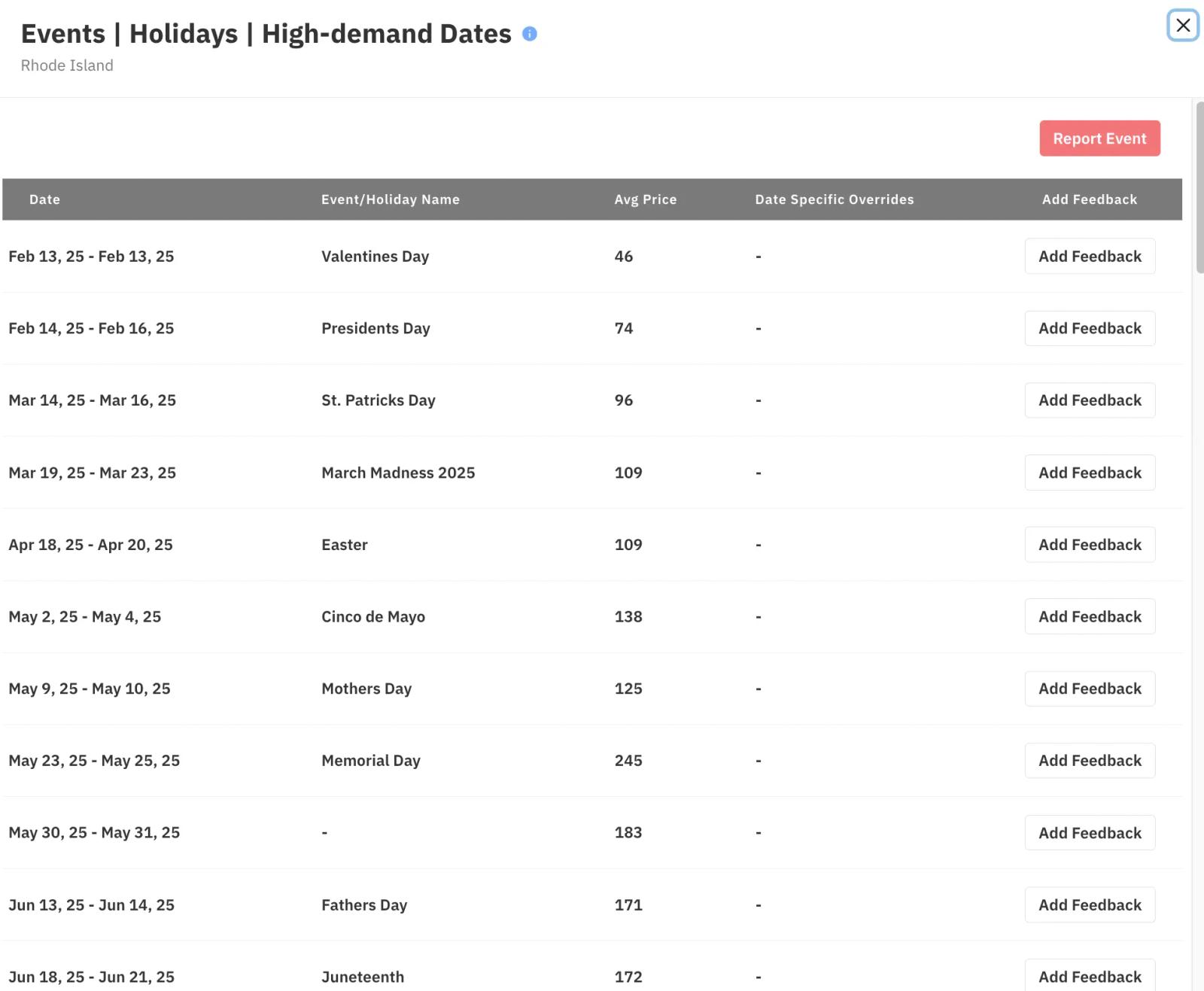
Event-driven pricing involves raising or lowering nightly rates based on demand generated by nearby events, conferences, concerts, and attractions. This tactical approach ensures properties capitalize on temporary demand spikes while remaining competitive during quieter periods.
| Event Type | Typical Rate Increase | Booking Window |
| Major Festivals | 100-200% | 3-6 months |
| Sports Events | 50-150% | 1-3 months ahead |
| Conferences | 25-75% | 2-4 months |
To implement event-driven pricing effectively:
Regular review of event calendars and proactive guest communication helps maximize the revenue potential of local demand spikes while maintaining competitive positioning.
Lowering minimum stay requirements during slower periods unlocks new booking segments, particularly last-minute travelers seeking short getaways. Reducing minimums or adjusting for “orphan nights” boosts occupancy and fills booking gaps that might otherwise remain vacant.
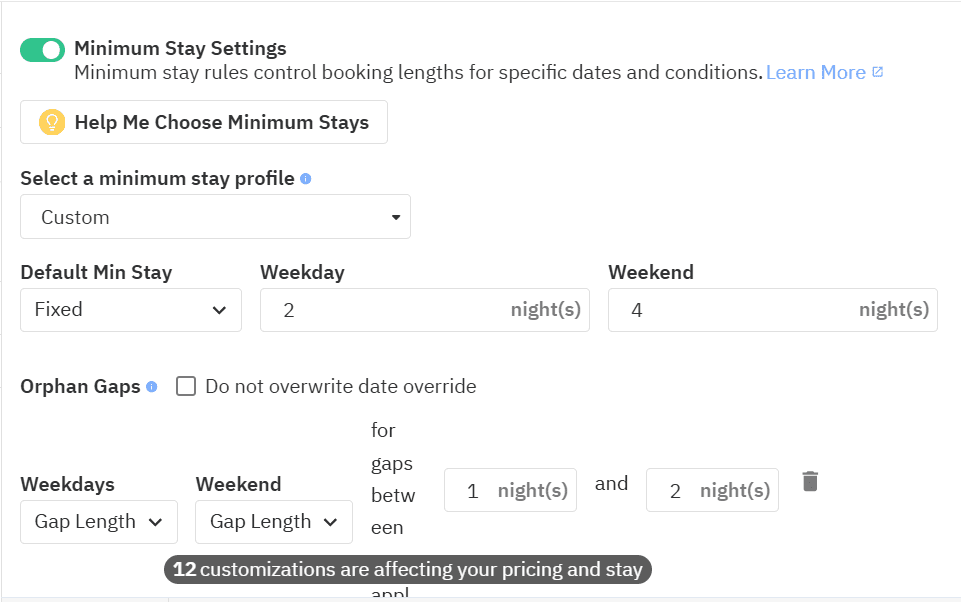
Minimum stay requirements represent the shortest duration guests must book your property—often two or more nights—though these can be strategically adjusted based on seasonal demand or calendar gaps. Dynamic minimum stay management helps optimize booking potential across different market conditions.
Implementation strategies include:
Dynamic minimum-stay rules within an Airbnb pricing software enable hosts to optimize booking potential without constant manual adjustments, ensuring properties remain accessible to diverse guest segments during challenging periods.
Unique package deals and add-on offers help properties stand out when competition intensifies during low-demand periods. Promotional packages combine discounted lodging with valuable perks, making listings more appealing and driving incremental off-season bookings.
A promotional package is a value-added offer that combines discounted lodging with perks, amenities, or local partnerships to enhance booking appeal. These packages provide perceived value beyond simple rate reductions, appealing to guests seeking comprehensive experiences.
Effective promotional package ideas include:
Promotional packages make listings more memorable and shareable, often generating word-of-mouth marketing that extends beyond the immediate booking. Properties offering creative packages frequently maintain higher occupancy during challenging periods while building guest loyalty.
Flexible cancellation policies build trust among travelers facing uncertainty, ultimately growing bookings during shoulder and off-seasons. Guest-friendly cancellation terms widen the potential guest pool by accommodating hesitant bookers and value shoppers.

A flexible cancellation policy allows guests to cancel reservations until a specified date with minimal or no financial penalty. This approach reduces booking friction while providing guests with confidence in their travel decisions, particularly important during uncertain economic periods.
Flexible policy options include:
Balancing flexibility with revenue protection involves offering multiple rate tiers—from fully refundable premium rates to discounted non-refundable options. This approach caters to different guest preferences while maintaining booking momentum during challenging periods.
Strategic discounts of 15-25% for off-season dates commonly help boost occupancy, though the ideal percentage varies by local demand patterns and competition. Properties should monitor booking pace and adjust discounts based on market response rather than applying blanket reductions.
Maintaining an occupancy rate above 50% during off-season is often considered successful for Airbnb properties, though top-performing listings may reach 60-70% based on location and Airbnb pricing strategy. Focus on optimizing revenue per available night rather than occupancy alone.
Yes, lowering minimum stay requirements during slow periods helps attract short-term and last-minute travelers, effectively filling calendar gaps. Dynamic minimum stay rules allow properties to capture bookings that might otherwise go to competitors with more flexible policies.
Targeted discounts for mid-week stays combined with flexible minimum requirements appeal to digital nomads, retirees, and business travelers. Consider offering weekday-specific packages or promotions to capture this often-overlooked market segment.
Begin adjusting rates during the shoulder season to optimize your Airbnb pricing gradually as demand shifts. Early adjustments allow for better market positioning compared to last-minute reactive changes that may appear desperate to potential guests.
Yes, last-minute pricing incentives effectively drive bookings from spontaneous travelers and can convert otherwise empty nights into revenue. Automated last-minute discounts provided by tools like PriceLabs help capture this market segment without requiring constant manual intervention.
During off-peak periods, focusing on higher occupancy with strategically reduced nightly rates often improves cash flow and helps cover fixed costs until peak season returns. The key is finding the optimal balance that maximizes total revenue rather than the rate per night.
Want to learn what PriceLabs can do for you? See for yourself with a free trial. Get started now!