
Get started with PriceLabs now!
Want to learn what PriceLabs can do for you? See for yourself with a free trial. Get started now!

Vacation rental pricing factors are the hidden levers that decide whether your Miami listing thrives or struggles. From winter snowbird demand and spring break surges to hurricane-season slowdowns, Miami is a city where pricing strategy can make or break your revenue. Hosts who rely on static rates often miss out on peak earnings—or leave money on the table when occupancy dips.
In this article, we’ll break down the core vacation rental pricing factors in Miami, highlight how 2025 is shaping up month by month, and offer an early look at 2026 trends. More importantly, you’ll walk away with an actionable playbook that shows you how to respond to shifts in demand, booking windows, and competition—so your pricing isn’t just reactive, but strategically ahead of the curve.
Bonus: Short-Term Rental Analytics & Market Data: The Complete Beginner’s Guide
Our analysis is powered by STR Index, PriceLabs’ free market analysis tool that gives hosts real-time visibility into occupancy, ADR, and RevPAR across their markets.
By examining Miami’s monthly performance data, comparing year-over-year trends, and layering in pacing insights, we can identify the pricing factors that matter most for 2025 and beyond.
The scope here is market-level, but the recommendations are designed to help hosts translate data into practical pricing strategy.
Pricing vacation rentals involves understanding the forces that shape demand and knowing when to adjust accordingly.
These are the primary factors that drive Miami’s market in 2025:
Miami’s calendar is sharply divided. December through March sees peak demand as snowbirds, international travelers, and event-goers escape colder regions. ADR climbs significantly during these months, often reaching its annual highs. Conversely, June through September tends to be a slower period due to high heat, humidity, and the hurricane season.
Effective pricing means adjusting to winter premiums while maintaining competitiveness in slower summer months.
Events are one of the most significant factors influencing vacation rental pricing in Miami. Major events, such as Art Basel in December, spring break in March, and the Miami Grand Prix in May, consistently drive sharp increases in both occupancy and ADR.
For example, PriceLabs’ own analysis of the Miami Grand Prix 2025 shows that demand during race week has already outpaced 2024, with forward bookings pushing occupancy and RevPAR well above seasonal averages.
Read about the Copa América vs Euro 2024’s Impact on Short-Term Rentals, specifically in Miami.
Hosts who updated prices early captured the upside, while those who reacted late risked leaving revenue on the table.
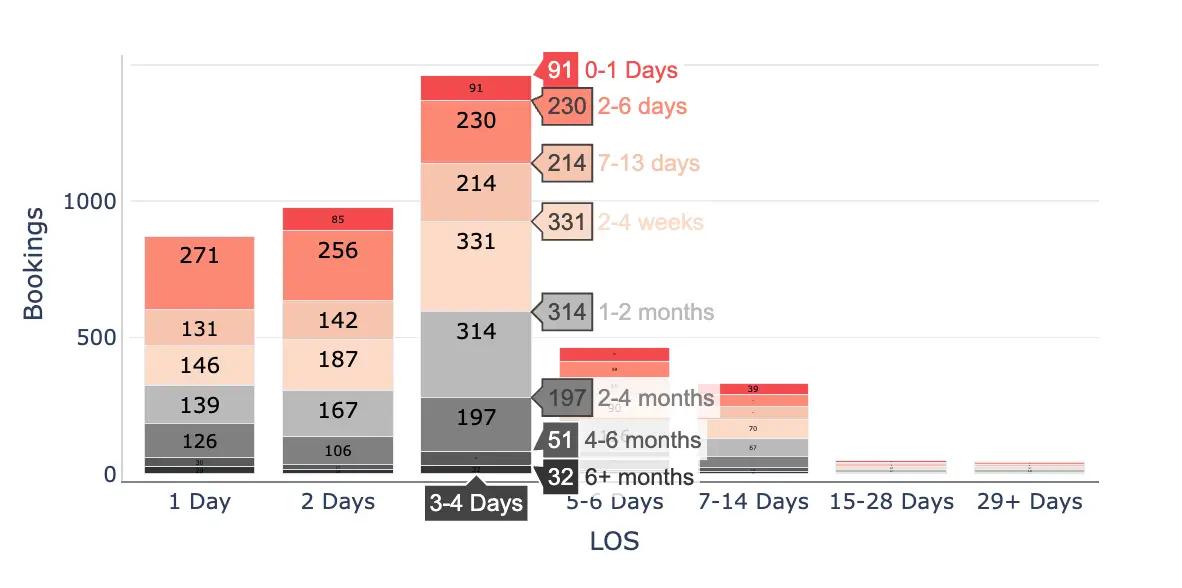
Miami travelers book at very different speeds depending on the season:
Understanding these booking windows helps you avoid premature discounts while still being aggressive enough to capture late-booking demand.
Miami attracts a mix of travelers:
Adjusting minimum-stay rules seasonally allows hosts to optimize occupancy without leaving orphan nights unbooked.
Miami is one of the largest short-term rental markets in the U.S., and supply growth continues. New condos, professional property managers, and corporate operators are entering the market, which can suppress ADR if demand doesn’t keep pace.
Monitoring competitor performance helps you avoid underpricing or holding too firm against increased competition.
The actions of your comp set shape pricing. If nearby listings drop rates aggressively during the shoulder months, holding firm could result in reduced occupancy. Conversely, disciplined pricing during peak events can protect your ADR without sacrificing bookings if your comp set is constrained.
Tools like Comp Sets in PriceLabs help identify where your property sits against actual competitors, not just the entire market average.
Together, these factors explain the fluctuations in Miami’s vacation rental pricing in 2025. In the next section, we’ll translate these dynamics into a month-by-month breakdown of occupancy, ADR, and RevPAR—so you can see exactly how these forces show up in the data.
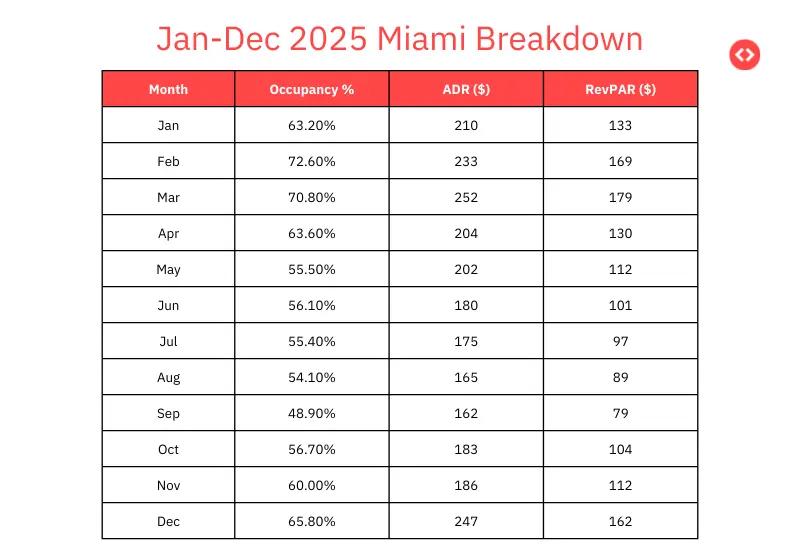
The pacing data provides a first look at how 2026 bookings are tracking relative to 2025.
Several clear signals emerge:
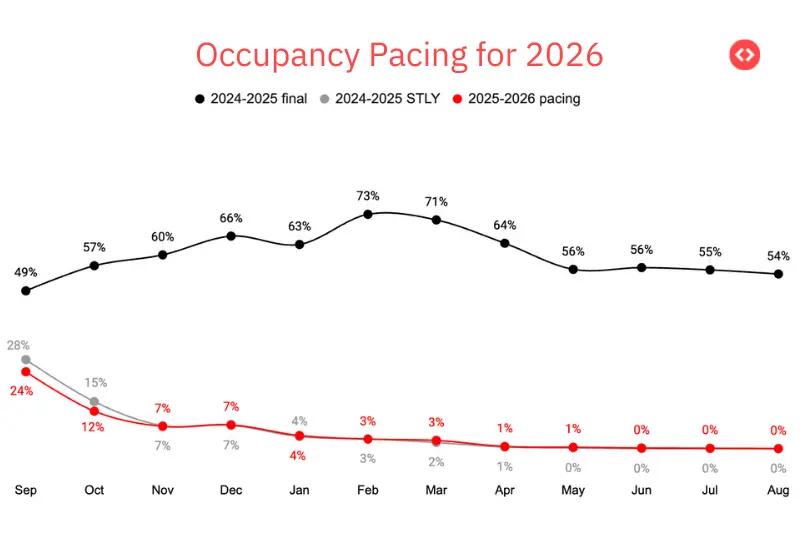
ADR pacing for early 2026 is higher across nearly every month:
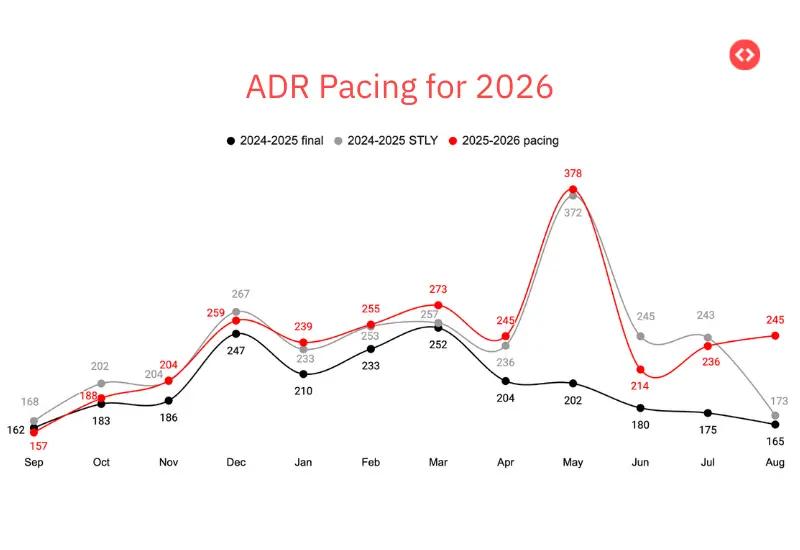
January through August show relatively thin on-the-books occupancy (all under 5%), which is normal at this horizon. But the ADR levels being loaded are solid—suggesting hosts are maintaining pricing discipline even before meaningful occupancy builds.
Data is only useful if it translates into actions. Here’s how Miami hosts can put the 2025 results and early 2026 pacing to work in their own pricing strategy.
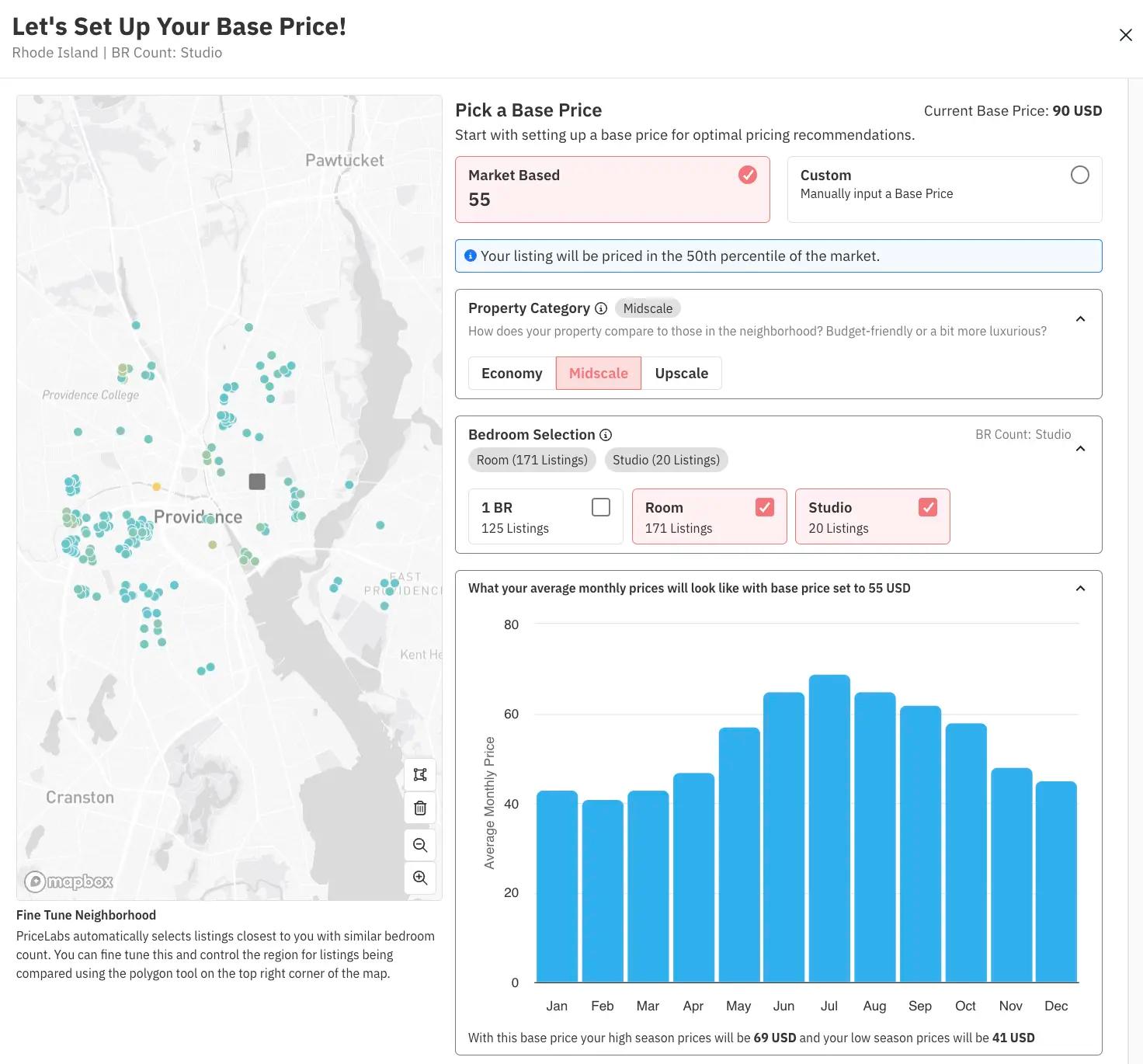
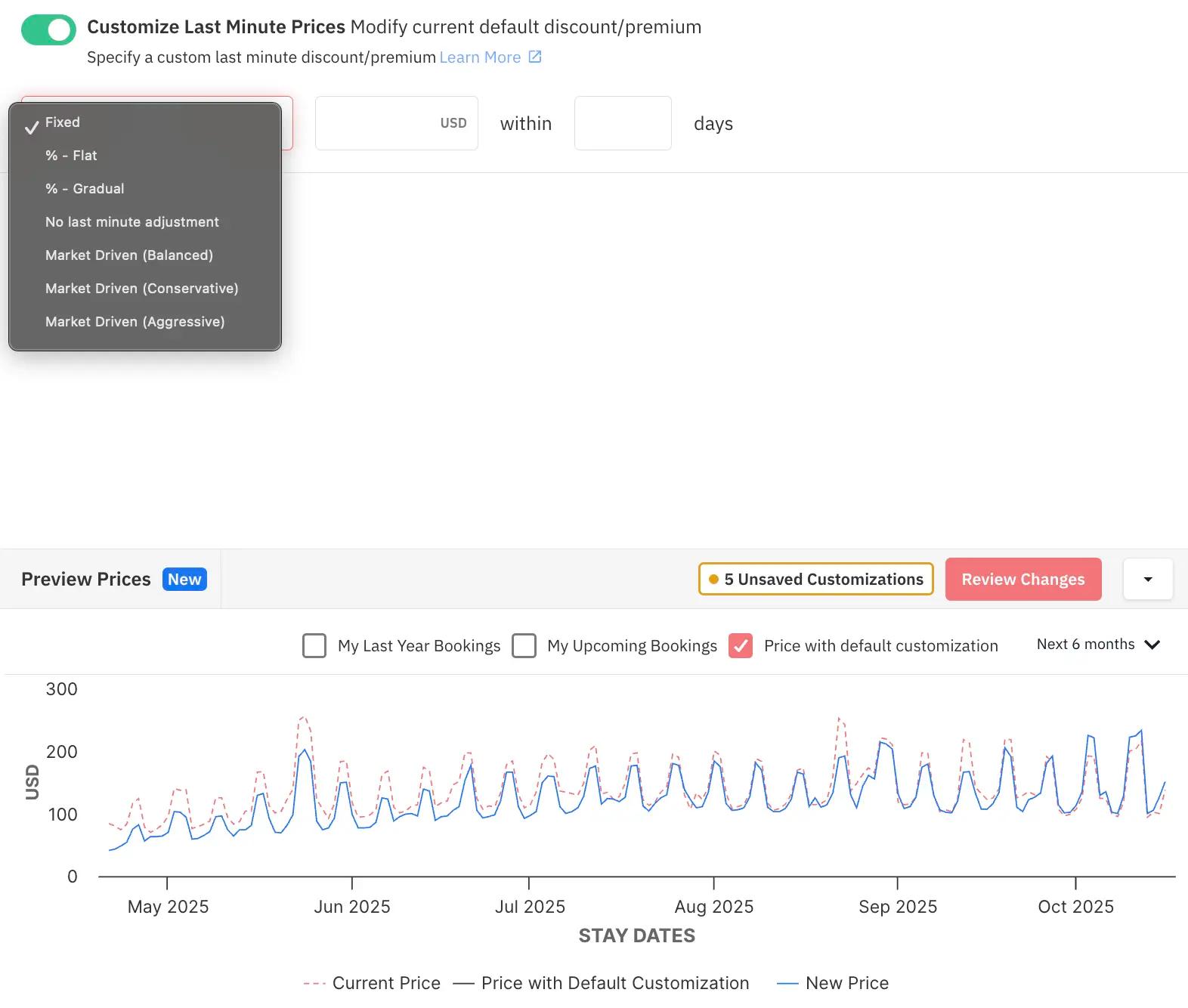
Last-minute discounts: Let PriceLabs’ automation fill gaps inside a 0–7 day window.
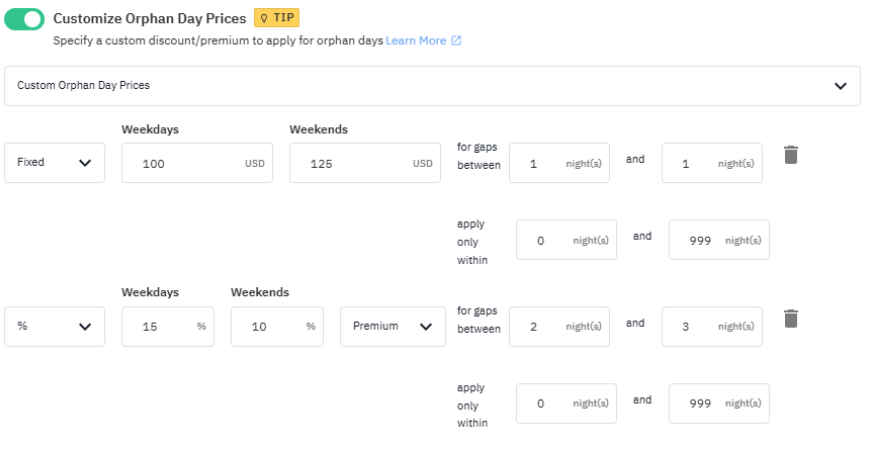
Orphan-night discounts: Target 1–2 night gaps between longer stays to keep your calendar full without slashing overall ADR.
Length-of-stay discounts: Offer weekly/monthly discounts in low season (Jul–Sep) to lock in longer bookings rather than juggling multiple short ones.
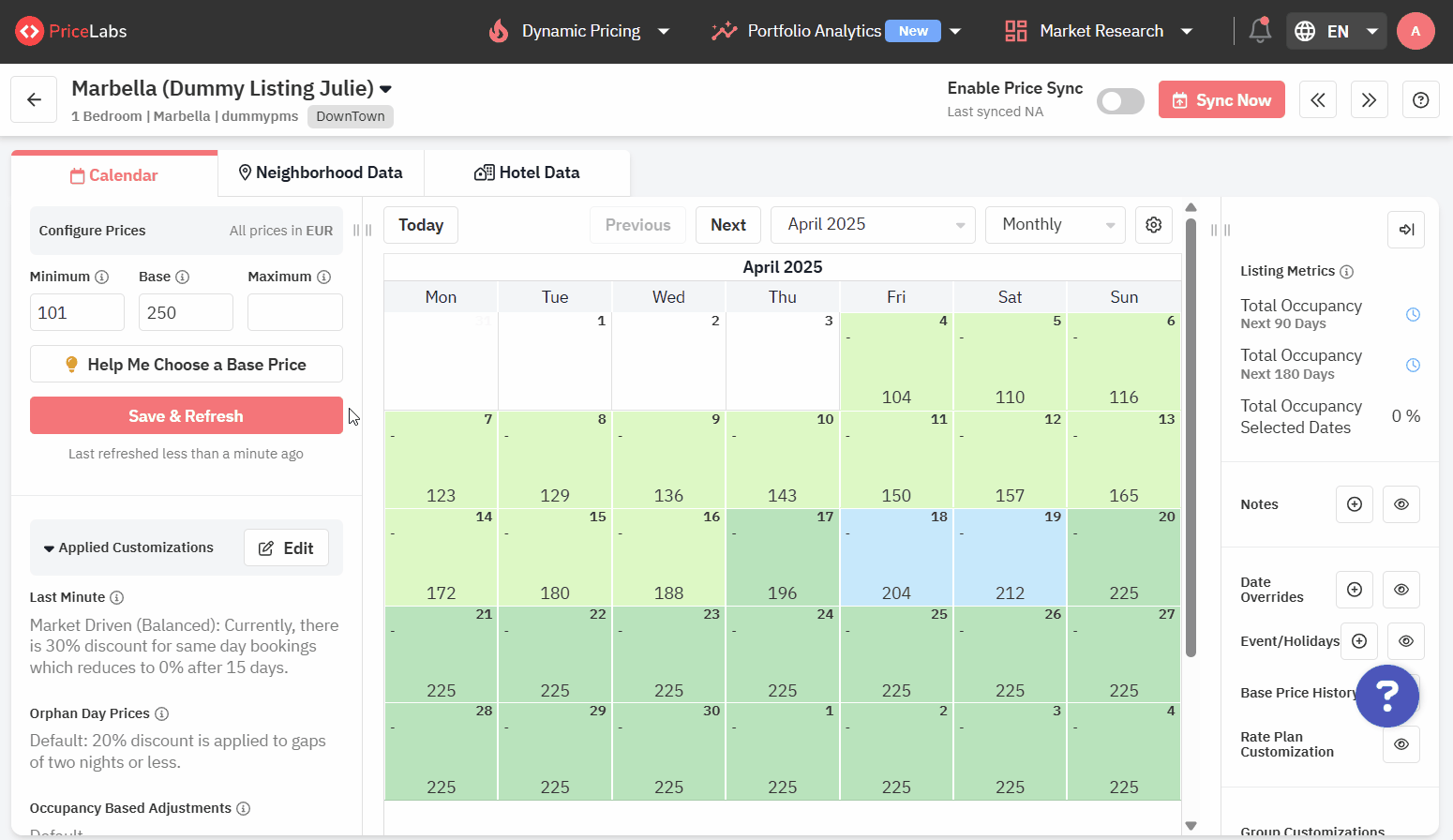
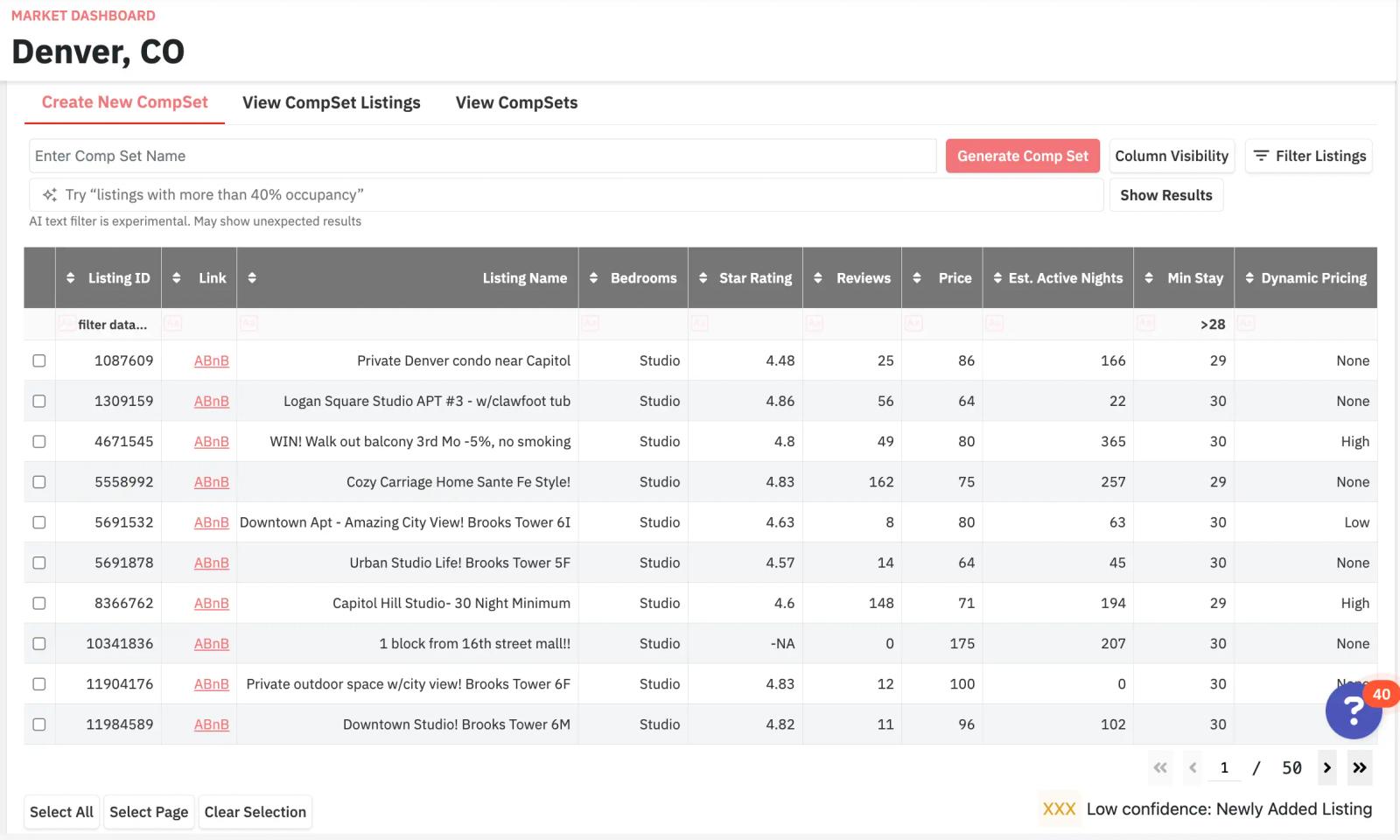
Don’t just track Miami’s citywide average. Use PriceLabs Comp Sets to benchmark against listings that mirror your property type and neighborhood. If they’re raising rates ahead of an event, you should too.
Focus on RevPAR (revenue per available night), not just occupancy or ADR alone. For example, in 2025, ADR dipped slightly in some months, but higher occupancy lifted RevPAR overall. If your calendar is filling at strong rates, resist the urge to discount for 100% occupancy. Instead, track RevPAR in PriceLabs Portfolio Analytics — it’s the clearest measure of whether your pricing is working.
If your listing shows you’re behind last year’s occupancy with a month to go , take action quickly:
Don’t wait until the last week — Miami’s booking windows are short in low season but longer in peak months. Early adjustments protect your RevPAR.
Yes — but do it tactically. Occupancy fell to ~55% in June–August 2025, with RevPAR dropping under $100. That’s the time to offer weekly/monthly discounts to attract longer stays and last-minute deals to catch short-term demand. Keep base prices aligned with the season, but let automation handle the micro-adjustments so you don’t over-discount.
Miami’s vacation rental market is shaped by clear pricing factors: sharp seasonality, event-driven surges, shifting booking windows, and a constant balance between occupancy and ADR. The 2025 data shows how RevPAR climbs when hosts align their strategies with these rhythms, while the 2026 pacing outlook suggests even stronger opportunities if pricing discipline holds.
For hosts, the message is simple:
By blending seasonal guardrails with event-based strategies, tactical discounts, and comp-set monitoring, Miami hosts can turn insights into measurable revenue gains. And with PriceLabs’ STR Index and Market Dashboards alongside its Dynamic Pricing automation, you don’t need to chase every shift manually — the tools do the heavy lifting, while you stay strategically in control.
The takeaway: Miami’s vacation rental pricing factors aren’t just data points. They’re actionable levers. Pull them right, and you’ll not only fill your calendar — you’ll maximize every night booked.
Want to learn what PriceLabs can do for you? See for yourself with a free trial. Get started now!