
Get started with PriceLabs now!
Want to learn what PriceLabs can do for you? See for yourself with a free trial. Get started now!
Finding the perfect balance between occupancy and revenue is the holy grail for vacation rental pricing strategies. Chronically low rates with full calendars or high rates with empty nights both leave money on the table. A data-driven vacation rental pricing strategy aligns average daily rate (ADR) and occupancy to maximize total revenue (RevPAR = ADR × occupancy) while delivering an exceptional guest experience.
In this article, we’ll help you develop effective vacation rental pricing strategies and build, execute, and refine high-performing pricing strategies through 2025 and 2026.
Bonus Read: The Ultimate Guide to Dynamic Pricing for Short-Term Rentals
A vacation rental pricing strategy is a structured, repeatable approach to setting and adjusting nightly rates and stay requirements.
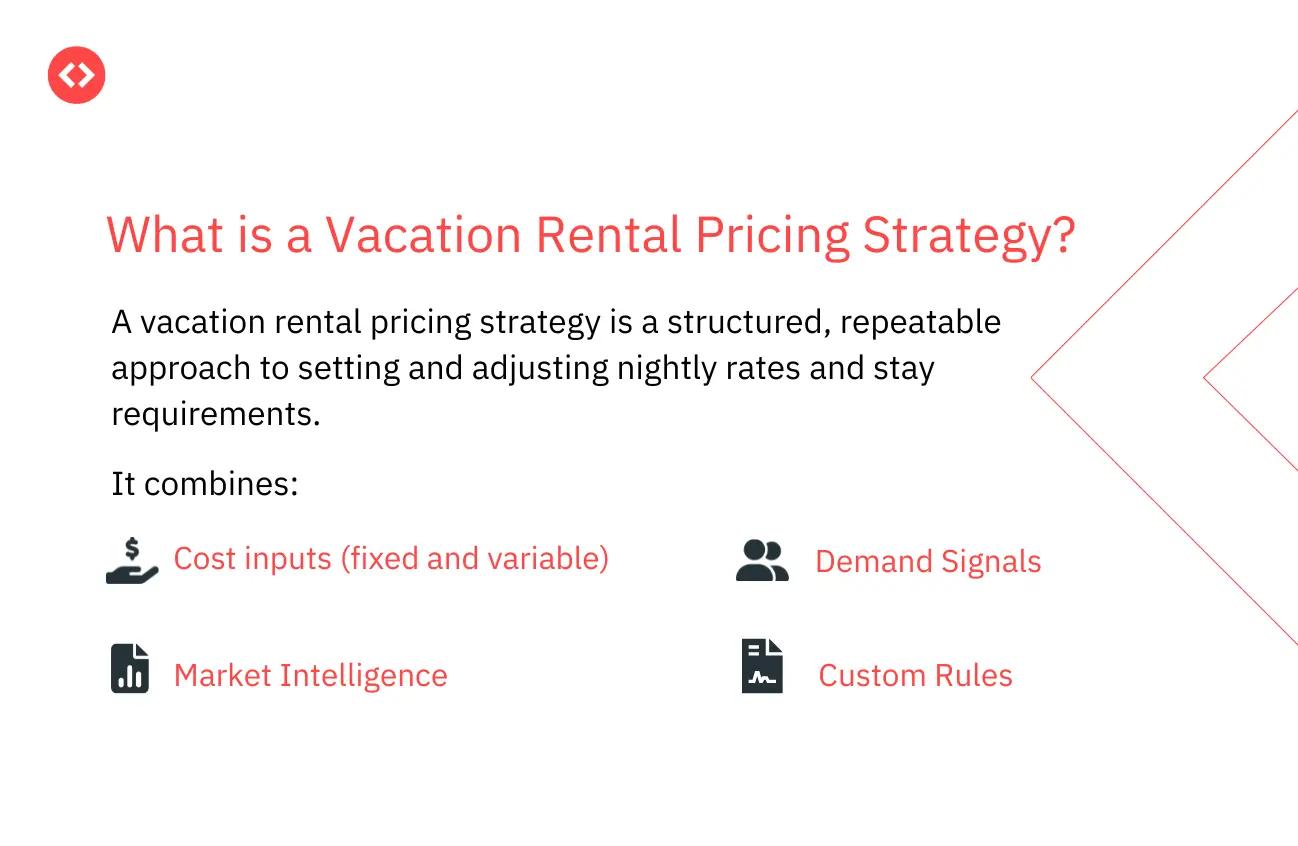
It blends:
Rather than manually tweaking rates based on gut feel, dynamic pricing platforms like PriceLabs ingest these data streams to deliver nightly price recommendations — automatically adjusting as the market shifts. This frees you from spreadsheets while ensuring they capture every dollar of opportunity, no matter how subtle the demand fluctuation.
Before setting up your vacation rental pricing strategies, it’s essential to understand your current situation and plan accordingly. Here’s how you should do that:
Your pricing must never drop below cost. Calculate a breakeven ADR:
Total Monthly Costs = Mortgage/Rent + Utilities + Cleaning + Maintenance + Platform Fees
Breakeven ADR = Total Monthly Costs ÷ Target Nights Booked per Month
Scenario Example:
In this scenario, enter $55 as your minimum price in PriceLabs to safeguard against loss-making rates. This will ensure that your pricing never falls below $55, even if you have aggressive settings in place in PriceLabs.
PriceLabs’ Market Dashboard will help you understand location-specific demand patterns by focusing on actual booking trends in your target area.
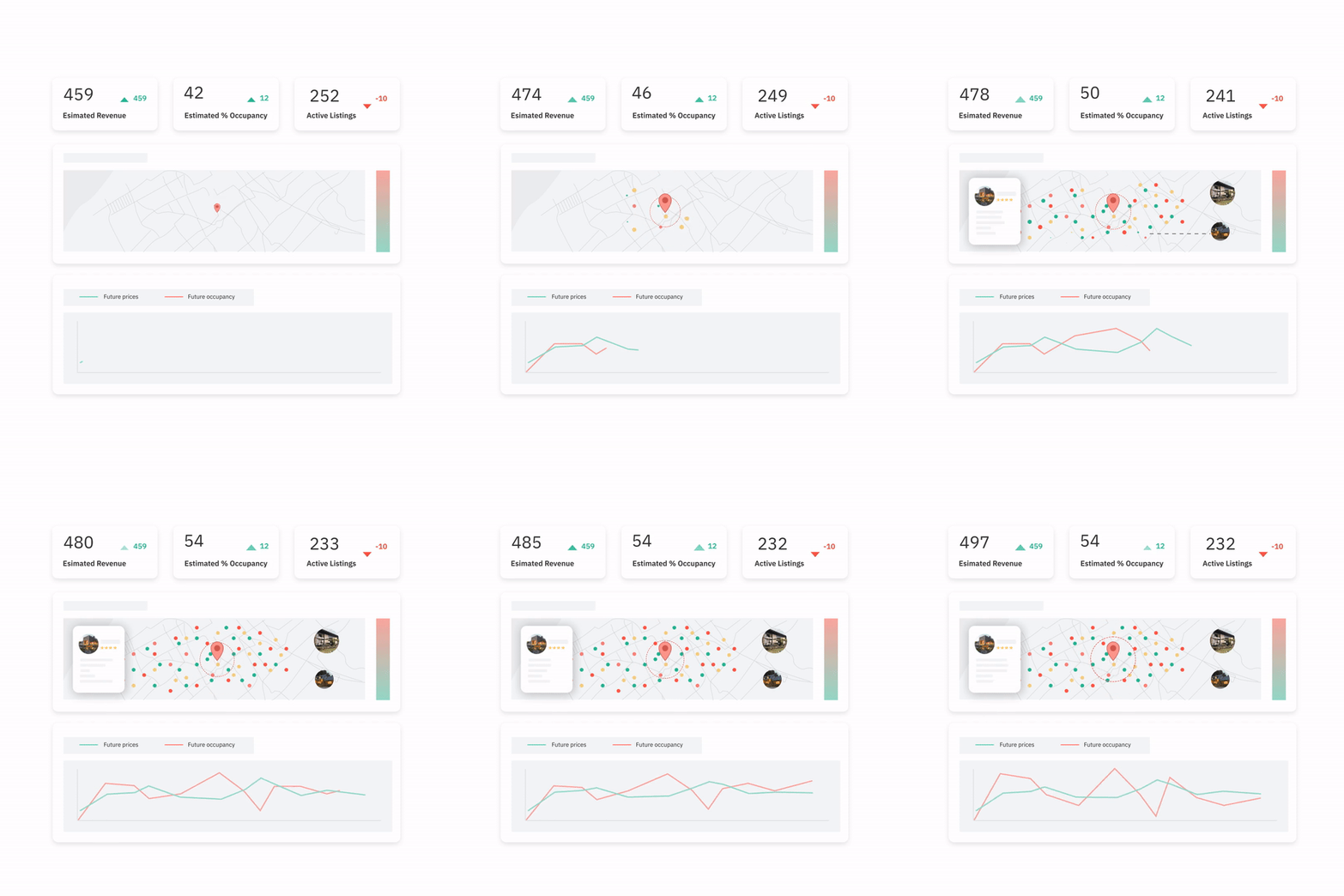
Create comp sets with properties similar to yours, considering:
You should then further analyse the properties in your comp set along the following criteria:
Once you identify your target bracket, you can either discount further by 5-10% if you want to be more aggressive. Or you can exceed them if you are in a premium positioning.
Example: Your compset ADR averages $90 (30d). For a launch promotion, price at $85 for the first 30 days before shifting to $95 thereafter to match demand
Local events, school vacations, and travel seasons create spikes in demand. PriceLabs auto‑ingests upcoming events and applies markups:
This rule increases ADR by 25% three days before and after detected events (e.g., music festival, conference).
Scenario: Comic‑Con books three months out. Your $100 base rate becomes $125 during event days, boosting revenue by $125 per night instead of leaving money on the table.
Implementation: In PriceLabs, configure a date-specific override:
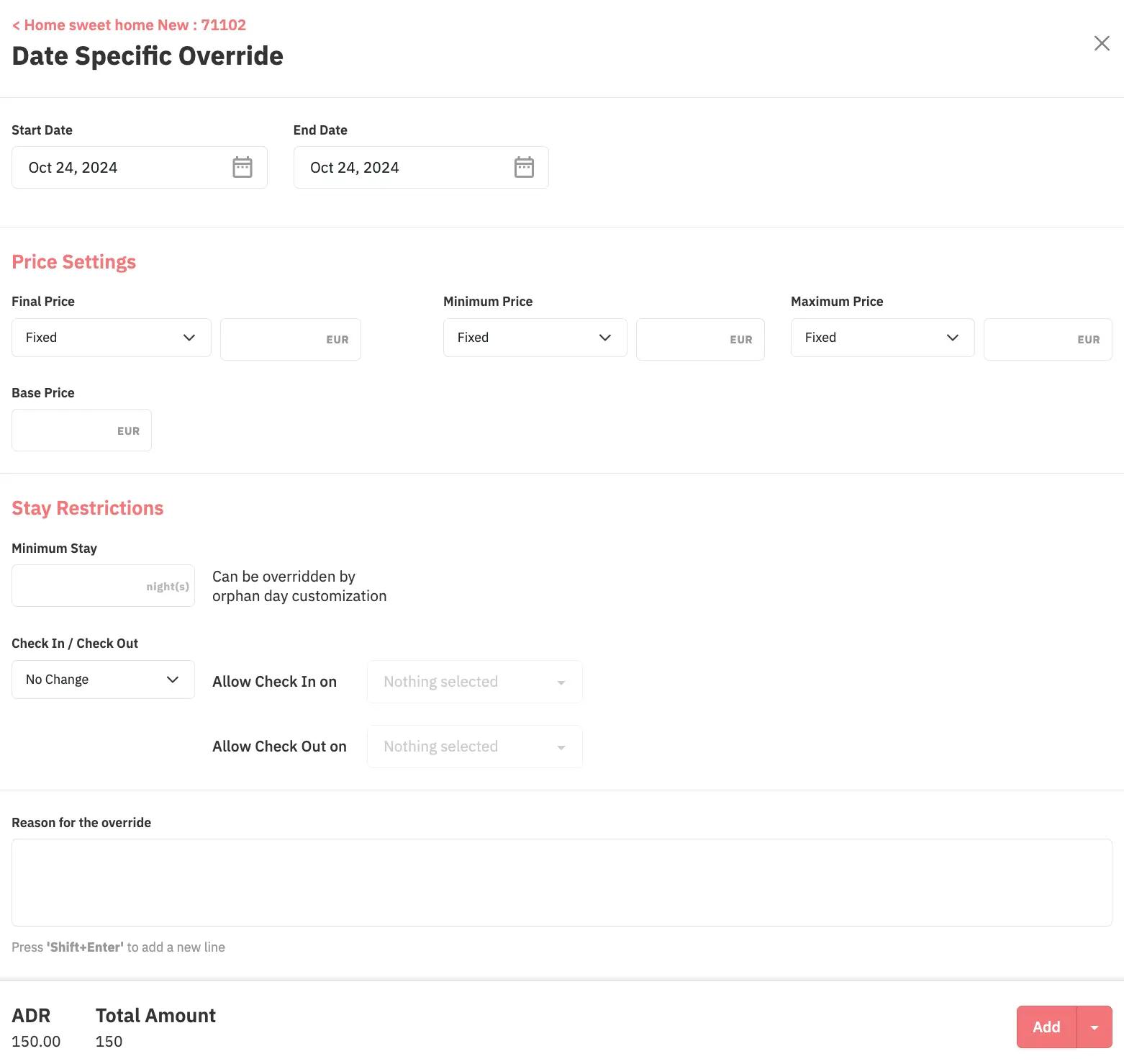
Offering graduated length-of-stay (LoS) discounts incentivizes longer bookings, smoothing occupancy while preserving average daily rate (ADR) across nights.
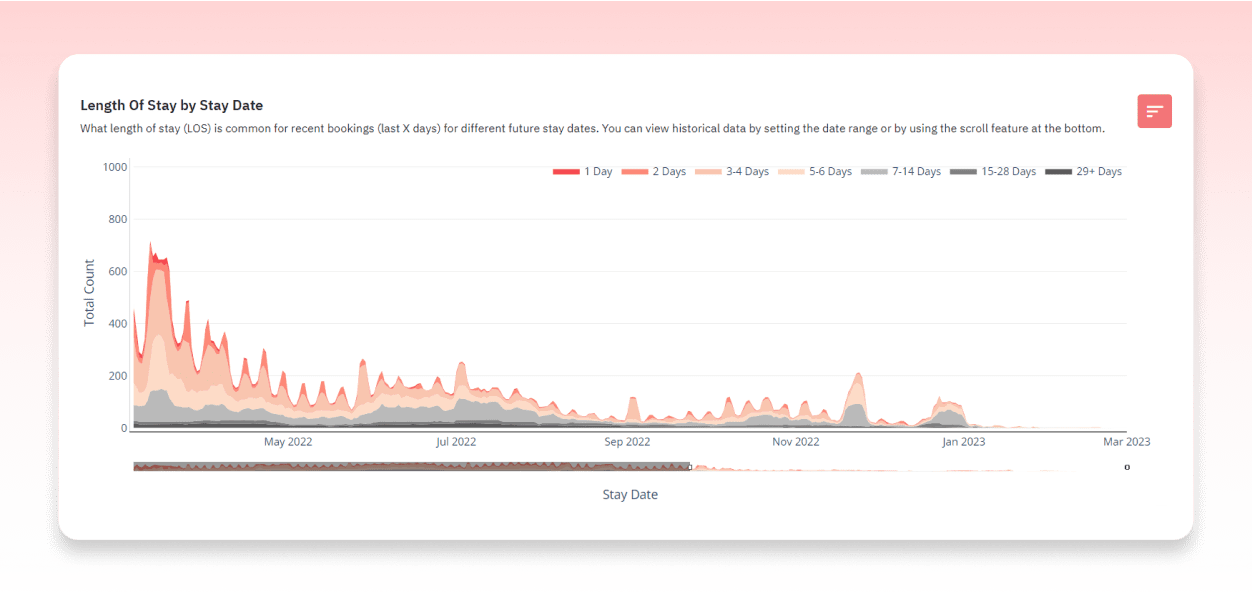
Example: Base ADR $120. A 9-night stay nets $120 × 0.90 = $108/night, locking in a total of $972 without any empty late nights.
Stop manual price pushes. Complete these steps:
Analyze the following performance metrics of your property:
PriceLabs Portfolio Analytics will help you create a quick and efficient report of your property’s historical performance and also help you spot trends that weren’t obvious at first glance.

With Portfolio Analytics, you will have a real-time reporting system that provides high-level metrics about the business, such as monthly revenue or length of stay information. It dives further in and exposes listing-level performance and metrics.
You can look at your listed rates and occupancy for future dates but also overlay them on top of the same data from a Market Dashboard to quickly identify where your prices and occupancy stand against the market.
If occupancy is 15% below the compset, add a 10% short‑notice discount for stays ≤7 days to capture spontaneous travelers.
Different goals require specialized rule sets. Below are detailed strategies with examples.
Goal: Fill every night—ideal for new launches or off‑season.
Explanation: Rates oscillate between $75 and $100 to achieve an 85% occupancy target. A 15% last‑minute discount attracts bookings <7 days out.
Scenario: For a ski-town cabin in April (shoulder season), this rule fills late-season gaps at $85 per night, rather than leaving the calendar empty.
Goal: Prioritize ADR during high‑demand events.
Explanation: Charges $210/night (150 × 1.4) with a 3‑night minimum around major concerts or sports games.
Scenario: Formula 1 weekend at the local circuit: $210/night × 3 nights = $630 per booking vs. standard $450.
Goal: Prevent orphan nights under various booking windows.
Implementation: PriceLabs Min Stay Calendar custom rule.
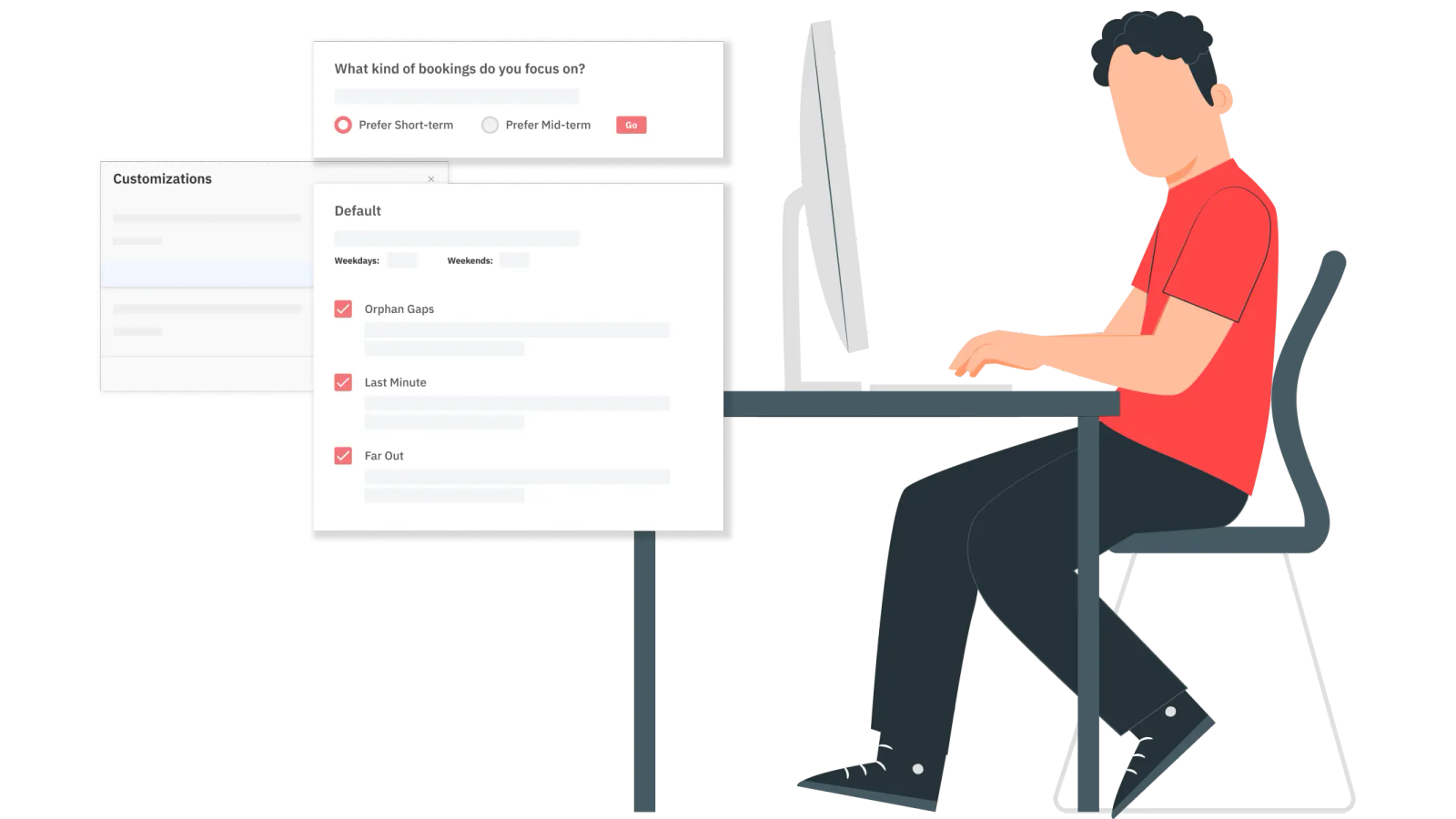
Scenario Example: A lone empty night between two bookings on June 15 gets a 20% discount, converting $120 → $96 to entice a quick filler.
Goal: Capture stable, multi‑week/month bookings.
Scenario: Base ADR $90 → Monthly rate = $90 × 28 × 0.75 = $1,890 total. Prominently advertise utilities‑inclusive for remote workers.
Goal: Let PriceLabs algorithm optimize without manual overrides.
Review: Quarterly check of realized vs. target ADR—adjust global markup multiplier if ADR deviates >8%.
Vacation rental pricing typically leverages one of four approaches:
A pricing calculator is a tool—often a spreadsheet or software module—that combines your fixed/variable costs, compset market data, and demand forecasts to recommend optimal nightly rates and discount levels. For example, PriceLabs’ Revenue Estimator Pro projects monthly revenue, ADR, and occupancy for new properties, helping hosts set smarter base prices.
Airbnb Smart Pricing is the platform’s native rate automation, which adjusts your nightly rates within a preset range based on booking demand. While it offers basic surge pricing, it lacks the granular control over LoS discounts, gap-filling, event markups, and competitor insights that PriceLabs provides.
Sophisticated vacation rental pricing strategies combines precise cost analysis, deep market intelligence, and robust automation.
By following the workflows and examples in this guide and leveraging PriceLabs’ dynamic pricing engine, hosts can:
Implementing these vacation rental pricing strategies will empower you to maximize revenue, streamline operations, and deliver a consistently excellent guest experience throughout 2025 and 2026.
Want to learn what PriceLabs can do for you? See for yourself with a free trial. Get started now!