
Get started with PriceLabs now!
Want to learn what PriceLabs can do for you? See for yourself with a free trial. Get started now!

The most expensive tuition in Airbnb investing isn't a course. It's the first 90 days of running your listing on autopilot. Every successful host made at least three of these Airbnb investing mistakes early on — the ones that quietly drain revenue while the calendar stays busy enough to feel like things are going well.
The most costly Airbnb investing mistakes for new hosts fall into four categories: pricing errors, market analysis blind spots, operational oversights, and platform strategy gaps. This article covers 9 specific mistakes, explains why each one happens, and gives you a concrete fix for every single one.
The tone here is empathetic, not preachy. These mistakes are recoverable. You just need to catch them early — and have the right tools to course-correct before they compound.
The Airbnb underpricing mistake is the most common error new hosts make, and it happens for a completely understandable reason. You're anxious about an empty calendar. So you set your rate 15–25% below market to guarantee bookings. The calendar fills up. You feel like you're winning. You're not.
Here's the revenue math. A $200/night property underpriced at $165/night running at 65% occupancy earns $39,113 a year. The same property priced at $200/night — even at 60% occupancy — earns $43,800. The cheaper version is busier and earns $4,687 less annually. More work, less money. That's the trap.
There's a counter-intuitive truth about underpricing: guests who pay more tend to complain less, treat the property better, and leave stronger reviews. You're not just losing revenue. You're attracting guests who increase your turnover costs. These are exactly the new Airbnb host tips that experienced operators wish someone had told them in month one.
The Fix: Set a Base Price anchored to comparable market rates using PriceLabs Revenue Estimator Pro or Market Dashboards — not your emotional comfort zone.
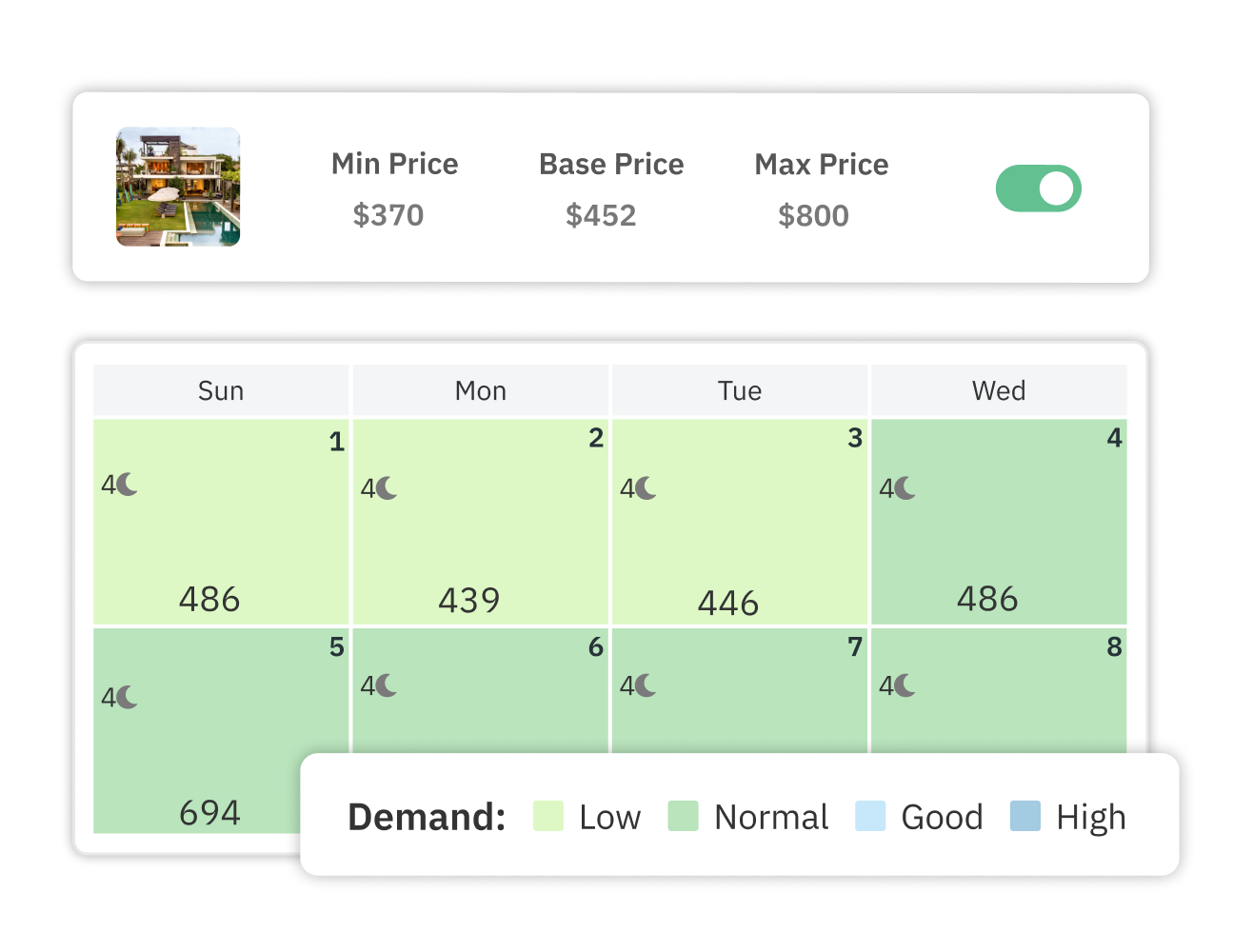
The Hyper Local Pulse (HLP) Algorithm then adjusts dynamically, so you're never underpricing on high-demand nights. And avoid the flip side of this mistake — the "set it and forget it" pricing error, where one static price is competitive in peak season but too high in shoulder months. That problem is covered in detail in our minimum stay and event pricing strategy guide.
Smart Pricing is free, built-in, and feels like a reasonable default for beginner Airbnb host errors to avoid. That's exactly why so many new hosts use it. The problem isn't that it doesn't work — it's what it optimizes for.
Airbnb Smart Pricing is designed to fill dates, not maximize revenue. That means it can push your nightly rate below what you need to be profitable. If you haven't set a Minimum Price floor, Smart Pricing can actively undercut your break-even rate on slow nights — giving you bookings that cost you money rather than earning it.
The algorithm serves Airbnb's platform interests, not yours. A filled calendar makes the platform look active. Your margin is a separate concern — and Smart Pricing doesn't weigh it. Understanding this is one of the core vacation rental revenue management lessons that distinguishes hosts who scale from those who plateau.
The Fix: Use a third-party dynamic pricing tool like PriceLabs with a configured Base Price floor, Minimum Price settings, and a market-demand-aware HLP Algorithm.
Unlike Airbnb Smart Pricing, PriceLabs dynamic pricing is designed by hosts and property managers to maximize revenue, not booking volume. It also charges a flat monthly fee with no revenue-sharing — so its incentives are aligned with yours, not with filling your calendar at any price.
This is the vacation rental market analysis mistake that kills the most Airbnb investment deals on paper before they ever have a chance in reality. New investors look at peak-season performance — or the seller's best three months — and project it forward. The spreadsheet looks great. The actual year looks very different.
A beach market with 90% occupancy in July and 20% in January averages around 55% annually. Your cash-flow modeling must use that annual average. If it's based on peak data, every financial projection you make is built on a number that doesn't exist outside of summer. This is one of the short-term rental investment mistakes to avoid that experienced investors rank among their costliest early errors.
The Fix: Use PriceLabs Revenue Estimator Pro to model 12-month projected income for any specific address.
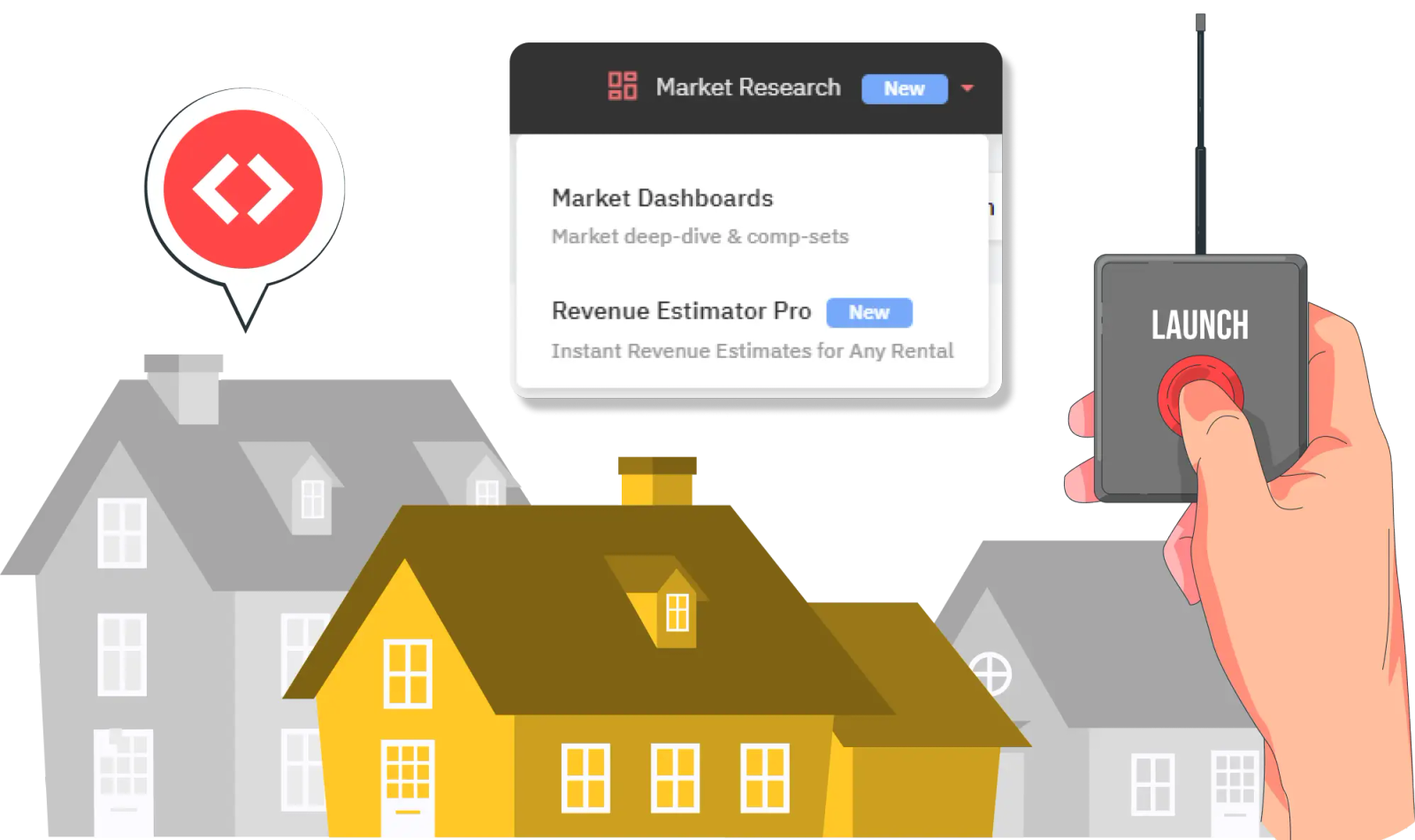
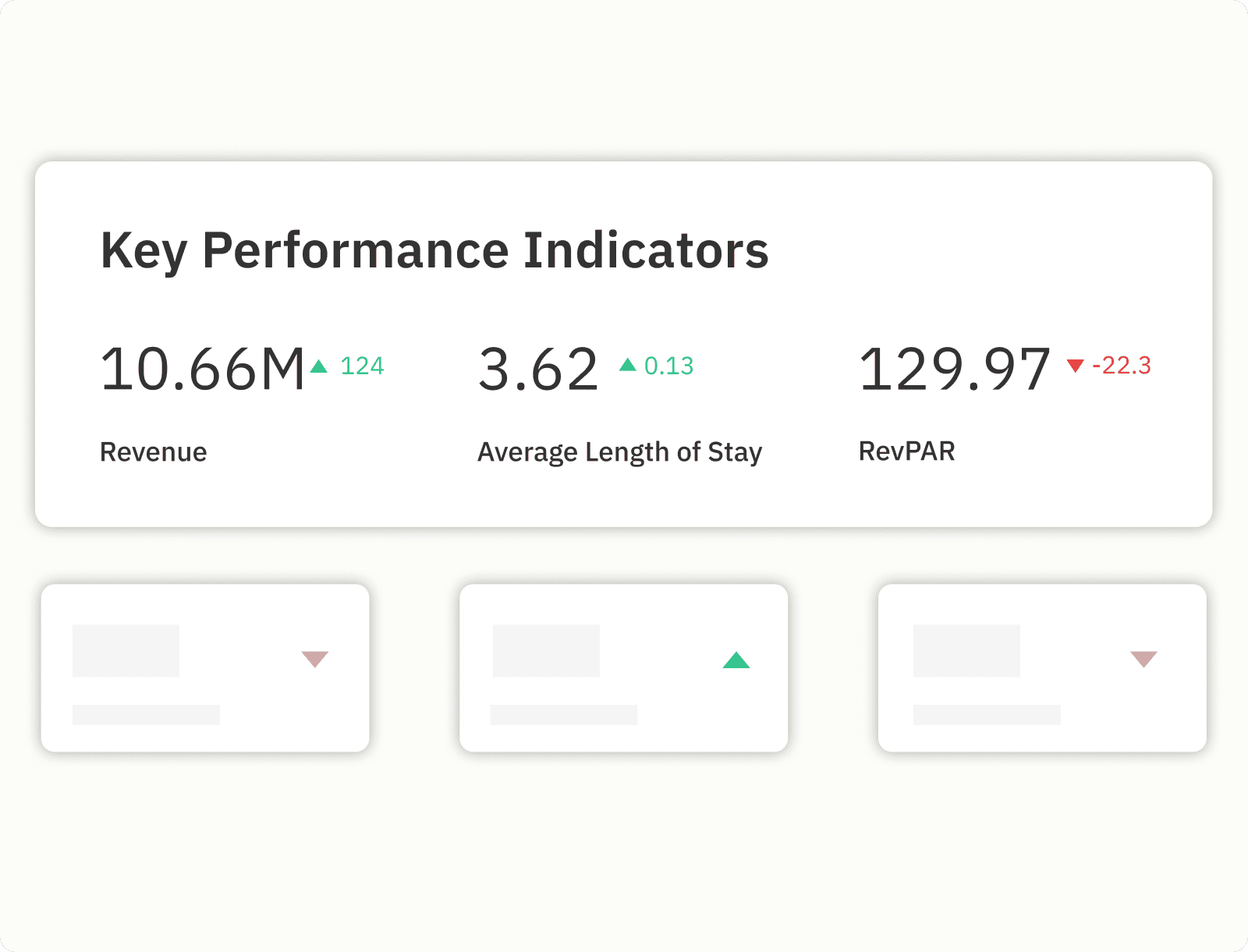
Look at the full seasonality curve in Market Dashboards — specifically the off-peak trough, not just the summer peak. That trough is the number that determines whether the investment survives a slow January.
This is the short-term rental insurance mistake that most new hosts don't discover until they need coverage and find out they don't have it. Standard homeowner insurance policies specifically exclude commercial rental activity. A guest injury, a significant water damage event, or a major theft without proper coverage can be financially devastating — and Airbnb AirCover doesn't fill that gap.
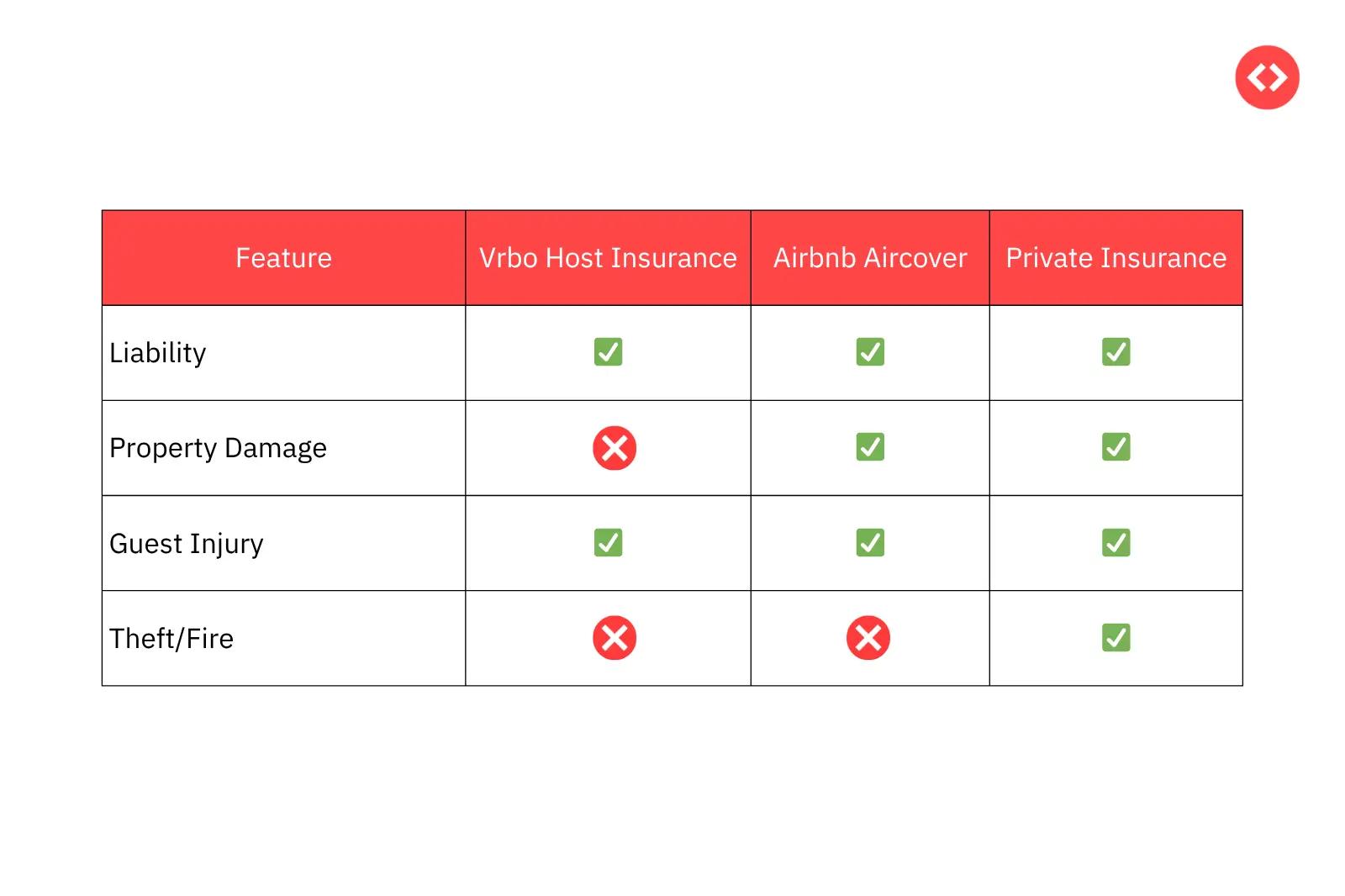
AirCover is a host guarantee program, not an insurance policy. It has coverage caps, exclusions, and a claims process that doesn't replace what a dedicated STR insurance policy provides. Many hosts learn this distinction only after filing a claim that doesn't go as expected. Reading through the vacation rental revenue management fundamentals will make clear how insurance fits into your full cost structure.
The Fix: Purchase a dedicated short-term rental insurance policy covering liability, guest-caused damage, loss of rental income, and local weather risks. Budget $1,500–$3,500 per year depending on property value and location. Providers like Proper Insurance and Steadily specialize in STR coverage. This is a non-negotiable line item in your operating cost structure — not an optional upgrade.
Airbnb is the most recognizable platform in short-term rentals, so it's the natural starting point for new hosts. The mistake is staying there exclusively. The Airbnb single platform mistake quietly caps your revenue potential — Airbnb holds roughly 50–60% of US STR booking volume. That means 40–50% of potential demand is looking somewhere else.
Vrbo dominates certain guest demographics: families, groups, and travelers booking longer stays tend to prefer VRBO over Airbnb. Booking.com brings international travelers and last-minute bookers. By listing exclusively on Airbnb, you're ignoring an entire demand pool. You're also making yourself fully dependent on one platform's algorithm, fee structure, and policy decisions — any one of which can change without notice. Learn more about vacation rental automation to see how multi-platform distribution can run without adding operational complexity.
The Fix: List on at least Airbnb and Vrbo to start. Use a channel manager or PriceLabs' 150+ channel integrations — including Hospitable, Eviivo, and Beds24 — to synchronize calendars and pricing across platforms. This prevents double bookings, ensures consistent rates everywhere, and reduces your dependency on any single platform's algorithm changes.
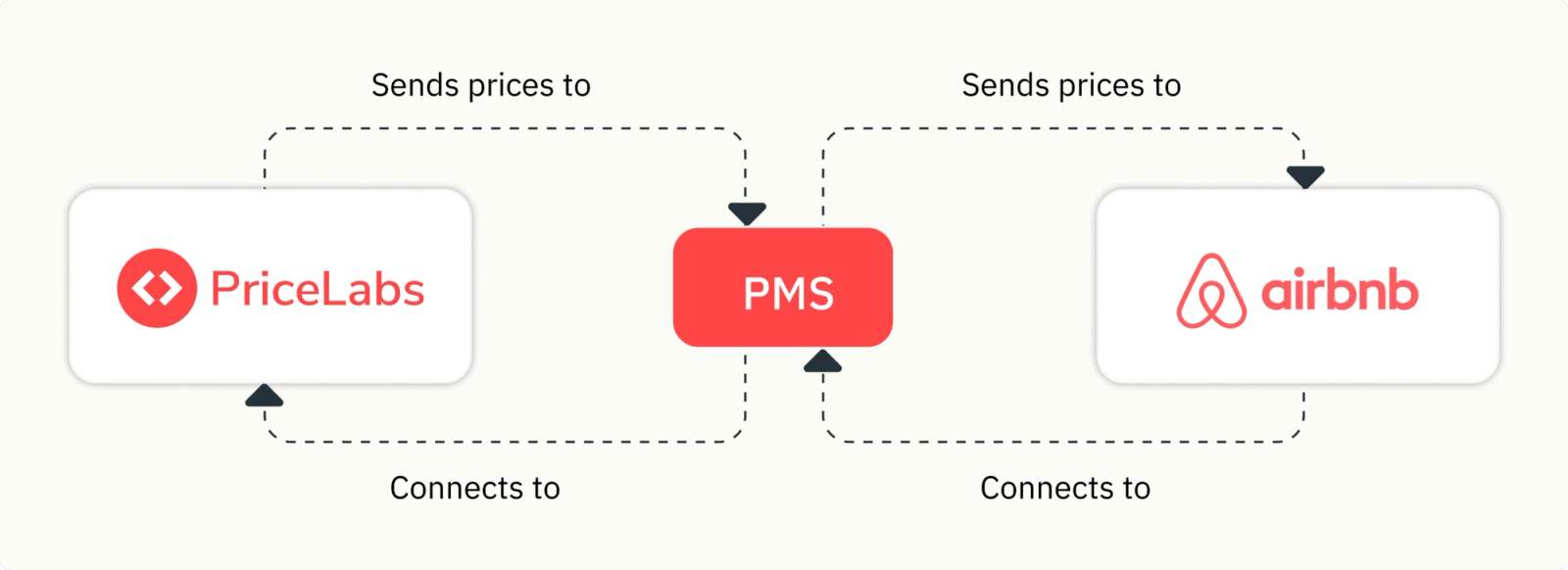
Hosting feels casual in the early days. A spreadsheet for one listing feels like overkill when you're focused on getting your first bookings. This is one of the most consequential common Airbnb host mistakes new investors make — because the cost isn't visible until tax time, when it arrives all at once.
Without tracking from day one, you can't calculate actual profit margin. You can't identify which expense categories are growing faster than revenue. You can't model whether a second property is financially viable. And you'll encounter the Airbnb 1099-K problem: Airbnb reports gross payout amounts to the IRS, not your net income — meaning your tax liability will be based on a number that doesn't reflect your actual profit unless you have the expense records to offset it.
The Fix: Set up a simple expense tracker from your very first booking. At minimum, track: gross payout per booking, Airbnb fee deducted, cleaning cost, supply restock, utilities overage, and maintenance costs. Use PriceLabs Portfolio Analytics to track revenue-side performance over time. Treating your first listing like a business from day one makes everything easier — scaling, refinancing, or selling later all depend on clean financial records.
New hosts want to launch fast. The property looks good in person — how bad can phone photos really be? Bad enough to be the single biggest conversion killer on Airbnb. Airbnb's algorithm ranks listings partly on conversion rate, which means how often guests who view your listing actually book it. Poor photos kill conversion. The algorithm notices and reduces your impressions over time.
Beyond photos, there's an amenity gap problem that pricing can't solve. If comparable listings in your market offer fast WiFi, a coffee station, and a hot tub — and yours doesn't — you can't price your way to equivalent performance. The amenity audit has to come before the listing goes live. Check what your local comp set offers and match or beat the standard amenities for your price tier.
The Fix: Invest in professional photography. For a standard STR listing, professional photos typically cost $150–$400 and pay back that investment many times over in booking conversion. Write a listing title and description that includes natural search keywords and directly answers the questions guests are asking. Consider PriceLabs' Listing Optimizer as a complementary tool for listing quality signals that affect both conversion and search ranking.
The property is new. Everything works. Building a maintenance reserve feels like preparing for a disaster that isn't coming. Then an HVAC unit fails in mid-peak-season, the hot tub breaks the week before a fully booked holiday weekend, and you're facing a $4,000+ emergency with no cash set aside. This is one of the short-term rental investment mistakes to avoid that catches even experienced hosts off guard.
Short-term rentals experience 2–3 times the wear of a primary residence. Guests cycle through constantly. HVAC units, appliances, mattresses, and outdoor features like hot tubs and grills degrade faster than they would with a single occupant. Deferred repairs compound: a minor plumbing issue becomes water damage; a fraying sofa becomes an unfurnished living room. Each repair that gets postponed costs more and generates more negative reviews than a repair handled proactively. Track your maintenance costs using revenue management tools that make these expenses visible in context of your overall income.
The Fix: Budget 1–3% of property value per year in a dedicated maintenance reserve. Conduct a property inspection every six months for high-traffic STRs. Schedule repairs and updates between booking seasons — not during peak periods when a closure costs you booked nights.
This is the hardest mistake to recover from because it's baked into the investment itself. Hosts fall in love with a location — usually their vacation destination — and evaluate it emotionally rather than analytically. The second version of this mistake is subtler: choosing a good market but the wrong property type. A studio apartment in a family beach town, a large house in a city that primarily attracts solo business travelers — these mismatches are expensive.
No amount of great hosting, smart pricing, or creative marketing overcomes a fundamental location-property mismatch. The vacation rental market analysis mistake at the acquisition stage is the one mistake on this list that can't be fixed after the fact. And it's exactly why data tools exist for pre-purchase analysis — not just post-purchase optimization. Understanding how to analyze a market before you buy is covered in detail in the complete Airbnb income calculation guide.
The Fix: Use data to choose the market first, then find properties that match the top-performing comp set in that market — by bedroom count, proximity to demand drivers, and amenity stack. PriceLabs Market Dashboards and Revenue Estimator Pro help validate market-property fit before you sign a contract. If you haven't purchased yet, the complete guide to becoming an Airbnb host walks through the acquisition decision in full.
Every mistake in this guide is recoverable — most successful Airbnb hosts made at least three of them. The difference between hosts who turn it around and hosts who exit early is catching them fast and having the right tools to correct course.
Here's the full list at a glance, so you can use this as a listing and investment optimization reference:
The pricing and market analysis mistakes — the two that cost new hosts the most money — are exactly what PriceLabs is built to solve. The HLP Algorithm prices to real market demand, Revenue Estimator Pro gives you realistic projections before you invest, and Market Dashboards keep you calibrated to your competitive set. If you're in your first year hosting, setting up PriceLabs is the single highest-ROI improvement you can make to your revenue strategy. Start with a free PriceLabs trial — flat monthly fee, no revenue-sharing, no setup complexity.
Underpricing is the most frequently cited mistake. New hosts set rates below market out of fear of empty calendars, not realizing that a 15–20% price reduction often requires 15–20% more bookings just to break even — and frequently results in lower-quality guests and more turnover costs. Setting a data-anchored Base Price from the start is the fix.
The most common reasons are: overestimated annual occupancy (modeled from peak data only); untracked expenses that erode margin silently; underpricing that leaves revenue on the table; inadequate insurance coverage leading to uncovered damage costs; and single-platform listing that misses 40–50% of potential demand. All five of these are fully preventable with the right pre-launch setup.
Airbnb Smart Pricing prioritizes filling dates over maximizing revenue, which means it can push prices lower than a host's break-even rate. For new hosts who haven't set a Minimum Price floor, Smart Pricing can actively reduce profitability. A third-party dynamic pricing tool with a configured Minimum Price — like PriceLabs — gives new hosts the automation of Smart Pricing without the downward revenue risk.
Model 12-month projected income using real market data tools — not the seller's figures and not your best-case occupancy estimate. Look at the full seasonality curve including the off-peak trough. Check how fast new listings are entering the market (supply growth compresses margins). Verify STR regulations are stable before committing capital.
Yes. Standard homeowner insurance policies typically exclude commercial rental activity. You need a dedicated short-term rental insurance policy covering liability, guest-caused property damage, loss of income, and weather risks. Budget $1,500–$3,500 per year. Airbnb AirCover is a supplemental host protection program, not a replacement for insurance.
Want to learn what PriceLabs can do for you? See for yourself with a free trial. Get started now!