Get started with PriceLabs now!
Want to learn what PriceLabs can do for you? See for yourself with a free trial. Get started now!

The real secret to maximizing revenue lies in what most hosts overlook: the psychology of pricing, the power of predictive demand, and the art of revenue engineering. Your Airbnb is an asset that responds to shifting demand, competitor strategies, and guest behavior. The most successful hosts don’t just react to market trends; they anticipate and influence them. You should know when to raise prices before peak demand, how to fill midweek gaps without undercutting their value, and why the right minimum stay strategy can transform your bottom line. In this article, we’ll break down Airbnb revenue management secrets that separate high-performing hosts from the rest, helping you turn your Airbnb into a finely tuned, profit-generating machine.
Bonus Read: Vacation Rental Revenue Management: The Complete Guide for Hosts and Property Managers
At its core, Airbnb revenue management is the art and science of optimizing your pricing strategy to maximize income. It’s not just about setting a competitive rate—it’s about understanding demand fluctuations, market trends, and guest behavior to ensure you earn the most per booking while maintaining high occupancy.
Hotels have entire teams dedicated to this, with specialized Airbnb revenue managers analyzing data and adjusting prices in real-time. As an Airbnb host, you may not have that luxury—but with the right Airbnb revenue management strategy, you can still outsmart the competition and boost your bottom line.
Imagine two Airbnb hosts in the same city, offering nearly identical properties.
Host A sets a flat rate of $150 per night, no matter the season.
Host B uses revenue management for Airbnb to adjust pricing dynamically:
Charging $200 during peak demand, offering discounts to fillmidweek gaps, and tweaking minimum stay requirements to maximize revenue.
By the end of the year, Host B has earned significantly more — without increasing expenses.
That’s the power of revenue management Airbnb strategies.
Instead of relying on guesswork, you use data-driven pricing models to:
If you are pricing too high, you might not get enough bookings to sustain your business. Let’s say your market average is $450 per night for your type of property in your locality. If you price $550 but provide the same amenities as another property that only charges $450, a guest is going to go for the latter rather than you.
On the other hand, if you price too low, people might assume that you do not have high-quality amenities and not book. Another (high probability) possibility is that too many people might book your property.
This might not seem like a problem right now. Let’s consider the difference in revenue for both scenarios.
| High ADROccupancy rate: 100%ADR: $350 | Low ADROccupancy rate: 85%ADR: $450 |
| RevPAR: Occupancy x ADR= 100 x 350= 35,000 | RevPAR: Occupancy x ADR= 85 x 450= 38,250 |
A reduced occupancy rate but an increased ADR will lead to higher revenue per available room (RevPAR).
Finding this accurate balance is extremely important to ensure that you maximize your revenue. Your ADR should never be static — it has to continuously update according to changing market conditions and your property’s changing dynamics.
The first step to finding the right ADR for your property is to understand how your competitors are pricing their properties. You can use PriceLabs Neighborhood Data to keep track of your competitors using the Competitor Calendar.
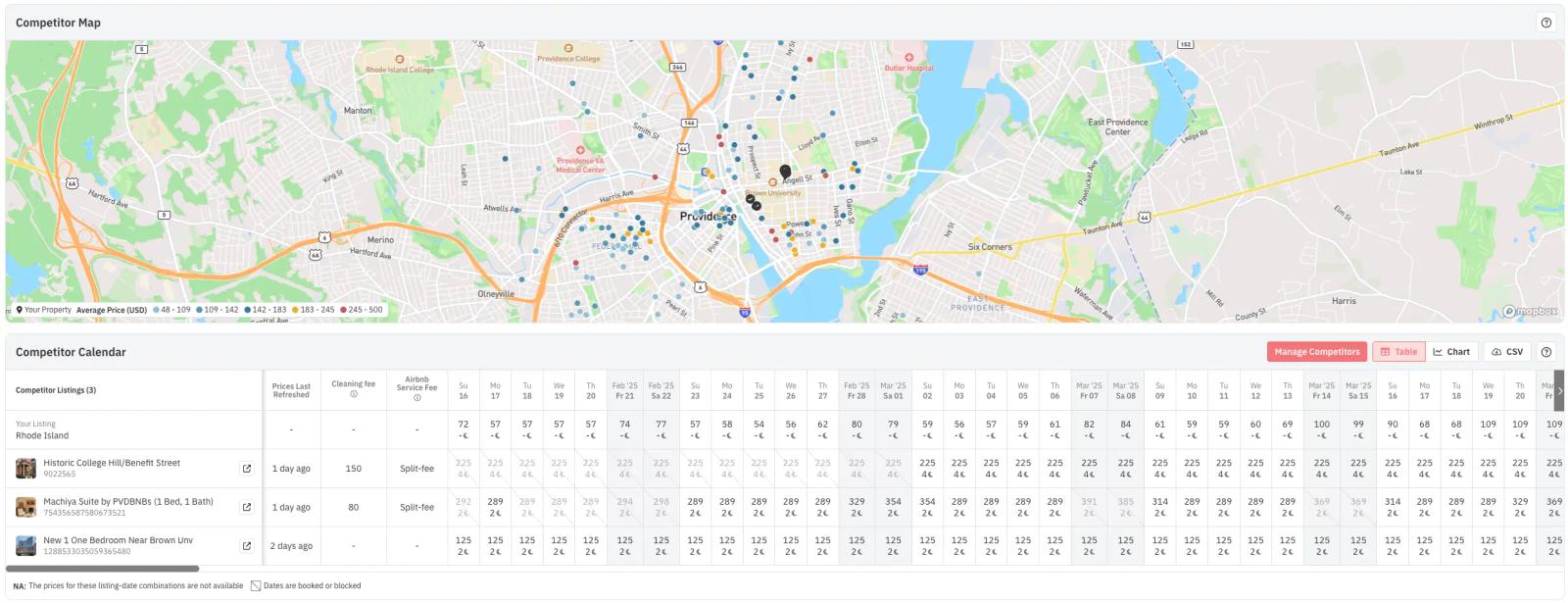
In the competitor calendar, you can select the competitors you want to continuously track. In this table, you will be able to understand how they’re pricing their property on a daily basis and also track their minimum stay restrictions along with their cleaning fee and Airbnb service fees.
Pricing your property isn’t a one time thing. Demand fluctuates throughout the year — summer vacations, winter holidays, local festivals, and changing travelers’ expectations all impact your pricing.
If you’re charging the same year round, you’re either losing potential revenue in peak seasons or struggle to attract bookings in slower periods.
This is where seasonal pricing comes in!
Seasonal pricing is the practice of modifying nightly rates based on expected demand shifts. Instead of keeping your rates static, you increase them during peak seasons when demand is high and lower them during slow seasons to encourage more bookings.
Several factors influence seasonal pricing:
A well-optimized seasonal pricing strategy ensures you capture the highest possible revenue during busy periods while maintaining occupancy during slow months.
📌 Example Pricing Strategy for a Mountain Cabin in Colorado:
| Season | Base Price | Min Stay | Discounts |
| Peak (Dec–Feb) | $400/night | 5 nights | No discounts |
| Shoulder (Mar–May) | $250/night | 3 nights | 5% early bird discount (60+ days out) |
| Off-Peak (Jun–Sep) | $180/night | 2 nights | 10% last-minute discount (within 7 days) |
To implement a similar pricing strategy to the Mountain Cabin, you should first understand your seasons. You should look at both past performance data and future market trends.
✅ Past Data: Reveals proven demand patterns. If Christmas bookings were strong last year without a one-off event, a similar trend is likely.
✅ Future Data: Helps predict demand but is less conclusive due to long booking windows. For example, checking Christmas 2023 bookings in March may not show true demand yet.
By combining historical insights with live data, you’ll stay ahead of market changes and optimize revenue without guesswork:
The Vermont A-Frame, a 1965 boho A-frame cabin rental in Vermont, struggled with:
❌ Low off-season occupancy due to high rates
❌ Missed revenue opportunities in peak ski season
❌ Inconsistent pricing updates
Solution: PriceLabs’ Custom Seasonal Pricing
📈 Revenue increased by 18% while maintaining an 80% occupancy rate year-round
📈 Improved RevPAR with a better ADR-occupancy mix
📈 Less manual work, more optimized pricing decisions
Airbnb revenue management goes beyond just optimizing nightly rates; it also involves increasing overall revenue per booking by offering additional services and experiences.
Upselling can significantly enhance your earnings while providing extra value to your guests. It enhances guest satisfaction, and increases the chance of positive reviews and repeat bookings.
Booking window or lead time is the time between the time a guest books your property and their check-in date.
You should analyze your booking window because it:
If you receive a lot of last-minute bookings then you should probably apply a premium for last-minute bookings. The same goes for far-out bookings. You can use PriceLabs Minimum Stay Restrictions to adjust your minimum stay restrictions and pricing according to your booking windows.
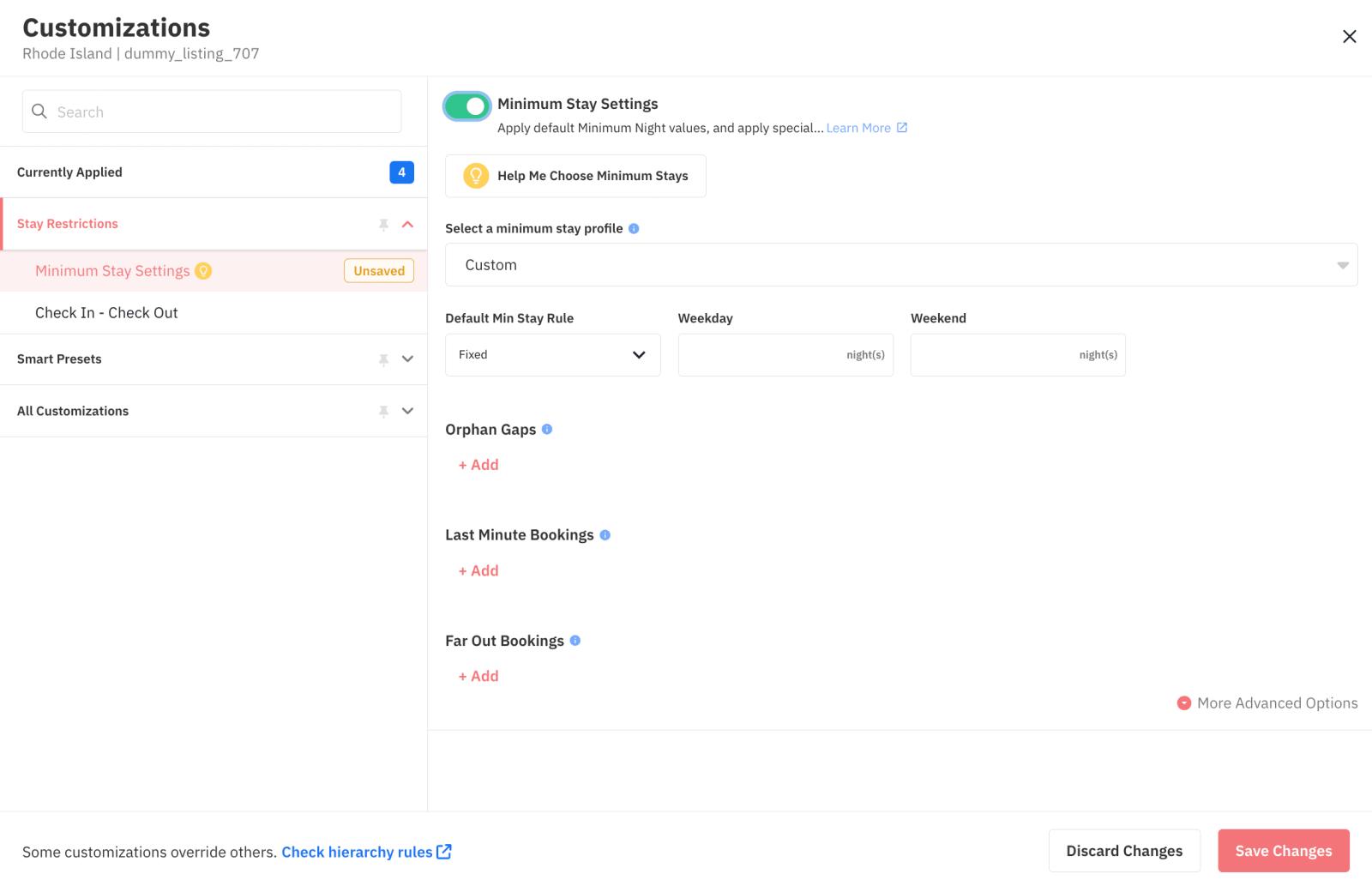
Adjust Pricing Based on Lead Time:
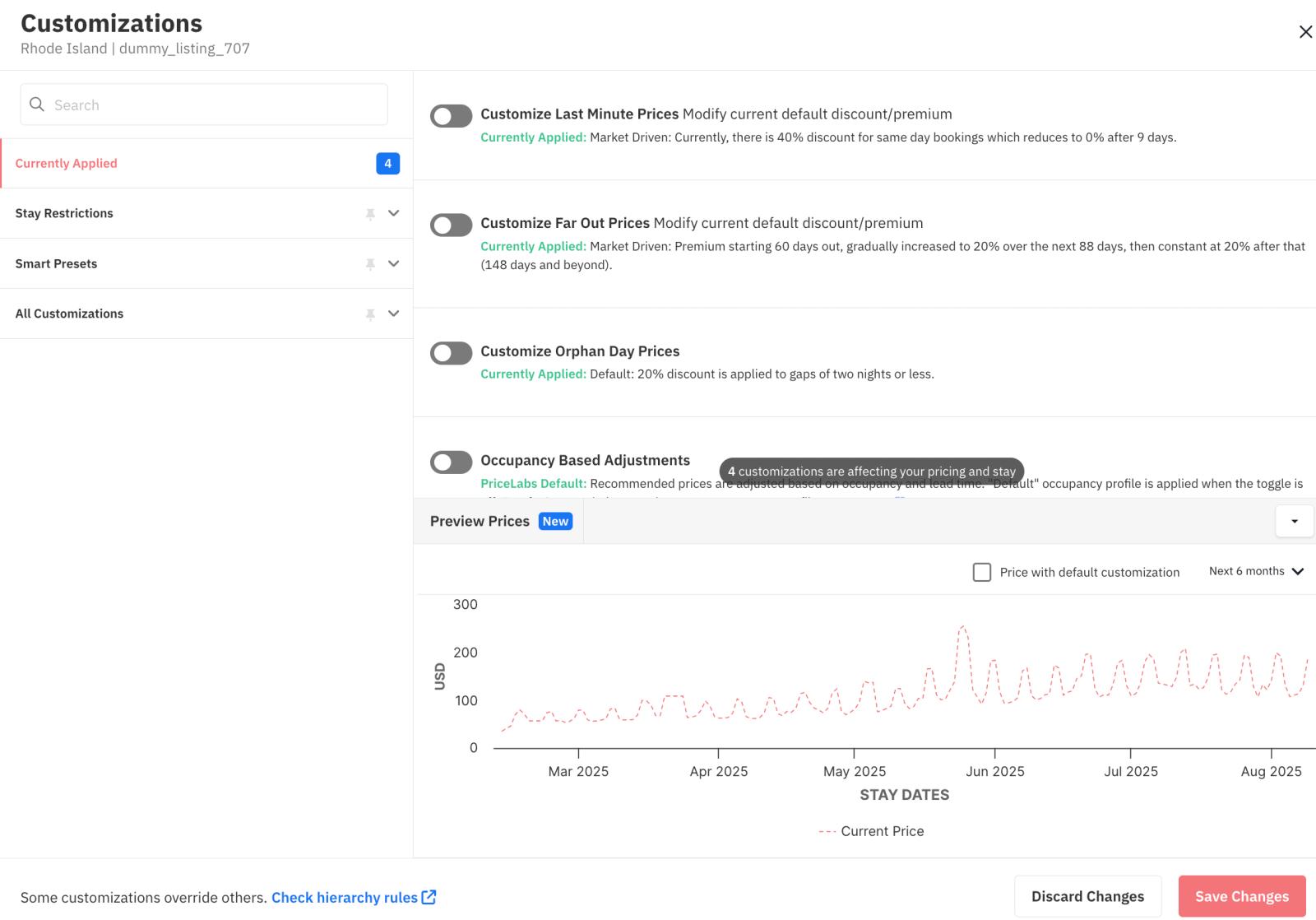
Adjust your pricing according to your booking window
Direct booking allows you to rent your listings without relying on Airbnb or other OTAs (Online Travel Agencies). Instead of paying high service fees, you can retain more revenue and build direct relationships with guests.
Mastering Airbnb revenue management is key to running a successful and profitable rental business.
By strategically adjusting pricing, understanding seasonal demand, offering upsells, and optimizing direct bookings, hosts can significantly increase their earnings.
Leveraging tools like PriceLabs can provide data-driven insights and automation, ensuring you stay ahead of market trends while saving time. By implementing these revenue management secrets, you can maximize your Airbnb profits in any market, attract more guests, and enhance the overall guest experience.
With the right strategies and technology, you can turn your Airbnb property into a consistently high-performing asset and achieve long-term success.
These strategies build on the fundamentals in our complete guide to vacation rental revenue management.
Want to learn what PriceLabs can do for you? See for yourself with a free trial. Get started now!