Table of Contents
Updated : Feb 24, 2026
Managing an independent hotel is a lot like playing a high-stakes game of Tetris; you’re constantly trying to fit the right pieces—your guests—into the right blocks—your rooms—at exactly the right speed to enhance your score (and in your case, revenue). If you miscalculate the dimensions of those blocks or price them incorrectly, your board piles up, and you lose out on potential earnings. At the very foundation of this daily puzzle is a fundamental question every hotelier must master: What does double occupancy mean in a hotel? Mastering this concept, along with clever pricing strategies and automated tools, will keep your revenue stacking up rather than leaving money on the table.
The Baseline: What Does Double Occupancy Mean in a Hotel?
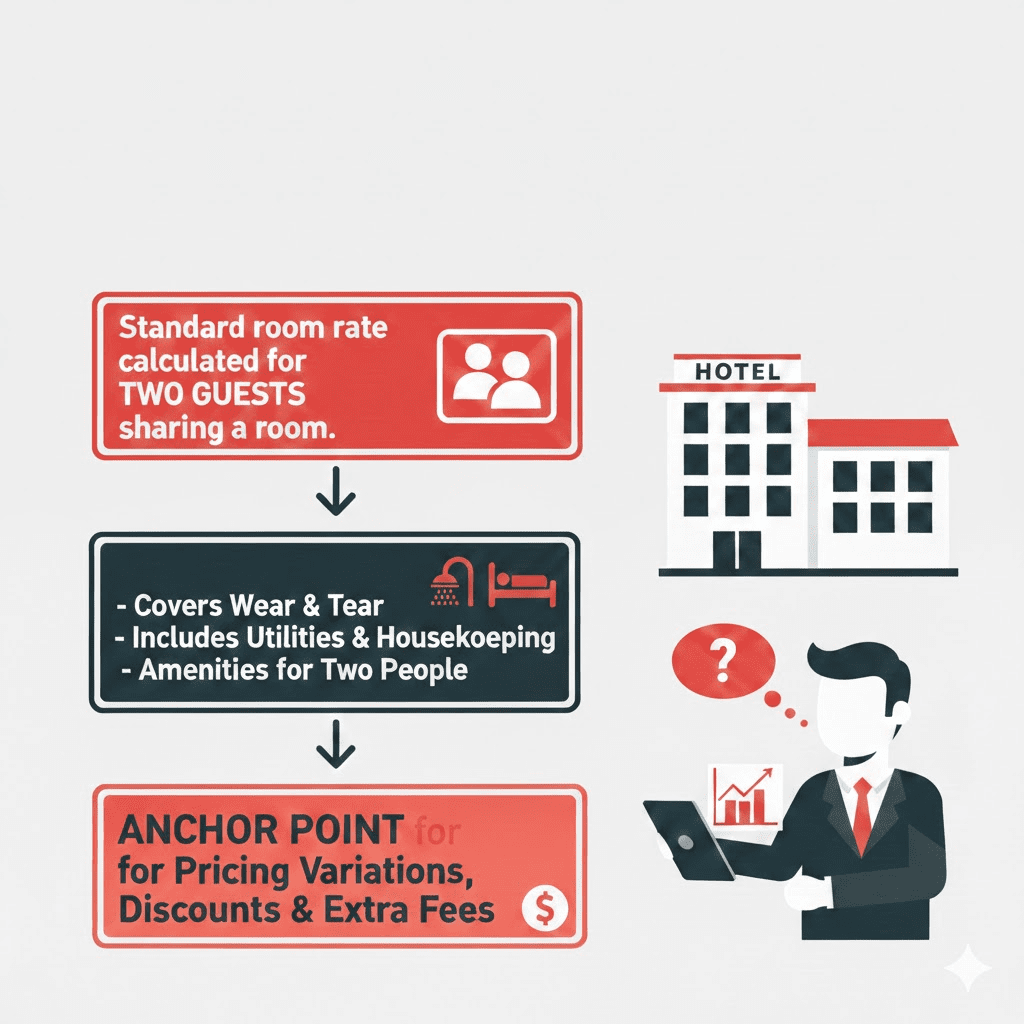
If you want to master revenue management, you first have to ask: What does double occupancy mean in a hotel from a financial perspective? Simply put, it is the standard room rate calculated based on two guests sharing a room. While the general public sees only a “price per night,” hoteliers know this figure represents the baseline cost to cover wear and tear, utilities, housekeeping, and amenities for two people.
To rank on search engines and answer guest queries perfectly, we can define it like this: What does double occupancy mean in a hotel? It means the quoted room price assumes two people will be sleeping there, which serves as the anchor point for all your other pricing variations, discounts, and extra fees.
How to Navigate This on PriceLabs
Establishing this baseline is step one in your initial setup. In PriceLabs, this is known as your “Base Price.” The base price is the average rate you would charge for a room type across the year. It serves as your starting point, with market factors and demand patterns applied on top. If you aren’t sure where to start your double occupancy rate, you can use the Base Price Help tool in PriceLabs to assist in suggesting the perfect starting number based on market data.
Capturing Demand: Single vs Double Occupancy Rates
Once you understand what does double occupancy mean in a hotel, you can start targeting different traveler segments. Solo corporate travelers or backpackers are incredibly price-conscious. If you only offer a flat rate for two people, you might price yourself out of solo travelers’ budgets. This is where analyzing your Single vs double occupancy rates becomes a competitive advantage.
Offering a slight discount for single occupancy can increase your conversion rate on weekdays when business travel peaks.
Practical Tips for Setting Single Rates:
- Analyze your costs: Calculate the exact difference in variable costs (towels, water, breakfast) between one guest and two.
- Set a discount: Offer a 10% to 15% discount for single travelers to make your property look more attractive compared to larger corporate chains.
How to Navigate This on PriceLabs: Managing multiple rates can be tedious, but PriceLabs automates this with the Mapping and Pricing Offset features. You can set up a Parent/Child room type relationship. Make your Standard Double Room the “Parent” (the benchmark). Then, map your single-occupancy listing as a “Child” room and add a Pricing Offset (e.g., a 10% markdown). Now, you only need to manage the parent room’s base price—the child room will automatically inherit the settings and apply the discount!
Managing Hotel Room Occupancy Limits
Every room has a breaking point, both for comfort and safety. Establishing strict Hotel room occupancy limits is crucial for adhering to local fire codes and ensuring your guests aren’t packed in like sardines.
However, larger rooms with higher occupancy limits are goldmines during peak seasons, holidays, and local events. A family suite that safely sleeps four should be priced dynamically compared to a standard room that sleeps two.
How-To Steps for Occupancy Limits:
- Audit Physical Space: Physically check which rooms can comfortably accommodate rollaway beds or sofa sleepers without blocking fire exits.
- Update Your PMS: Ensure your Property Management System and OTA listings explicitly state these Hotel room occupancy limits to prevent “stealth guests.”
How to Navigate This on PriceLabs: To enhance revenue on high-capacity rooms, use the Create Groups and Sub-Group feature. You can group all your ‘Family Suites’ together. If you notice families book longer stays, you can apply specific Minimum Stay Restrictions to this sub-group. For example, using Seasonal Profiles, you can ensure your highest-occupancy rooms require a 3-night minimum stay during peak summer months, protecting your calendar from awkward one-night gaps.
Revenue Boosters: Extra Guest Fees in Hotels
What happens when a room’s occupancy limit is three, but your baseline rate is strictly built for two? This is where you implement Extra guest fees in hotels.
Because we established what does double occupancy mean in a hotel (a rate for two people), anyone beyond that number costs you extra money in utilities, linens, and free breakfast. Charging a flat fee (e.g., $25 to $50 per night) for the third or fourth guest is standard industry practice to protect your margins.
How to Navigate This on PriceLabs: While your PMS handles the flat fee addition, PriceLabs ensures the base rate of that room is optimized daily. By utilizing the Hyper-Local Pulse Algorithm, PriceLabs forecasts demand at a hyper-local level. If a massive concert is in town, families will be looking for those high-capacity rooms. The algorithm will automatically fluctuate your event and holiday prices, ensuring that by the time your Extra guest fees in hotels are added at checkout, you are yielding the absolute maximum RevPAR (Revenue Per Available Room) possible.
Outsmarting the Market: Competitor Tracking
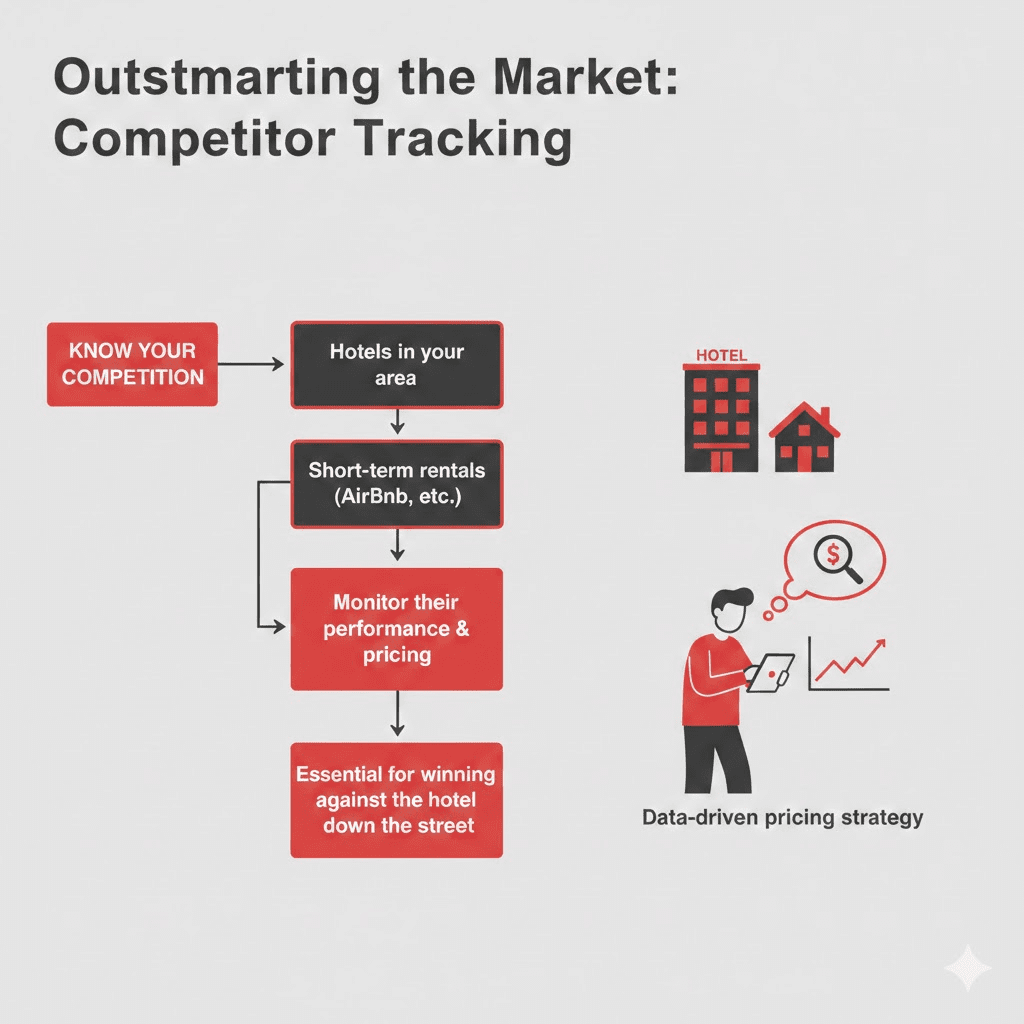
You can have the best occupancy strategies in the world, but if you are pricing in a vacuum, you will lose to the hotel down the street. Knowing how both hotels and short-term rentals are performing in your area is essential.
How to Navigate This on PriceLabs: PriceLabs has an incredibly powerful Hotel Rate Shopper powered by high-quality data from Booking.com.
- Select Competitors: You can select up to 350 properties to track, sorting them by distance, star rating, or unit count.
- Length of Stay (LOS) Filter: Want to see what competitors charge for a 2-night stay vs. a 7-night stay? The LOS filter reveals the discounts or premiums they apply.
- Chart View: Use the Chart View to easily benchmark your property. Your “Recommended Price” appears as a black line against your competitors, allowing you to instantly detect peak demand periods and visually confirm that your pricing strategy is on point.
Way Forward
Understanding what double occupancy means in a hotel is the gateway to a highly profitable revenue management strategy. By establishing a solid base price for two guests, strategically offering single occupancy discounts, enforcing occupancy limits, and accurately charging extra guest fees, you ensure every available square foot of your property is monetized effectively. The days of guessing your daily rates are over; it is time to let automation and hyper-local data do the heavy lifting so you can focus on delivering an incredible guest experience. The way forward is simple: start automating your pricing updates and tracking your competitors today.
Frequently Asked Questions: Double Occupancy and Room Capacity
1. Exactly what does double occupancy mean in a hotel?
Double occupancy means the quoted room rate covers two guests staying in the room. This is the industry standard baseline for pricing, regardless of whether the room has one King bed or two Twin beds.
2. Should my single vs double occupancy rates always be different?
Not always, but it is a highly effective strategy for attracting solo business travelers during slow weekday periods. Offering a slightly lower single rate makes you more competitive to price-conscious solo guests while still covering your room’s fixed costs.
3. Why is it important to strictly enforce hotel room occupancy limits?
Occupancy limits are crucial for maintaining guest comfort, preventing excessive wear and tear on your property, and, most importantly, adhering to local fire and safety regulations.
4. How do I justify extra guest fees in hotels to my customers?
Extra guest fees cover the tangible variable costs of having an additional person in the room, such as extra water and electricity usage, additional housekeeping time, extra linens, and consumable amenities like free breakfast or toiletries.