Table of Contents
Updated : Feb 26, 2026
Running a hotel in 2026 without a data-driven strategy is like trying to captain a ship in a storm using a paper map from the 1990s—you might stay afloat for a while, but you’ll definitely miss the fastest routes to your destination. As travelers become more tech-savvy and the market more volatile, hotel owners and managers must pivot from “gut-feeling” management to “AI-assisted” precision to stay relevant.
1. The Era of AI Agents and Hyper-Automation
In 2026, we’ve moved past simple chatbots. We are now in the age of Autonomous AI Agents. These tools don’t just answer “What time is breakfast?”; they handle complex booking modifications, upsell room upgrades based on guest history, and even monitor real-time energy usage.
For a manager, this means the “manual workload” is finally shrinking. However, the biggest shift is in Revenue Management. If you aren’t updating your prices based on real-time shifts, you’re losing money every hour.
PriceLabs’ Dynamic Pricing (Hyper Local Pulse) acts as your 24/7 AI revenue assistant. It scans internal occupancy, local events, and market data to generate daily pricing recommendations. Instead of you spending hours on spreadsheets, the system suggests the “Right Price” automatically, giving you the final “user control” to approve or tweak.
2. Hyper-Personalization through Attribute-Based Selling
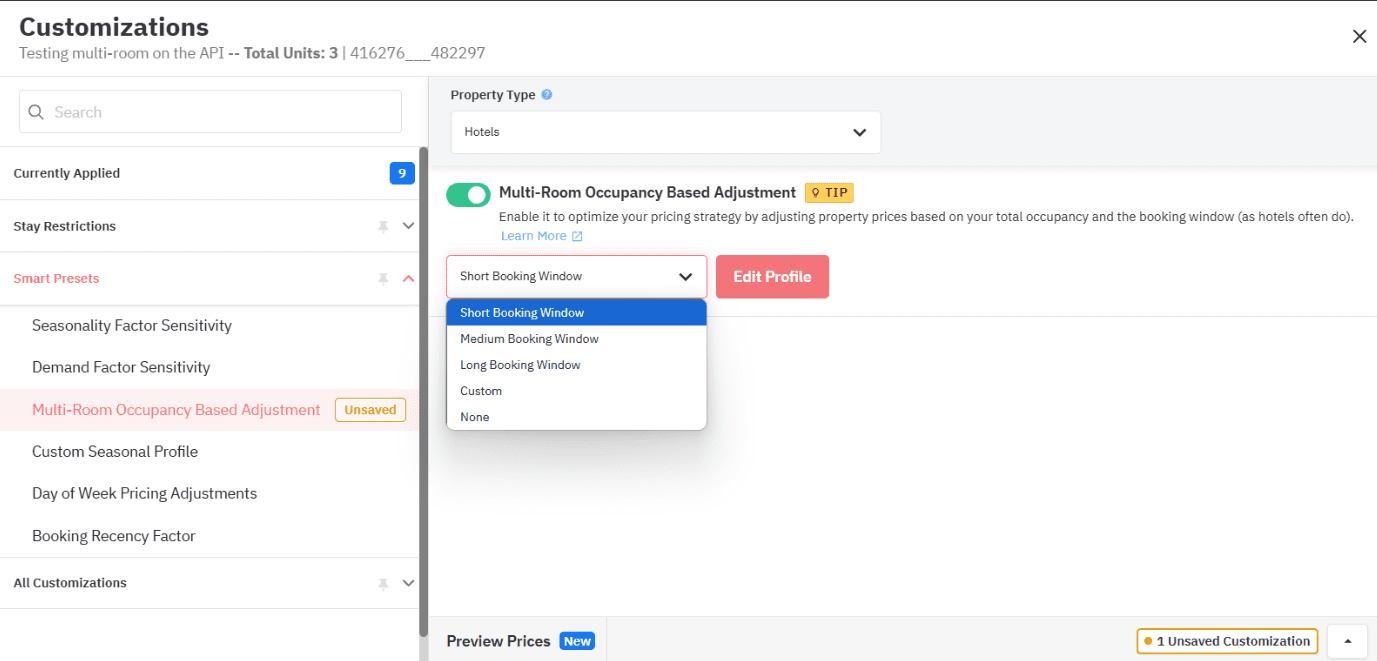
The modern guest doesn’t just want a “Standard Room.” They want the room on the 4th floor, near the elevator, with a sunrise view. In 2026, Attribute-Based Selling (ABS) is a top hospitality industry trend. This allows hotels to unbundle their inventory and charge premiums for specific features.
Practical Tip: Start categorizing your rooms by unique “attributes” (e.g., quiet zone, high-speed Wi-Fi, balcony). You can charge a $10–$20 premium for these features, which significantly boosts yourADR (Average Daily Rate).
Navigating this on PriceLabs
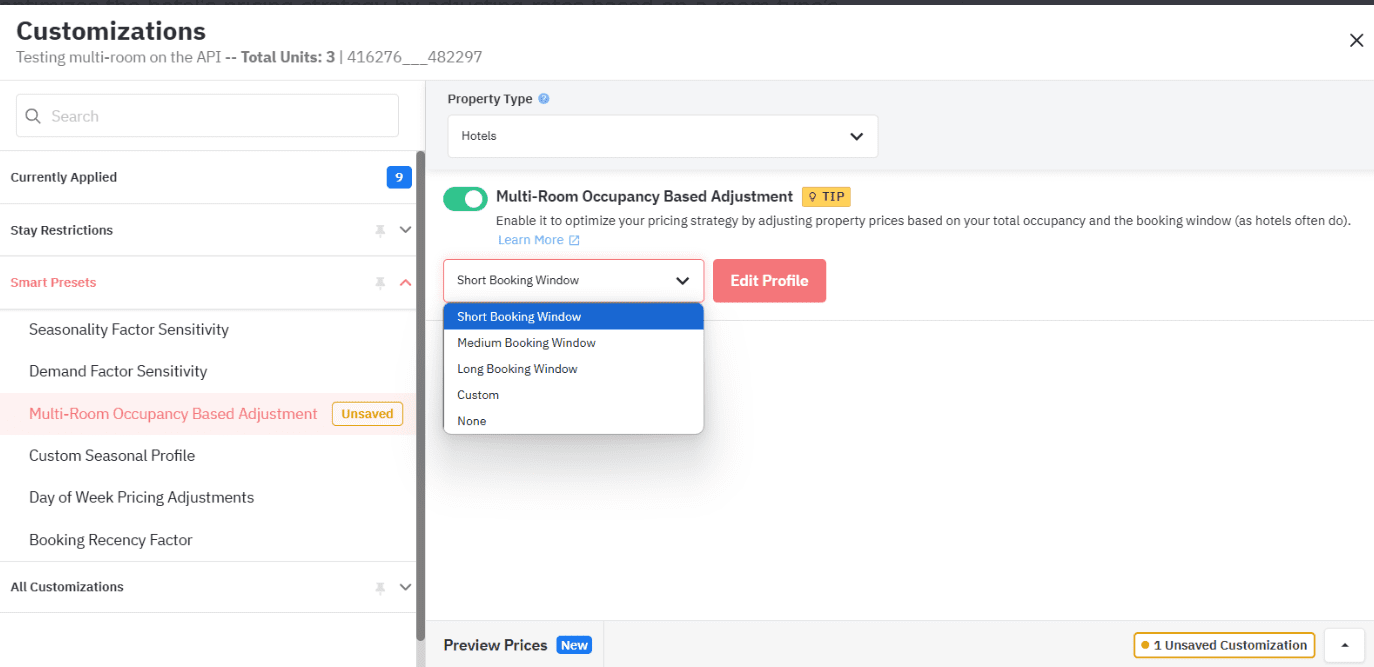
Use Room-Type Specific Pricing. You can customize pricing strategies for individual room categories based on demand patterns. If your “Balcony Suites” are pacing faster than your “Standard Rooms,” PriceLabs allows you to apply custom rules to those specific units without affecting your base inventory.
3. Real-Time Competitive Benchmarking Beyond the Big Chains
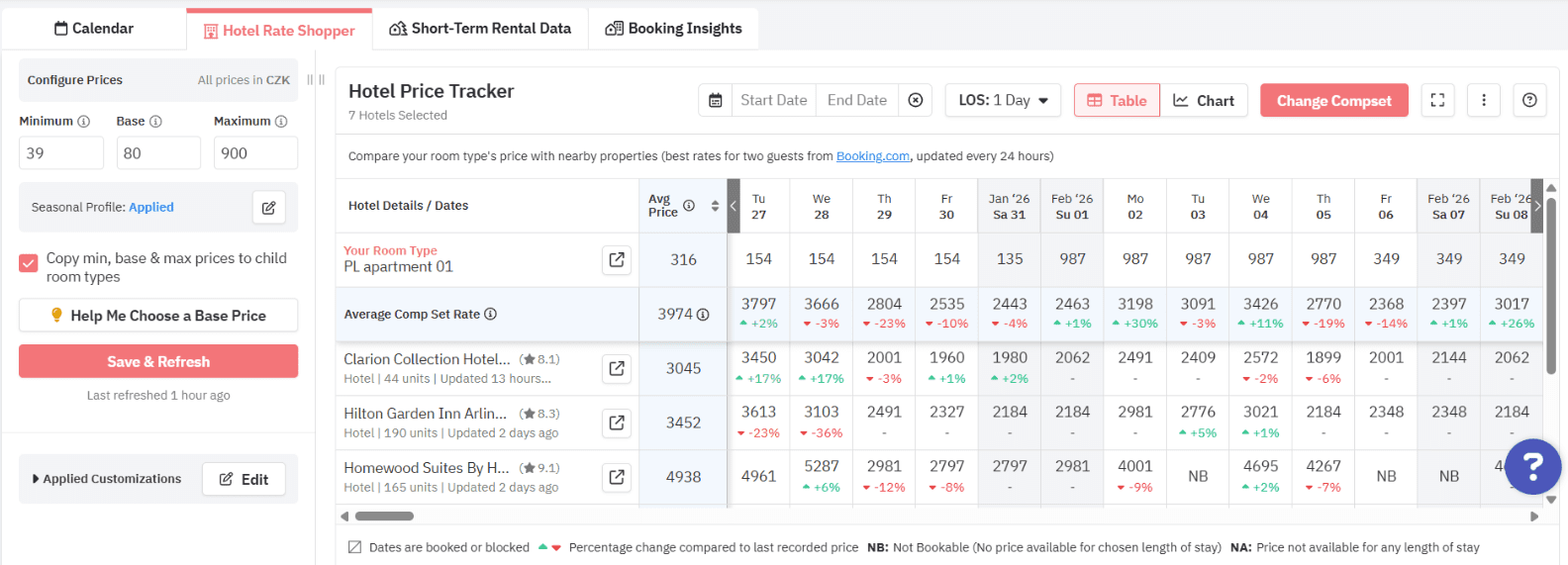
Independent hotels used to struggle to compete with big-brand tech. In 2026, the playing field is leveled. Success now depends on Hyper-Local Intelligence—knowing exactly what the hotel next door and the luxury short-term rental across the street are charging right now.
How to Step-by-Step:
- Identify your top 5 direct competitors.
- Monitor their “pacing” (how fast they are filling up).
- Adjust your rates to capture the “overflow” demand when they hit 80% occupancy.
The Hotel Data Tab / Rate Shopper allows you to monitor up to 350 nearby properties. You can create Custom Comp Sets so your rates are only influenced by the properties your guests actually compare you to. This prevents you from “racing to the bottom” on price just because a low-quality budget motel nearby dropped its rates.
4. Sustainability as a Revenue Driver
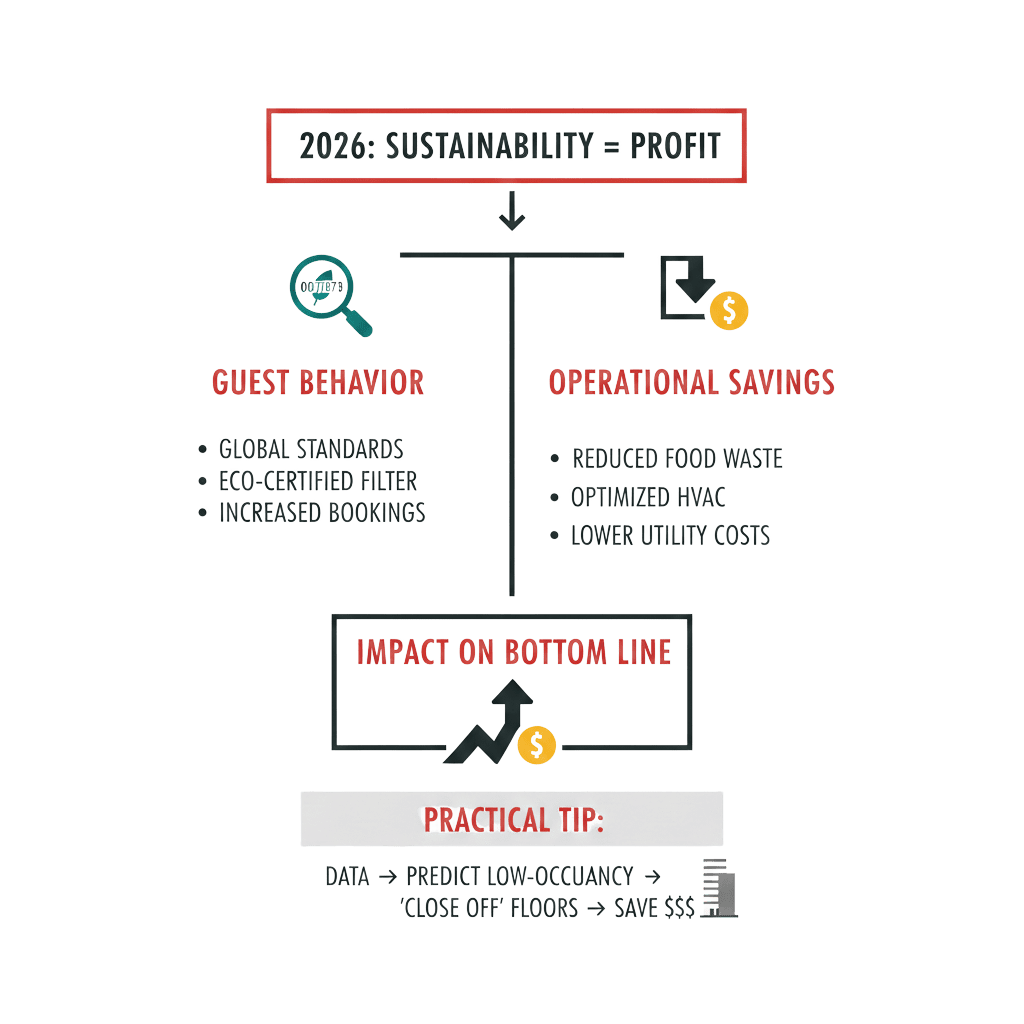
Sustainability isn’t just a buzzword in 2026; it’s a financial metric. With new global reporting standards, guests are actively filtering for “Eco-Certified” stays. More importantly, sustainable operations—like reducing food waste or optimizing room temperatures—directly impact your bottom line.
Practical Tip: Use data to predict low-occupancy days. On these days, “close off” specific floors to save on heating, cooling, and labor.
Navigating this on PriceLabs
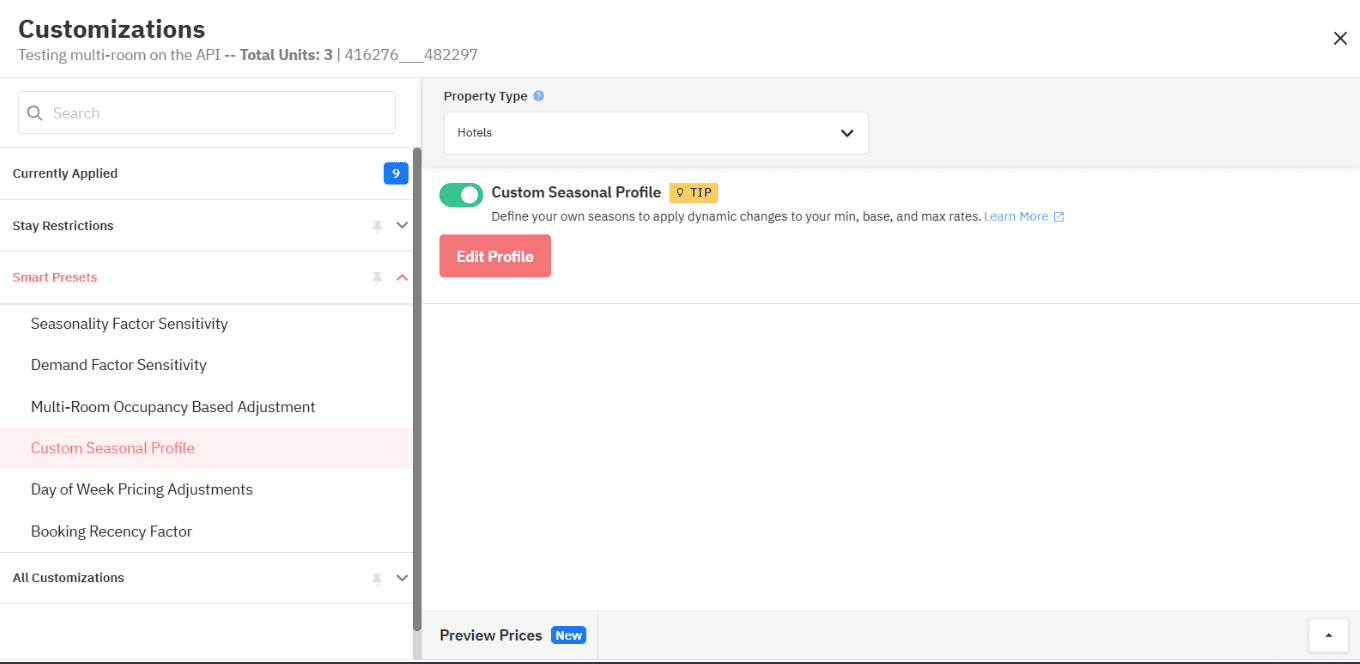
Use Seasonal Profiles and Minimum Stay Rules. By setting longer minimum stays during peak eco-tourism dates, you reduce laundry turnovers and operational waste, while PriceLabs ensures those longer stays are priced optimally to maintain your RevPAR.
5. Bridging the Labor Gap with Integrated Systems
The talent shortage remains a challenge for hotel managers. The trend for 2026 is Workflow Efficiency. If your PMS (Property Management System) doesn’t talk to your pricing tool, your staff is wasting hours on manual entry—hours they should be spending with guests.
PriceLabs offers 160+ PMS & OTA Integrations. With Automated Rate Syncing, a price change in PriceLabs instantly reflects across all your booking channels. No more manual updates at midnight. If you use a compatible PMS, the Real-Time Sync add-on triggers up to 24 updates per day following any new reservation or cancellation.
Conclusion & Way Forward
The hospitality landscape in 2026 is defined by the marriage of high-tech automation and high-touch guest experiences. To rank at the top of your market, you must move away from static, “set-it-and-forget-it” pricing. The way forward is clear: embrace tools that provide predictive insights rather than reactive data. Start by auditing your current tech stack—if your pricing isn’t dynamic and your data isn’t local, you are leaving revenue on the table.
Frequently Asked Questions (FAQs)
Q: What is the most important hospitality trend for 2026?
A: AI-driven hyper-personalization and dynamic pricing. Guests expect prices to reflect real-time demand, and they are willing to pay more for specific room attributes.
Q: How can independent hotels compete with Marriott or Hilton in 2026?
A: By using “Market Intelligence” tools like PriceLabs. These tools give independent owners the same data sophistication as big chains, allowing them to adjust rates instantly based on local demand shifts.
Q: Is dynamic pricing hard to set up?
A: Not with modern integrations. Most systems sync with your existing PMS in minutes, automating the heavy lifting while leaving you in full control of the “Base Price” and “Minimum/Maximum” limits.