Table of Contents
Updated : Apr 3, 2026
Imagine your hotel pricing strategy is like a professional surfer. If you’re paddling out there manually, you’re constantly trying to guess when the next big wave of demand will hit, often catching it too late or missing it entirely. Hotel pricing automation is like having a high-tech sonar system that tells you exactly when to paddle and how to ride every wave perfectly. For the independent hotelier, this isn’t just a “cool gadget”—it’s the engine that drives your business forward.
Many small property owners worry that sophisticated tech is only for the “big guys”. In reality, adopting automated hospitality revenue management tools is exactly how the “little guy” wins. These platforms automatically adjust your room rates in real time by analyzing market data, your current occupancy, and future demand.
At PriceLabs, we see small hotels achieve RevPAR uplift by switching from manual spreadsheets to our AI-driven system. In this guide, we’ll break down the seven proven ROI benchmarks that show exactly how this investment pays for itself.
A Guide to Implementing Dynamic Pricing
Transitioning from fixed rates to a fluid, data-driven strategy might feel like a leap, but it is the most effective way to ensure your property remains competitive in a digital-first market. For the independent hotelier, a structured approach is essential to avoid the “race to the bottom” on pricing while still capturing every possible booking. By following a clear implementation roadmap, you can shift from manual guesswork to an automated system that works around the clock to protect your margins. Below, we have outlined the essential steps that will help you implement a robust dynamic pricing framework and take full control of your revenue potential.
1. Increased Revenue per Available Room (RevPAR)
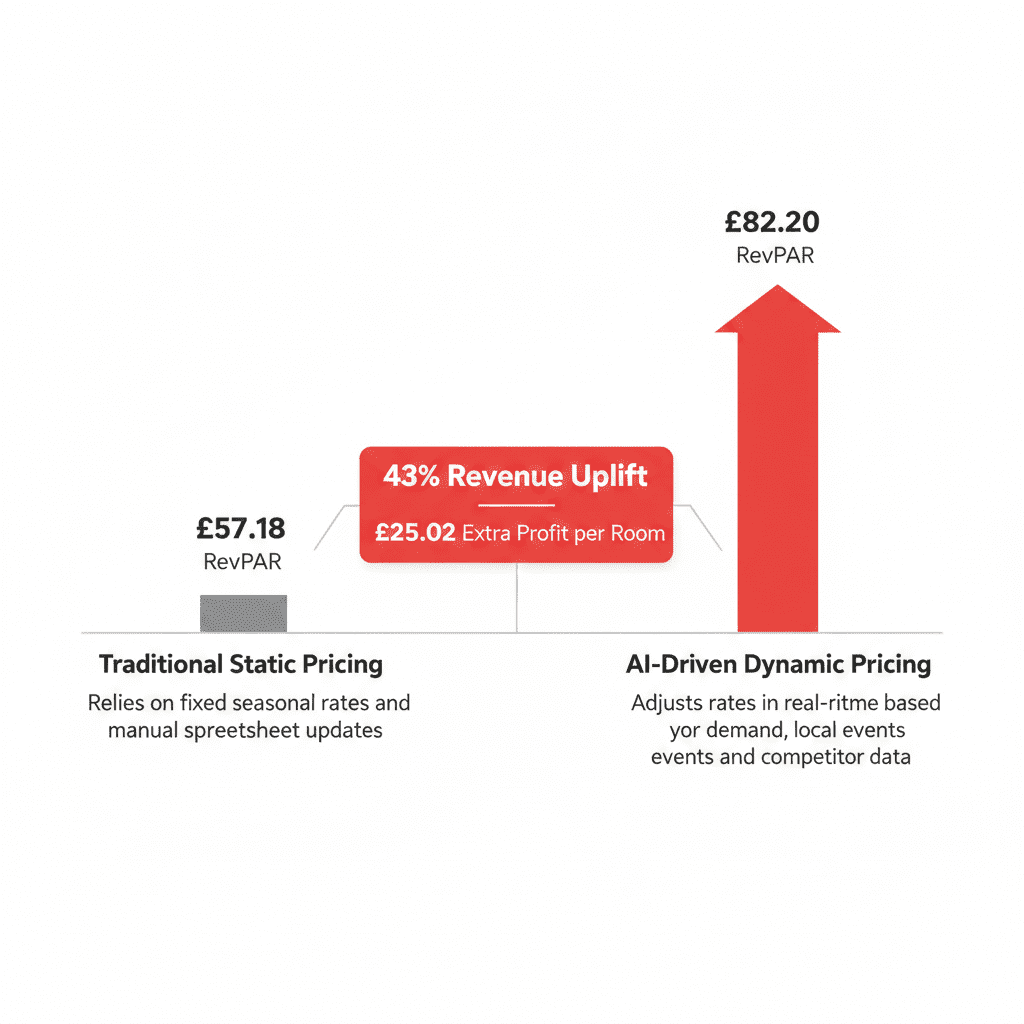
RevPAR is the “North Star” of hotel metrics because it tells you how well you are filling rooms at the best possible price.
- The Benchmark: PriceLabs has helped independent hotels increase their RevPAR from an average of £57.18 to £82.20.
- Real-World Impact: Hotels typically see a 22% to 23% increase in RevPAR by dynamically optimizing pricing during demand peaks.
| Metric | Pre-Automation | Post-Automation |
| Average RevPAR | £57.18 | £82.20 |
| Revenue Uplift | Baseline | +43% |
2. Growth in Average Daily Rate (ADR)
Your ADR is the average amount you earn per sold room. Intelligent automation ensures you aren’t just “selling out” at any price, but selling at a price that reflects your true value.
- The Benchmark: Small hotels using PriceLabs have grown ADR from £85.34 to £97.22.
- Practical Tip: During unexpected surges—such as a last-minute local concert announcement—automation enables you to raise rates instantly, maximizing revenue opportunities that a static model would miss.
3. Improved Occupancy Rates
It’s a common mistake to think that higher prices mean fewer guests. In reality, occupancy optimization is about finding the “sweet spot”.
- The Benchmark: Many users report occupancy increases of up to 22% to 27%.
- Practical Scenario: During the off-season, the software detects a lull in the market and automatically triggers a competitive “mid-week discount” to fill empty beds that would otherwise earn zero revenue.
4. Competitive Market Rate Benchmarking
To win, you must know what your neighbors are doing. Market rate benchmarking is the continuous process of comparing your room prices to those of similar properties nearby.
- The Strategy: PriceLabs’ Hyper Local Pulse algorithm benchmarks rates against up to 350 nearby competitors’ public data.
- How-To Tip: Create separate comp sets for different segments, such as comparing your hotel against both direct hotel neighbors and nearby high-quality short-term rentals, to get a 360-degree view of the market.
5. Massive Time Savings
Labor is one of your biggest costs. Manual revenue management is a full-time job that most independent managers try to squeeze into minutes a day.
- The Benchmark: On average, hotels using an automated pricing solution save 10 hours per week.
- Operational Efficiency: Automation frees up your team from the tedious task of manually updating rates across multiple OTAs, allowing them to focus on guest service and experience.
| Task | Manual (Spreadsheets) | Automated (PriceLabs) |
| Rate Analysis | 60+ minutes daily | Automated real-time |
| OTA Updates | Log into 5+ platforms | Instant 1-click sync |
| Error Risk | High (human error) | Low (AI-validated) |
6. Customizable Data-Driven Pricing Strategies
Automation doesn’t mean losing control. In fact, it gives you more precision through data-driven hotel revenue strategies.
- Actionable Idea: Use Length of Stay (LOS) restrictions dynamically. For example, set a 2-night minimum for high-demand festival weekends to avoid “unbookable” gaps, but allow 1-night stays during the week to capture business travelers.
- Customization: PriceLabs allows you to define “guardrails”—specific minimum and maximum price thresholds—so the system never prices below your operating costs.
7. Proactive Revenue Management and Market Insights
Most small hotels are reactive—they change prices only after they see a competitor do it. Proactive revenue management means adjusting your strategy before the market shifts.
- The Advantage: PriceLabs’ dashboards provide predictive analytics that forecast demand, allowing you to optimize pricing windows months in advance.
- Example: By spotting early search volume for a future event, you can raise your “early-bird” rates before the general public—and your competitors—even realize the event is happening.
How PriceLabs Can Help
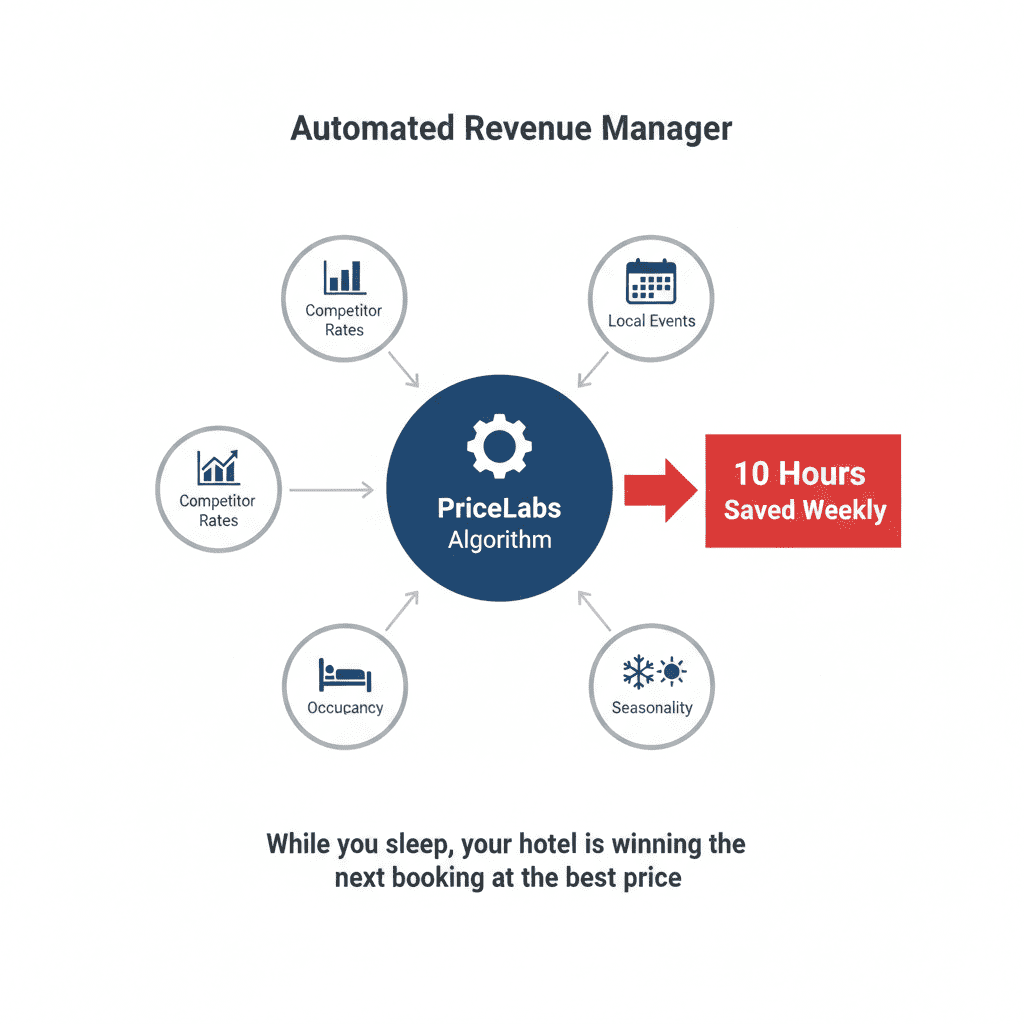
PriceLabs is designed to be the “Revenue Manager in a Box” for small properties. We provide the transparent, scalable tools you need to see a measurable RevPAR increase. Our platform integrates with over 160 Property Management Systems (PMS) and Channel Managers, ensuring your new, optimized rates are synced across all platforms—including your direct booking website—instantly and accurately.
Wrapping Up
Adopting an automated hospitality revenue management system is the single most effective way for small hotel owners to reclaim their time and outpace the competition. By focusing on these seven ROI benchmarks—from achieving a 23% RevPAR uplift to saving 10 hours of manual labor every week—you transform your property from a reactive business into a proactive, profit-generating enterprise. Technology is no longer a luxury reserved for global chains; it is a vital necessity for the modern independent hotelier aiming for sustainable growth. Start leveraging these data-driven insights today to ensure your property is always priced to win, regardless of how the market shifts.
Frequently Asked Questions
What ROI can a small hotel realistically expect from automated pricing?
Most small hotels see a 20% to 30% increase in RevPAR. For an average 19-room hotel, this can translate to approximately $70,000 in additional annual revenue.
How long does it take to see financial returns?
Because the software responds to real-time market changes, many owners see a positive shift in their ADR and occupancy within the first 30 to 90 days.
What is the difference between a PMS and a dynamic pricing tool?
A PMS (Property Management System) oversees daily operations like check-ins and housekeeping. A dynamic pricing tool focuses specifically on analyzing market data to set the most profitable rates, which then sync back to your PMS.
How do demand fluctuations affect my ROI?
Fluctuations are where automation shines. During high-demand “spikes,” the software captures the higher rates that a human might miss; during lulls, it adjusts to maintain occupancy, ensuring ROI remains steady year-round.