Table of Contents
Updated : Mar 24, 2026
Running a boutique hotel in 2026 without a modern pricing strategy is like trying to navigate a cross-country road trip using a paper map from the 1990s while your competitors are using real-time GPS; you will eventually get there, but you’ll miss the fastest routes and hit every traffic jam along the way. Today’s shifting guest expectations and fierce market competition demand precision, which is why adopting hotel dynamic pricing software for boutique hotels is no longer optional. Boutique properties leveraging AI-powered revenue management and flexible pricing methods consistently outperform traditional manual approaches, generating higher revenue and an increase in RevPAR (Revenue Per Available Room) within just 90 days of switching!
Here are the top 9 boutique hotel pricing strategies proven to boost your revenue this year, along with the operational frameworks to make them work.
1. AI-Powered Dynamic Pricing
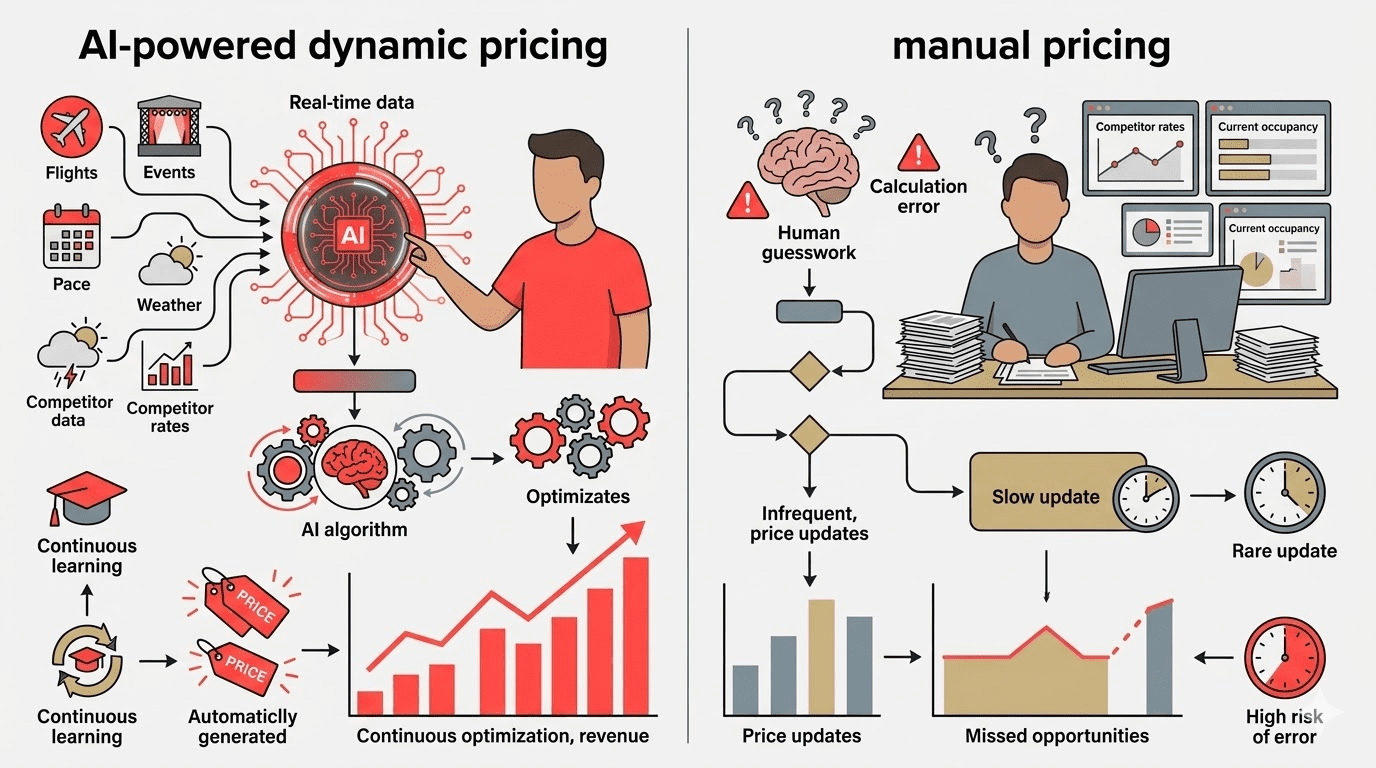
What it is: AI-powered dynamic pricing refers to systems that automatically adjust room rates in real-time by analyzing demand, competitor rates, and booking pace.
Relying on gut feeling and manual processes means spending too much time adjusting prices and inevitably missing peak demand opportunities. Hotels using AI tools commonly see a 10–40% revenue uplift and save 30+ hours a month by reducing manual rate updates.
How PriceLabs Helps: If you suffer from a fear of losing control but desperately want automation to save time, PriceLabs is built for you. Its Hyper Local Pulse generates daily pricing recommendations using internal occupancy, lead time, seasonality, and local events. With Real-Time Sync (available for select PMSs), webhooks trigger up to 24 price updates per day instantly following new reservations or cancellations, ensuring you always have the right rate without lifting a finger.
2. Forecast-Based Pricing
What it is: Forecast-based pricing is the use of predictive analytics and expected demand trends—rather than just historical data—to proactively set rates ahead of anticipated market surges or lulls.
A common revenue-related pain point is forecasting uncertainty. If you only look at last year’s pickup, you risk underpricing during unexpected demand spikes.
- Practical Tip: Integrate local event calendars and monitor your competitor’s booking pace. Create a monthly displacement review to ensure you aren’t filling up too early at too low of a rate.
How PriceLabs Helps
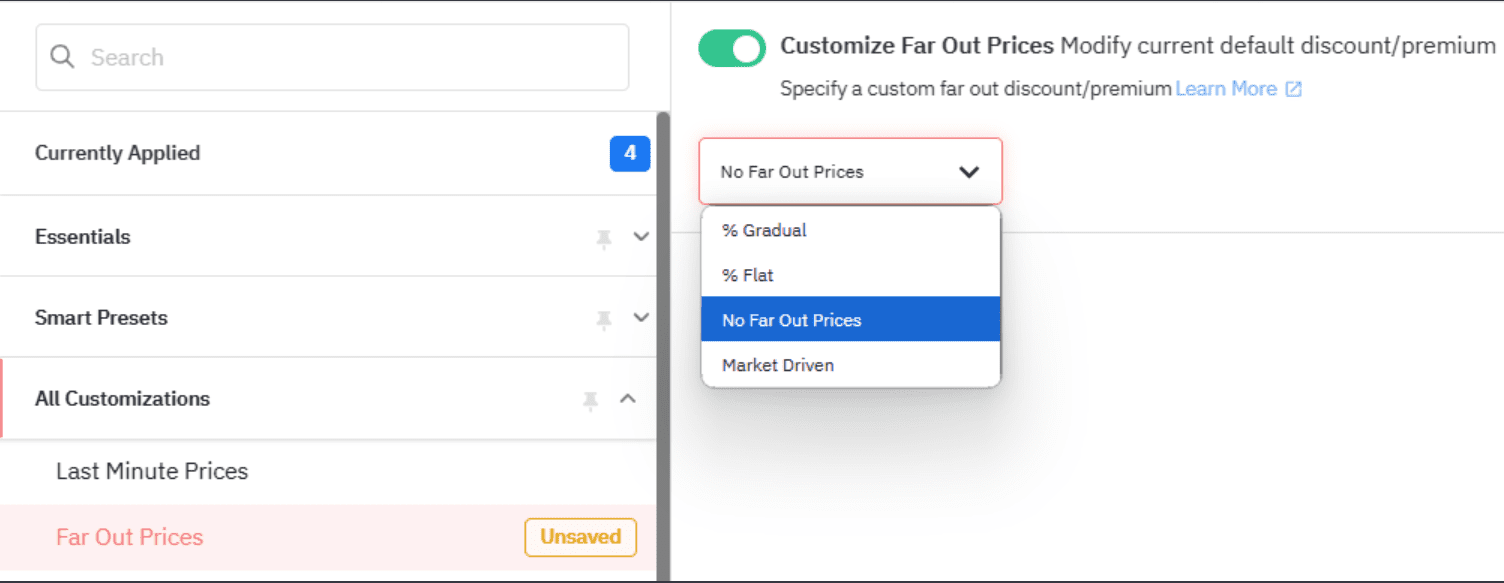
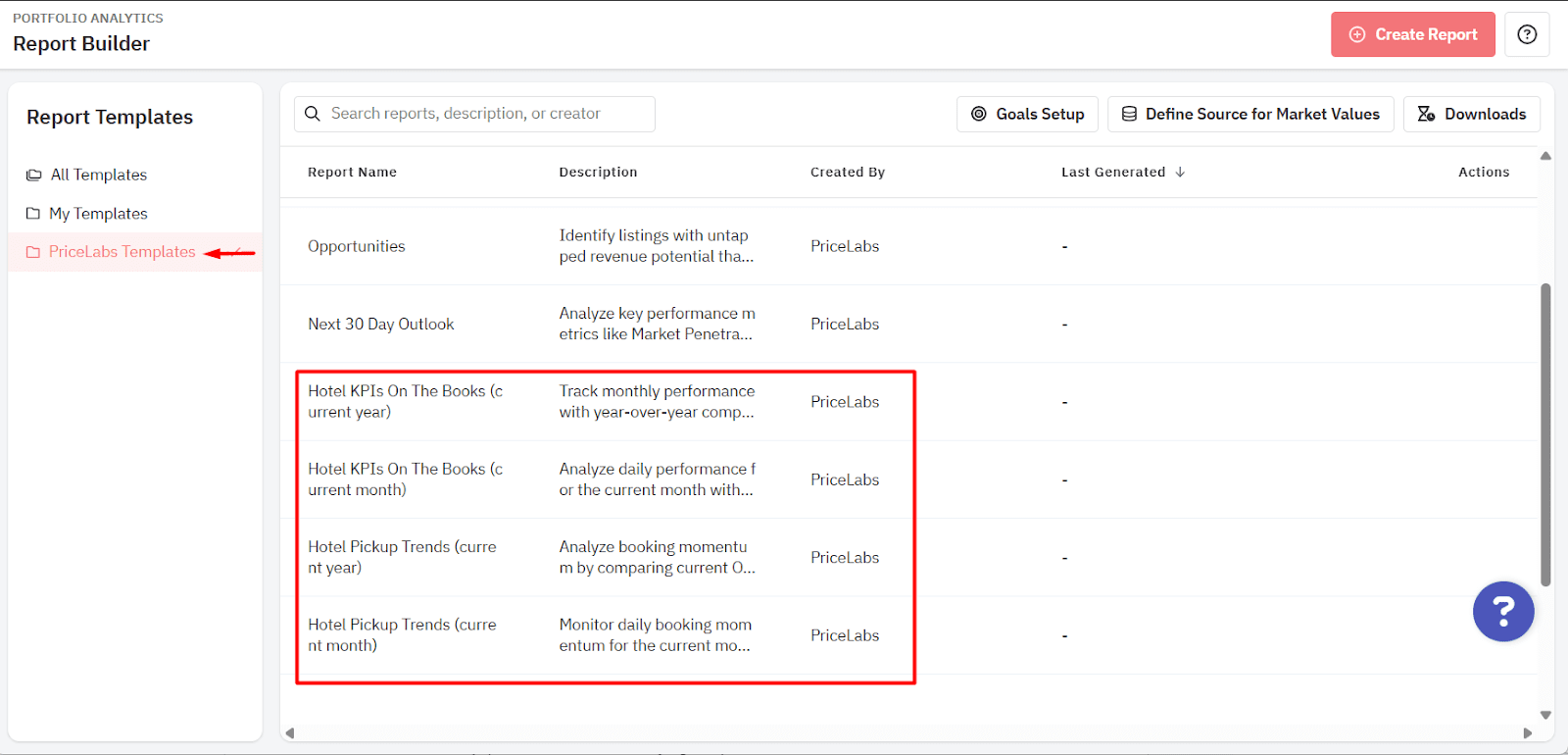
PriceLabs tackles forecasting uncertainty with Far-Out Pricing Adjustments, allowing you to shape pricing recommendations for dates far in advance. This reflects long lead times and early demand signals, protecting your room value. You can also use the Report Builder to forecast your revenue and occupancy for the coming year, replacing guesswork with data-backed projections.
3. Length-of-Stay (LOS) Optimization Strategies
What it is: Length-of-stay optimization involves applying policies, such as setting minimum nights or applying sliding discounts, to drive longer, more profitable guest stays.
Implementing length-of-stay pricing controls can raise your occupancy and drive more direct bookings.
Key Tactics:
- Implement minimum stay requirements during peak dates or local festivals.
- Offer bundled rates for 2+ or 3+ night stays to guarantee base occupancy.
- Allow last-minute short-stay gaps to be booked to maximize your final occupancy.
How PriceLabs Helps
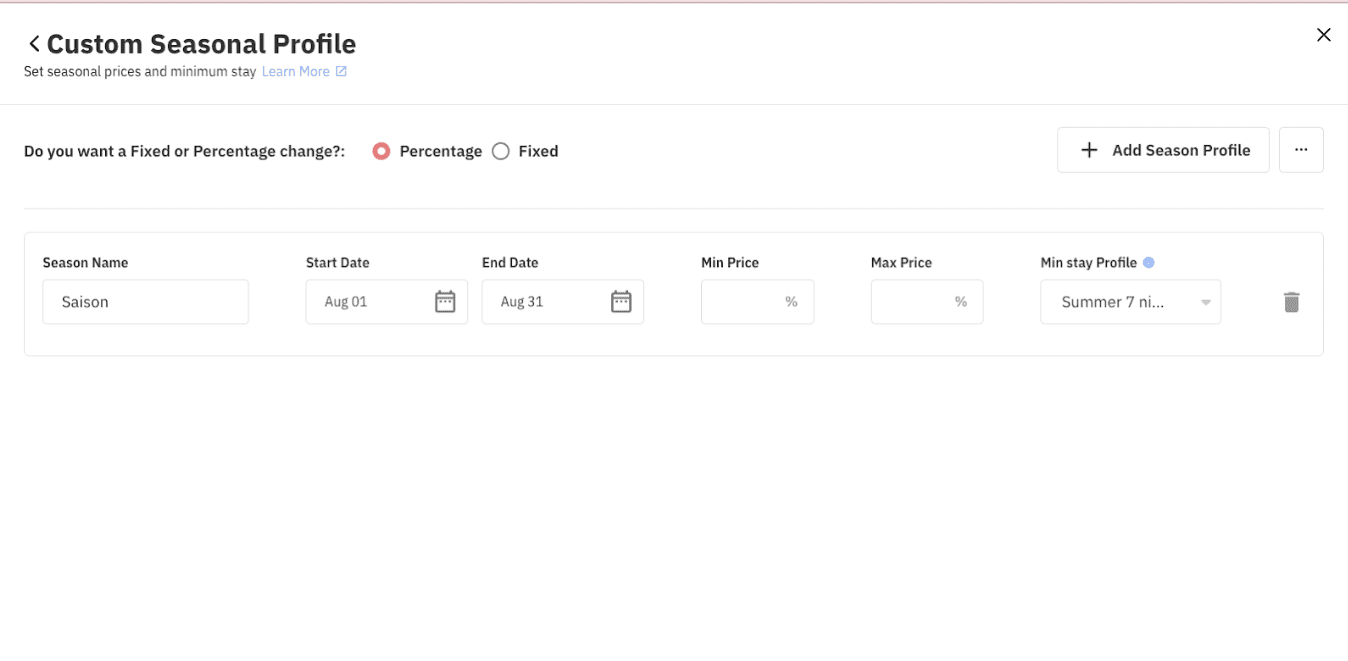
PriceLabs automates this with Minimum Stay Rules, which seamlessly adapt your length-of-stay suggestions based on seasonality, booking patterns, and demand periods.
4. Pricing Ladder and Trigger Point Management
What it is: A pricing ladder is a multi-tier structure (typically 5–10 rate levels) that hotels move through systematically from a floor to a peak rate. Trigger points are booking pace or occupancy milestones that prompt these price changes.
Without a system, hoteliers often suffer from uncertainty about pricing decisions, leading to ad-hoc or emotional discounting.
- Example Workflow:
- Trigger 1: 60% booked at 30 days out -> Move up one ladder rung.
- Trigger 2: 75% booked at 14 days out -> Move to peak rate.
How PriceLabs Helps:
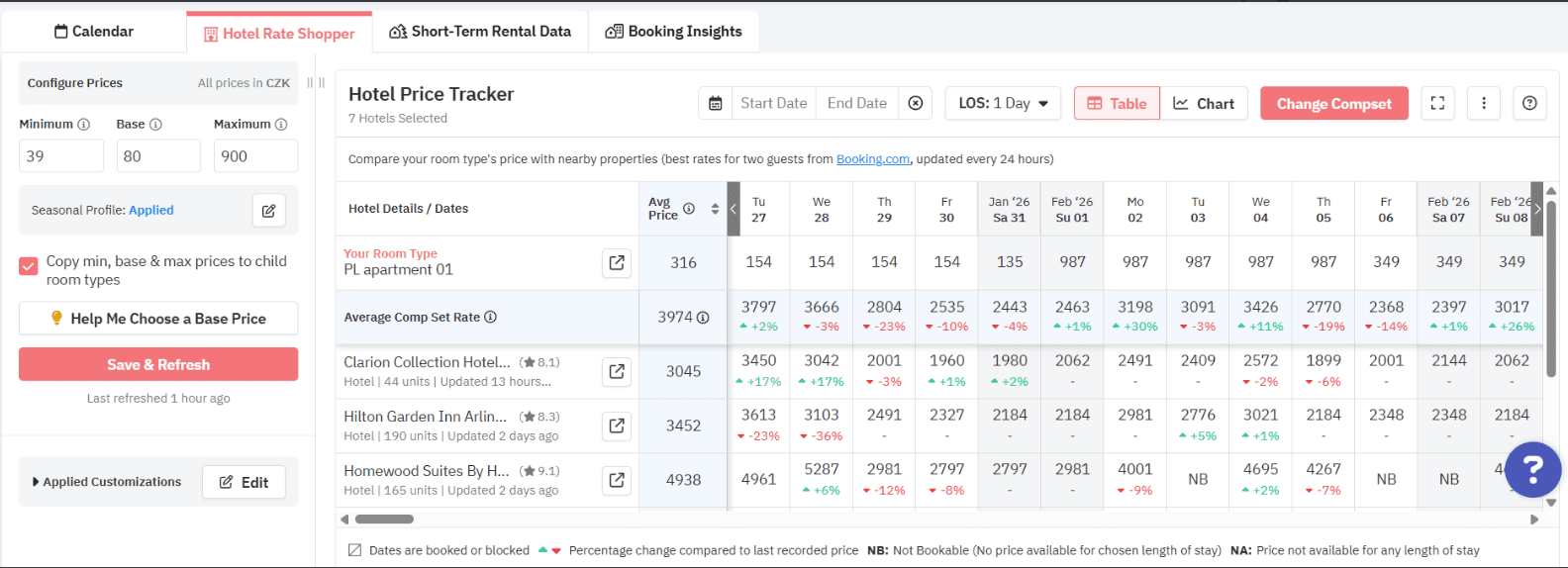
To set a solid foundation, PriceLabs offers Base Price Guidance, providing data-informed recommendations for an annual average rate. If you need to make immediate changes based on a trigger, Date-Specific Overrides allow you to adjust pricing, stay restrictions, and availability for high-demand dates with precision.
5. Channel and Direct-Booking Rate Fencing
What it is: Rate fencing is the strategic segmentation where certain rates, room categories, or perks are kept exclusive to selected channels, like yourdirect website versus Online Travel Agencies (OTAs)
Rate parity issues—ensuring consistent pricing across OTAs, direct bookings, and corporate contracts—can drain a revenue manager’s time.
Practical Tip: Offer unique packages (like a free welcome drink or late checkout) exclusively for direct bookings. Restrict promotional discounts to your website to protect your OTA margins while complying with parity agreements.
6. Occupancy-Based Dynamic Pricing
What it is: This is the practice of dynamically increasing rates as occupancy rises to enhance revenue, or lowering them to stimulate demand during periods of low fill.
Balancing occupancy versus ADR (Average Daily Rate) is a constant tightrope walk.
- Rule of Thumb: Stimulate demand below 30% occupancy; confidently raise rates above 70%.
How PriceLabs Helps:
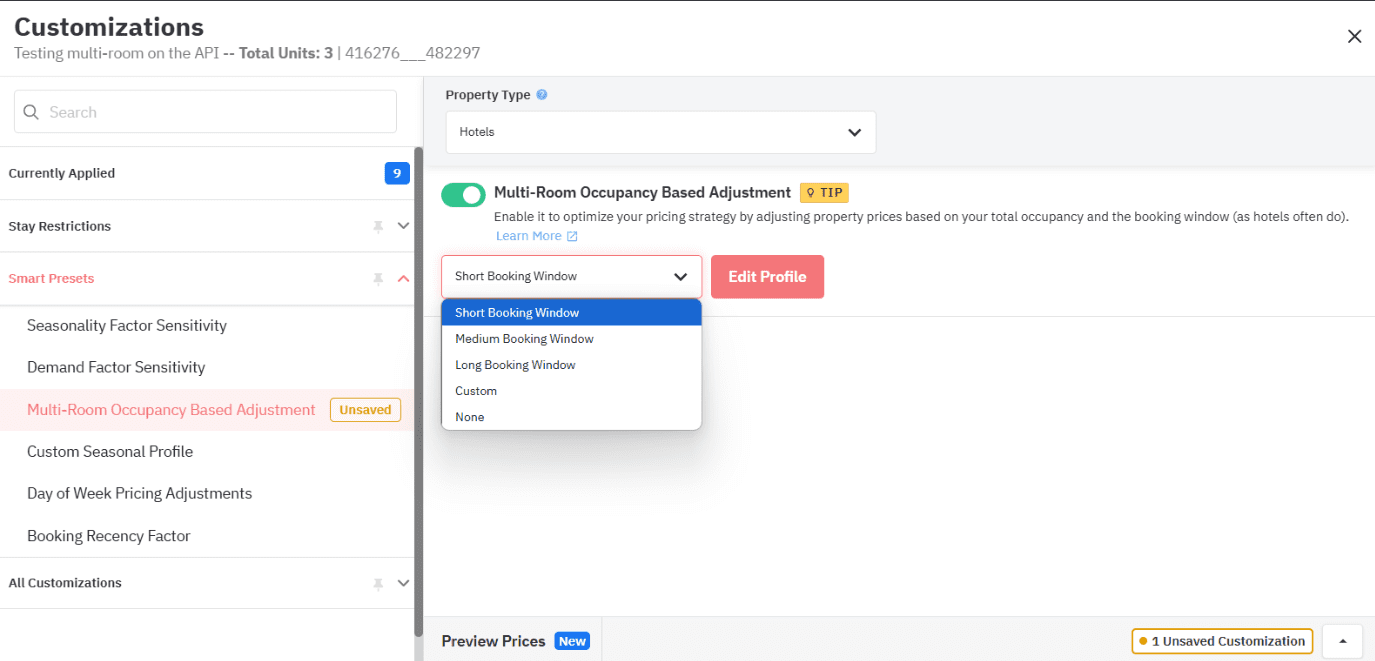
PriceLabs addresses this directly with Multi-Room Occupancy-Based Adjustments. This feature adjusts pricing recommendations based on occupancy trends within specific room types, supporting balanced sell-through across your entire inventory. Furthermore, Last-Minute Pricing Adjustments react to close-in dates based on pickup and market demand to catch any straggling bookings.
7. Bundled and Ancillary Revenue Pricing
What it is: Bundled pricing combines the room rate with add-ons—like food and beverage, spa access, or local experiences—to maximize the total value extracted per guest.
When pure ADR growth slows down, packages are how you increase total revenue without officially dropping your public room rate. Bundles almost always outperform basic rate discounts because they add perceived value.
- Example Bundles: Room + breakfast + late checkout, or a room paired with partner-led local event tickets.
8. Psychological and Charm Pricing Techniques
What it is: Charm pricing uses psychological cues, such as ending a price in .99 or .95 instead of a round number, to make the cost appear significantly more attractive.
Research shows that using .99 or .95 endings can raise booking conversions by 3–5%. It is a simple, no-cost tweak that plays on consumer psychology, especially effective for standard room categories where guests are more price-sensitive.
9. Segmented and Personalized Pricing Offers
What it is: Customizing offers by guest type, travel reason, or loyalty status so you are charging the right rate for corporate, event, or leisure stays.
A major pain point for boutique properties is balancing guest loyalty with revenue; long-time guests expect consistent pricing, making it hard to raise rates across the board.
How PriceLabs Helps
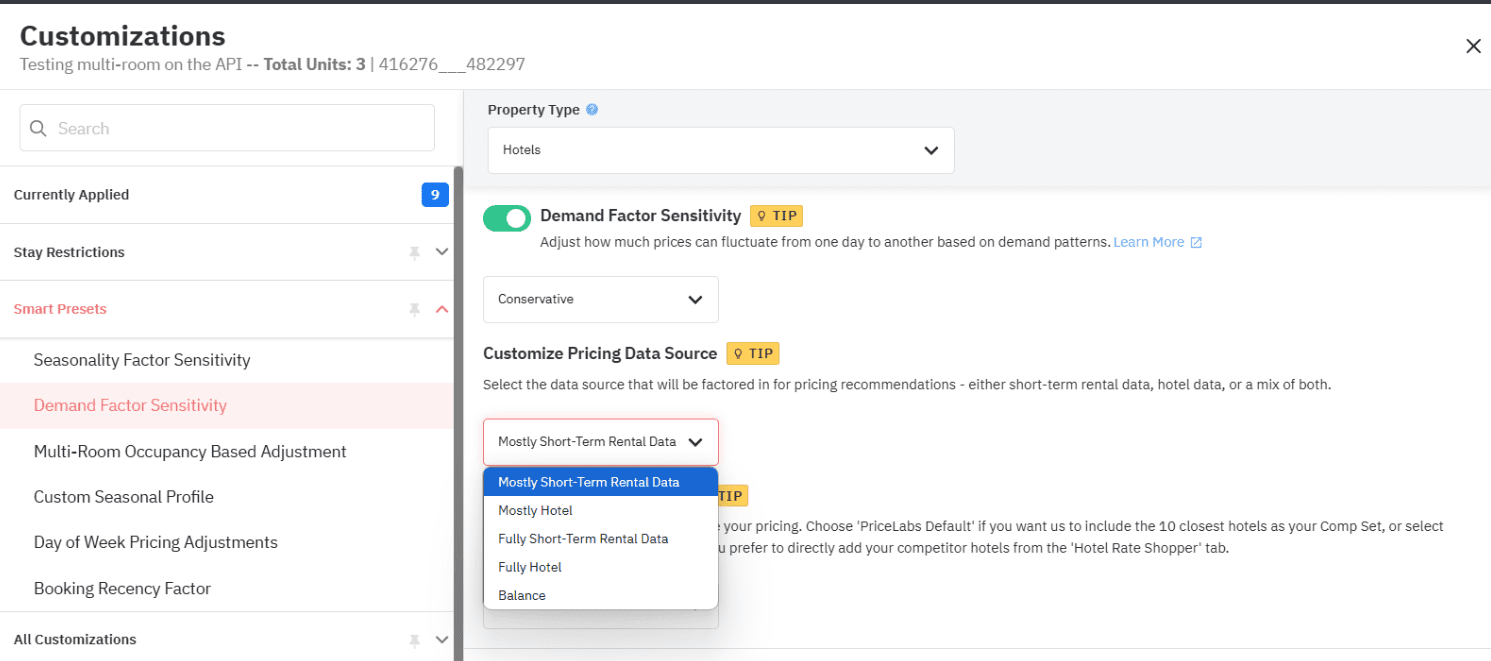
You can segment your approach using Room-Type Specific Pricing and Seasonal Profiles. Apply custom pricing rules to individual rooms (like your premium suites) without affecting the broader property settings, allowing you to cater to luxury leisure guests differently than weekday corporate travelers.
Measuring Success of Dynamic Pricing Strategies
To prove the ROI of any new strategy, you need clear KPIs. The most critical metrics to monitor are RevPAR (total room revenue divided by rooms available), occupancy rate, ADR, booking pace, and total guest value.
How PriceLabs Helps: PriceLabs eliminates data overload by delivering clear, high-level insights. With Portfolio Analytics, you can track key hotel KPIs at the property, room-type, and room level. When you need to justify pricing changes, the custom Report Builder provides data-backed reports on ADR, Occupancy, RevPAR, and pacing to easily defend your strategy.
Using Competitor Benchmarking to Inform Pricing Decisions
Competitor benchmarking for hotels is the systematic analysis of comparable properties’ prices, occupancy, and market events to inform your own rates.
Without clear competitive benchmarking, independent hotels struggle to track nearby rates and adjust accordingly.
How PriceLabs Helps:
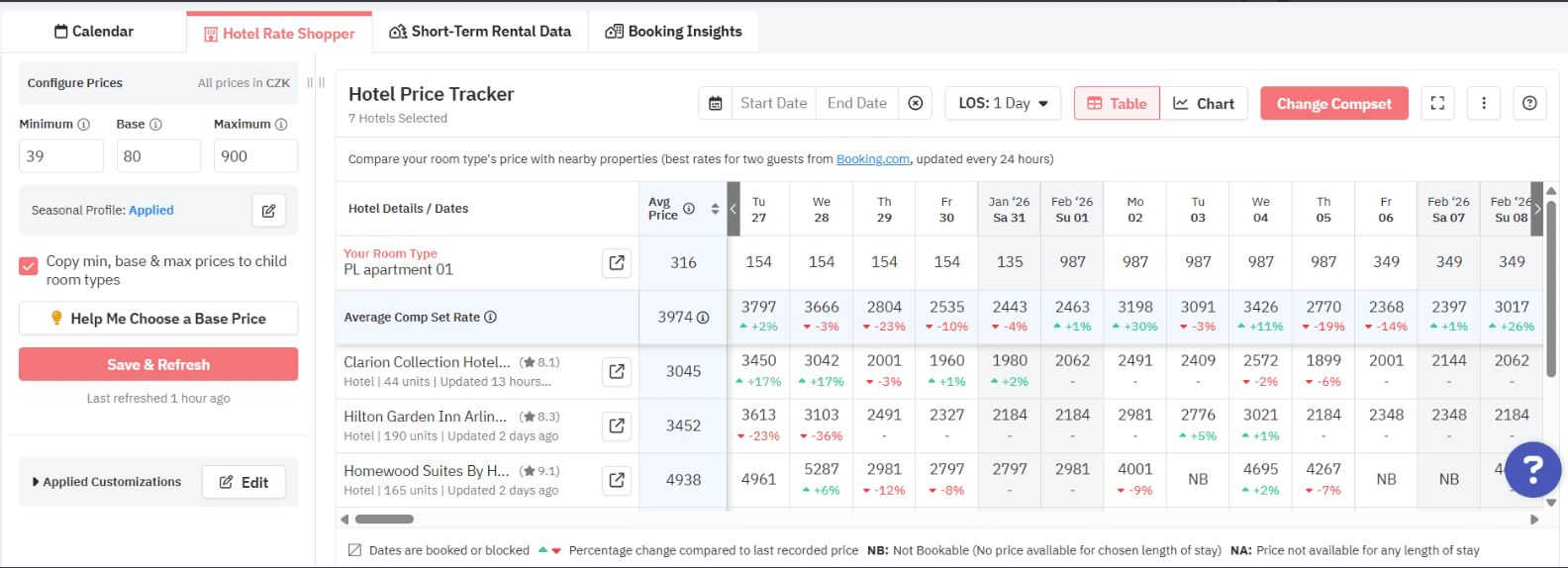
PriceLabs takes the manual research out of competitive intelligence.
- Hotel Data Tab / Rate Shopper: Monitor pricing trends across up to 350 nearby hotel-like properties and identify high-demand periods using regularly refreshed public data.
- Custom Comp Sets: Manually select specific rivals to ensure your rates are influenced only by the properties your guests actually consider.
- Hotel Weights & Neighborhood Data Tab: If you operate in an area heavy with Airbnbs, you can control the influence of hotel data versus short-term rental data on your pricing recommendations.
Software Integrations and System Compatibility
A massive hurdle for small hotels is disconnected systems. Using a PMS, OTA platforms, and pricing tools that don’t communicate leads to pricing discrepancies and manual data entry.
Dynamic pricing systems integration refers to the ability of a software solution to sync rates, restrictions, and availability with a property’s PMS and all booking channels in real-time. This two-way sync is vital for avoiding overbookings and ensuring rate accuracy across the web.
How PriceLabs Helps: PriceLabs connects seamlessly to your tech stack with 160+ PMS & OTA Integrations. It provides automated rate syncing to ensure real-time updates across all channels, completely eliminating PMS integration concerns and workflow bottlenecks.
The Way Forward
Embracing AI-driven revenue management in 2026 is the clearest path to protecting your margins and growing your market share. By implementing these nine strategies—from forecast-based pricing to length-of-stay controls—you transition from reactive, gut-feeling rate management to a proactive, data-backed revenue engine. Tools like PriceLabs democratize these enterprise-level capabilities, giving independent boutique hoteliers full control, deep market intelligence, and the seamless integrations necessary to thrive without the enterprise price tag.
Frequently Asked Questions ( FAQs)
How do hotel managers measure the success of dynamic pricing?
Hotel managers measure success using key performance indicators like RevPAR, occupancy rate, average daily rate (ADR), and booking pace, comparing performance against previous periods and market benchmarks.
How can small hotels effectively benchmark competitors for pricing?
Small hotels can benchmark competitors by regularly tracking local rivals’ public rates, monitoring events that influence demand, and using automated platforms for real-time competitive intelligence.
What are common challenges when implementing dynamic pricing software?
Common challenges include ensuring clean and accurate data, training staff on new systems, and setting clear guardrails to avoid pricing errors or guest confusion.
How do length-of-stay restrictions impact pricing strategy effectiveness?
Length-of-stay restrictions help optimize occupancy and increase total revenue by converting short-term demand spikes into longer, higher-value bookings.