
Get started with PriceLabs now!
Want to learn what PriceLabs can do for you? See for yourself with a free trial. Get started now!

A studio with a great desk and reliable Wi-Fi will out-convert one without it, and a five-bedroom ski chalet without outdoor seating loses guests to the chalet next door that has it. Vacation rental amenities are not a single checklist that applies equally everywhere, a nuance most rental pricing guides skip in favor of one generic list. What moves the needle depends entirely on who is booking your property type, and treating a studio's amenity list like a family home's is how budget gets wasted on features nobody in that segment cares about.
This guide breaks down what guests in three common segments, small units, mid-range multi-bedroom homes, and high-end seasonal rentals, actually prioritize, and where to put your amenity budget first. For the pricing side of the same optimization problem, see the complete guide to Airbnb listing optimization.
The mistake most property managers make is building one standard amenity list and applying it to every unit regardless of size or guest type. A remote worker booking a studio for a few nights wants a functional desk. A family booking a four-bedroom home for a week wants a kitchen that can actually feed everyone. A guest paying a premium for a ski chalet wants the après-ski experience handled before they arrive. None of these guests are evaluating the same thing, which is the same logic behind pricing multi-unit setups differently by segment rather than applying one rule.
Segmenting your portfolio before deciding on amenities is the first step, and Portfolio Analytics makes that split visible alongside performance, so you can see whether a segment's conversion gap is a pricing problem or an amenity problem before spending on either.
Small units draw a mix of solo travellers, couples, and increasingly, guests blending a short trip with remote work. A dedicated workspace, meaning a real desk, a comfortable chair, strong lighting, and an accessible outlet, addresses a need this segment specifically has that larger family bookings usually do not. Guests who need to get an hour of work done during a trip will pass over a listing that clearly cannot support that, regardless of how nice the rest of the space looks, a gap mid-term rental hosts in particular cannot afford to ignore.
This does not require a renovation. A small desk, a proper chair instead of a stool, a lamp instead of relying on ceiling light, and photographing the setup clearly in the listing covers the essentials. Vacation rental management software can help track which of your small units already have this set up and which are still missing it across a portfolio.
Families and groups booking multi-bedroom homes are not evaluating novelty amenities first, they are evaluating whether the home functions as a home for the length of their stay. A properly equipped kitchen with real cookware, a working washer and dryer, comfortable outdoor seating, and reliable streaming access cover the bulk of what this segment actually uses during a stay, the same functional priorities behind marketing a home to families in the first place.
The return here comes from reducing friction rather than adding a wow factor, the same principle behind optimizing turnover and cleaning processes. A kitchen missing basic cookware or a broken dryer generates a support request mid-stay and a lower review, both of which cost future bookings more than the missing amenity itself. A solid turnover checklist is where most of these gaps get caught before a guest ever notices them.
Guests booking premium seasonal properties, ski chalets in particular, are paying for convenience as much as space. Two amenities come up consistently in this segment, the kind that experienced property managers learn to prioritize early: outdoor seating built for the climate, meaning heated patios, fire features, and weatherproof furniture rather than standard patio chairs, and a luggage drop off arrangement that lets guests unload gear before or after official check in.
Both address a specific friction point rather than a general nice to have. A ski guest arriving with heavy equipment on a tight schedule notices immediately whether the property has thought about that logistics problem. Coordinating a drop off service with cleaning staff or a local partner is a low cost addition relative to what a lost booking in a premium segment is worth, and it is the kind of detail worth including prominently in the listing rather than leaving guests to discover it after booking, alongside the other details covered in vacation rental management software reviews.
Below the segment-specific amenities, every property type shares a floor of expectations that guests treat as non-negotiable rather than a bonus. Missing any of these costs conversions regardless of segment, the same baseline that shows up in the global host report as a top complaint driver.
These are the amenities guests notice fastest when they are missing, and a strong Listing Optimizer review will usually flag a gap here before it flags a missing segment-specific feature.
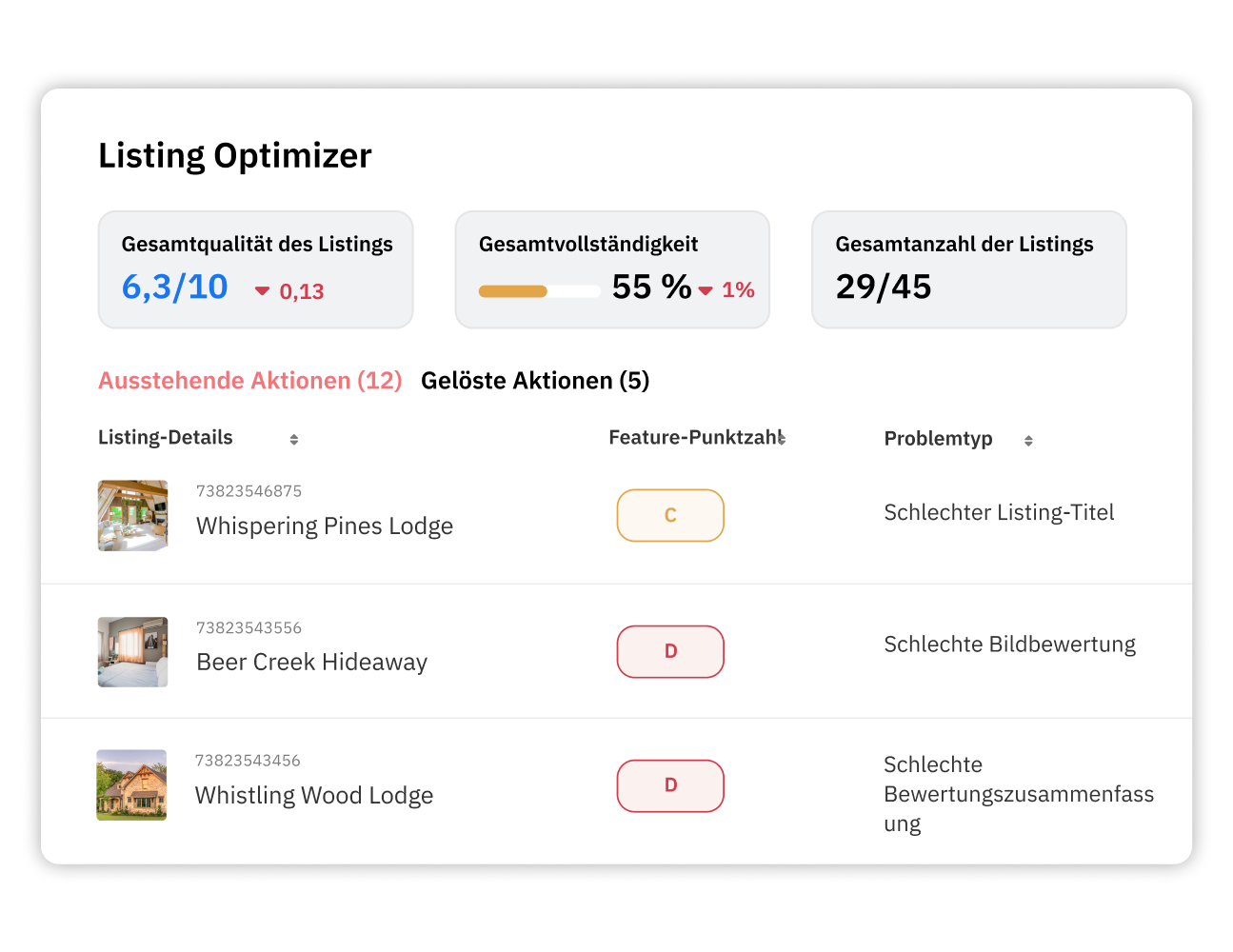
Start with your comp set, not a generic list. Checking what comparable listings in your market already offer tells you which amenities are table stakes locally and which would actually differentiate you. An amenity that every competing listing already has will not move conversion much by adding it; one that none of them have might.
From there, prioritize by cost against likely impact. A desk and chair for a studio costs little and directly serves a guest need. A luggage drop off arrangement for a ski property costs coordination time more than money. Full outdoor furniture upgrades or kitchen renovations cost more and should be justified by guest feedback, not assumption. Tracking performance by property before and after a change is the only way to confirm an amenity investment actually paid off in your specific market rather than in general.
Reviews are the most reliable, most underused amenity research tool available, because guests describe exactly what they missed in their own words rather than in a generic checklist. A pattern of comments mentioning a cramped kitchen, spotty Wi-Fi, or no real place to work points directly at what to fix next, and it is specific to your property rather than a market average, in the same way the global property manager report tracks recurring guest priorities at scale.
Cross reference that feedback against your segment. A workspace complaint on a family home is not the same signal as a workspace complaint on a studio marketed toward remote workers, and treating every mention the same way leads to spending on the wrong fix. The vacation rental marketing guide covers how to fold confirmed amenity strengths back into your listing description once you have addressed the gaps.
Treat amenities as a per-segment audit rather than a one-time project. Once a quarter, pull your comp set data, check guest feedback for the period, and confirm each property still meets the baseline expectations plus its segment-specific priorities. Ready to view market dashboards keep this check quick enough to do regularly instead of only after a slow month forces the question.
Pair the audit with your pricing strategy rather than running them separately. An amenity gap and a pricing gap often show up together, and Dynamic Pricing works best once the listing itself is no longer the reason guests are passing it over.
A genuine workspace, meaning a desk, a proper chair, good lighting, and an accessible outlet, addresses the specific need this segment has for combining travel with remote work. Reliable Wi-Fi and a clearly photographed setup matter as much as the furniture itself, since guests are screening listings before they book, which is exactly what Listing Optimizer checks for automatically.
A fully equipped kitchen, working laundry, comfortable outdoor seating, and dependable streaming access cover most of what group and family bookings actually use during a stay. The value here comes from removing friction during the stay rather than adding a standout feature, consistent with turnover checklist priorities.
They address a specific logistics pain point for guests travelling with ski or snowboard equipment on a tight schedule, and properties that coordinate this stand out in a segment where guests are paying for convenience. The cost is mostly coordination rather than capital, which makes it a reasonable addition even for smaller operators, a detail worth pairing with competitor monitoring in that market.
Check your comp set first to see what is already standard in your market versus what would differentiate you, then prioritize low cost, high friction fixes like a workspace setup or turnover checklist gaps before larger renovations. Guest reviews are the fastest way to confirm which gap is actually costing you bookings, and tracking performance by property confirms whether the fix worked.
Quarterly is a reasonable cadence for most portfolios, checked alongside your comp set and recent guest feedback. A property that was competitive a year ago may no longer be if nearby listings have upgraded, so the check needs to be ongoing rather than a one time setup task, which is why market dashboards work best reviewed on a set schedule.
Want to learn what PriceLabs can do for you? See for yourself with a free trial. Get started now!