
Get started with PriceLabs now!
Want to learn what PriceLabs can do for you? See for yourself with a free trial. Get started now!

The best vacation rental markets by property type are not interchangeable. A cabin that performs at 78% occupancy in Gatlinburg will struggle to hit 50% in downtown Austin, and a condo that fills every weekend in Nashville will sit empty in a rural mountain market. This guide maps which property types perform best in which markets, covering leisure, mountain, beach, and urban categories, and gives you a framework to verify the fit before you buy.
The core insight from short-term rental analytics is that traveler intent drives demand at the property-type level, not just the market level. Beach markets skew toward families on week-long trips, a demand profile that favors large homes with direct water access over one-bedroom condos. Understanding this distinction before you buy or list changes everything about how you evaluate a market.
| Property type | Top markets | Peak season | Key demand driver | Key risk |
|---|---|---|---|---|
| Cabins | Gatlinburg/Pigeon Forge TN, Asheville NC | Year-round, summer/fall peak | Great Smoky Mountains National Park visitation | Rising supply growth in Gatlinburg |
| Beach houses | Gulf Shores AL, Destin FL | May through August | Repeat-visitor base, direct flight access | Checkout gaps if minimum-stay rules are too loose |
| Condos/urban | Nashville TN, Austin TX | Event-driven, spikes around festivals | Bachelorette/bachelor travel, music and sporting events | Regulatory changes to NOO permits and licensing |
| Large-group homes (5+ BR) | Smoky Mountains region, Scottsdale AZ | Winter/spring (Scottsdale), peak season (Smokies) | Reunions, corporate retreats, golf and spring training | Requires purpose-built infrastructure to compete |
Every vacation rental market has a dominant traveler profile. Beach markets attract families booking week-long summer trips. Mountain markets draw couples and outdoor groups on long weekends. Urban markets fill with bachelorette parties, concert-goers, and business travelers booking one or two nights at a time. The traveler profile determines which property types command the highest rates and occupancy, and when your property type aligns with that dominant profile, you benefit from natural pricing power.
When the match is off, you are always competing for the secondary tier of demand. That is a structural disadvantage no listing optimization can fully overcome. Vacation rental pricing strategy depends on being the type of property travelers are specifically searching for in a given market. When you are in that position, you set rates from a position of strength. When you are not, you set rates defensively to stay competitive with the properties travelers actually want.
Occupancy benchmarks vary significantly by property size and type, even within the same market. A two-bedroom condo in Nashville might run at 72% occupancy while a two-bedroom cabin in the same metro area runs at 48%, because travelers going to Nashville want walkable proximity to Broadway, not a wooded retreat outside the city. Market-wide averages of vacation rental KPIs obscure these differences and lead investors and hosts to make investment decisions based on misleading data.
Cabins attract guests who are specifically searching for a rustic, nature-immersed experience. That search intent is the key variable. In most property categories, travelers search for a destination first and then choose a property type. With cabins, many travelers search for the cabin experience itself and then select a destination that offers it. This means cabin hosts in cabin-dominant markets benefit from a searcher who has already self-selected into their product category.
Gatlinburg and Pigeon Forge, Tennessee are the largest cabin vacation rental markets in the United States. Great Smoky Mountains National Park is one of the most visited national parks in the US, drawing consistent year-round tourism demand, and a substantial portion of those visitors prefer cabin stays over hotels. Cabin occupancy rates in Gatlinburg consistently maintain strong occupancy relative to most leisure markets. Hot tubs and mountain views are the two amenities that most significantly increase average daily rates in this market.
Asheville, North Carolina is the second major cabin market worth serious consideration. Asheville benefits from year-round demand driven by its food and arts scene in addition to outdoor recreation. This means cabins near Asheville face less severe off-season dips than pure mountain markets, because travelers come for the city experience as well as the landscape. Revenue potential is strong for cabins positioned within 20 to 30 minutes of downtown Asheville, particularly those with mountain views and outdoor living spaces.
Key indicators to verify before buying a cabin in either market:
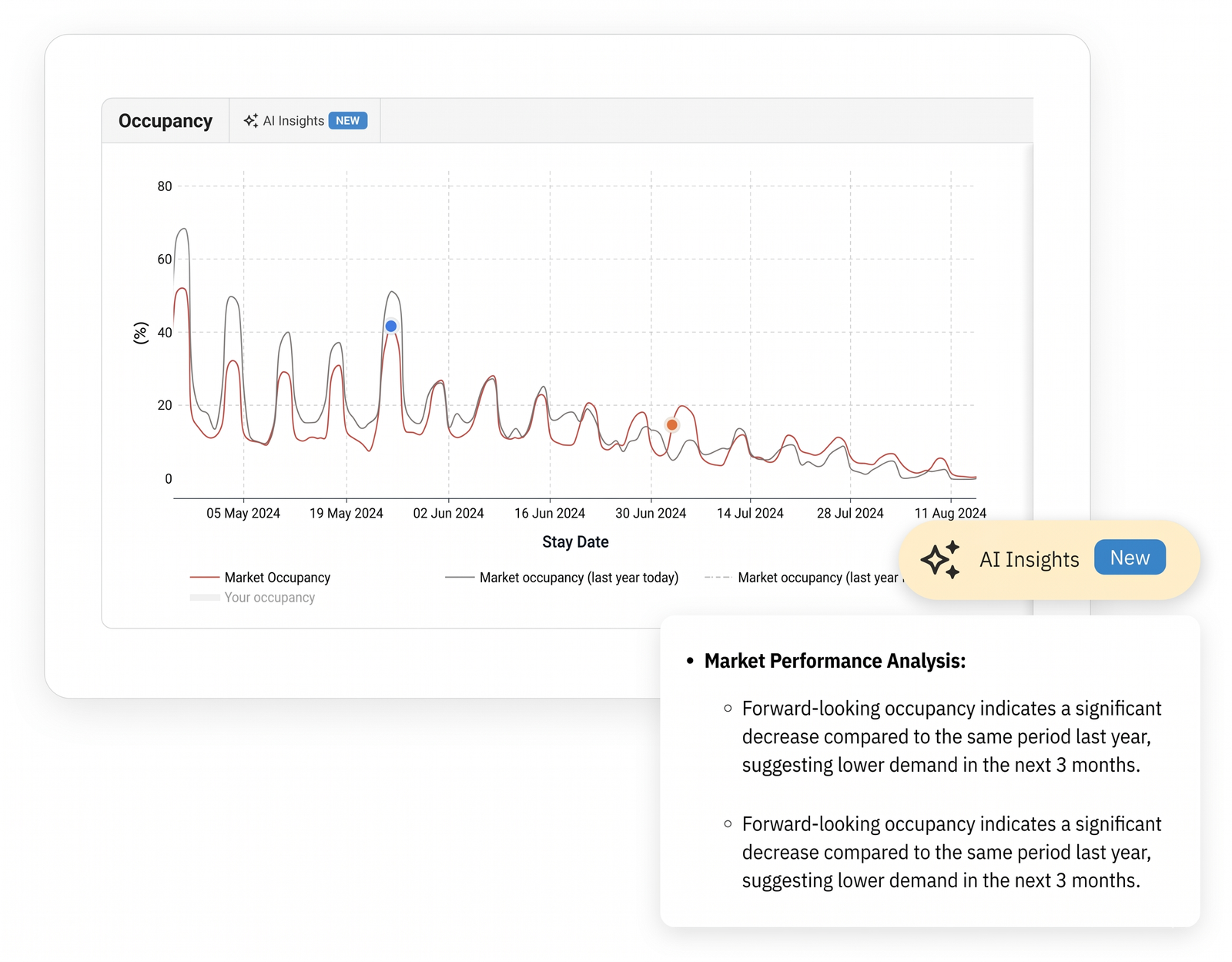
PriceLabs Market Dashboard lets you filter by property type and bedroom count so you are comparing cabins to cabins, not cabins to the overall market average that includes hotels, condos, and homes of all types.
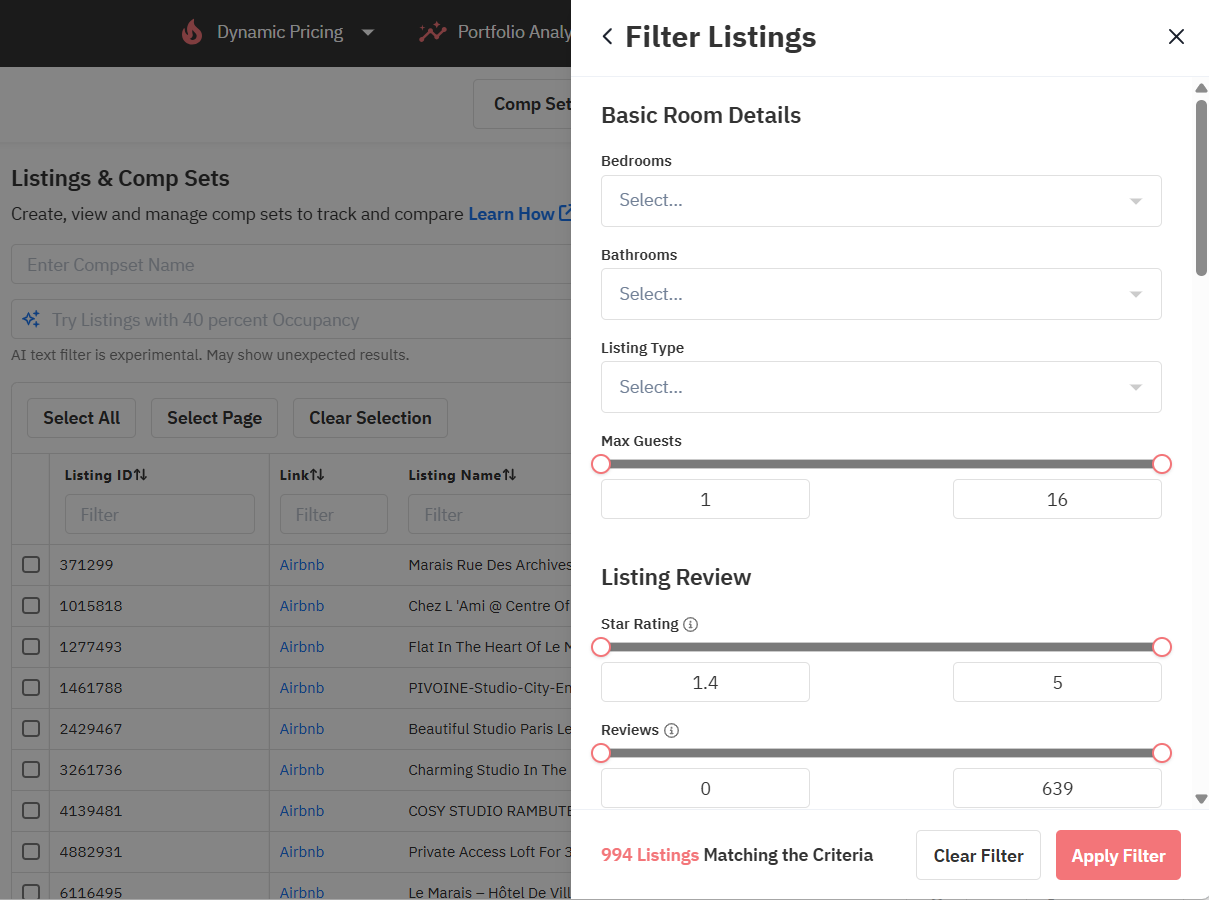
Blue Ridge, Georgia; Broken Bow, Oklahoma; and Eureka Springs, Arkansas are emerging cabin markets with lower purchase prices than Gatlinburg and similar traveler intent and amenity expectations. These three markets are not interchangeable with each other any more than cabins and condos are interchangeable within a single market, so treat them as separate cases rather than one category. Before evaluating any of them, pull property-type-filtered occupancy, ADR, and supply growth data through PriceLabs Market Dashboard using the five-step verification process below, rather than relying on the general reputation of "emerging cabin market."
Beach house travelers book differently from cabin travelers. They typically plan 3 to 6 months in advance, stay for 5 to 7 nights, and select properties based primarily on the number of bedrooms to accommodate their group. Weekly pricing for beach houses during peak summer season is a distinct pricing environment from nightly pricing in other markets. Hosts who understand this booking pattern and price accordingly extract significantly more revenue from the same number of available nights.
Gulf Shores, Alabama and Destin, Florida consistently rank among the top-performing beach house markets in the country for independent hosts. Both markets benefit from a long summer season, direct flight access from major Midwest and Southeast cities, and a loyal repeat-visitor base that books the same area year after year. Pricing strategy for beach houses in these markets should prioritize 7-night minimums during peak summer weeks to capture the full weekly booking premium. Allowing 2 or 3-night stays during peak season typically results in lower total revenue because the short stays create checkout gaps that are hard to fill.
What separates Gulf Coast markets from Florida's east coast for independent hosts is the regulatory and competitive environment. While Miami and Fort Lauderdale have strong demand, they also have significant hotel competition, higher property prices, and more active STR regulatory pressure. Gulf Shores and Destin have more favorable regulatory frameworks and a higher share of travelers specifically seeking private home rentals over hotels. Seasonal demand patterns for Gulf Coast beach houses concentrate most revenue in May through August, which is critical for cash flow planning and off-season pricing strategy.
Urban condos and apartments fill best in markets where travelers are coming for experiences rather than landscapes. Nashville and Austin have become the dominant urban vacation rental markets in the United States, driven by bachelorette parties, bachelor parties, music events, sporting events, and sustained growth as tourist destinations. Both cities have multiple recurring demand drivers that keep occupancy elevated even outside major event weekends, which is the key differentiator for urban markets worth investing in.
The best vacation rental markets by property type for urban condos share several characteristics: multiple recurring demand drivers beyond a single annual festival, walkable access to entertainment districts, and sufficient hotel pricing that makes a well-positioned Airbnb condo an attractive value alternative. Nashville's Broadway district and Austin's Sixth Street fulfill all three. Listing optimization for urban condos should emphasize proximity to specific venues rather than generic "downtown" language, because travelers booking these cities are often searching around a specific event or venue.
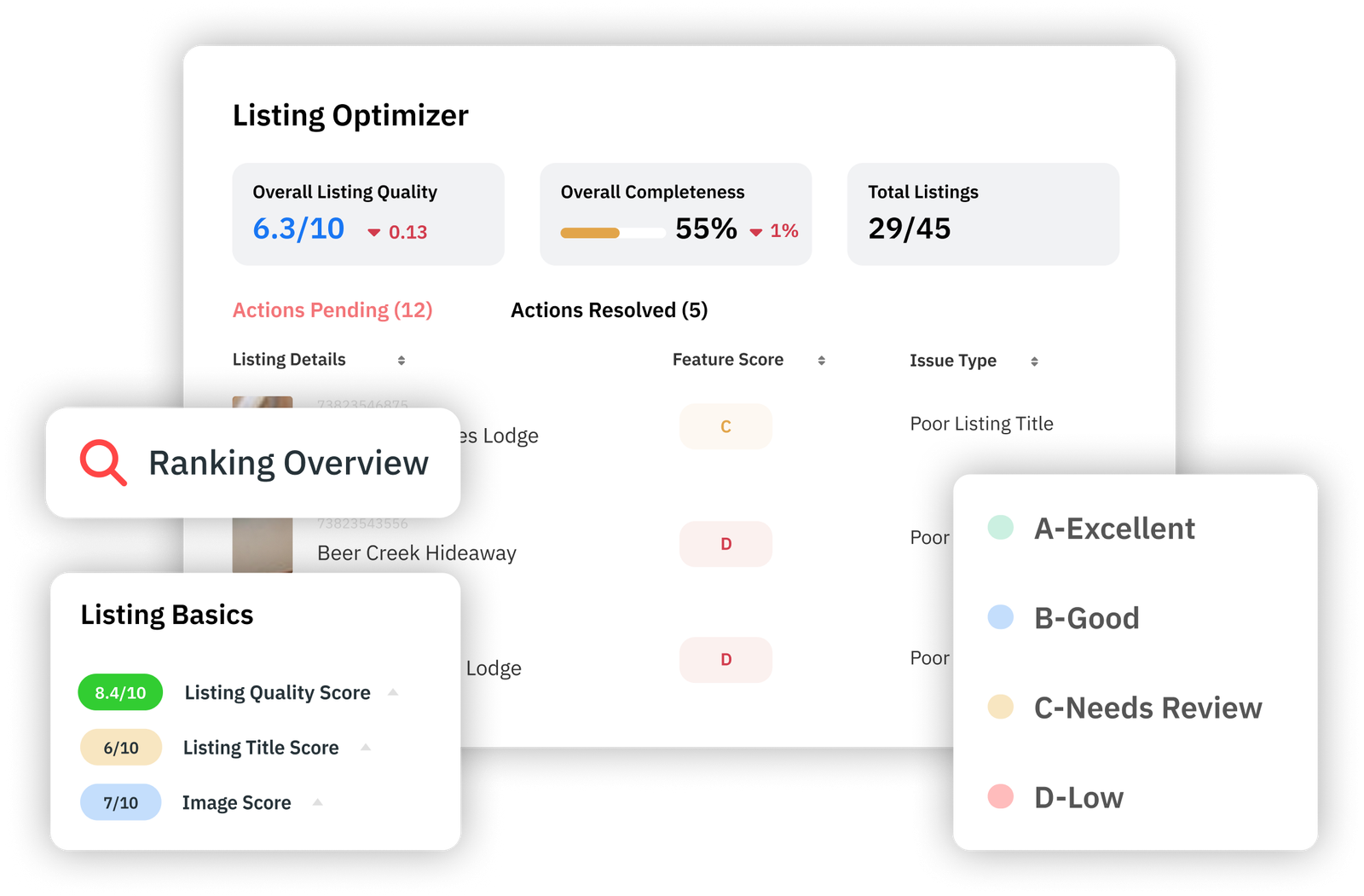
Urban condos also benefit from event-based pricing opportunities that do not exist in leisure markets. CMA Fest in Nashville, ACL Festival and SXSW in Austin, and Formula 1 in Austin each create week-long demand spikes where experienced hosts routinely charge 3x to 5x their base nightly rate. Capturing those windows with dynamic pricing is one of the highest-ROI practices available to urban STR hosts. Missing them means leaving the year's most profitable revenue on the table.
STR regulations can change in urban markets quickly, and that regulatory risk is a real factor for underwriting a property's projected revenue over a 5 to 10-year investment horizon.
Nashville: New non-owner-occupied (NOO) STR permits are no longer available in residential zoning districts in Nashville. NOO permits are now limited to commercial and mixed-use zones. Existing permitted properties in residential areas retain their permits under Tennessee's Short-Term Rental Unit Act, but that grandfathered status is lost upon sale — meaning a buyer cannot assume the existing permit. Investors considering Nashville should verify zoning directly with Metro Codes and confirm any property they are evaluating is in a commercially zoned area eligible for a new NOO permit before making a purchase decision.
Austin: Austin significantly overhauled its STR framework in 2025. STRs are now permitted in all residential zoning districts citywide, provided the operator holds a valid city-issued license. Licenses are valid for two years and are non-transferable. Since July 1, 2026, the City of Austin has required booking platforms (Airbnb, Vrbo, Booking.com, etc.) to display valid license numbers and remove unlicensed listings within 10 days of a city request.
The spacing rule requires STRs to be at least 1,000 feet apart (measured site-to-site), with up to two rentals per lot permitted. Investors should factor the licensing process (currently 4–10 weeks depending on property type) into their timeline and verify current requirements at AustinTexas.gov.
Properties with five or more bedrooms serve a specific guest segment: family reunions, corporate retreats, wedding parties, and large friend groups. This segment books further in advance than any other category, looks for specific amenities rather than general quality, and is far less price-sensitive per person because the total cost is split among a large group. A large-group home that might seem expensive at $600 per night costs just $50 per person per night for a 12-person group.
The Smoky Mountains region excels as a large-group home market because the area has purpose-built infrastructure for it. Large-group cabin companies in Gatlinburg have been operating for decades, and the road network, service infrastructure, and traveler expectations are calibrated for large-group stays. A well-amenitized 6-bedroom mountain home in Sevierville with a theater room, private pool, and game room will regularly achieve $600 to $900 per night during peak season. Revenue management for large-group homes should be particularly attentive to the shoulder-season opportunity: groups celebrating milestone events often prefer the off-peak months to avoid crowds and find better availability.
Scottsdale, Arizona is the other major large-group market, driven by a completely different demand profile: golf trips, spring training baseball, bachelorette parties, and corporate retreats. Scottsdale fills in winter and spring when cold-weather mountain markets are in their low season, making it a natural portfolio complement for hosts who own in both markets. Multi-property portfolio strategy across complementary seasonal markets reduces overall revenue variance and creates a more stable income stream across the full year.
Reading market reports is a starting point, not a conclusion. Verifying market fit requires seeing how your specific property type performs within a market, not what the market average shows. Here is a practical verification process.
Step 1: Filter by property type and bedroom count. Use PriceLabs Market Dashboard to isolate the exact property type you plan to operate. A 3-bedroom cabin and a 3-bedroom condo in the same zip code are not competing for the same guests and will not perform the same way in the same market.
Step 2: Look at the revenue distribution, not just the average. If the top 20% of properties are achieving dramatically higher revenue than the median, find out what those top performers have that median properties lack. Is it a hot tub? A specific view? A particular location within the market? Revenue management starts with understanding what actually drives revenue in your specific market category.
Step 3: Check supply growth rate. A market with 15% annual supply growth will see meaningful rate pressure within 18 to 24 months even if current performance looks strong. Stable or slow-growing supply with consistent demand is a safer foundation for investment underwriting than a currently hot market that is also attracting substantial new competition.
Step 4: Stress-test the low season. Review what the bottom two months of the year look like for your property type. Some investors accept a defined low season and plan cash flow accordingly. Others need year-round production. Knowing the seasonal trough before you buy is essential. Cash flow planning for short-term rentals should model the worst two months explicitly, not just annual averages that smooth over them.
Step 5: Verify regulatory stability. Check local municipality websites, STR permit databases, and recent local news for any pending changes to short-term rental rules. Airbnb rules and regulations vary enormously by municipality and can change faster in politically active urban markets than in established leisure markets.
Gatlinburg and Pigeon Forge, Tennessee remain the top cabin markets in the United States, with annual occupancy rates regularly above 68% and strong year-round demand driven by Great Smoky Mountains National Park visitation. Asheville, North Carolina is a strong second option with more diversified year-round demand from its food, arts, and outdoor recreation scene.
Use a market analytics tool that filters by property type and bedroom count rather than showing overall market averages. Looking at market-wide averages will mislead you because they blend high and low performers across all property categories. Short-term rental analytics tools built for property-type-level filtering give you the data you need to make an accurate comparison.
The top Gulf Coast markets have seen significant supply growth since 2020. New entrants need to differentiate on amenities (private pool, direct beach access, large group capacity) or look at adjacent markets with lower competition but similar demand profiles. A beach market is not closed to new investors, but the era where any beach property performed well without differentiation is over.
The Smoky Mountains region and Scottsdale, Arizona are the two most consistent large-group markets. Both have established demand from reunion and event travelers, purpose-built property management infrastructure, and guests who pay premium rates for large-group-specific amenities like theater rooms, private pools, and outdoor kitchens.
Seasonality is one of the most critical underwriting factors for any vacation rental investment. A market with a 3-month peak season requires you to generate enough revenue in those months to cover year-round costs. Use seasonality data from market analytics tools to model monthly cash flow before committing, not just annual averages that can obscure severe low-season performance.
This selection process is one part of a broader market analysis — see our full guide to vacation rental market analysis.
Want to learn what PriceLabs can do for you? See for yourself with a free trial. Get started now!