
Get started with PriceLabs now!
Want to learn what PriceLabs can do for you? See for yourself with a free trial. Get started now!

Airbnb investment analysis is not complicated, but most investors skip the questions that matter most and buy on optimism instead of data. The result is a property that underperforms its projections, strains cash flow, and becomes a source of stress rather than income.
This guide gives you a five-question framework — covering demand-supply balance, realistic net revenue, regulatory stability, property-market fit, and occupancy benchmarking — that every investor must answer with real data before purchasing a short-term rental property. Answer all five rigorously, and you buy with clarity. Skip any one of them, and you are carrying avoidable risk into your first year of operations.
A complete short-term rental analytics framework is what separates investors who perform in line with or above their pro forma from those who spend years chasing projections they cannot reach. The five questions below are the core of that framework, applied to the specific analysis decisions that determine investment success.
Every Airbnb investment analysis starts with the demand-supply balance in the target market. High demand with limited supply creates pricing power and healthy occupancy rates. High demand with rapidly growing supply creates rate compression that will erode returns over the next 12 to 24 months. Low demand at any supply level is a market to avoid entirely for short-term rental investment purposes.
The metric that captures this balance most clearly is Revenue Per Available Night (RevPAN) trend over 12 to 24 months. If RevPAN is flat or growing, demand is absorbing new supply. If RevPAN is declining year over year, supply is outrunning demand and you can expect rate pressure for the foreseeable future. Revenue management analysis tools provide this trend at the market level, broken down by property type and bedroom count so you can see the picture for your specific property category.
Supply growth rate is the second key variable. A market adding 15% or more new STR listings annually requires ongoing strong demand growth to absorb that supply without rate compression. That is a riskier bet than a stable market adding 3 to 5% annually. PriceLabs Market Dashboard provides supply trend data so you can evaluate this directly for any market you are considering.
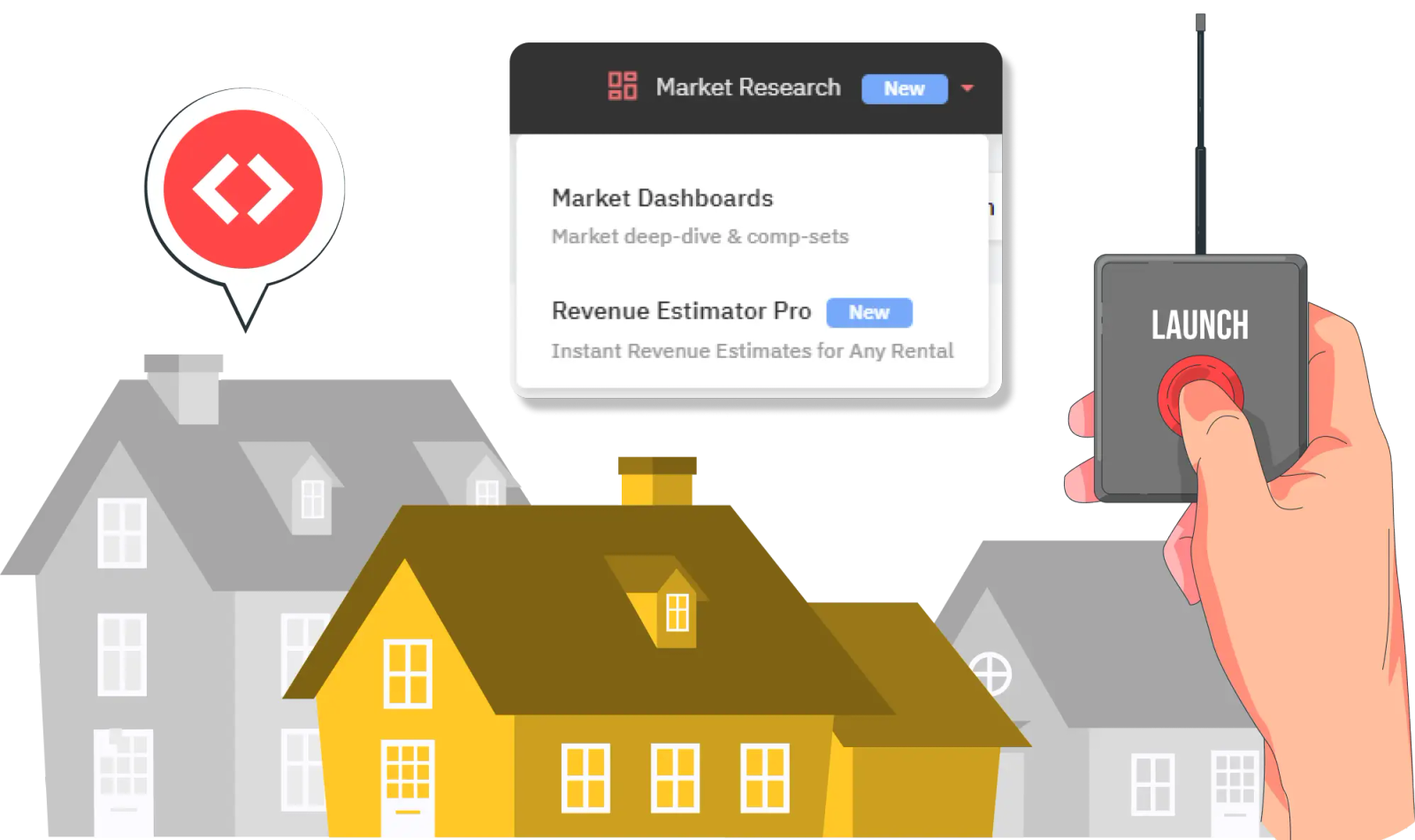
Using PriceLabs Market Dashboard for This Analysis
Each of the five questions in this framework can be answered directly using PriceLabs Market Dashboard. Here is what to pull for each:
Markets with a healthy demand-supply balance for Airbnb investment share several characteristics: annual occupancy rates above 60% for your specific property type, RevPAN that is stable or improving over a 24-month window, limited net new supply entering the market, and identifiable recurring demand drivers that are not tied to a single annual event. Markets that check all four boxes provide the safest foundation for short-term rental investment.
Net operating income after every real cost decides whether an Airbnb investment works. Gross revenue on its own tells you almost nothing. Most investor underwriting failures trace back to an optimistic gross revenue projection that was never tested against an honest cost model.
Build your revenue baseline from the median-performing property in your specific property type and bedroom count tier, not from the top 25%. The median tells you what a competently run listing actually earns. The top 25% tells you what is possible with a well-reviewed, optimally positioned, fully amenitized listing. Your year-one performance will track closer to the median than the top quartile, because new listings take 6 to 12 months to build the review volume needed to rank competitively on Airbnb search.
Costs to include in your model without exception:
After modeling all costs against median revenue projections, your resulting net operating income should produce positive cash flow above your debt service with margin to spare. If the model only works at median occupancy with no cost buffer, any maintenance issue or slow month creates a cash flow problem. Cash flow modeling for short-term rentals requires discipline about cost inputs, not just revenue assumptions.
Debt structure is the input most often left out of STR underwriting, and it is the one that most often turns a workable deal into a loss. Two investors can buy the same property in the same market against the same revenue projection and land in completely different positions on rate, term, and down payment alone.
Three variables to model before you commit:
Cash-on-cash return is annual pre-tax cash flow divided by total cash invested. Total cash invested includes down payment, closing costs, and full furnishing. Furnishing a property to a competitive standard for its market is a real capital line item and should come from actual quotes rather than a placeholder figure, because it directly reduces the return on every dollar of revenue the property produces.
A deal that needs both your best-case rate and your best-case occupancy to produce an acceptable return has no margin of safety. Both assumptions have to hold at once, in a first year of operations when neither is under your control.
Dynamic pricing belongs in your model as upside potential on top of a conservative base case, not as a built-in assumption that inflates your base revenue projection. The pricing tool captures additional revenue above the median baseline; it does not guarantee that the median baseline is achievable.
Regulatory risk is the most consistently underestimated risk factor in Airbnb investment analysis. A property producing strong cash flow today can lose its permit to a single city council vote. New York City shows what that looks like at scale: Local Law 18 passed in January 2022 and took effect in September 2023, requiring hosts to register with the Mayor's Office of Special Enforcement and barring booking platforms from processing transactions for unregistered listings.
By 2025 the city reported roughly 3,000 active short-term rental registrations, against more than 38,000 active listings on a single platform at the start of 2023. Market risk builds gradually and shows up in data trends. Regulatory risk arrives on a vote, and the data gives you almost no warning.
Before any purchase, research the following for your target municipality:
Airbnb rules and regulations vary dramatically by city. Markets like Gatlinburg and Gulf Shores have stable, long-established STR frameworks built around their tourism economies.
Urban markets like New York, San Francisco, Nashville, and Austin have all undergone significant regulatory changes in recent years, and their current status is meaningfully different from a few years ago. In Nashville, new non-owner-occupied (NOO) permits are no longer available in residential zoning districts — they are now limited to commercial and mixed-use zones. Existing permitted properties in residential areas are grandfathered under Tennessee's Short-Term Rental Unit Act, but that status is lost when a property changes ownership.
In Austin, the City Council overhauled its STR framework in 2025: STRs are now permitted in all residential zoning districts with a valid city-issued license, but as of July 1, 2026, booking platforms are required to remove unlicensed properties within 10 days of a city request. The direction of travel in both cities — and most major urban markets — is toward tighter enforcement and more structured permitting. Always verify current rules directly with the municipality's planning or licensing department before any purchase decision, as these frameworks continue to evolve.
Look at the trajectory over the past 3 to 5 years, not just today's rules. A market that has maintained stable regulations for several years with no active proposals for change is meaningfully lower risk than a market that has passed new STR restrictions multiple times in that same window. Market analysis for serious investment decisions should always include a regulatory stability assessment as a core input alongside demand and revenue data.
Every market has a dominant traveler profile, and that profile determines which property types command the highest rates and occupancy. Buying a property type that serves secondary demand in a market means you will always be competing at a structural disadvantage. No level of listing quality or listing optimization fully overcomes a product-market mismatch.
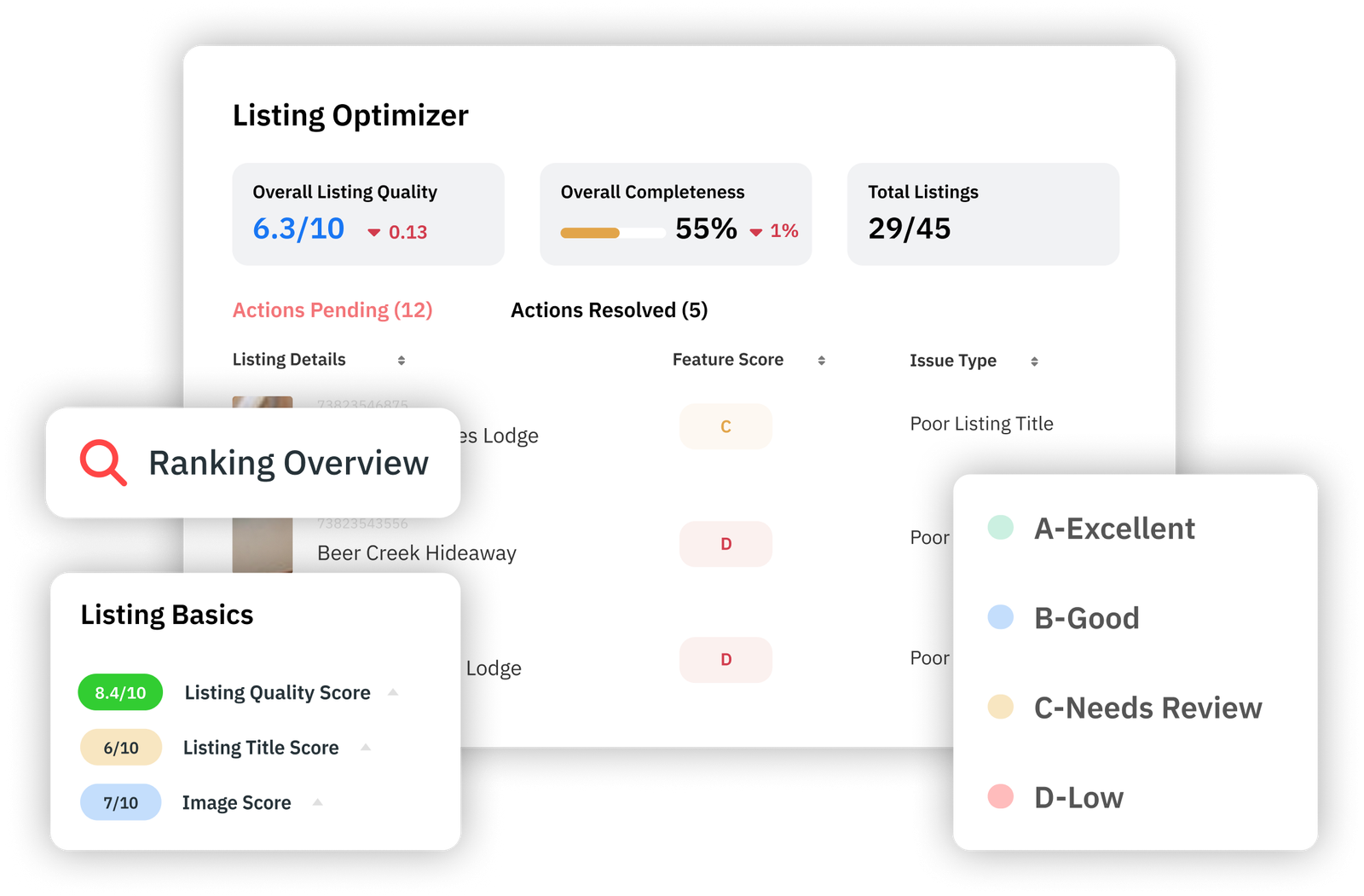
The best vacation rental markets by property type are clear when you look at market data filtered by property category. A beach market's dominant travelers are families seeking week-long stays in large homes with beach access. A mountain market's dominant travelers are couples and small groups seeking cabin experiences with hot tubs and fireplaces. An urban market's dominant travelers are event-driven groups seeking walkable proximity to entertainment.
If you are considering a condominium in Gatlinburg, understand that the dominant demand profile is for cabin experiences, and your condo will compete on price against the cabin experience that most travelers specifically chose this destination to have. That is not an impossible position, but it is a disadvantage you are choosing to take on. Match property type to dominant demand before you buy. The revenue implications of this match or mismatch are significant over a multi-year hold.
The occupancy rate assumption in your Airbnb investment analysis drives every other number in your model. An error of 10 percentage points in occupancy — assuming 70% when a realistic expectation is 60% — can turn a marginally positive cash-flow property into one that bleeds money every month. Getting this number right matters more than any other single input in your underwriting.
Pull occupancy data specifically for your property type and bedroom count in the target market. Filter for listings that have been active for at least 12 months, since new listings have not yet built the review volume needed to rank competitively in search and will understate achievable occupancy. Filter for listings with an amenity set comparable to what you plan to offer. Airbnb occupancy rates vary substantially within the same market based on these factors.
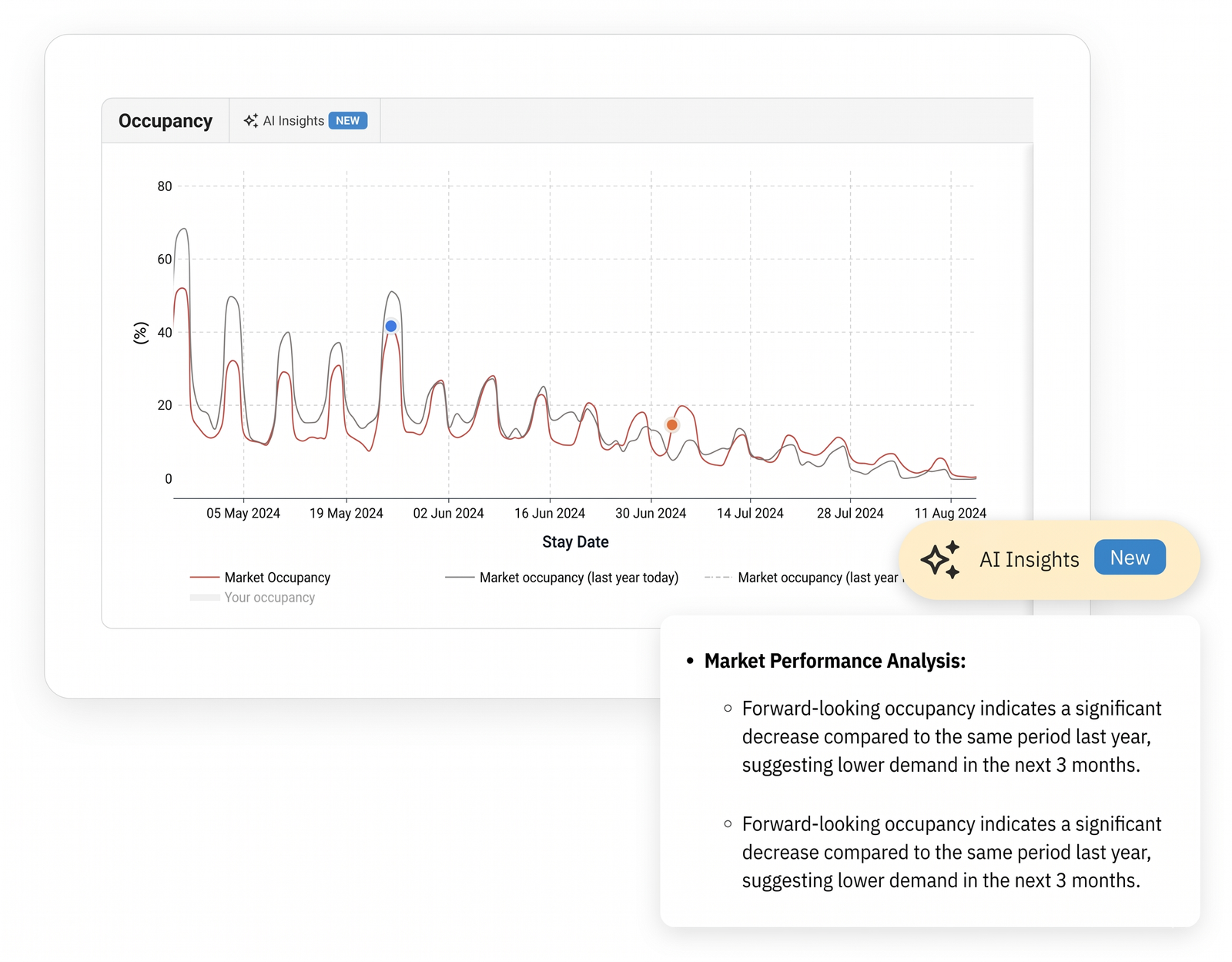
Use the 40th percentile occupancy rate as your base case. This is slightly below median and represents what a competently operated but not exceptional listing achieves. If your investment model produces positive cash flow at this occupancy level, you have a meaningful margin of safety. If your model only works at the 60th or 70th percentile, you are betting on above-average year-one performance before your listing has established its review reputation — a risky assumption that has derailed many otherwise reasonable investment analyses.
Completing your pre-purchase analysis is the beginning of the revenue story, not the end. Once you own the property, ongoing execution determines whether you achieve the returns you modeled. The single highest-impact operational practice for hitting your revenue targets is using dynamic pricing that adjusts your rates in real time based on market demand signals rather than setting static rates and leaving them.
Static pricing leaves money on the table at both ends of the booking curve. A guest booking months ahead for a high-demand weekend pays a rate that was set before demand signaled how strong that weekend would be. A last-minute guest who would have filled an empty Tuesday at a lower rate never sees that rate, and books a competitor who offers it. Dynamic pricing closes both gaps automatically and continuously.
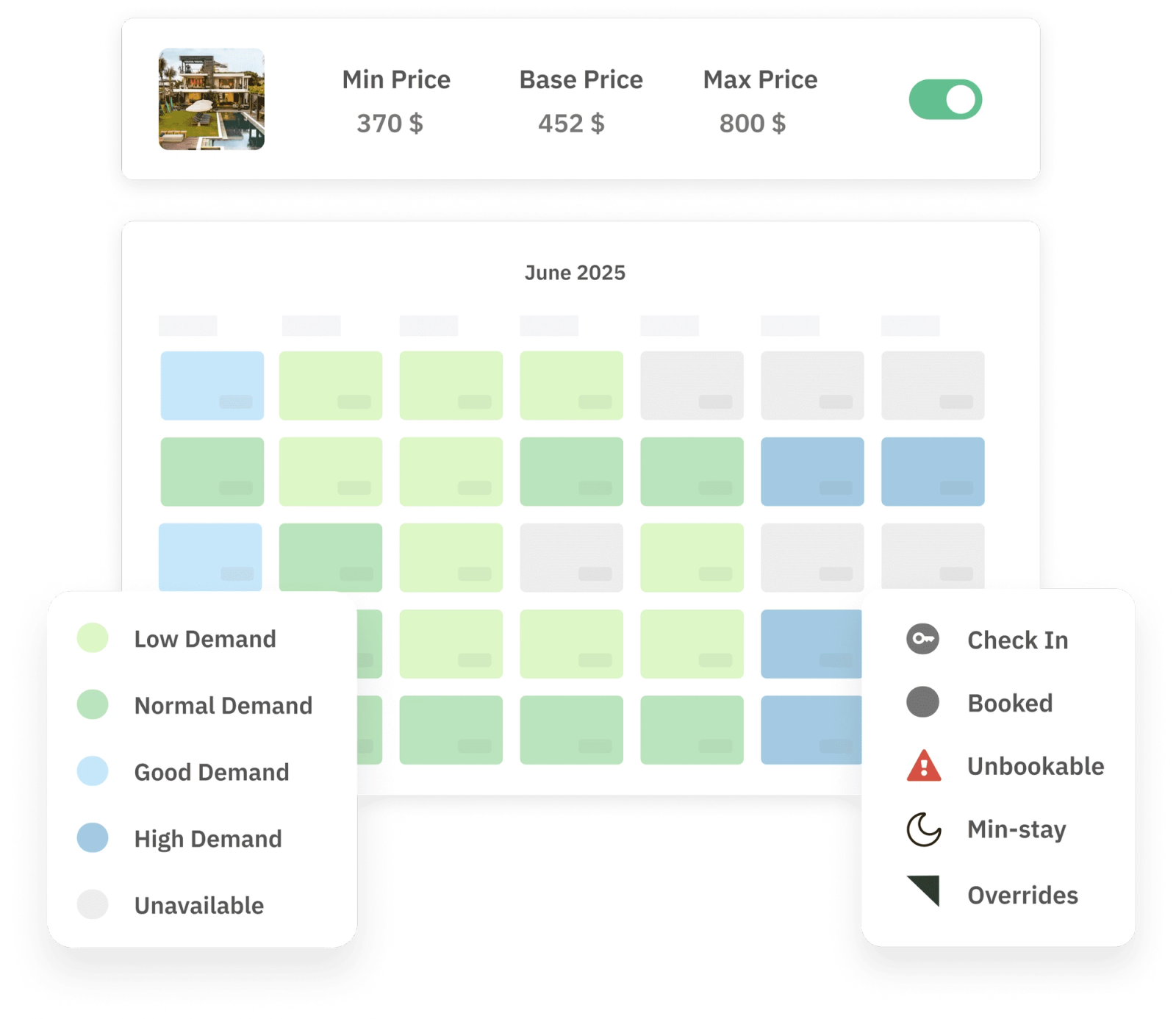
Beyond pricing, the practices that most consistently produce above-median returns are maintaining a 4.8-star rating or higher (which improves search ranking on Airbnb and VRBO), responding to guest inquiries within an hour, keeping your calendar current and accurate, and reinvesting in amenity updates to stay current with the competitive set in your market. Revenue management is an ongoing operational discipline, not a one-time setup activity. The hosts who treat it that way consistently outperform those who do not.
Use short-term rental analytics to build your ongoing market monitoring practice after purchase. Markets shift over time, and hosts who continue tracking demand signals, supply growth, and competitive dynamics after buying are far better positioned to respond to rate compression, seasonal changes, and new competition than those who set their strategy once and leave it in place.
| Question | Key metric | Data source | Red-flag signal |
|---|---|---|---|
| 1. Does demand exceed supply? | RevPAN trend over 12 to 24 months; annual supply growth rate | Market Dashboard, filtered by property type and bedroom count | RevPAN declining year over year; supply growth above 15% with flat occupancy |
| 2. What is realistic revenue after costs? | Net operating income built from median-tier revenue | Revenue Estimator Pro plus a full cost model | NOI turns positive only at median occupancy with no cost buffer |
| 2a. Does the financing survive a stress test? | Cash-on-cash return; DSCR | Lender term sheet run against your NOI model | DSCR below 1.20 at 40th percentile occupancy |
| 3. Are regulations stable? | Ordinance changes over 3 to 5 years; permit availability | Municipal planning or licensing department, verified directly | Permit cap or waitlist; two or more rule changes in three years |
| 4. Does property type match demand? | Occupancy and ADR by property category | Market Dashboard filtered to your property type | Your property type sits outside the market's dominant category |
| 5. What occupancy is realistic? | 40th percentile occupancy for comparable listings | Market data filtered to listings active 12+ months with comparable amenities | The model only works above the 60th percentile |
Some findings in your analysis warrant a closer look. The signals below warrant walking away.
Any one of these justifies walking away from the property. Two or more together should end the analysis before you spend more time on it.
Pull market data for your specific property type and bedroom count, build a cost model from real expense inputs, verify regulatory stability with the local municipality, confirm the property type matches the market's dominant demand profile, and stress-test your revenue model at below-median occupancy assumptions. A complete STR analytics framework covers all five steps in full detail.
Use the 40th percentile occupancy rate for comparable properties — same type, bedroom count, and amenity tier — in your target market as your base case. If the investment works at that level, you have a real margin of safety. Assuming top-quartile occupancy in year one is a common underwriting error that leads to negative surprises when a new listing must earn its search position before achieving peak occupancy.
Using gross revenue projections from the top-performing listings in a market as the basis for your own revenue model. Top performers have established review histories, ideal locations, premium amenities, and years of returning guests. A new listing with no reviews should be modeled against median or below-median performance until it earns its competitive position through operational excellence.
Check the current permit requirements and availability directly on the municipality's website, search recent local news for any council actions on short-term rentals, and review the regulatory history over the past 3 to 5 years. The trajectory of regulation over time is as important as the current state. Markets with a stable track record are materially lower risk than markets where rules have changed multiple times recently.
Use a market analytics platform that filters by property type and bedroom count, a cash flow modeling spreadsheet that captures all real cost inputs, and direct municipal research for permit status. PriceLabs Market Dashboard provides the supply trend, occupancy, ADR, and RevPAN data needed for questions 1, 4, and 5 in the framework above, filtered to your specific property category. Revenue Estimator Pro helps answer question 2 by providing median revenue projections for comparable listings. For regulatory research, always go directly to the municipality's website — third-party databases are often several months behind on permit status changes.
These 5 questions eventually come down to one number worth understanding deeply — see our full guide to what makes a good cap rate.
Weighing this investment decision still rests on the fundamentals in our complete guide to calculating Airbnb income.
This framework is one step in the broader process covered in our complete guide to how to calculate Airbnb income.
Want to learn what PriceLabs can do for you? See for yourself with a free trial. Get started now!