Table of Contents
Updated : Apr 14, 2026
Are you tired of watching your rooms sit empty during the week, only to realize you underpriced them for the big festival next month? Does the constant manual adjustment of rates feel like a losing battle against an ever-shifting market? For boutique hotel owners, balancing occupancy and revenue shouldn’t feel like guesswork. It is time to embrace hotel dynamic pricing software to reclaim your time and maximize your profits. By leveraging AI and real-time data, you can move from reactive stress to proactive growth—seeing a measurable 20–30% uplift in RevPAR while ensuring your property stays competitive every single night.
What is Hotel Dynamic Pricing Software?
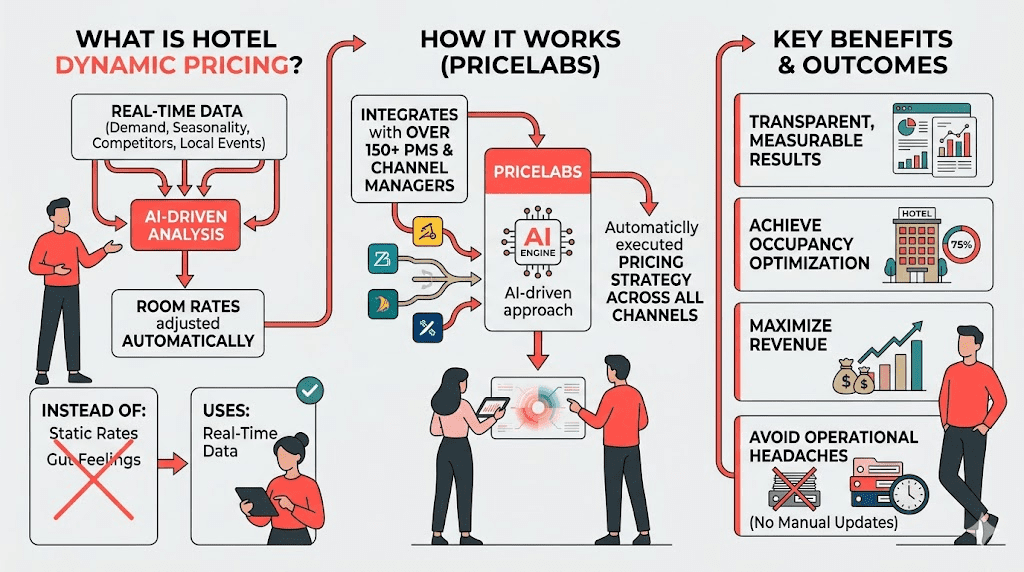
Hotel dynamic pricing software is an automated system that adjusts room rates in real time by analyzing demand, seasonality, competitor pricing, and local events. Instead of relying on static seasonal rates or gut feelings, these tools use data to ensure your rooms are priced perfectly for whoever is looking at them right now.
PriceLabs democratizes this technology for hotels of all sizes, from boutique properties to massive portfolios. By integrating with over 150 Property Management Systems (PMS) and Channel Managers, PriceLabs ensures your strategy is executed automatically across all channels. Our AI-driven approach is designed to deliver transparent, measurable outcomes, helping property managers achieve occupancy and revenue optimization without the operational headache of manual updates.
Atomic Definition: “Dynamic pricing increases operational efficiency through automation and data-driven decisions.”
9 Quick Wins with Dynamic Pricing Software
Here is a concise list to get you going immediately!
1. Set Minimum and Maximum Price Guardrails
The first step to trusting automation is setting boundaries. Price guardrails are rules that define the lowest and highest allowable rates for your rooms.
- The Win: Protects your brand trust and profitability. It prevents the system from selling rooms at a loss during extreme low demand or overpricing them to a point that alienates guests during spikes.
- How PriceLabs Helps: Within the PriceLabs interface, you can set specific Min/Max price limits by room type or date. This ensures that even during high-velocity automation, your AI-driven revenue management stays aligned with your business strategy.
| Room Type | Min Price (Floor) | Max Price (Ceiling) |
| Standard Queen | $120 | $350 |
| Deluxe Suite | $250 | $700 |
2. Use Length-of-Stay (LOS) Rules
LOS rules automate pricing adjustments based on how many nights a guest stays.
- The Win: Incentivizes longer bookings during slow periods to reduce cleaning costs and churn, or applies premiums to short stays when demand is high to maximize RevPAR.
- How PriceLabs Helps: Use the Minimum Stay Rules feature to adapt length-of-stay suggestions based on booking patterns. You can set rules to automatically relax stay requirements as the check-in date approaches to fill late-notice gaps.
3. Enable Last-Room Scarcity Pricing
As your inventory nears zero, the value of that remaining room skyrockets.
- The Win: Captures the “willingness to pay” from last-minute travelers who need a room urgently.
- How PriceLabs Helps: PriceLabs’ Hyper Local Pulse algorithm recognizes when your specific inventory is tightening and can automatically nudge rates upward to capitalize on scarcity.
4. Apply Day-of-Week and Seasonality Patterns
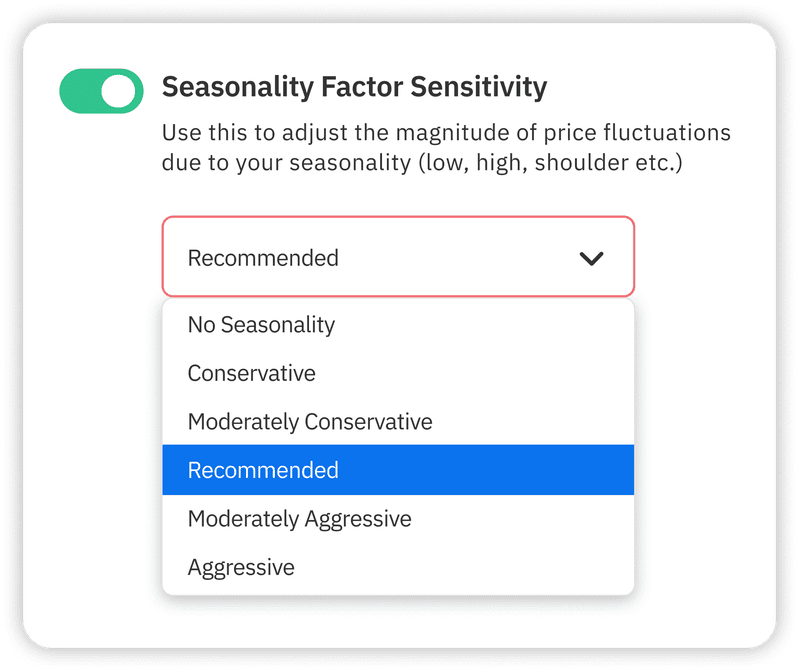
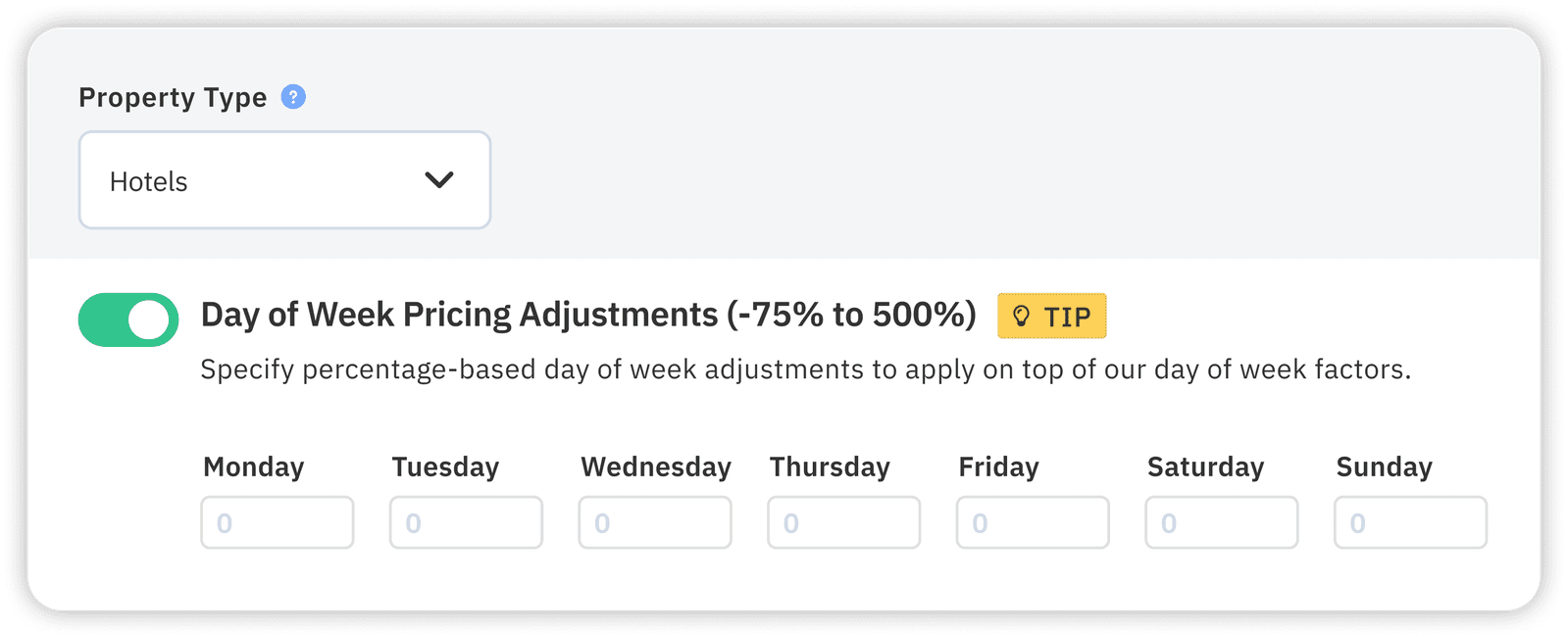
Predictable demand cycles (like business travelers on Tuesdays or leisure guests on Saturdays) should be reflected in your pricing automatically.
- The Win: Aligns your calendar with local demand shifts.
- How PriceLabs Helps: Use Smart Presets in PriceLabs to quickly apply seasonality factors. These presets use historical and market data to determine if your property should have a “conservative” or “aggressive” reaction to seasonal changes.
5. Competitor Benchmarking
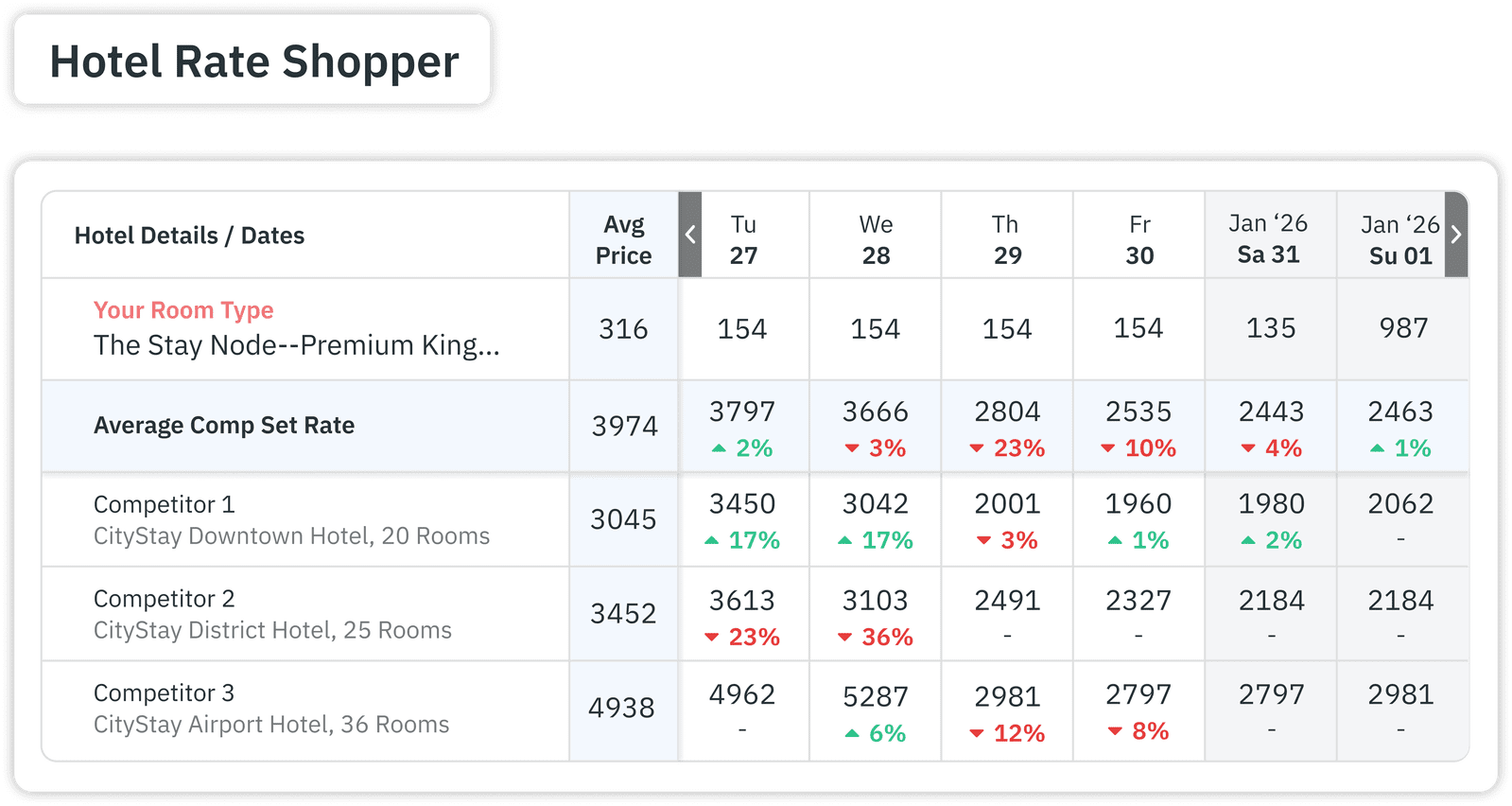
Staying competitive doesn’t mean winning a “race to the bottom” on price; it means knowing your worth relative to the market.
- The Win: Avoids underpricing and ensures you aren’t the most expensive (and empty) hotel on the block.
- How PriceLabs Helps: The Hotel Data Tab (Rate Shopper) allows you to monitor up to 350 nearby properties. You can set Hotel Weights to control how much influence your competitors’ rates have on your own pricing recommendations.
6. Occupancy-Based Discounts for Low Demand
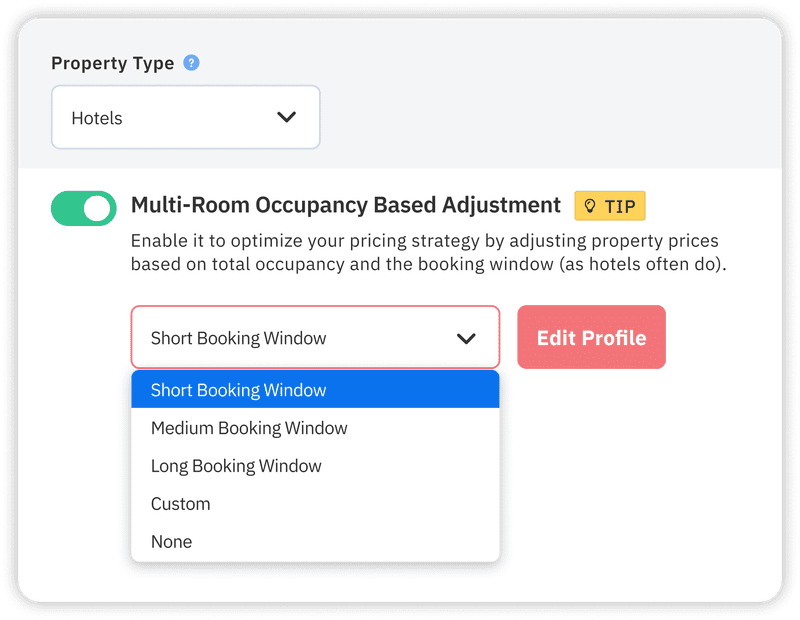
When your occupancy drops below a specific threshold for an upcoming date, the software should automatically trigger a “rescue” discount.
- The Win: Fills rooms that would otherwise go empty, protecting your baseline revenue.
- How PriceLabs Helps: Use Multi-Room Occupancy-Based Adjustments . This tool adjusts recommendations based on real-time occupancy trends within specific room types, supporting a balanced sell-through across your entire inventory.
7. Event and Weather Overlays
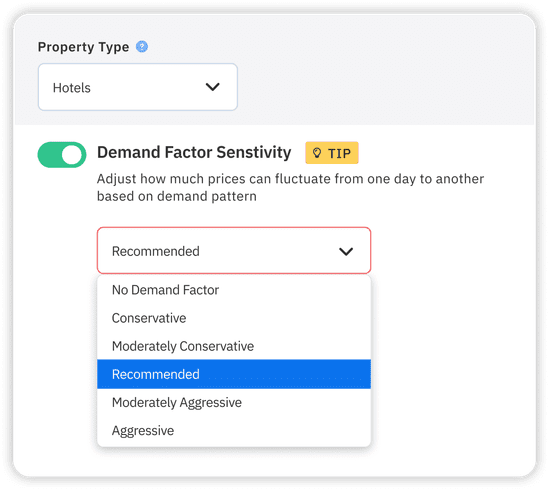
Local concerts, sports games, and even sudden changes in weather can cause demand to spike or crater overnight.
- The Win: Captures demand spikes without the lag time of manual research.
- How PriceLabs Helps: PriceLabs integrates local event calendars and market data into its Hyper Local Pulse algorithm. It “sees” the surge in market searches for a festival weekend and adjusts your rates before the first booking even hits your PMS.
8. Channel-Specific Rules and Parity Controls
Your pricing strategy should account for the different costs associated with OTAs versus direct bookings.
- The Win: Protects your margins by covering commission costs on OTAs while offering the best value on your direct site.
- How PriceLabs Helps: Through Rate Plan Support, PriceLabs can sync pricing across multiple plans (refundable vs. non-refundable) and help you maintain parity controls to avoid brand-damaging rate leakage across the web.
9. Test with Controlled A/B Pricing Experiments
Don’t just set it and forget it. Systematic testing allows you to find the “sweet spot” for your property.
- The Win: Directly measures the impact of a strategy (e.g., “Does a $10 decrease in the minimum stay requirement actually increase occupancy?”) before rolling it out property-wide.
- How PriceLabs Helps: Use Portfolio Analytics and the Report Builder to track performance metrics like ADR and RevPAR. By changing one rule for a small subset of dates, you can iterate based on hard results rather than guesses.
Why These Dynamic Pricing Wins Work
The economic rationale is simple: speed and accuracy. Dynamic pricing strategies succeed because they harness automation to react to market changes faster than any human could.
- Automation: Saves hours of manual work every week.
- Data-Driven Decisions: Removes emotional bias from pricing.
- Market Responsiveness: Ensures you are never the last one to raise prices for a major event.
- Increased RevPAR: Properties using hotel dynamic pricing software typically see at least a 20% increase in revenue by capturing demand they previously missed.
Implementation Notes and Common Caveats
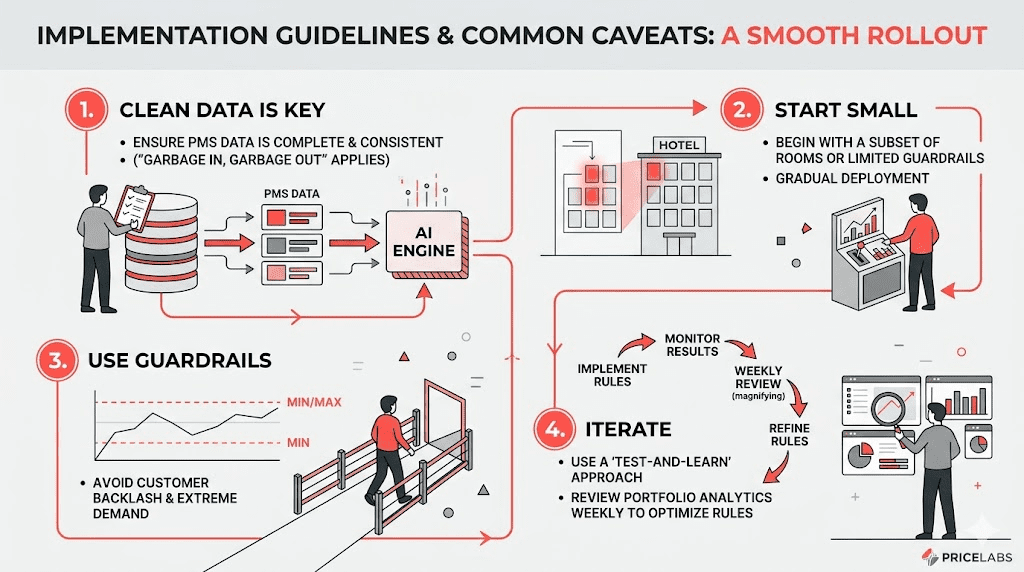
To ensure a smooth rollout of your AI-driven revenue management strategy, keep these tips in mind:
- Clean Data is Key: Ensure your PMS data is complete and consistent. “Garbage in, garbage out” applies to pricing engines too.
- Start Small: Begin with a subset of rooms or a limited range of guardrails.
- Use Guardrails: Always set min/max limits to prevent “price wars” or customer backlash during extreme demand fluctuations.
- Iterate: Use a “test-and-learn” approach. Review your Portfolio Analytics weekly to see which rules are driving the best results.
Conclusion
Implementing hotel dynamic pricing software isn’t just about changing a few numbers on a screen; it’s about taking control of your hotel’s financial future. By automating the routine and leveraging hyper-local data, you ensure that every room is sold at the best possible price, every single day. Whether you are managing a 10-room boutique hotel or a large portfolio, these nine quick wins provide a roadmap to higher occupancy and sustained revenue growth.
Way Forward
The most effective way to start is by seeing the data for yourself. Conduct a “tech audit” of your current PMS and explore PriceLabs’ 150+ integrations. Sign up for a 30 days free trial, set your Base Price Guidance, and enable your first set of Min/Max Guardrails. Within one booking cycle, you’ll see the power of automated, occupancy and revenue optimization in action.
Frequently Asked Questions ( FAQs)
How can hotels balance occupancy and revenue goals using dynamic pricing?
Dynamic pricing adjusts room rates in real-time based on demand. It helps you fill rooms during slow periods via occupancy-based discounts and maximizes revenue during peak demand by identifying scarcity and high-willingness-to-pay windows.
What data is essential for effective dynamic pricing?
Effective pricing relies on a mix of internal data (booking history, current inventory) and external market data (competitor rates, local events, and seasonal demand shifts).
How do price guardrails protect hotel revenue and brand perception?
Guardrails set the “floor” and “ceiling” for your rates. This prevents the system from dropping prices so low that they hurt your brand’s perceived value or raising them so high that they violate guest trust.
What are best practices for testing dynamic pricing strategies?
The best approach is A/B testing. Limit the scope of your changes to specific dates or room types, monitor metrics like RevPAR and ADR through Portfolio Analytics, and iterate based on the results.
How does automation improve operational efficiency in dynamic pricing?
Automation eliminates the need for manual daily rate updates. This allows your team to respond instantly to market changes while freeing up staff to focus on guest experience and higher-value strategy.