Updated : Mar 12, 2026
In the competitive landscape of short-term rentals, identifying predictable demand drivers is essential for maintaining high yield. Traditionally, property managers relied on seasonal holidays or major annual festivals to dictate pricing; however, understanding the artist residency market impact is proving to be a significant revenue goldmine. When a global superstar performs a series of dates in a single city, they don’t just fill stadiums—they fundamentally shift the local accommodation market, creating a unique and powerful surge in demand that goes beyond a typical one-night event.
From Harry Styles’ multi-night runs in London and Amsterdam to Bad Bunny’s dominance in San Juan, the data indicates that these events act as catalysts for both occupancy and Average Daily Rate (ADR). For property managers, analyzing the residency effect is often the difference between a standard week and a record-breaking month.
Market Data Analysis: The Artist Residency Market Impact
Recent data from PriceLabs Market Dashboards and World STR Index reveals a clear correlation between artist residencies and significant uplifts in key performance indicators. In several markets, occupancy during concert dates has surged between 2% and 30% compared to the same time last year (STLY).
| Market and Artist | Occupancy (Concert Dates) | Occupancy (STLY) | ADR (Concert Dates) | RevPAR Uplift |
| Harry Styles: London | 44% | 14% | $290 | +385% |
| Harry Styles: Amsterdam | 48% | 32% | $263 | +70% |
| Harry Styles: New York | 5% | 3% | $350 | +85% |
| Bad Bunny: San Juan | 79% | 63% | $135 | +39% |
| Metallica: Las Vegas (2026) | 1% | 1% | $284 | 0% |
Key Performance Insights
- The London Surge: The Harry Styles residency in London represents the most dramatic shift in the dataset. With a 385% increase in RevPAR, the market saw a rare combination of a 30% absolute occupancy jump and a 56% increase in ADR.
- Consistent Gains in Amsterdam and New York: Even in highly saturated markets like New York and Amsterdam, the presence of a residency provided a noticeable buffer, driving RevPAR up by 85% and 70% respectively.
- San Juan’s High Baseline: Bad Bunny’s residency achieved the highest absolute occupancy at 79%. This suggests that in specific regional hubs, local icons can drive demand to near-capacity levels.
- The Early Announcement Phase: Metallica’s 2026 Las Vegas dates currently show flat growth. This is typical for events announced far in advance; however, it presents an opportunity for managers to set optimized “event floors” before the primary booking wave begins.
STOP PRICING BLINDLY: Capture Every Event Premium
When a residency is announced, the first wave of bookings happens in minutes. If your rates are static, you're leaving revenue on the table. Use PriceLabs to automatically detect local demand spikes and ensure your property is priced to win. Start optimizing your ADR and event-driven profitability today.
Start Your Free Trial NowStrategic Takeaways for Property Managers
Capitalize on Extended Booking Windows
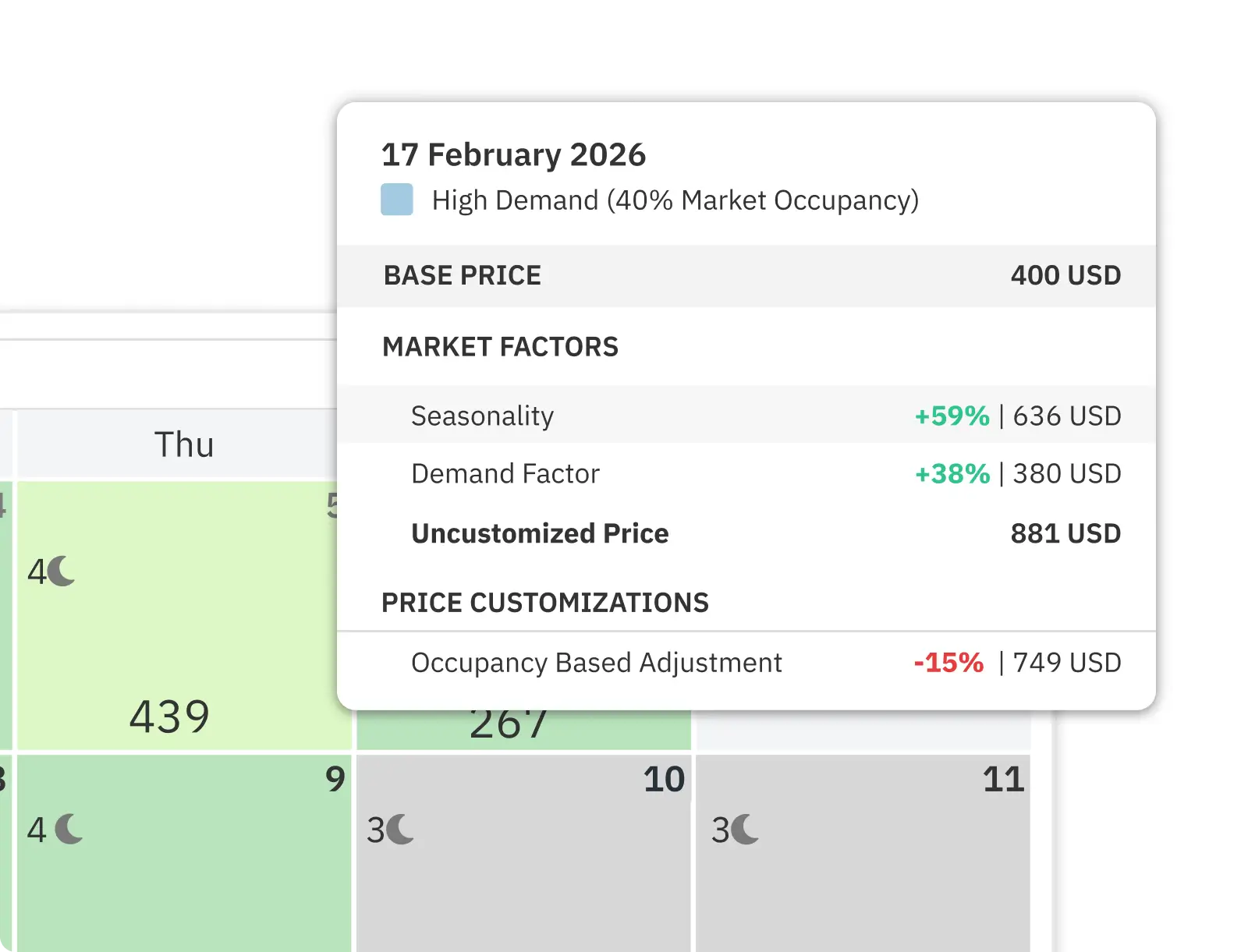
Event-driven demand typically follows a distinct pattern. A primary surge occurs immediately following the ticket release, followed by a steady climb as the event approaches. Property managers should avoid underpricing during the initial hype phase. By monitoring booking pacing, you can ensure that early-bird fans are paying a premium that reflects the limited supply. With PriceLabs Dynamic Pricing, you can leverage the Demand Factor Sensitivity and Pacing Factor to automatically detect these surges and apply far-out premiums. This ensures your rates adjust upward the moment the market begins to compress, preventing your most valuable dates from being booked at a default base price.
Optimize Length of Stay (LOS)
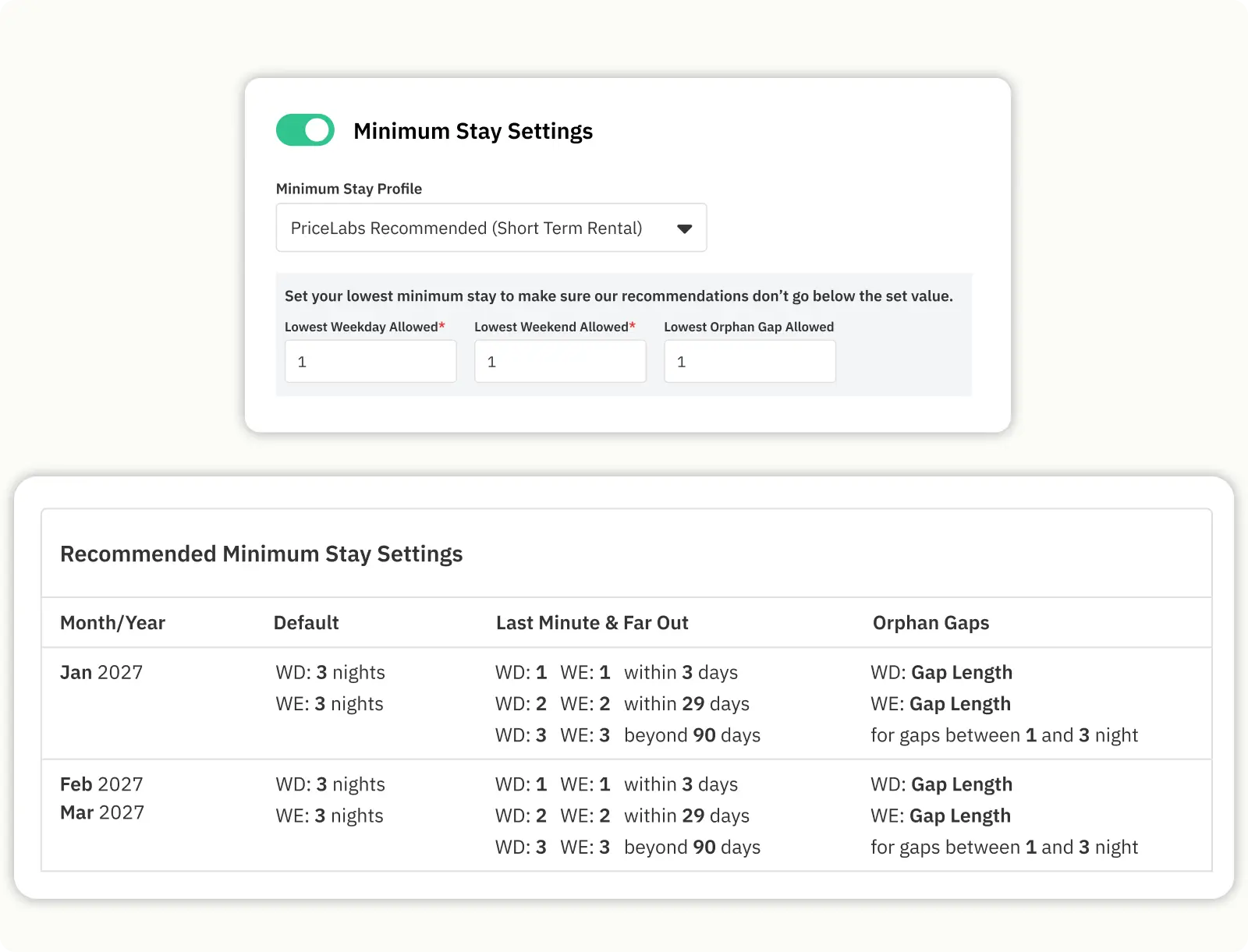
Travelers attending residencies often travel from out of state or overseas. They are frequently looking for more than a single night’s stay. Implementing a two- or three-night minimum during these periods can help you capture “bleisure” travelers and reduce the operational costs associated with high turnover. With PriceLabs, you can easily automate this by applying minimum stay restrictions or date-specific overrides. This allows you to set higher stay requirements specifically for residency dates while maintaining flexibility for gaps in your calendar using “Orphan Night” rules.
Monitor Local Regulations
Increased demand often brings increased scrutiny. For example, London’s 90-day rule or the strict registration requirements in New York can impact how much inventory is available. Ensuring your properties are fully compliant and registered not only protects you from fines but also positions you as a professional, reliable choice for international visitors.
The Critical Role of Dynamic Pricing
In a market driven by sudden announcements and high-intensity demand, static pricing is a significant liability. Property managers using manual pricing often react too late, missing the initial surge of bookings that occur minutes after a concert announcement.
Dynamic pricing technology identifies these demand spikes in real-time. By analyzing hyper-local supply and demand, tools like PriceLabs automatically adjust your rates to optimize your ADR without sacrificing occupancy. Properties utilizing dynamic pricing consistently see higher RevPAR by ensuring their rates are always aligned with the current market temperature which is evident from market data from Brazil and UK.
STOP PRICING BLINDLY: Capture Every Event Premium
When a residency is announced, the first wave of bookings happens in minutes. If your rates are static, you're leaving revenue on the table. Use PriceLabs to automatically detect local demand spikes and ensure your property is priced to win. Start optimizing your ADR and event-driven profitability today.
Start Your Free Trial NowFrequently Asked Questions
How do artist residencies differ from one-off concert dates for STRs?
Residencies create sustained demand over several days or weeks, allowing for more stable occupancy and the ability to implement longer minimum stay requirements. One-off dates often see a sharp, 24-hour spike that is harder to optimize operationally.
What should I do if my market shows low occupancy for a recently announced event?
Do not lower your rates. As seen with the Metallica 2026 data, early numbers are often low because the booking window has just opened. Maintain an event-based price floor to ensure you don’t get booked at a standard rate before the market fully reacts.
Can I use these trends to attract a specific type of guest?
Yes. Use the residency as a marketing hook. Tailor your listing description to mention the proximity to the venue or highlight amenities that appeal to concert-goers, such as flexible check-in times or proximity to public transit.
How can I track these events before they happen?
Utilizing Market Dashboards is the most effective way to see demand pacing. When you see a sudden increase in “booked” dates for a period in the future, it is often a signal that a major event has been announced.