
Table of Contents
Updated : Apr 6, 2026
It is the scenario every short-term rental (STR) property manager dreads: You look at your calendar for the upcoming month, and there are glaring white gaps of unbooked dates. The anxiety sets in. The immediate, knee-jerk reaction is almost always the same: “Drop the price. Slash the rates until someone books.”
While this impulse is understandable, it is often a strategic mistake. Panic-discounting can devalue your vacation rental brand, attract lower-quality guests, and ignite a “race to the bottom” that hurts your entire local market. Revenue management isn’t just about lowering prices; it is about capturing the value that you and your team have created.
Before you touch that base rate, you need to master the art of last-minute pricing. Here is why you should put down the red pen and pick up a data-driven strategy.
1. The “Price vs. Visibility” Diagnosis
Before you assume your price is the problem, you must determine whether you have a pricing or visibility issue. If your listing is buried on page 5 of search results, dropping your rate by $50 won’t help, because no one is seeing it in the first place.
The Fix: Merchandising over Price Cutting
Instead of manually lowering your base price, use the merchandising tools provided by OTAs (Online Travel Agencies).
- Promotions over Price Cuts: Platforms like Airbnb and Vrbo favor listings that run official promotions. By using built-in “Last Minute” promotion tools, you often get a boost in search ranking and a “strikethrough” price that psychologically appeals to guests.
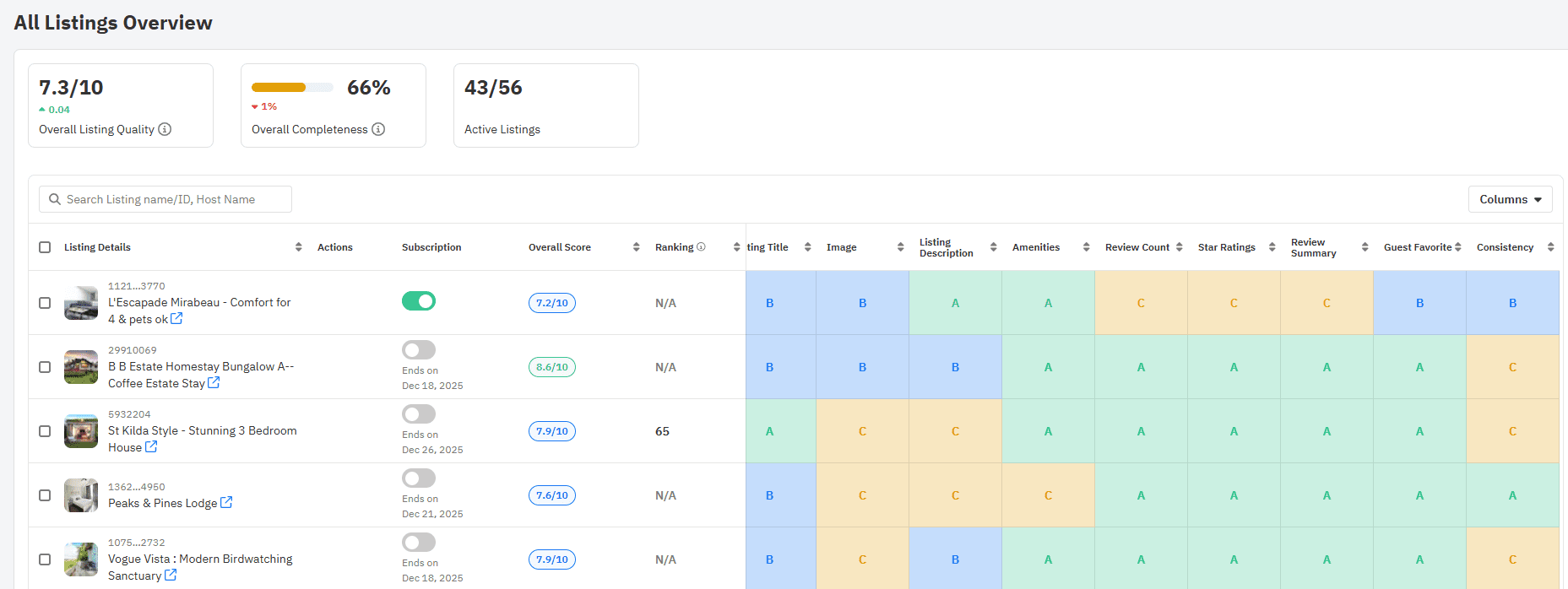
- Audit Your Content: Sometimes the issue is your listing’s health. Are your photos optimized? Is your hero image seasonal? A professional, well-lit shot of a cozy fireplace in winter or a sparkling pool in summer can drive more last-minute conversions than a desperate price drop. Use tools like PriceLabs Listing Optimizer to evaluate your listing score and understand which areas need improvement to improve your visibility
2. The Counter-Intuitive Move: Yielding Up with Length of Stay (LOS)
Here is a strategy that feels risky but often pays off: when you have last-minute availability, consider strategically adjusting your minimum length-of-stay (LOS) restrictions.
A single two-night stay at a discounted rate might actually cost you money once you factor in cleaning, operations, and wear and tear. By holding your rate while requiring a longer stay, you filter for a higher-quality guest who values the property.
Why LOS Matters
- Reduce Turnover Costs: Longer stays mean fewer cleanings and administrative headaches.
- Target the Right Segment: More guests are choosing longer stays to combine work and leisure. Highlighting a laptop-friendly workspace can attract digital nomads willing to stay a week or more, even at the last minute.
Transform your last-minute gaps into high-value bookings with data-driven automation.
Don’t let a few empty dates trigger a pricing panic. Whether you're navigating the low season or managing a high-turnover portfolio, PriceLabs gives you the analytical tools to stay competitive without sacrificing your ADR.
Start Your free trial3. The “Cascading” Strategy: Automate Your Flexibility
The most effective revenue managers don’t wake up every morning and manually adjust rules for hundreds of properties. They automate it using a Cascading Minimum Stay Strategy.
This approach acknowledges that booking behaviors change the closer you get to the arrival date:
- Far Out (6+ Months): Secure high-value, low-turnover bookings. You might set a strict 5-7 night minimum to protect your calendar for long-term travelers.
- Mid-Term (3-6 Months): Relax stay restrictions slightly to capture general vacationers or families.
- Close In (Last 14-30 Days): This is where the cascade happens. Your system should automatically drop requirements to 2 or 3 nights to capture weekenders and spontaneous travelers.
4. Monetize “Gap Nights” Without Public Discounts
One of the biggest sources of lost revenue is the “orphan night“—that random Tuesday sitting empty between two weekend bookings.
Instead of slashing the price on Airbnb and hoping for the best, market those days directly to the guests who are already booked on the shoulder dates.
- The Strategy: Use automation to detect these gaps. Send a personalized message to the guest checking out Tuesday morning: “We have a gap night available. Would you like to extend your stay for 50% off?”
- The Result: You secure revenue for a night that would have remained empty, avoid an extra turnover cleaning, and protect your ADR (Average Daily Rate).
Bonus Read: Short-Term Rental Property Management: The Complete Guide for Professional Managers
5. Use PriceLabs to Eliminate the Guesswork
To successfully resist the urge to slash rates, you need to be the “conduit” between the data and the property owner, with a data-driven strategy. Owners see an empty week and panic; your job is to show them why holding the line is more profitable in the long run.
Use PriceLabs Market Dashboard To Understand Market Trends
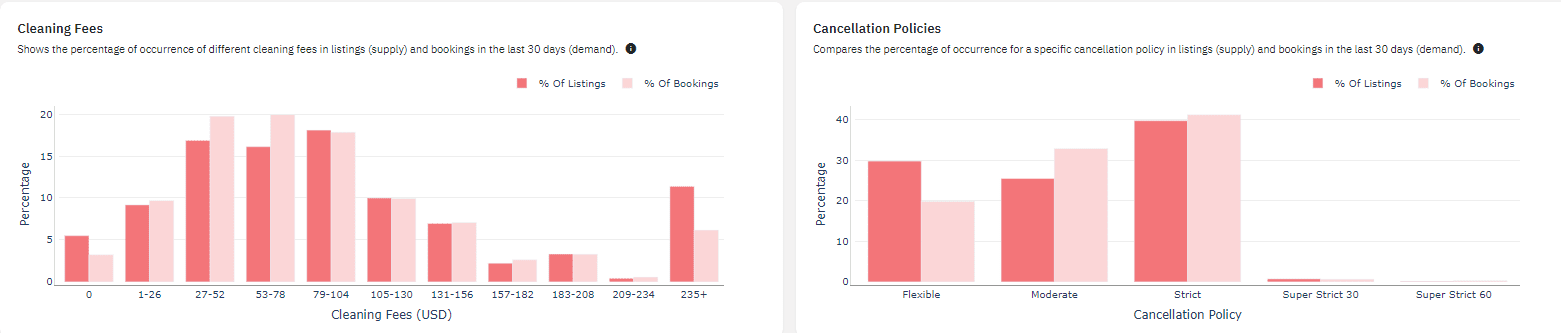
Property managers who integrate the PriceLabs Market Dashboard gain an edge by seeing exactly how their competition is behaving:
- Analyze the Competition: Create comp sets of listings similar to yours to determine whether the slowdown is specific to your property or the entire market. If everyone is 20% occupied, a price drop won’t create demand that doesn’t exist.
- Spot Opportunities: The tool identifies popular cleaning fees, cancellation policies, and the most desired amenities in your specific neighborhood.
- Benchmark Performance: Use Portfolio Analytics to pace your listing against the previous year’s performance and the current market average.
Leverage Dynamic Pricing
Instead of manual “red pen” discounting, use PriceLabs Dynamic Pricing. The algorithm analyzes daily data from Airbnb and Vrbo to automatically tweak your nightly rates based on real-time demand, local competition, and upcoming events. This ensures you are always competitive yet profitable without constant manual intervention.
Bottom Line
The “Art” of last-minute pricing is actually the art of preparation. Adaptability is key for managing low occupancy, but it must be fueled by data-driven solutions rather than reactive panic. By automating your stay restrictions, checking visibility first, and using sophisticated tools like PriceLabs, you shift from a scarcity mindset to a strategic, long-term profit mindset.
Frequently Asked Questions
1. Why am I getting fewer bookings even after dropping my price?
It may be a visibility issue rather than a pricing one. Factors like inaccurate descriptions, poor photos, low reviews, or slow response times can drop your ranking regardless of your price. Use PriceLabs Listing Optimizer to identify the real reason for declining occupancy.
2. What is the recommended price reduction for the low season?
It is generally advisable to experiment with a 5-20% reduction in your minimum nightly pricing. However, your minimum price should ideally be 20-30% less than your base price to maintain profitability.
3. How can I increase midweek bookings?
Consider releasing weekday-specific deals, reducing the minimum length of stay for midweek stays, or targeting business travelers by highlighting amenities such as high-speed Wi-Fi and coffee machines.