
Get started with PriceLabs now!
Want to learn what PriceLabs can do for you? See for yourself with a free trial. Get started now!

You've got the property. You've furnished it, photographed it, listed it. And yet, one question keeps nagging at you: Am I charging the right price?
It's not a small question. Pricing is the single biggest lever you have over your rental income — more impactful than amenities, more immediate than reviews, and more powerful than any platform algorithm. Get it right consistently, and your property becomes a reliable income machine. Get it wrong, and you're either sitting on empty nights or underselling a property that's worth significantly more.
The problem is that most hosts approach pricing reactively. They set a rate when they first list, adjust it occasionally when they notice a slow week, and hope for the best. That approach leaves real money on the table — and in some markets, the gap between reactive pricing and an Airbnb pricing strategy can be tens of thousands of dollars per year.
This guide is the antidote to that.
About this guide: Pricing Rentals with Confidence is a joint ebook developed by PriceLabs and Furnished Finder — two platforms that together touch nearly every corner of the furnished rental market. This blog is based on that ebook.
It's free, no credit card required, and goes deeper on every topic covered below.
PriceLabs is a revenue management platform trusted by hosts in 135+ countries. It uses real-time market data, demand signals, local event intelligence, and competitor pricing to automatically adjust your nightly rates — so you're always priced right for the moment, not just the month.
Furnished Finder is the leading marketplace for monthly furnished rentals (30+ day stays), with over 500,000 travelers searching for housing every single month. Demand for 30+ day stays has more than doubled year-over-year on the platform, driven by traveling healthcare workers, corporate assignees, relocating families, and remote professionals.
This collaboration brings together two complementary data sets and areas of expertise: PriceLabs' deep intelligence on short-term rental pricing dynamics and automation, and Furnished Finder's ground-level data on monthly rental tenant behavior, budgets, and booking patterns. Together, they cover the full spectrum of the furnished rental market.
This guide is for you if you are:
Here's what we'll cover:
Let's start at the beginning.
Before you can price well, you need to understand which model you're operating in because each one follows different rules. The four rental models available to hosts each carry distinct pricing logic, demand mechanics, and income patterns.

The most common pricing mistake isn't setting the wrong number — it's applying the wrong logic. A host who prices their short-term rental like a long-term lease will consistently underperform. A host who tries to run a monthly rental with STR-style dynamic pricing will confuse potential tenants and miss bookings. The model shapes everything: your rate-setting approach, your review cadence, your tolerance for vacancy, and what "optimization" even means.
This guide focuses primarily on STR and monthly rentals — the two models with the most pricing complexity and the most room for performance improvement — plus the hybrid strategies that combine them.
Unlike a product sitting in a warehouse, a vacant Tuesday night can never be recovered. There is no inventory buffer, no next-season markdown. The night passes, and the revenue with it. This is what makes STR pricing so different from virtually every other pricing context — and so consequential to get right.
The implication is that your goal isn't to find one price that works across the year. It's to find the optimal price for each specific night on your calendar.
A Friday in July before a major concert is worth something completely different than a Tuesday in February. Static pricing treats them the same. Dynamic pricing for short-term rentals doesn't.
Understanding what moves STR demand is the foundation of everything else. There are five core signals every host needs to track:
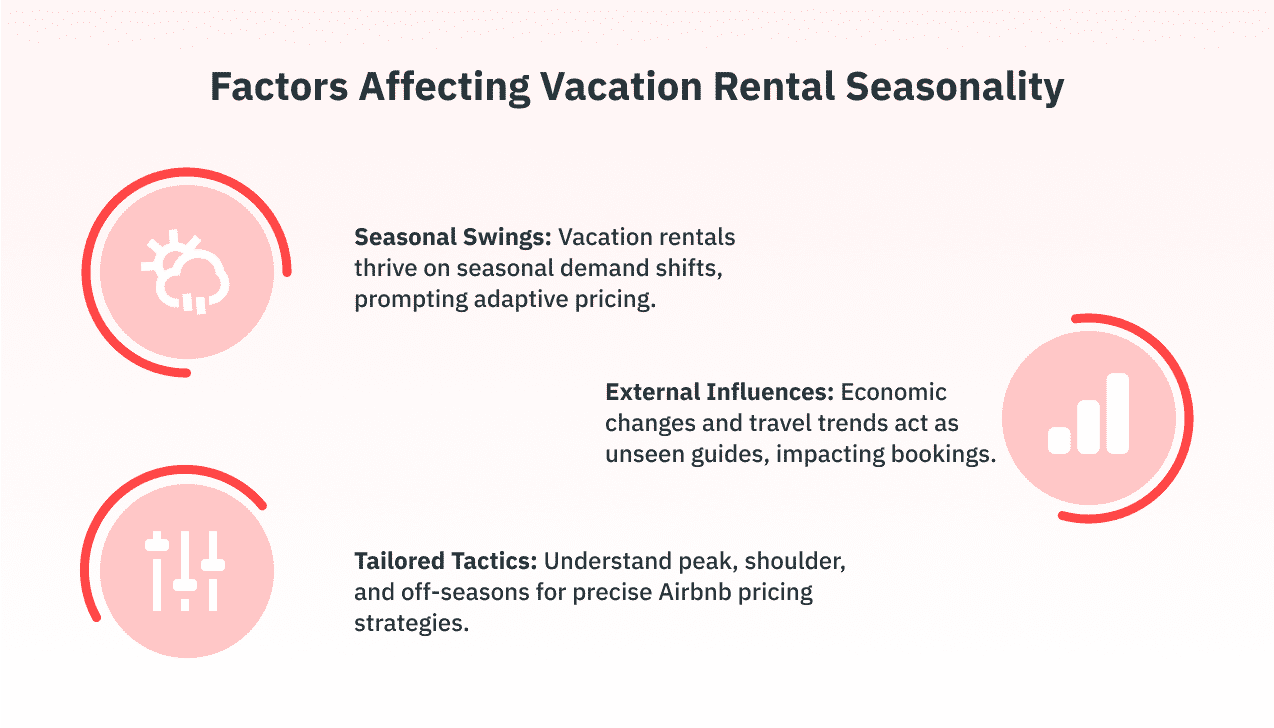
Every market has a seasonal demand curve. Beach destinations peak in summer. Mountain ski towns peak in winter. City markets often have multiple demand waves tied to weather, events, and travel patterns. Your pricing needs to ride this curve, not ignore it.
Seasonality isn't just about raising prices during the busy season — it's about understanding the shape of demand throughout the year so you can protect your best windows and fill your slow periods without destroying your rate. Actionable first step: before you set any rates, map out your market's high-, mid-, and low-demand periods over a full year. This becomes the skeleton of your pricing calendar.
Leisure markets almost universally see stronger weekend demand: Friday and Saturday nights outperform weekdays, often by 20–40%. Business travel markets can invert this, with higher midweek demand from corporate travelers and softer weekends.
Knowing your market's day-of-week pattern lets you price weekdays and weekends independently — a practice that, over the course of a year, meaningfully improves total revenue by preventing underpriced peak nights and overpriced slow ones.
Nothing moves STR demand faster than a major local event. A sold-out music festival, a college graduation weekend, a national sporting championship, and a large convention can all double or triple nightly rates in the surrounding area for the duration of the event.
Monitoring a local events calendar or using a tool that does it for you, and pricing proactively consistently captures the highest rates for these windows.
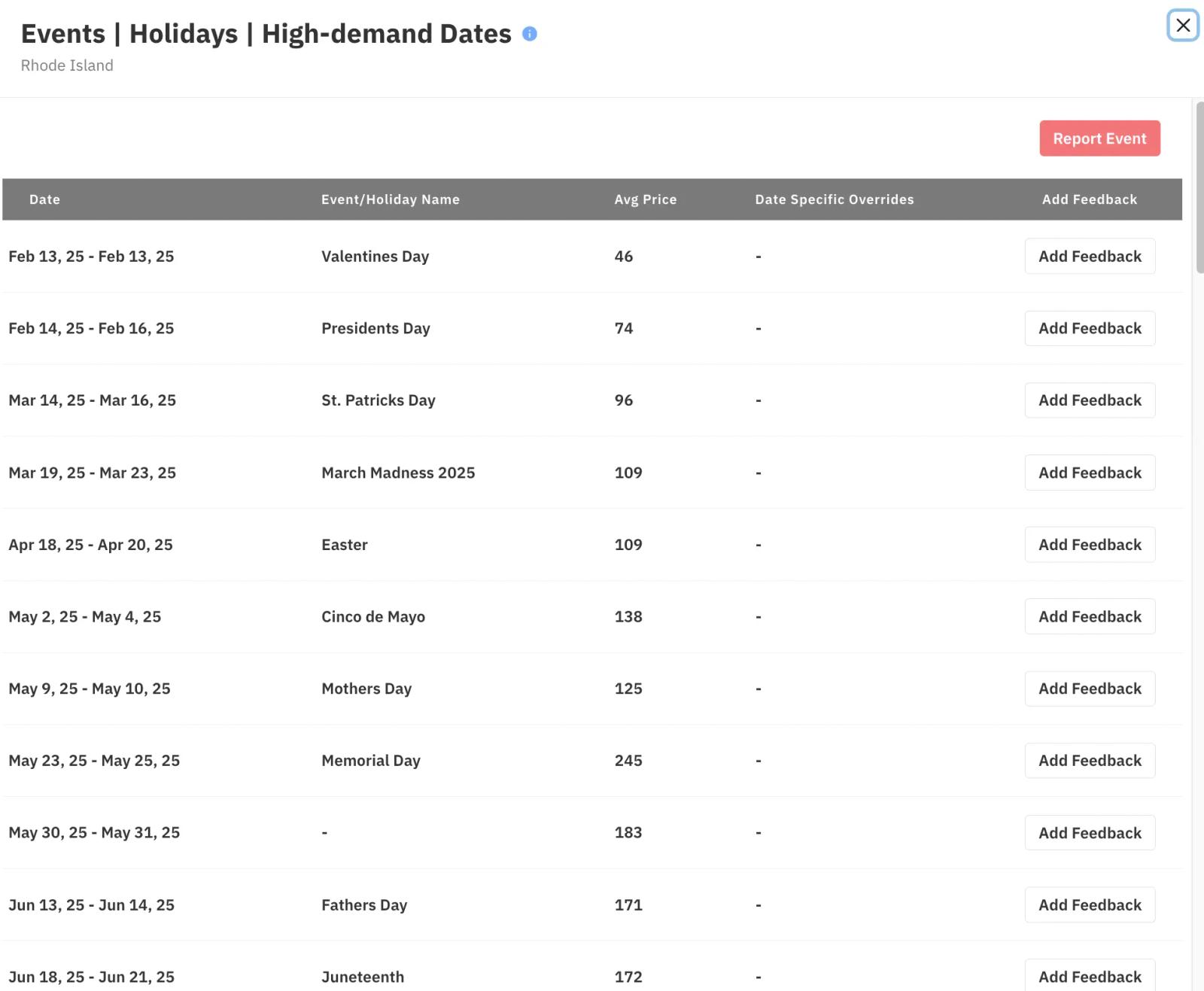
Hosts who miss them — or notice them too late — leave significant money behind. This is one area where manual attention pays enormous dividends, and where even a well-configured dynamic pricing tool benefits from a human keeping an eye on local market intelligence.
How far in advance your calendar is booking relative to historical norms is one of the most useful real-time demand signals available. If dates four weeks out are filling faster than usual, demand is strong, and you may be able to hold or raise your rate. If those same dates are sitting empty at what feels like a normal price, something is off: either demand is weaker than expected, or your rate is out of alignment with the market.
Booking pace is not an obvious metric for new hosts, but it's one that sophisticated operators pay close attention to, often more than occupancy rate alone. Pacing tells you what's about to happen; occupancy tells you what already happened.

Your price doesn't exist in isolation. It exists relative to every other listing a potential guest is comparing you to. Knowing what your true competitive set is, similar size, quality, amenities, and location, charging in real time keeps you calibrated. And critically, it's not just about their listed rates. It's about what they're actually getting booked at.
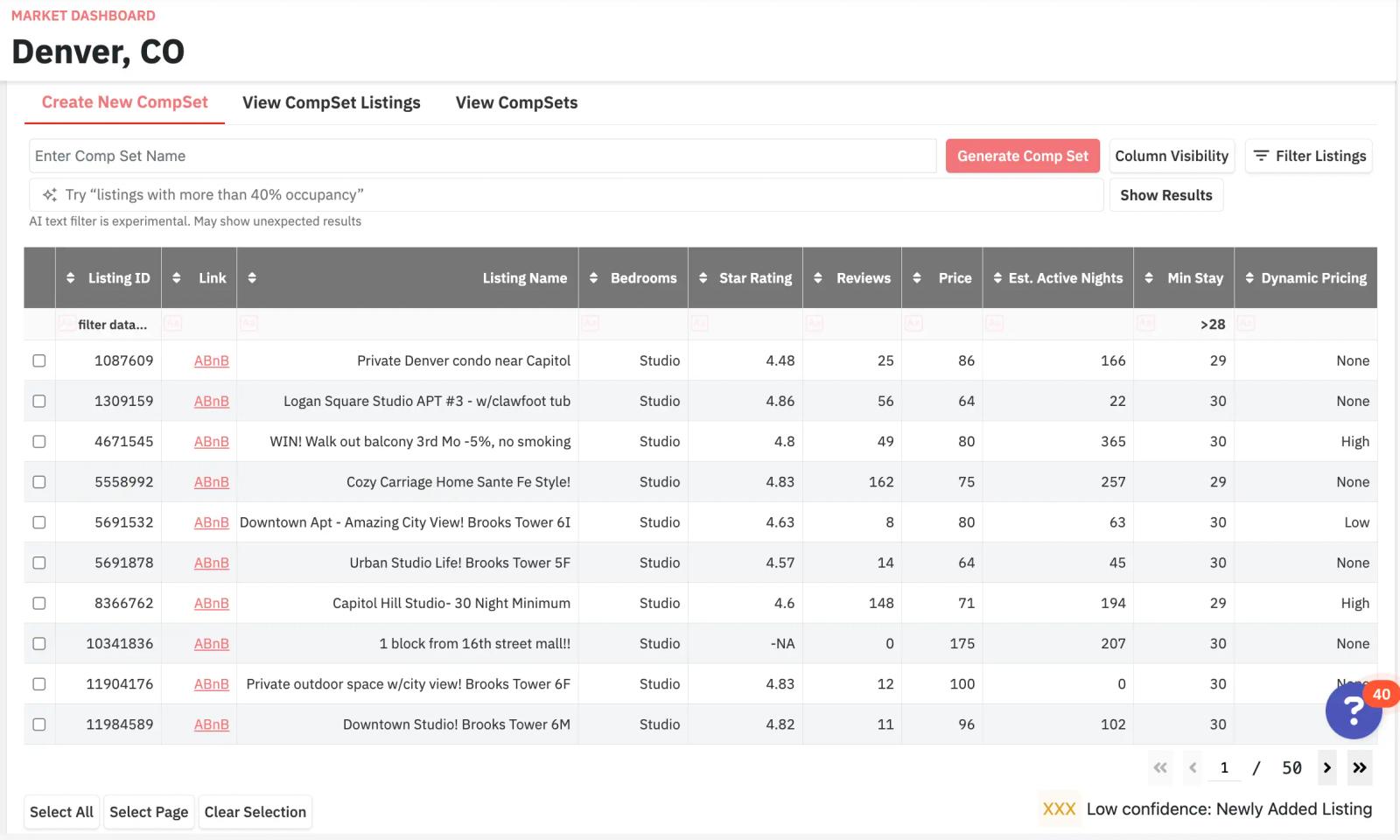
A listing priced at $200 that's always empty is not evidence that $200 is a viable rate. A listing consistently booked at $140 tells you much more about where real demand sits.
Your base price is your pricing anchor. In dynamic pricing systems like PriceLabs, every automated adjustment — seasonality factors, event multipliers, last-minute discounts — is calculated relative to your base price. If your base is wrong, everything built on top of it is wrong too. Getting this number right is the single most important configuration decision in your pricing setup.
This is the minimum you need to charge per occupied night to not lose money. Add up all your monthly costs — mortgage or rent, insurance, HOA fees, property management, platform fees (Airbnb/Vrbo typically charge 3–5% host fees), cleaning costs per turnover, restocking, utilities if included, and a realistic maintenance reserve. Then divide by the number of nights you realistically expect to be occupied each month. That's your price floor. Go below it consistently and you're losing money, regardless of what your gross revenue looks like.
Find 5–8 listings in your market that are genuinely comparable: similar bedroom counts, similar amenities, similar photo and listing presentation quality, and similar locations. This is your competitive set.
Now look at two numbers: their listed rate, and critically, whether they're actually getting booked. A listing always available at $200 indicates the market won't clear at $200, given that listing's quality. A listing consistently occupied at $150 tells you the market will clear at $150. Focus on actual bookings, not listed rates.
PriceLabs Base Price Help makes this process data-driven rather than intuitive — it analyzes real market booking data to suggest a base price grounded in what your competitive set is actually clearing, not what they're listing at.

Your base price should sit within the range of your competitive set, at the position that reflects your relative quality. If your listing is meaningfully better than most comparables — superior photos, more amenities, faster host response, stronger review history — you can anchor toward the upper end. If you're newer to hosting, still building your review base, or your listing quality is average, anchoring toward the midpoint or slightly below is smart: you're buying occupancy and social proof.
Your first month of live pricing data is invaluable. Look at your occupancy rate, your average nightly rate, and your RevPAN (Revenue Per Available Night — covered in Part IV). If you're consistently at 90%+ occupancy, your base price is almost certainly too low — you're filling the calendar but leaving revenue behind. If you're below 60% and your listing quality is solid, your price may be out of range. Adjust once — not five times simultaneously — and watch for at least two weeks.
Manually adjusting pricing for every date, every season, every event, and every competitive shift is simply not sustainable — especially beyond a single property. Dynamic pricing platforms automate this with precision and speed no human can match.
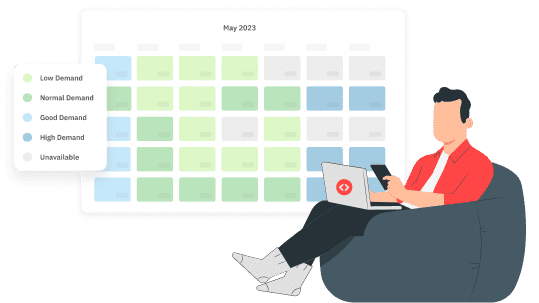
Here's what a well-configured dynamic pricing system does, continuously and automatically:
The important nuance: Dynamic pricing is not a fully autonomous system. You set your base price, floor, ceiling, and strategic preferences. The automation handles the routine adjustments within those guardrails. You step in manually for high-stakes exceptions: specific event windows where you want a firm price floor, strategic positioning decisions that require human judgment, or local market intelligence the algorithm doesn't yet have.
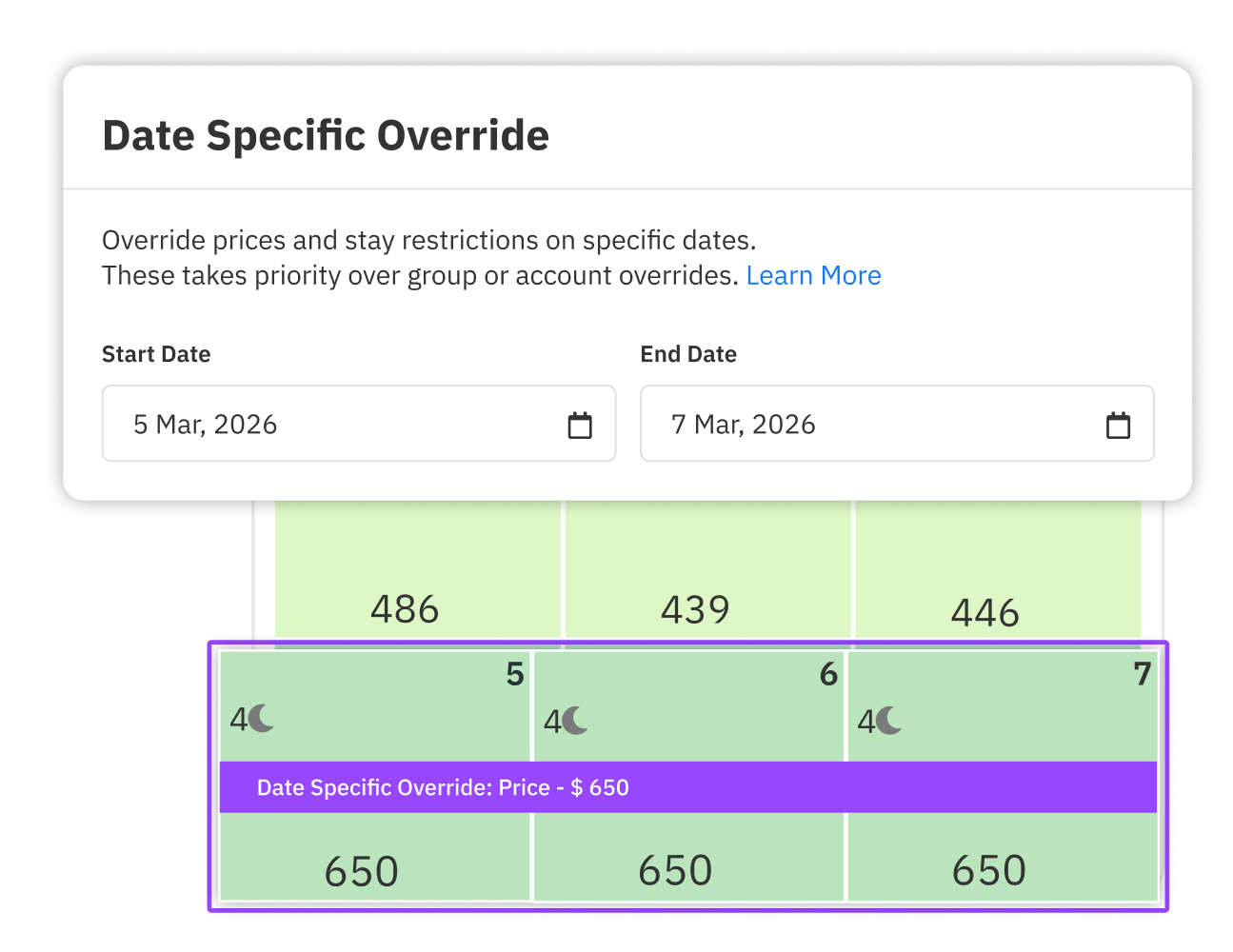
Use Date-Specific Overrides in PriceLabs to make those targeted manual interventions without disrupting your broader automated strategy.
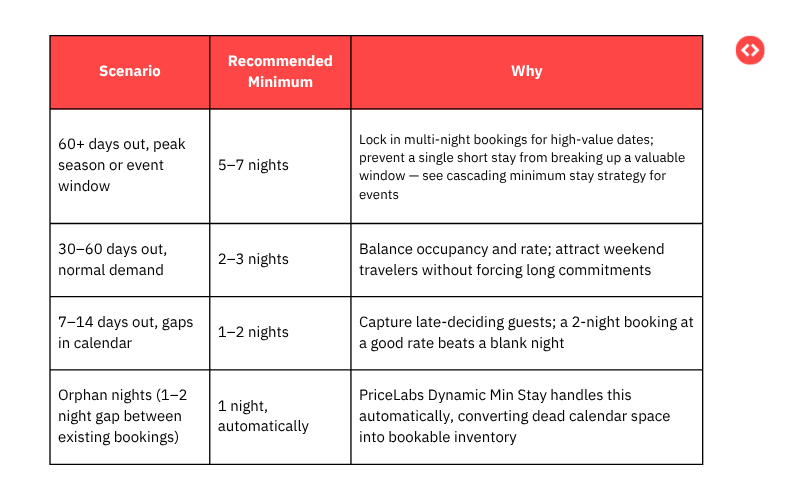
Most hosts pick a minimum stay requirement — usually 2 or 3 nights — and leave it there indefinitely. It's one of the most common missed opportunities in STR management.
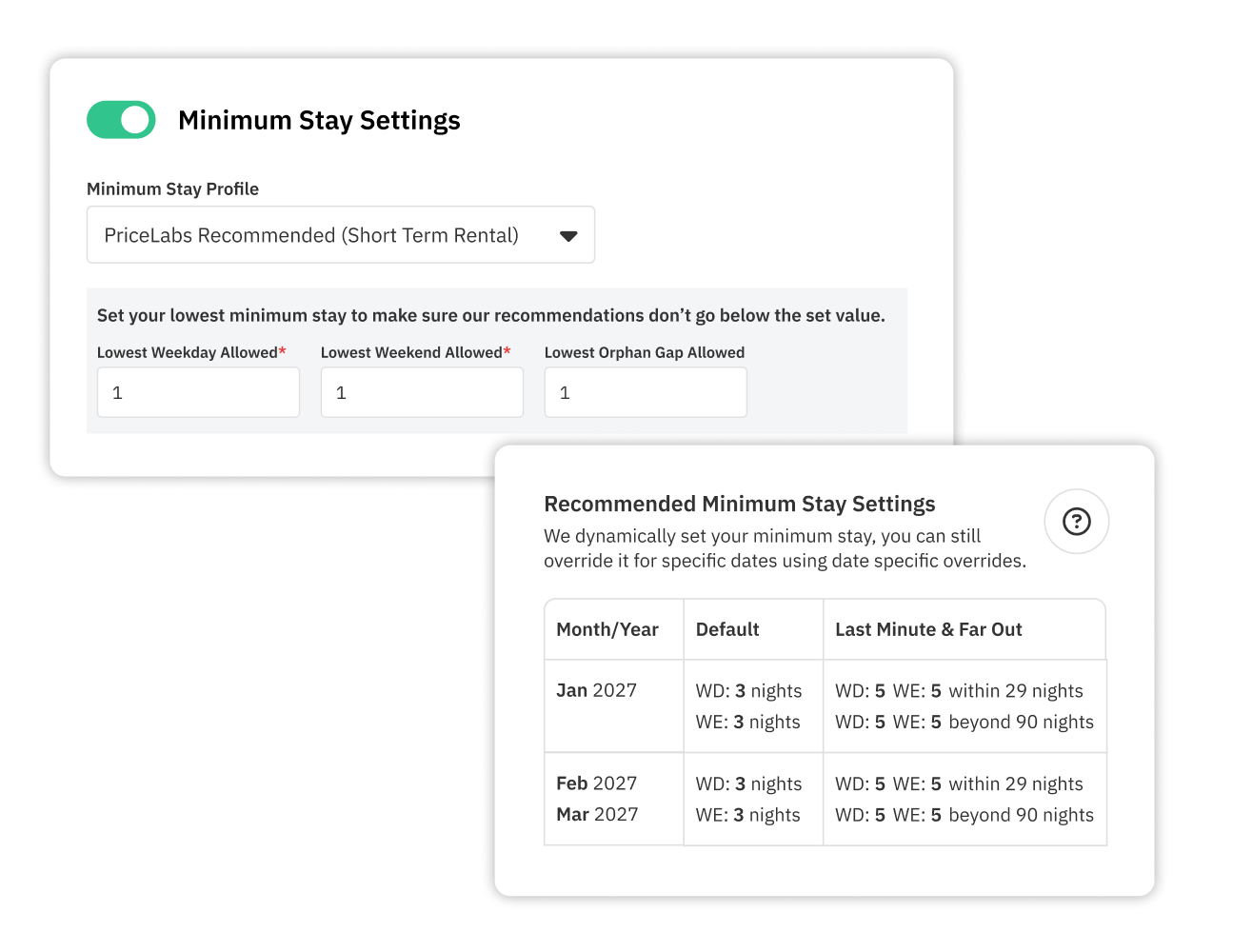
PriceLabs Dynamic Min Stay manages most of this automatically adjusting minimums based on date, demand, and calendar context. The result is significantly fewer unoccupied gap nights and better overall calendar efficiency across the year.
Pricing is a signal before it's a transaction. Before a guest reads your listing description, before they look at your photos, your nightly rate tells them where you sit in the market — and whether you're worth clicking on.
There are three defensible market positions:
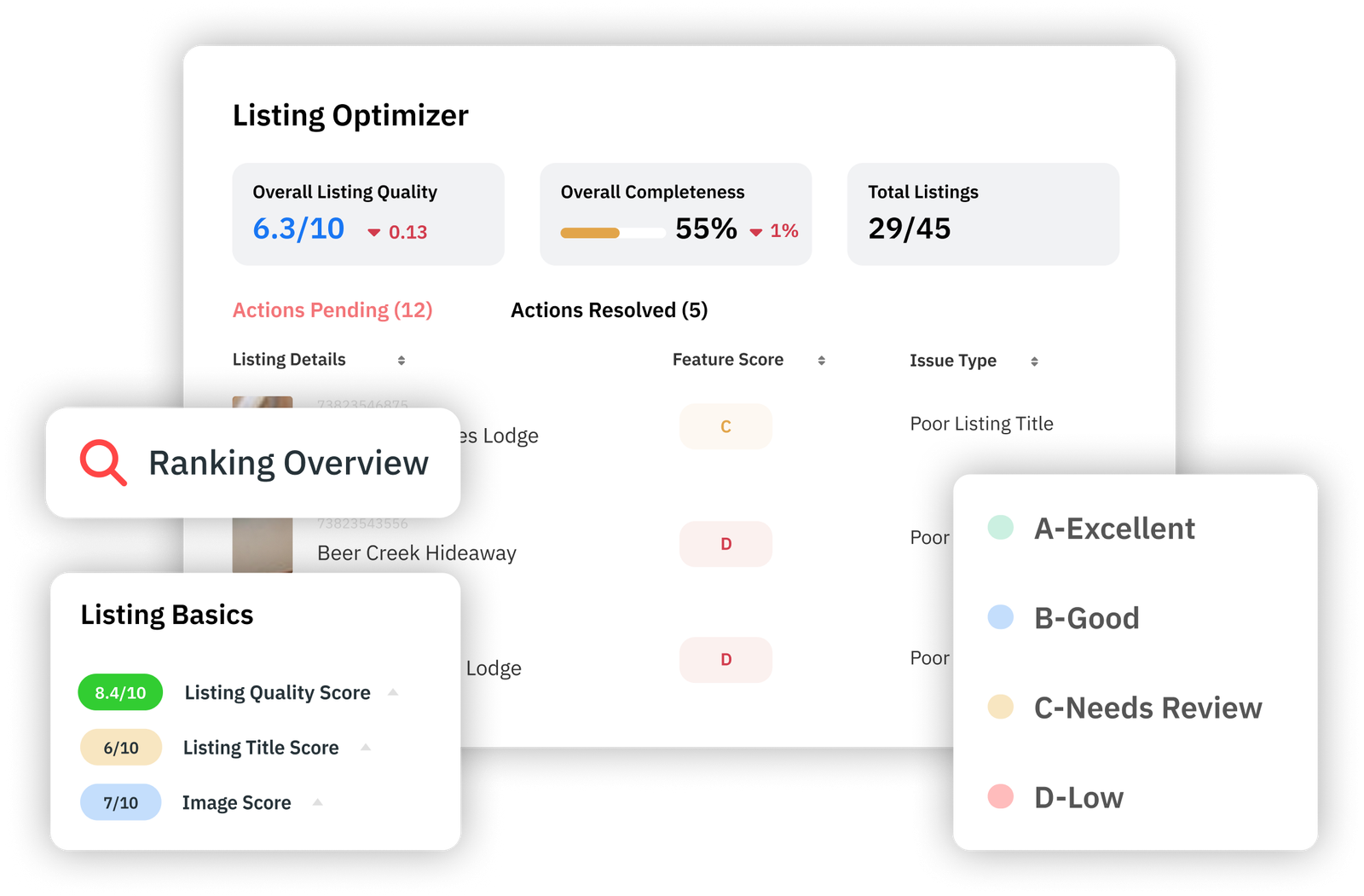
One important caveat: don't confuse your desired position with your earned position. A listing with 10 reviews and average photos cannot command premium rates on the strength of the host's belief in the property. Positioning must be grounded in what guests actually see and experience.
Hosts who focus only on individual nightly rates miss the bigger picture. Sustainable STR revenue comes from a seasonal strategy that optimizes across the whole year — and treats each season as a distinct strategic period with its own objectives.
Before setting any rates, lay out your market's demand calendar for the year: when is peak season? What are the known high-demand event windows? When does the shoulder season start? When does the slow season bottom out? When do major events fall? This map becomes the context for every pricing decision you make.
Three seasonal objectives:
Treat season transitions as a strategic reset. At the start of each season, revisit your base price, minimum-stay rules, and target guest profile. The guest booking your property in October is different from the one booking in July — their priorities, booking lead times, and price sensitivity all differ. Calibrate to the coming season, not the one that just ended.
The hosts who consistently outperform in STR pricing aren't necessarily those with the most sophisticated tools. They're the ones who treat pricing as an ongoing practice — reviewing regularly, interpreting what the data is telling them, and making deliberate adjustments one at a time. A short-term rental pricing SOP can help you build this into a repeatable weekly and monthly routine.
A monthly review covers five questions (for a deeper breakdown of the full set of vacation rental revenue management metrics worth tracking, see the linked guide):
The most important discipline: Make one change at a time and observe the effect for at least 2 weeks before making another. Hosts who make five simultaneous adjustments can never tell what worked. Hosts who change one thing and watch what happens build real pricing intuition over time.
Monthly rentals — stays of 30 days or longer — are not simply longer versions of short-term bookings. They're a different market, a different guest profile, and a different operating model. Applying STR pricing logic to monthly rentals is one of the most common and costly mistakes landlords make.
The tenant renting your property for 90 days is not a tourist. They're likely a traveling nurse on a 13-week hospital contract, a corporate employee on an extended project assignment, a family between homes during a renovation or relocation, or a consultant anchored in a city for the quarter. These are people with real housing needs, defined professional budgets, and a strong practical incentive to stay put once they find somewhere that works.
Furnished Finder platform data tells the story clearly:
That average stay of 97 days is worth sitting with. Four turnovers per year versus 12–20+ for a comparable STR. That's dramatically lower cleaning costs, less wear and tear, less operational overhead, and far more predictable cash flow. The tradeoff — lower potential upside per night — is real, but it's consistently offset by the efficiency gains and the reliability of the income stream.
Knowing your tenant pool is foundational to monthly rental pricing. You can't price well for a market you don't understand. Across the Furnished Finder platform, demand breaks down roughly as:
A few important observations from this breakdown:
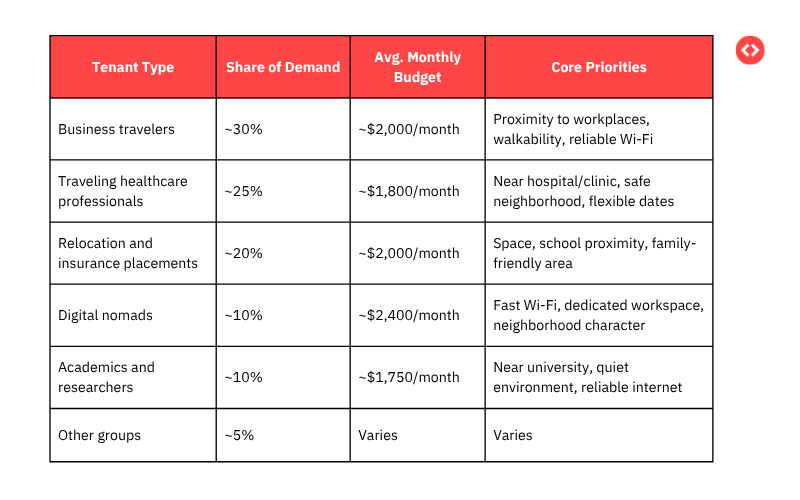
Monthly rental pricing is built from the ground up — not derived by multiplying or discounting an STR nightly rate. Here's the complete framework:
Start by researching what comparable unfurnished long-term rentals in your area are leasing for. This is your market baseline. A well-furnished, move-in-ready monthly rental should command a 20–40% premium over a comparable unfurnished long-term unit. That premium reflects the furniture, equipment, utilities, flexibility, and professional management that monthly tenants are paying for.
If a comparable unfurnished 2-bedroom in your area leases for $2,000/month, your furnished monthly rate should anchor somewhere between $2,400 and $2,800/month — assuming your property is genuinely well-furnished and well-equipped.
Monthly rental tenants evaluate total-cost housing, not just the rent line item. Are utilities included? High-speed Wi-Fi? In-unit laundry? A fully stocked kitchen? Parking? Regular cleaning? Each of these has real dollar value to a tenant who would otherwise need to source and pay for them separately.
Include them in your listing explicitly — not just "utilities included" but which utilities, up to what cap. Not just "Wi-Fi" but the speed (documented with a speed test screenshot). And price them in. Research on the Furnished Finder platform consistently shows that listings with complete, specific amenity information convert significantly better than vague or general ones.
Even with strong monthly demand, you'll have transition gaps between tenants — typically 1–2 weeks per turnover for cleaning, maintenance, and new tenant onboarding. A realistic vacancy assumption for monthly rental pricing is 10–15%. This means you should price as if 10–15% of your available nights won't generate income.
If your all-in monthly costs are $2,000, and you apply a 15% vacancy buffer, your effective cost basis per tenanted month is closer to $2,350. That's your true floor — not the nominal $2,000.
A 30-day booking and a 90-day booking represent meaningfully different value to you as a landlord. Longer stays mean lower per-day turnover costs, more predictable income, and reduced vacancy risk. Many landlords offer a modest discount — typically 5–10% off the base monthly rate — for stays of 60+ or 90+ days. Whether this makes sense depends on your market: in high-demand areas where quality tenants are actively competing for units, you may not need to discount at all.
Beyond the rate itself, platform data from Furnished Finder identifies several listing characteristics that consistently drive better booking performance:
The most common question from hosts evaluating monthly rentals is: "Will I make less money than STR?"
The answer is market-dependent — but the gap is almost always smaller than hosts initially assume, and on a true risk-adjusted basis, monthly rentals are often the stronger choice.
STR has a higher revenue ceiling. In peak season, with strong demand and good pricing, STR nightly rates during event weekends can dramatically outperform monthly rental equivalent rates. The upside potential is genuinely higher.
But STR income is also highly volatile. Peak weekends coexist with slow weekdays. Strong seasons are followed by off-seasons. Cancellations happen on individual nights with no replacement income. And the full operational cost of STR — 12–20 turnovers per year, professional cleaning after every checkout, constant platform management — significantly erodes the gross revenue numbers that most hosts focus on.
Monthly rental income is more resilient. Four turnovers per year means dramatically lower cleaning and restocking costs. No revenue lost to last-minute cancellations on individual nights. More predictable cash flow for budgeting and mortgage service. Less time and energy spent managing the operational machinery.
The real comparison is net income, not nightly headline rate.
When you model total annual income minus vacancy, turnover costs, cleaning, and operational overhead, monthly rentals frequently match or outperform STR on a net basis — a point reinforced by any serious look at Airbnb revenue management strategy for annual profitability.
Practical signals that monthly deserves serious consideration:
If two or more of these describe your situation, running the monthly rental math carefully is worth your time and the full ebook includes worksheets to help you do exactly that.
The hybrid model — using a single property for short-term rentals during high-demand periods and monthly rentals during slower ones — is increasingly popular in markets with meaningful seasonal demand swings. Done well, it can outperform either model alone. Done poorly, it produces the worst of both: rushed monthly pricing that undersells and poor calendar management that misses the STR window.
The core opportunity is simple: capture STR nightly rates when demand genuinely justifies the operational overhead, then shift to monthly rentals to fill the trough periods with reliable income instead of fighting for thin margins on STR platforms during slow season.
The strongest candidates for hybrid operation:
Hybrid fails when transitions are reactive. The critical discipline is deciding your seasonal mode in advance — before the market forces your hand.
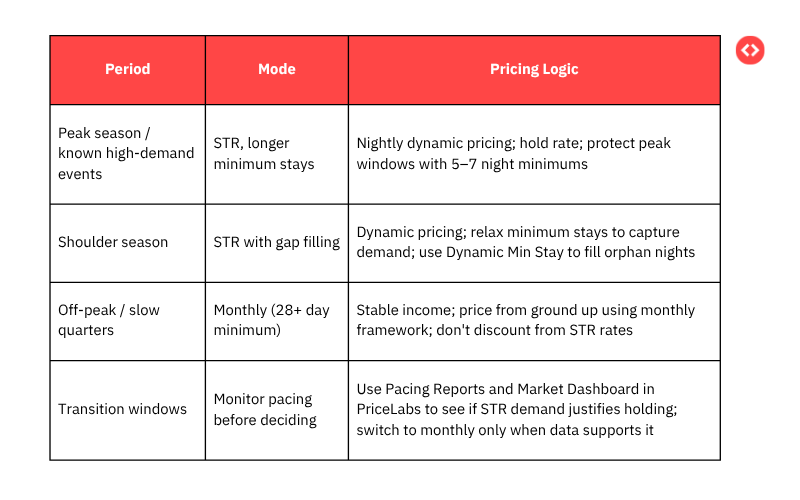
The single most important mindset shift in rental pricing is moving from nightly rate as your primary metric to Revenue Per Available Night (RevPAN).
RevPAN = Total Revenue ÷ Total Available Nights
It's the only number that captures both your rate and your occupancy together — the two levers that actually drive income.
A host charging $200/night at 60% occupancy earns $120 RevPAN. A host charging $150/night at 90% occupancy earns $135 RevPAN.
The second host is outperforming by 12.5% — despite having a lower listed rate. This matters enormously for how you interpret pricing decisions. When a dynamic pricing system lowers your rate slightly on a slow Thursday to ensure the night gets booked, it's not "losing you money" — it's making a rational tradeoff between rate and occupancy to maximize RevPAN. An occupied night at $125 always outperforms a vacant night at any listed rate.
The goal is never the highest possible rate. It's the optimal combination of rate and occupancy that produces the strongest RevPAN.
There is no universally best rental model. The right choice depends on your market, your financial goals, and how much operational involvement you want.
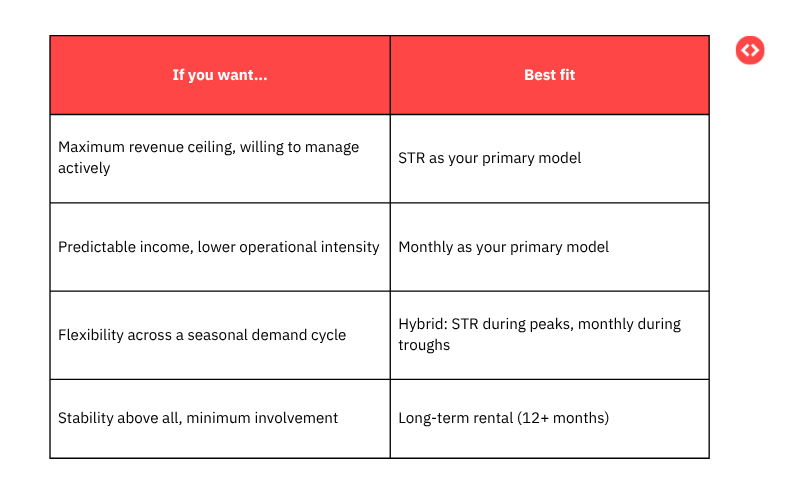
The key questions: How important is income maximization versus income predictability? How much do you want to manage? What's your market's demand profile — tourism and events, or workforce and relocation? How long is your planning horizon? If you're unsure where dynamic pricing vs. revenue management fit in your strategy, that linked guide clearly breaks down the practical differences.
The good news: you're not locked in permanently. Many hosts start with one model, learn their market through real performance data, and evolve their strategy over time. What matters is starting with clear goals and measuring against them honestly.
Your price is the first signal you send to a potential guest or tenant — before they read your description, before they look at your photos. That rate tells them where you sit in the market and whether you're worth clicking on.
Price too low relative to your actual quality, and you attract guests who expect a bargain and feel entitled to demand one. Price too high relative to your demonstrated quality — your reviews, photos, and amenity set and you'll sit empty while comparable listings convert.
The goal is alignment: a price that matches the experience you actually deliver, positioned within the range where guests at your quality level expect to find you. From that position, you compete on the factors that actually close bookings: great photography, fast and professional responses, accurate and honest listing descriptions, and a consistent track record of guest satisfaction.
Pricing gets you considered. Everything else gets you booked. For a full checklist on listing quality and content, review those factors in tandem with your pricing setup.
Pricing gets better with time, practice, and better data. The hosts who invest the attention early build a system and an intuition that keeps working for them long after the initial setup.
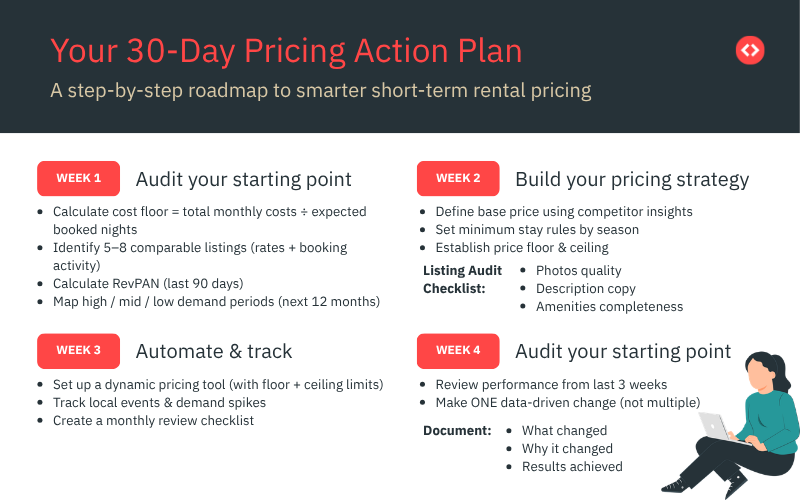
This blog is based on Pricing Rentals with Confidence — a free, comprehensive ebook developed jointly by PriceLabs and Furnished Finder.
The ebook includes more detailed frameworks, step-by-step PriceLabs configuration walkthroughs, extended Furnished Finder data on tenant types and market demand, long-term rental strategy coverage, and a full model comparison framework with decision worksheets.
Ready to put these strategies to work?
Start a free trial with PriceLabs → — dynamic pricing and revenue management for STR and monthly rental operators in 135+ countries.
List your property on Furnished Finder → — reach 500,000+ monthly rental travelers searching for furnished housing every month.
Want to learn what PriceLabs can do for you? See for yourself with a free trial. Get started now!