Table of Contents
Updated : Mar 24, 2026
The allure of remote property management is undeniable, offering the freedom to operate a hospitality business from anywhere in the world. However, as many short-term rental hosts discover, managing a property from hundreds or thousands of miles away quickly shatters the illusion of purely “passive” income. Whether you are living in Europe and managing a villa in the Caribbean, residing in England while operating a rental in Texas, or simply living a few states away, physical distance amplifies every operational hiccup. When a severe winter storm freezes the main water line, a smart lock traps guests outside in the middle of the night, or a cleaner unexpectedly cancels just hours before check-in, being far away can turn a simple maintenance issue into a logistical crisis.
As we discussed regarding how hosts handle major utility failures like water outages, survival in this industry relies heavily on rapid response and community relationships. The secret to bridging the gap between a remote owner and a seamless guest experience lies in building a resilient “boots on the ground” infrastructure. A successful remote operation requires more than just automated messaging and dynamic pricing software; it demands a trusted local team of dependable cleaners, versatile handymen, vigilant neighbors, and specialized emergency contacts.
This article, will explore how to source, empower, and manage an indispensable local support system. By combining the right technological tools with strong local relationships, remote hosts can transform potential disasters into five-star reviews, ensuring their properties thrive wherever in the world they are.
Strategic Framework for Remote Operations
The “boots on the ground” philosophy is the critical operational pillar for short-term rental success when the owner is geographically removed. Whether managing a Texas property from an 11-hour flight away in England (Joanna Woods) or navigating a 7-hour time difference (Julia Havia), the host cannot personally intervene. Strategic success depends on transforming the owner’s role from a hands-on operator to a remote supervisor of a local proxy network. This infrastructure maintains property value and guest satisfaction by bridging the physical gap with clinical precision.
Core Operational Challenges:
- Logistical Asymmetry: The distance creates a “logistical nightmare” where simple fixes (like a door handle breaking during a same-day turnover) require high-cost, rapid-response intervention.
- Technical Failure Chains: Remote properties are susceptible to infrastructure collapses, such as well-pump failures or “sink apocalypses” (David), which can escalate into total stay cancellations without a ready-response team.
- Information Lag: Time zone differences mean a midnight emergency for the guest is the middle of the host’s workday or sleep cycle, necessitating a decentralized communication layer.
Professional Standards for the Remote Operator:
- Radical Transparency: Proactively disclose property realities—such as the requirement to bring bottled water for cooking when using spring water or the difficulty of navigating mountain access roads (Peter De Neef)—to set expectations and build trust.
- Continuous Feedback Loops: Maintain constant communication with both the local team and the guest to manage the “100 small problems” (Joe Rohrhoff) that inevitably arise.
- Outcome Ownership: Adopting the mindset that regardless of vendor failure or “acts of God,” the host “owns” the guest’s experience and must solve the problem immediately.
This framework moves the operation from reactive crisis management to proactive asset oversight.
The Support Network: Essential Remote Roles
A multi-layered support network is the backbone of a remote operation, designed specifically to mitigate the risk of a Single Point of Failure (SPOF).
The Cleaning Team (The “Eyes” of the Asset)
The cleaning team is the most vital hire. Beyond sanitation, they act as onsite inspectors who identify damage—like ruined frying pans or “blood on the sheets” (Kevin Horn)—before the next guest checks in.
- Recruitment Strategy: Eschew traditional job boards for local community integration. Leverage high-visibility local figures; for example, utilizing a mobile vegetable vendor on a three-wheeler to display “cleaner required” signage (Abhimanyu) can reach dependable, word-of-mouth talent who become the “backbone of the business.”
The Technical Specialist Pool
Remote hosts must establish a roster of “preferred partners” (HVAC, plumbers, electricians) to avoid the “emergency surcharge” of unknown vendors.
- The Crossover Insight: In a remote environment, resourcefulness is a KPI. High-level hosts utilize “crossover” skills, such as deploying an HVAC technician to repair a pool pump on a holiday weekend because both systems rely on similar mechanical and electrical principles (Liz Damstra).
The Inspector/Caretaker
For high-stakes portfolios, an “inspector” provides an additional layer of quality control. This role verifies that the property is “extra perfect” (Charlene Miller), specifically checking for minor oversights like hair in the tub or missing supplies that a primary cleaning team might overlook during a high-speed turnover.
The Strategic Neighbor
Neighbors are “logistics recovery agents” capable of handling “fortuitous coincidences.” Their proximity allows for immediate intervention in scenarios a contractor cannot reach quickly, such as removing a snake from a guest’s kayak (Frankie Painter), checking on a leak after a storm (Jyoti Sachdeva), or towing a guest’s car out of a ditch (Myriam Scally).
Coordination Protocols for Same-Day Turnovers
The 10:00 AM to 4:00 PM turnover window is a high-velocity operational phase where precision determines profitability.
Turnover Optimization Workflow
- Scalable Laundry Systems: To grow from 1 to 16 apartments, DIY washing must be eliminated. Implementing an “automatic schedule” with a professional laundry service ensures linens and towels are delivered directly to the site, a key metric for scaling (Genc Minarolli).
- Inventory Redundancy: Security is found in high-volume stocking. Use local auctions to source “toothbrushes by the hundred,” extra blankets, and cleaning supplies (Alandria Saifer).
- Operational Manuals: Strategic managers create comprehensive manuals that empower local teams to resolve issues without owner intervention, essentially “systematizing” the home’s universe (Peter De Neef).
Turnover Crisis Matrix
| Potential Turnover Crisis | Operational Solution |
| Late Checkouts (e.g., Guests on-site at 2:00 PM) | Pay cleaners “extra” for speed; provide incoming guests with $200 gift cards for dinner to clear the home (Kristie Weber). |
| Disastrous Messes (e.g., Pet urine/odors) | Deploy emergency carpet shampooers or leverage home-based laundry services for same-day duvet turnarounds (Michelle Woods). |
| Vendor No-Show | Maintain a “reserve list” of contractors sourced through local word-of-mouth and Facebook community groups (Maddi). |
Technical Emergency & Infrastructure Protocols
Strategic remote management relies on “preventative maintenance”—checking systems like boilers hours before arrival (Nicholas Casely-Parker)—rather than responding to failure.
Critical Failure Response Matrix
- Utilities (Water/Gas/Heat):
- Well Systems: Maintain 70 pounds of pressure to ensure water reaches elevated properties (Spencer Rex).
- Propane: Implement “automatic refill services” to prevent system lockouts and expensive emergency service calls (Addie Wales).
- Access Control: Smart locks (Yale, Nuki) are the primary tool, but they are prone to “dead batteries” or “offline” errors. A physical key buried in a secure, on-site lockbox is a non-negotiable secondary access protocol (Ashlee Skunda).
- Connectivity: Establish a “backup Wi-Fi” strategy. This may involve a secondary cable provider from a neighboring property (Alandria Saifer) or providing a portable hotspot when primary routers are damaged (Jessica King).
Remote Troubleshooting Protocols
Hosts should implement “dead simple” fixes to reduce support volume.
- Physical Labeling: Place “hot/cold” stickers on shower knobs to prevent unnecessary calls (Jacob Mayeda).
- Video Chat Assessment: Before dispatching a vendor, use video chat to walk the guest through basic resets or diagnostics (Aaron Massie/Michael). This protocol often resolves “perceived failures” that are actually user errors.
The “Human Layer”: Guest Recovery Strategy
The “Human Layer” is the ultimate safeguard against negative reviews during an infrastructure crisis. Empathy is a tactical tool used to turn a “nightmare” into a high-loyalty relationship.
Recovery Gestures & Escalation
- Immediate Financial Compensation: Proactive refunds for “unprecedented” power outages or utility failures show the guest they are not being charged for a substandard experience (Brett).
- The “Kindness” Strategy: Sending gift cards for local brunch spots or providing bottled water during pump failures “kills them with kindness.” For hot water failures, offering a voucher for an all-day sauna or healthcare facility (Joe Rafalowicz) solves the immediate problem (needing a shower) while providing a luxury experience.
- Proactive Relocation: If a primary system (boiler/AC) fails, move guests to a hotel or an alternative unit like “Bay View Retreat” immediately. This preserves “once-in-a-lifetime moments,” such as a marriage proposal (Nicholas Casely-Parker).
Technological Integration: Scaling the Remote Model
A professional “tech stack” allows the remote manager to shift from “operating” to “overseeing.”
PriceLabs is the strategic engine for value optimization.
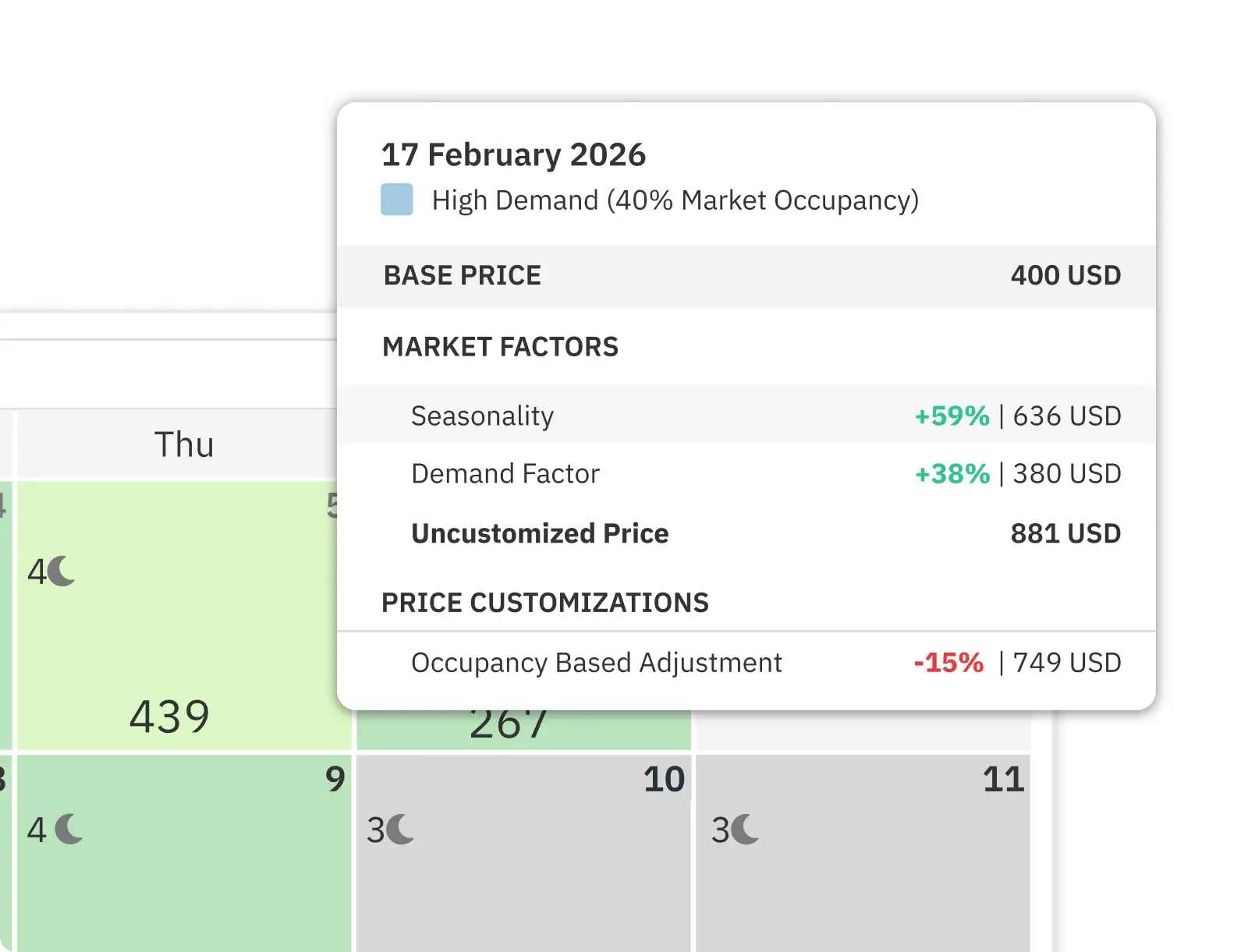
- Automated Valuation: It removes “second-guessing” by using market price suggestions to value the property during festivals and high-demand dates (Vivek Sharma/Luis Payan).
- Clarity & Fairness: It provides the host with the data to be “properly valued” for their labor without manual overthinking, while syncing across all platforms (Airbnb, Vrbo, Booking.com) to prevent double-bookings.
Hardware Infrastructure
- Wi-Fi Smoke Detectors: Essential for monitoring “vacation bacon” incidents—where guests set off alarms while cooking—allowing the host to intervene remotely and check for actual fire risk (Stephanie Lynn Addleman).
- Ozone Machines: A mandatory item for turnover teams. These are “life-saving” for removing the smell of marijuana or cigarettes within 24 hours (Mark Richmond).
Conclusion: The Resilient Remote Operator
Great hosting is not defined by the absence of problems, but by the speed and empathy with which those problems are solved. A resilient remote operator builds a “bulletproof” system where technology handles the pricing and access, while a trusted human network handles the physical reality. As the saying goes, “Great hosting isn’t tested when everything goes right; it’s tested when something goes wrong and you still show up” (Puneet Dhillon).
Non-Negotiable First Steps:
- Recruit Your “Backbone”: Find a dependable cleaner via unconventional local channels and pay them fairly to ensure they are the “backbone of your business.”
- Establish Immediate Redundancy: Install a secure on-site lockbox with a physical key and sign up for “automatic refill” services for all utilities.
- Map Your Preferred Partners: Identify and vet your HVAC, plumbing, and “crossover” specialists before the first emergency occurs.