Get started with PriceLabs now!
Want to learn what PriceLabs can do for you? See for yourself with a free trial. Get started now!

In today’s fast-paced vacation rental industry, short-term rental analytics have become a must-have tool for staying competitive. Understanding how your property performs over time—compared to the market and your own goals—requires more than just gut instinct. That’s where pacing intelligence and performance tracking come in.
Short-term rental analytics or vacation rental data analysis refer to the collection, measurement, and interpretation of data that help property managers and revenue teams make smarter, more profitable decisions. Instead of relying on gut feeling or guesswork, these analytics provide data-backed insights into how your properties are performing—and how they stack up against the competition or past performance.
At their core, short-term rental analytics answer critical questions like:
By consistently tracking and analyzing these metrics, property managers gain a clearer picture of both current performance and future potential. But one of the most powerful—and often underutilized—components of short-term rental analytics is pacing intelligence.
Let’s dive into what it means and how it can help you stay ahead of the market.
Bonus: Short-Term Rental Analytics & Market Data: The Complete Beginner’s Guide
“What we really mean when we talk about pacing intelligence is: how are you performing for future dates compared to either a previous period or the market?” — Vincent Breslin, Co-founder of Uplisting.
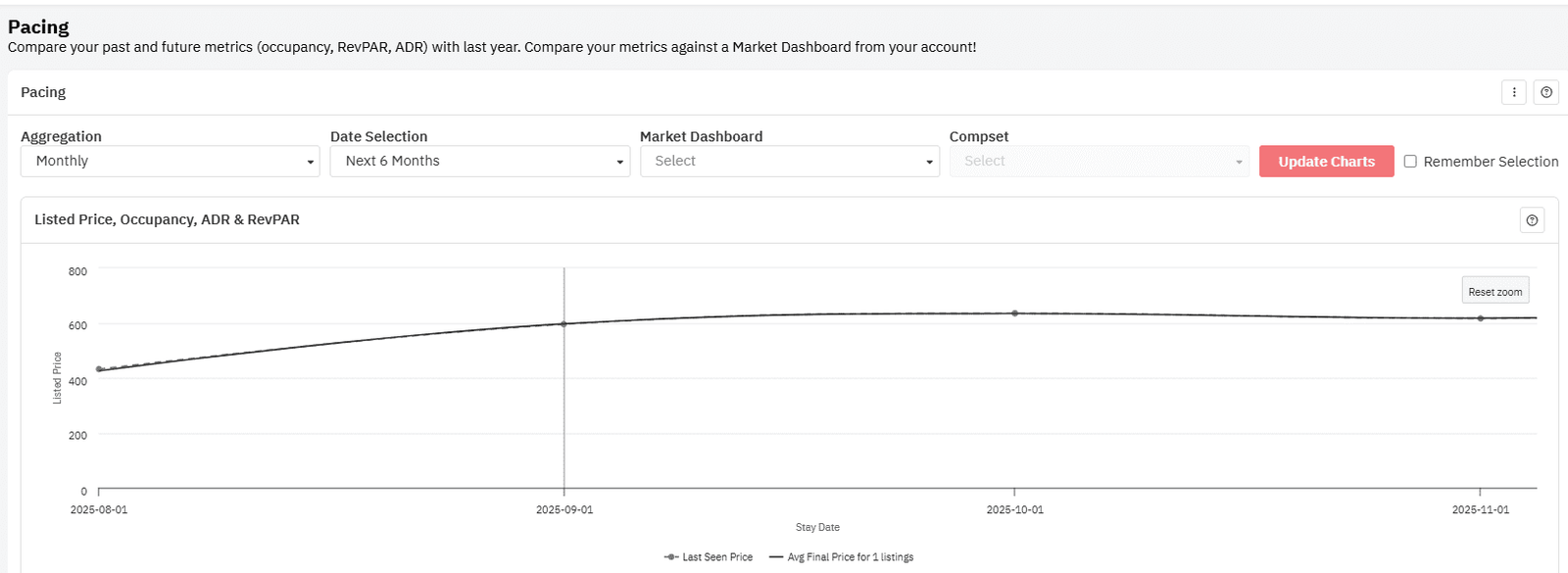
The PriceLabs RevLabs episode discusses pacing intelligence and how to use it in detail. Pacing intelligence looks at forward-looking data, comparing your current booking curve to a relevant benchmark—such as last year’s performance, your internal goals, or your comp set. It’s not just about how many bookings you have—it’s about whether that number is good or bad for this time of year, in this market.
For example, if you had 20 nights booked for August last year by July 1 and 25 this year, you’re pacing ahead. But if the market is pacing at 35 nights, you’re falling behind.
“Pacing is about comparing where you are today versus where you were in the past. Projection is where you think you’ll land.” — Anurag Verma, Co-founder of PriceLabs.
Pacing grounds your projections in real-time truth. It allows you to intervene early and adjust strategy if you’re trending behind. You can analyze your pacing data using PriceLabs Portfolio Analytics.
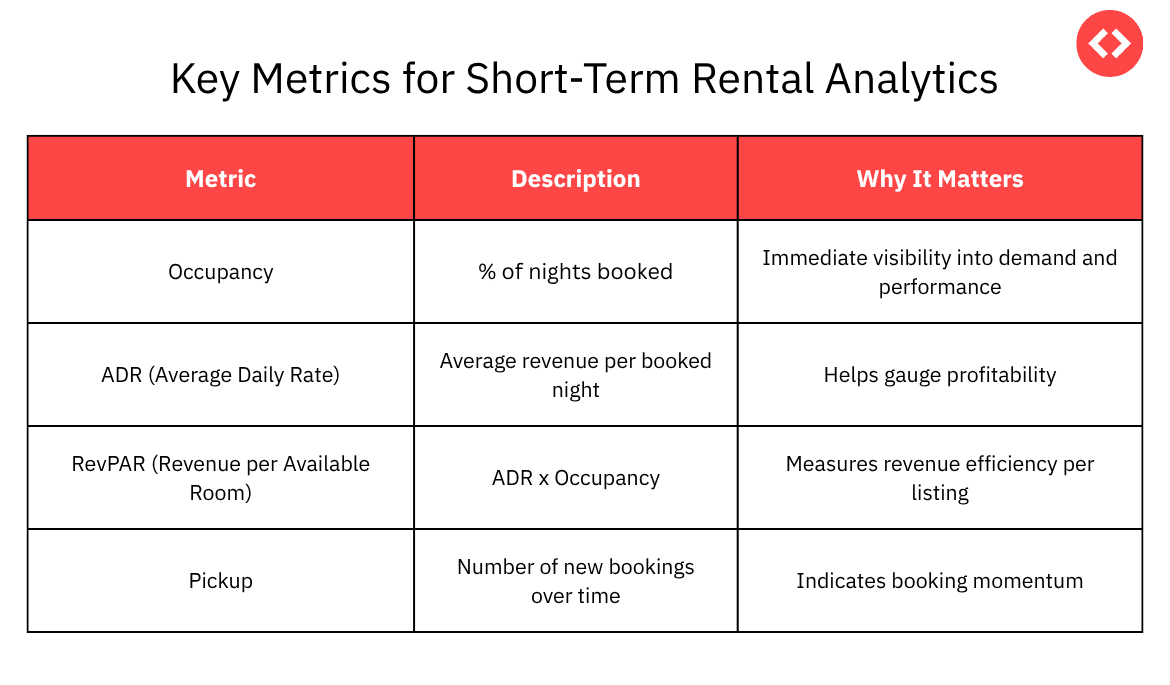
Property management KPIs and metrics, such as occupancy rate and ADR, are central to STR performance tracking and pacing strategy, helping managers assess and improve their business.
“You want to understand what’s happening right now with your future reservations, not just guess based on gut feeling.” — Anurag Verma, Co-founder of PriceLabs.
Relying solely on your own data is risky because market dynamics can change rapidly. Comparing your pacing against the broader market gives you essential context.
Your property’s year-over-year pacing data is your primary “source of truth,” offering an unfiltered view of your portfolio’s performance. Even with new or lost properties, you can compare “like properties” to anticipate performance. Ultimately, your business must meet its own financial goals, regardless of broader market trends.
However, market data provides crucial external context, especially in today’s volatile STR landscape, where supply and other factors constantly change.
“It’s not just about being up or down from last year—it’s about understanding whether that change is market-driven or property-driven,” says Anurag Verma, Co-founder of PriceLabs..
For example, if your property paces 20% ahead year-over-year, but the market paces 40% ahead, you might be missing revenue. This signals that rates are too low or that length-of-stay rules are too strict. Revenue management isn’t just about preventing losses; it’s about seizing opportunities during upturns.
Always understand the “why” behind the numbers. Consider a client whose market faced a hurricane. Their property might show a significant year-over-year decline. But if the market hasn’t recovered and they still outperform it, the story changes. Reacting to internal numbers without market context can lead to misguided decisions, like unnecessary price drops in a depressed market.
Market supply volatility also drastically alters dynamics. A sudden flood of new inventory, like 250 new large homes entering a market that previously had only 10, can overwhelm demand. Property managers in growing markets must constantly monitor new construction and listing trends and proactively adapt their strategies.
“If you’re managing a high-end treehouse or a 5-bedroom ski chalet, you can’t rely on standard comp sets—you need to define your own.” — Anurag Verma, Co-founder of PriceLabs.
Comp sets, or competitive sets, help you compare how your vacation rental is performing against similar properties in your area. They’re a key tool for making smart pricing decisions.
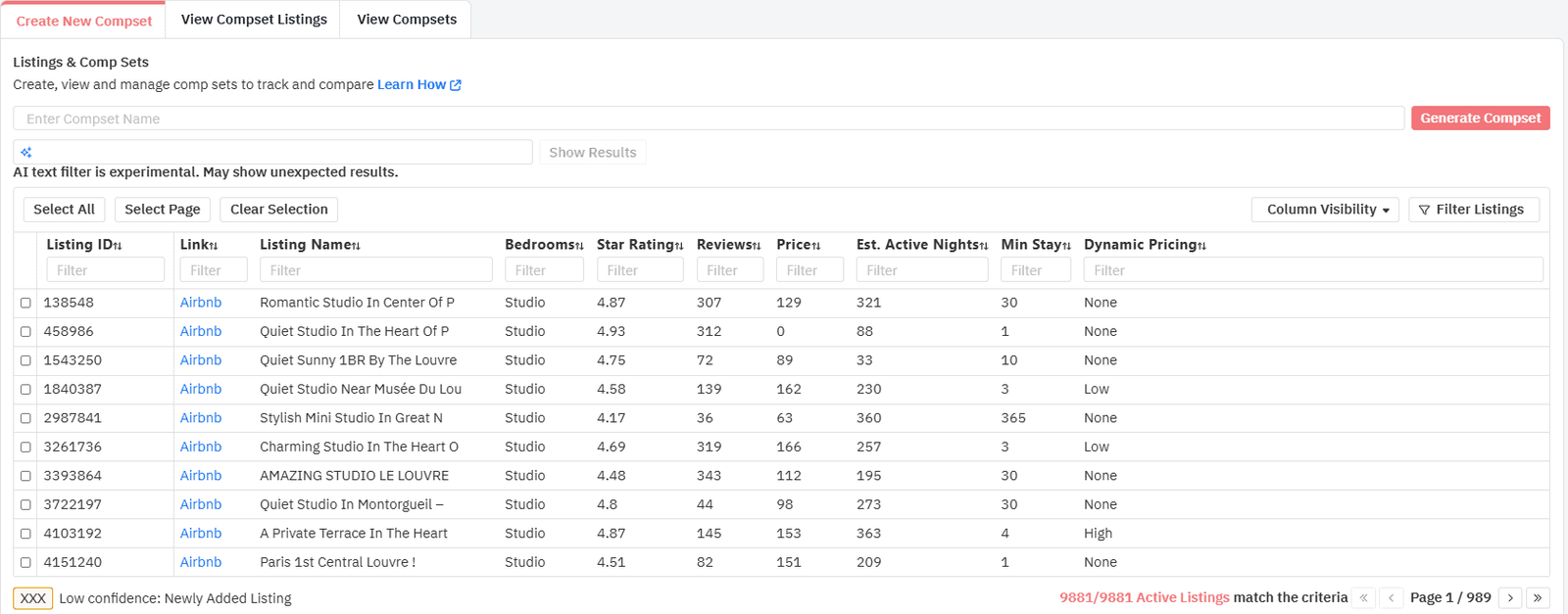
Tools like PriceLabs often provide automatic comp sets based on factors such as bedroom count and type. These work well in areas where properties are very similar—like lots of one-bedroom apartments in a busy downtown area (think central Miami). In such cases, the default comp set usually gives a good idea of how your listing is doing.
But what if your property is unique? Let’s say you manage a luxury properties or a big ski chalet. In these cases, the default comp sets won’t cut it. For example, suppose you’re renting out an 8-bedroom mansion in the countryside and there aren’t many similar listings nearby. In that case, you’ll need to create a custom comp set by finding truly comparable homes—even if they’re in different but similar markets. These kinds of properties are often valued for their experience and unique features, not just their location, size, or property type.
While comp sets are helpful, don’t let them be your only guide. As Rebecca Ballart says, “The business down the street may not have the same goals or fee structures as you.” Just because a nearby property charges less doesn’t mean you should, too. Their pricing strategy might reflect different business priorities or owner expectations. Always focus on what makes your property special—like better service, standout amenities, or strong guest reviews. These can justify higher prices even if competitors are cheaper.
Different markets require different pacing strategies:
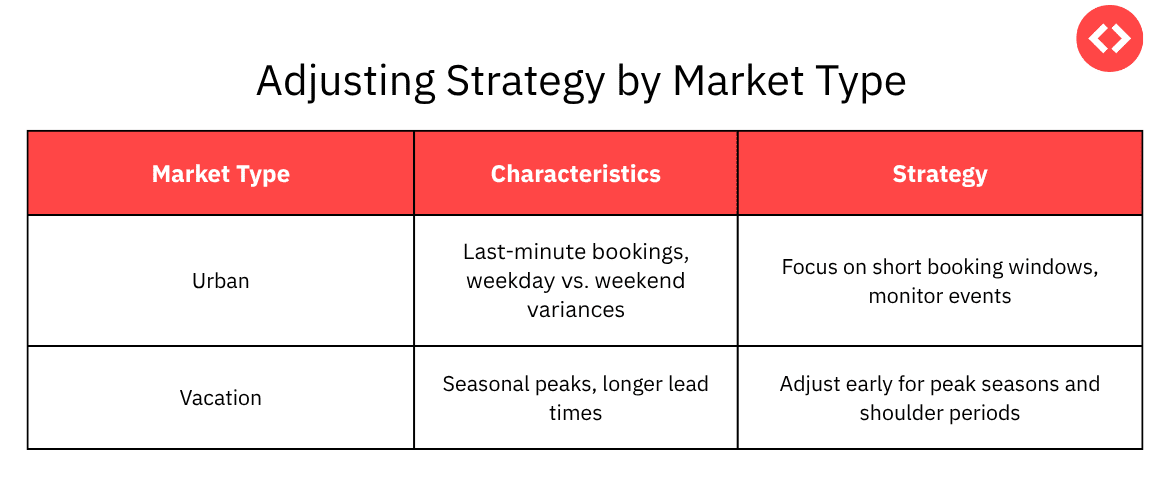
“Urban markets are more last-minute driven. Vacation markets tend to have longer lead times. But overall, booking windows are shrinking across the board.” — Vincent Breslin.
This shift is partly due to widespread last-minute discounts, which trained consumers to wait. Reversing this trend requires early bird pricing strategies.
This proactive approach not only boosts immediate revenue but also results in increased visibility and faster bookings for subsequent high seasons.
Dynamic pricing involves continuously adjusting nightly rates based on real-time demand, seasonality, and booking trends. This includes raising rates for peak periods, holidays, and events, and strategically lowering them during slower midweek nights or off-peak seasons.
Proactively adjusting rates ahead of time can significantly improve performance. Instead of waiting for last-minute desperation, strategically lowering prices for future slow seasons well in advance can build momentum on Online Travel Agencies (OTAs).
“Airbnb and the OTAs just love it when you’re driving bookings. And when you’re driving bookings, they want to show your properties more,” Jasper Ribbers explains.
This proactive approach not only boosts immediate revenue but also results in increased visibility and faster bookings for subsequent high seasons. PriceLabs Dynamic Pricing solutions help you automatically adjust your nightly rates based on market trends and real-time data.

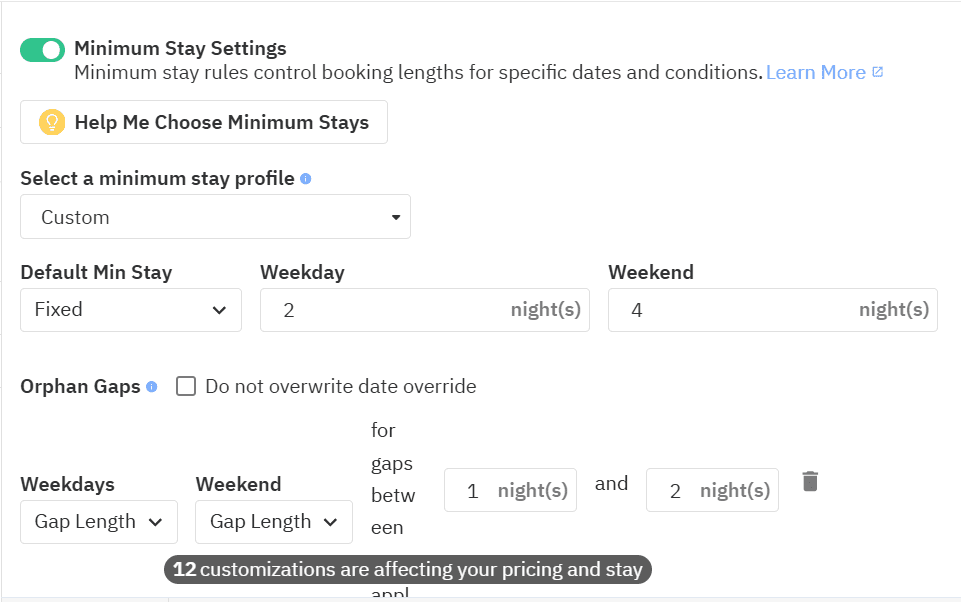
The flexibility of minimum stay requirements is a powerful, often underutilized, lever for increasing occupancy and revenue.
“More flexibility usually leads to more revenue,” Jasper Ribbers states.
Many operators tend to be overly restrictive, missing out on potential bookings.
However, increasing flexibility and offering shorter stays will inevitably lead to a higher volume of turnovers. This means balancing revenue optimization with operational capacity, potentially requiring investment in additional staff or more efficient processes.
Learning from real-world scenarios provides invaluable context for applying pacing intelligence. The case studies mentioned below are discussed in the RevLabs episodes.
Rebecca Ballart shared how Branson, a popular drive-to, multi-family vacation destination, experienced an unprecedented and rapid increase in the supply of large homes (6-bedroom and higher). This created an “amenity race” and significantly impacted legacy homeowners’ occupancy.
The response involved strategic pricing in shoulder seasons, meticulously studying booking windows, and crucial collaboration between revenue management and marketing teams. They targeted repeat guests through direct contact and personal phone calls for high-value bookings, fostering loyalty and long-term revenue.
Jasper Ribbers shared a case from Australia, where operators traditionally focused on last-minute pricing, hurting low-season bookings and subsequent high-season OTA visibility.
The strategy flipped: they used custom seasonal profiles to significantly reduce prices well in advance for the low season, utilizing OTA-specific early booker deals. This proactive approach led to a remarkable 40% outperformance in RevPAR, even requiring operational adjustments for increased turnover.
Monique shared an example where a client’s market experienced a significant year-over-year decline due to a hurricane. By comparing the client’s performance to the overall market, it was clear they were outperforming the severely impacted market. This crucial context provided a realistic understanding, indicating a broader demand problem rather than a property-specific pricing issue.
“You don’t want to react too quickly, but you also don’t want to wait too long to adjust. The sweet spot is identifying trends early and acting with purpose.” — Vincent Breslin.
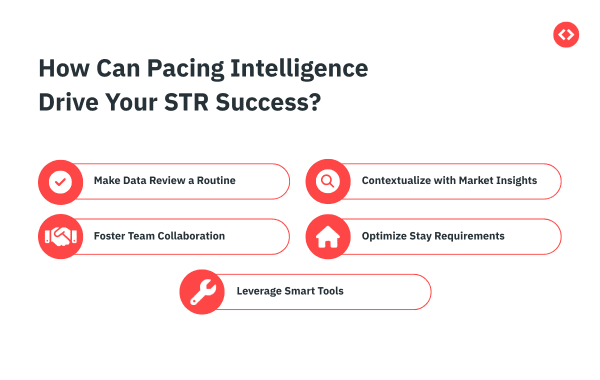
Mastering short-term rental analytics isn’t just about tracking data—it’s about making informed, confident decisions that drive sustained revenue growth. Pacing intelligence is a core strategy for maximizing revenue in short-term rentals. By blending internal benchmarks with market context, property managers and revenue teams can make faster, smarter, and more profitable decisions.
“Revenue management is no longer just about setting prices. It’s about understanding performance, identifying trends, and acting before the market moves past you.” — Anurag Verma, Co-founder of PriceLabs.
In a competitive landscape, that’s not just smart—it’s essential.
Q: What are short‑term rental analytics?
A: These analytics are data-driven insights that help property managers track performance trends—like occupancy, ADR, RevPAR, pacing, and booking window—to optimize pricing, stay competitive, and maximize revenue.
Q: How does pacing intelligence help in short‑term rental analytics?
A: Pacing intelligence compares your current booking momentum for future dates against benchmarks like last year or the market, helping you act early if you’re behind or capitalize when trending ahead.
Q: How can short‑term rental analytics improve my pricing strategy?
A: By analyzing market demand, competitor pricing, seasonality, and internal trends, analytics tools guide dynamic pricing adjustments that drive bookings and revenue growth.
Q: What are the best analytics tools for short‑term rental properties?
A: Leading tools include platforms like PriceLabs, which provide dashboards, market benchmarks, pacing reports, and automation for smarter pricing decisions.
Q: Can analytics help understand guest preferences and behavior?
A: Yes! Tools that incorporate guest booking patterns and reviews offer insights into preferences so you can optimize amenities, listing details, and marketing strategies.
For the broader portfolio-monitoring picture beyond pacing specifically, see our guide to Airbnb analytics for tracking STR performance.
Want to learn what PriceLabs can do for you? See for yourself with a free trial. Get started now!