Table of Contents
Updated : Mar 24, 2026
The short-term rental (STR) market has fundamentally lowered the barrier to entry for global entrepreneurship, facilitating a paradigm shift where personal and family assets are transformed into high-yield strategic business ventures.
Historically, real estate investment was the domain of institutional players; however, the rise of digital platforms and dynamic management tools has empowered individuals to monetize properties with unprecedented precision.
By analysing the diverse origins of modern hosts, we observe a move toward professionalised “hospitality entrepreneurship” that balances emotional attachment with rigorous financial objectives.
Catalysts for STR Entrepreneurship
Based on global case studies, three primary entry paths define the current landscape:
| Catalyst Type | Primary Motivation | Key Representative Case |
| Involuntary/Inherited | Debt service and asset retention | Alexander Rogers (Centerville, Maryland) |
| Adaptive Use | Asset optimization of vacation/personal homes | Addie Wales (Ely, Minnesota) |
| Strategic Investment | Long-term wealth building and independence | Amadi Leaks (Hapeville, Georgia) |
1. Involuntary/Inherited Ownership:
For many, the transition to hosting is born of necessity.
Alexander Rogers (Centerville, Maryland) entered the market after inheriting a family home.
In these instances, the STR model was adopted specifically to cover existing mortgage balances and maintenance costs that would otherwise have made retention of the asset unfeasible.
2. The “Happy Accident” and Adaptive Use:
This category includes owners who recognized commercial potential in personal assets.
Addie Wales (Ely, Minnesota) transitioned a log cabin dream into a four-cabin business venture.
Peter DeNeef (managing France from Singapore) exemplifies the transition from personal use to professional management; notably, a transition period between jobs provided the necessary operational capacity to professionalize the business, which now spans an international portfolio.
3. Strategic Wealth Building:
Increasingly, investors enter the STR space with the explicit goal of financial independence.
Amadi Leaks (Hapeville, Georgia) intentionally sold her primary residence, which she had owned for 16 years, to reinvest the proceeds into an STR to build long-term wealth.
Similarly, Natalie Mies (Dallas, Texas) utilised her background as an interior designer to launch four properties specifically to establish financial autonomy.
These varied origins converge into a shared objective: asset optimisation. Whether the entry was planned or accidental, the eventual trajectory is toward a professionalised business model that maximises the utility of the real estate asset.
Economic Transitions: The Move from Passive Leasing to Dynamic Hosting
A critical component of this entrepreneurial shift is the strategic transition from traditional long-term rentals (LTR) to the short-term model. This move is rarely just about higher gross revenue; it is a calculated decision focused on maximizing Return on Investment (ROI) while ensuring superior property protection.
The economic differentiators between the two models are substantial:
1. Revenue Optimization:
The income potential of STRs significantly outpaces traditional leasing.
Dolly Duran (Fort Lauderdale, Florida) noted that her income doubled upon switching a studio from an LTR to an STR.
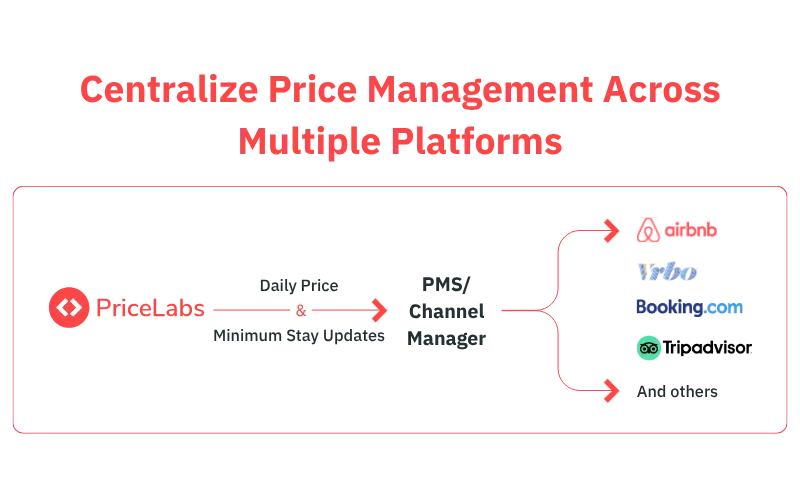
Luis Payan (Punta Cana, Dominican Republic) maximized his ROI by utilizing a “single-point-of-control” model, using professional tools to update prices and availability across Airbnb, Booking.com, and VRBO from a single interface, ensuring multi-channel efficiency.
2. Asset Preservation:
High-turnover hosting can offer better property protection than long-term occupancy.
Patrick Combs (San Diego, California) transitioned to the STR model to protect the integrity of his historic 1903 home.
Unlike LTR models where damage can remain hidden for years, the STR model allows for frequent professional inspections and cleaning, maintaining the asset’s “luxury” status.
3. Data-Driven Decision Making:
Professionalization is marked by a move away from “instinct-based” hosting.
Puneet Dhillon (Arpura, North Goa, India) highlights the shift from emotional, vibe-based pricing to intentional, market-responsive revenue management.
Using dynamic pricing tools, hosts capture demand surges that traditional flat-rate leases ignore.
This transition represents a fundamental shift in persona: the individual moves from being a “landlord”—primarily concerned with rent collection—to a hospitality executive, focused on guest experience, brand reputation, and dynamic yield management.
Operational Methodologies: Professionalizing Service Delivery
Scaling a property business from a single unit to a global portfolio requires robust operational systems. These systems allow individuals to function as international property managers, often overseeing assets from thousands of miles away.
The core operational techniques employed by successful global hosts include:
1. Remote Management Systems:
Technology bridges the geographical gap for hosts like Peter DeNeef, who manages French properties from Singapore—a 9,000-kilometre distance—by coordinating local maintenance and guest services teams across a seven-hour time difference.
Joanna Woods similarly manages Texas-based properties from the UK, proving physical proximity is no longer a prerequisite for effective oversight.
2. Tech-Enabled Guest Support:
Effective operations prioritize the guest’s ease of access.
Aaron Massie (Dominican Republic) developed custom checklists and visual arrival instructions (including local signs and pictures) to assist non-technological guests, ensuring a seamless check-in process.
3. Strategic Scaling and Proof of Concept:
Systematic management allows for rapid growth.
Bill Kirages expanded from one property to eight across multiple states within three years.
Conversely, Mark (Cedar Mountain, North Carolina) demonstrates the importance of a Proof of Concept (PoC); his expansion to 17 properties only began after his wife saw the “overwhelming success” of their initial college-town rental in real-time, validating the business model before committing to further mortgages.
Virtual Operations Workflow
- Market Intelligence: Utilizing dynamic pricing tools to analyze local demand, seasonality, and competitor rates without emotional bias.
- Automated Revenue Management: Implementing price fluctuations (often every 16–24 hours) to ensure the listing remains competitive and highly visible in search algorithms.
- Multi-Channel Synchronization: Using channel managers to sync bookings across various platforms to prevent double-bookings and maintain a “single-point-of-control.”Feedback-Driven Upgrades: Analyzing guest reviews to identify high-impact “small things” that need attention, removing emotional bias from maintenance decisions.
Competitive Differentiation: Theming, Persona, and Value Creation
In a saturated market, standard lodging is insufficient for maintaining high occupancy. Professional hosts utilize Unique Value Propositions (UVPs) to drive premium nightly rates.
Key differentiators include:
1. Hyper-Targeted Guest Personas:
Abhimanyu (Udapur, India) professionalizes his communication by tailoring messages to specific personas: “support-friendly” for young travelers, “respectful greetings” for professionals, and “quiet text support” for introverts.
2. Location-Linked Theming and Design:
Visual differentiation captures market share.
Willy Falou (Toulouse, France) created a “Space Shuttle” themed apartment specifically located near the Cité de l’Espace (Space City), leveraging local tourism drivers.
Thomas Retnauet (Outer Banks, North Carolina) utilized his architectural background to create an “Aviation” theme, converting a garage into a “hangar” with high-end amenities.
3. Amenity-Driven ROI:
Strategic investors identify market gaps through data.
Ken Boone (Pigeon Forge, Tennessee) purchased a “pool cabin” sight-unseen because the numbers indicated that the heated indoor pool amenity ensured bookings even in February.
This data-driven approach to amenities guarantees year-round yield.
4. The “Human” Layer of Luxury:
As Melanie Lewis notes, true hospitality is not about “showy” luxury; it is about “warmth, presence, and noticing the small things.”
This creates an emotional connection that standard institutional lodging cannot replicate.
Top 3 Differentiators for Premium Pricing
- Immersive/Location-Linked Theming: Creating photographable “universes” (e.g., Space Shuttle or Aviation themes) that align with local attractions.
- High-Utility Amenities: Identifying features like heated indoor pools or 120-inch HD screens that drive demand during off-peak seasons.
- Curated Personas: Transitioning from “offering a bed” to “managing a guest journey” through tailored communication and local expertise.
Conclusion: The Professionalisation Framework for Future Entrepreneurs
The evolution of the STR industry from a “side hustle” to a sophisticated asset class provides a clear framework for future investors. Success in this modern economy requires a synthesis of real estate savvy, hospitality excellence, and technological integration.
The STR Success Matrix
- Mindset: Successful hosts treat the venture as a hospitality business. This is driven by the realization articulated by Michael Baker: “nobody cares about the property as much as you do,” necessitating an owner-operator’s level of attention even when managing remotely.
- Asset Utility: Maximizing ROI involves leveraging unique property types—such as historic homes, pool cabins, or ADUs—to offer a value proposition that traditional hotels cannot match.
- Technology Integration: Removing emotional bias through data. Using dynamic pricing and multi-channel synchronization allows hosts to remain competitive in fluctuating markets while freeing up time for high-level portfolio strategy.
Ultimately, short-term rental management serves as a modern bridge to financial independence and generational wealth. As echoed by Amadi Leaks and Michael Baker, the goal is to build a legacy—a sustainable, income-generating business that transforms the traditional intersection of home, hospitality, and investment.